Ship Hold Cleaning in Athens Port: A Strategic Maritime Crossroads
Ship Hold Cleaning in Athens Port anchors one of the most influential shipping regions in the world. Just southwest of the city lies Port of Piraeus, a major Mediterranean hub handling bulk cargo, steel products, fertilizers, grains, and project freight. High vessel traffic and strict inspections make cargo hold readiness a top operational priority.
In this environment, ship hold cleaning in Athens Port directly affects charter compliance, vessel turnaround time, and freight revenue. Cleaning is not cosmetic work. It is a controlled technical process that determines whether a ship loads on time—or faces delay and rejection.
Why Greece Sets High Standards in Marine Cleaning
Greece manages one of the largest merchant fleets globally. Greek shipowners operate under intense scrutiny from charterers and classification societies. That culture of discipline influences service providers in Athens.
Contractors understand that failed inspections cost money and reputation. As a result, ship hold cleaning in Athens Port is built around measurable quality, documented procedures, and international compliance rather than informal practices.
Regulatory Compliance: The Operational Framework
Every cleaning operation must align with global maritime regulations:
- International Maritime Organization (IMO) conventions
- International Marine Contractors Association safety guidance
- MARPOL Convention pollution control rules
- International Association of Ports and Harbors environmental standards
Wash water, sludge, and cargo residues cannot be discharged improperly. Port authorities require documented transfer to licensed reception facilities. Strict compliance protects owners from fines, detention, or reputational harm.
Understanding Survey Expectations and Supercargo Rules
Charterers often demand grain-clean or hospital-clean holds. Surveyors apply the Marine Supercargo Final Quality Rules to evaluate dryness, odor neutrality, coating condition, and absence of loose scale.
Professional teams performing ship hold cleaning in Athens Port prepare for inspection from the start. They anticipate what surveyors will check and structure their process accordingly, minimizing the risk of last-minute rejection.
Solution 1: High-Pressure Washing Systems
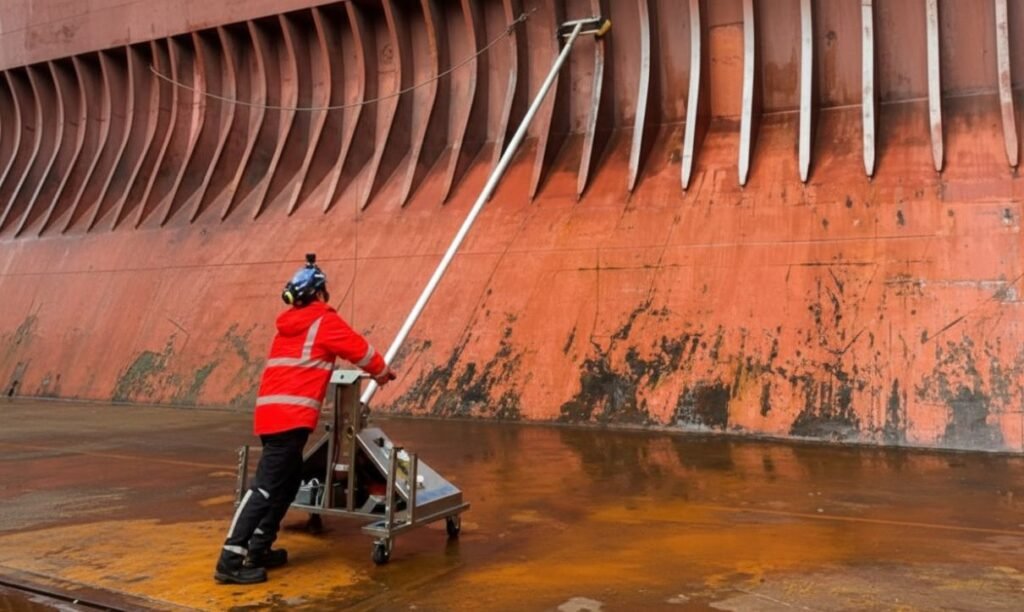
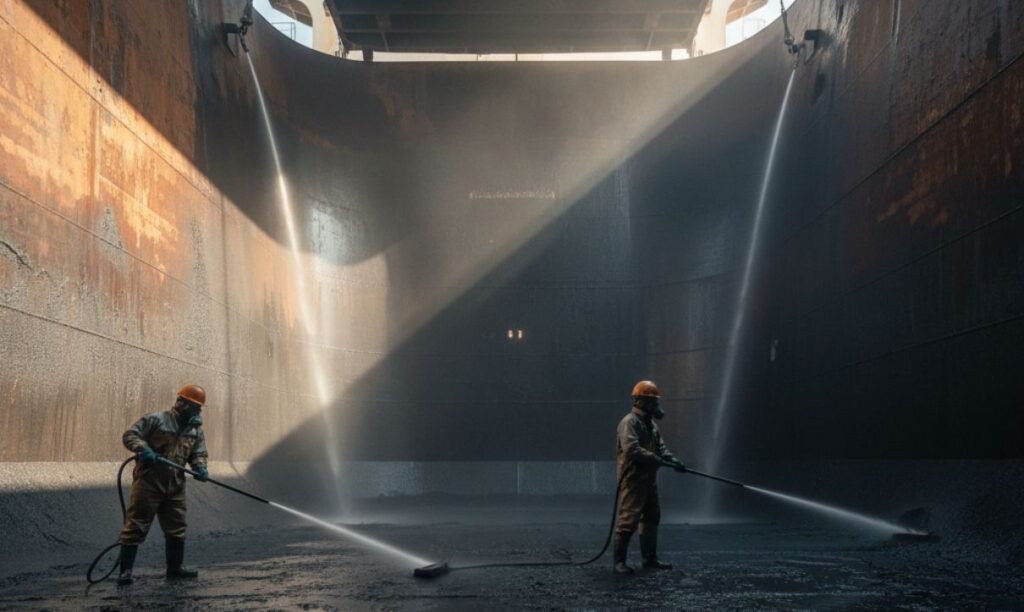
High-pressure seawater washing removes loose residues from tank tops, frames, and bulkheads. When chloride control is critical, freshwater rinsing follows.
Technicians control runoff and prevent overflow to comply with MARPOL Annex requirements. Proper drainage planning is part of responsible ship hold cleaning in Athens Port.
Solution 2: Approved Chemical Cleaning Agents
Coal, petcoke, or fertilizer cargoes leave chemical traces and stains. Marine-approved degreasers dissolve residues without damaging epoxy coatings.
Chemical selection requires technical judgment. Incompatible agents can weaken protective coatings, increasing corrosion risk. Skilled contractors verify compatibility before application.
Solution 3: Mechanical Descaling and Rust Removal
Loose rust scale remains one of the most common reasons for hold rejection. Pneumatic chipping tools and rotary brushes remove scale from structural members and ladders.
Confined space entry follows IMCA safety practices. Gas testing, ventilation, and standby rescue procedures are mandatory during mechanical operations.
Solution 4: Drying and Humidity Management
Cleaning alone is insufficient. Holds must be completely dry before loading sensitive cargo. Industrial air movers and dehumidifiers accelerate drying.
Moisture meters confirm acceptable humidity levels. This stage is critical in preventing cargo damage claims, particularly for grain and cement shipments.
Solution 5: Odor Neutralization and Surface Inspection
Previous cargoes may leave persistent odors. Neutralizing treatments eliminate smells that could contaminate food-grade shipments.
Detailed surface inspections follow. Teams verify that no loose paint, debris, or standing water remains before survey attendance.
Solution 6: Waste Handling and Environmental Reporting
Environmental responsibility is central to ship hold cleaning in Athens Port. Residues, sludge, and wash water are transferred to approved port reception facilities.
Documentation includes waste transfer receipts and disposal certificates. Alignment with IAPH World Ports sustainability principles demonstrates responsible operations and strengthens audit readiness.
Solution 7: Pre-Inspection Coordination with Surveyors
Experienced contractors conduct internal checks before official inspection. This proactive approach identifies overlooked areas.
When surveyors arrive, documentation is ready: cleaning logs, chemical usage records, and disposal confirmations. This structured preparation reduces dispute risk between owners and charterers.
Operational Pressures in Piraeus
The Port of Piraeus operates under tight berth schedules. Delays can lead to demurrage or missed laycan windows. Efficient execution of ship hold cleaning in Athens Port supports faster vessel turnaround.
Summer heat accelerates drying but increases worker fatigue. Winter humidity requires enhanced ventilation strategies. Local experience helps contractors plan around these seasonal factors.
Safety Culture and Workforce Discipline
Hold cleaning is confined space work. Slippery surfaces, high-pressure equipment, and chemical exposure create real hazards.
Compliance with IMO safety management principles and IMCA guidelines ensures structured risk assessment, toolbox talks, and proper PPE usage. A strong safety culture protects crew and shore personnel alike.
Documentation as Commercial Protection
Modern charter parties demand evidence. Time-stamped photographs, digital checklists, and chemical batch tracking protect vessel interests.
Companies recognized as industry benchmarks, including Cleanship.co, demonstrate how transparent reporting builds trust. Today, that level of documentation defines reliable ship hold cleaning in Athens Port.
Economic Impact on Vessel Performance
Failed inspections cause delays. Delays create financial losses. Each rejected hold can cost significant sums in idle time and contractual penalties.
Professional cleaning reduces rework, accelerates approvals, and safeguards freight revenue. Investing in qualified contractors supports predictable operational performance.
Selecting a Qualified Contractor
Ship managers should verify:
- Compliance history with IMO and MARPOL
- Trained confined space teams
- Chemical handling certification
- Waste disposal transparency
- Clear communication with vessel command
Choosing based solely on cost can compromise compliance and efficiency. Technical credibility and regulatory alignment are essential in Athens.
The Future of Marine Cleaning in Greece
Automation, robotic cleaning tools, and environmentally friendly chemicals are shaping the next phase of the industry. Greek ports increasingly align with international sustainability goals.
Digital inspection systems and remote reporting platforms improve transparency and coordination. These developments will further strengthen ship hold cleaning in Athens Port in the coming years.
Conclusion
Athens stands as one of the Mediterranean’s most demanding maritime environments. Strict adherence to IMO regulations, the MARPOL Convention, IMCA safety standards, and IAPH World Ports environmental principles defines how hold cleaning must be performed.
Technical precision, documented waste handling, and proactive survey coordination protect vessels from delay and financial risk. Shipowners and charterers who prioritize compliant, well-managed ship hold cleaning in Athens Port gain operational certainty and commercial stability. Engage a proven, regulation-focused contractor to ensure your vessel loads clean, safe, and on schedule.
FAQs:
It means holds are completely dry, free of loose scale, odorless, and without cargo residues, following Marine Supercargo Final Quality Rules.
No. All wash water and residues must comply with MARPOL Convention requirements and be transferred to licensed reception facilities.
Timing depends on cargo history and hold condition, but efficient teams complete work within tight port stay limits.
Not always. They are required when cargo residues cannot be removed by water washing alone.
IMCA provides safety guidance for confined space and contractor operations, ensuring safe and structured cleaning procedures.