Maritime safety news

India Launches New Maritime Hub for Sustainable Shipping Transport

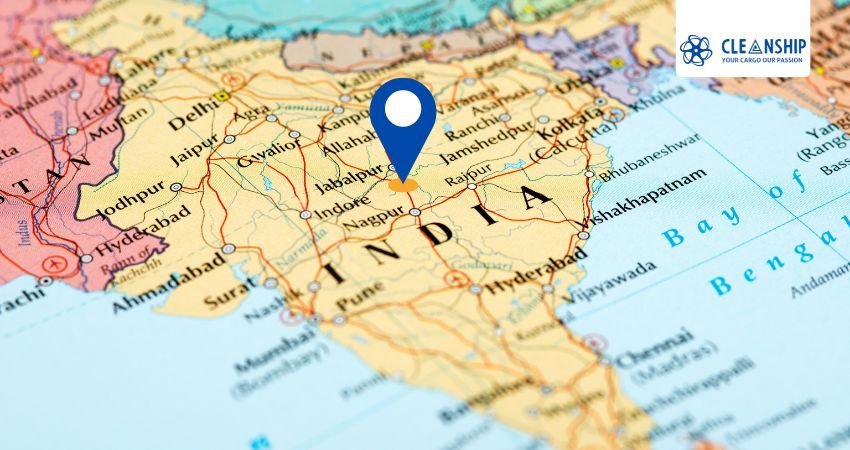
Lloyd’s Register (LR) has partnered with the Government of India’s Directorate General of Shipping for the design of the Indian Ocean Centre of Excellence for Sustainable Shipping Transport (IOCE-SMarT).  The initiative improves the Maritime Training Institute (MTI) in Mumbai, changing it into a hub of maritime excellence in collaboration with the IMO’s global Maritime Technologies Cooperation Centre (MTCC) network. Read also: 8 Trends That Will Affect Aids to Navigation Aligned with India’s aspiration for international maritime leadership, IOCE-SMarT will enable a holistic hub of maritime excellence across analysis, technology, and industry partnerships to profit the entire region.   Using its experience as a trusted adviser and its abilities on regional maritime policy, LR will help the regulatory authority with strategic planning, including needs assessment, stakeholder consultation, strategic alignment, and institutional framework development.  Shri Shyam Jagannathan, IAS, India’s Director General of Shipping, declared that the IOCE-SMaRT will be a pioneering center in South Asia, positioning India and its BIMSTEC members as leaders in Sustainable Shipping Transportation. The center aims to improve maritime capacity building across the Indian Ocean region. Read also: Decrease Speed When in Highly Congested Waters Ambrish Bansal, Senior VP at Lloyd’s Register, stressed that the center aligns with the region’s goal to lead global sustainable shipping maritime development. It will serve as a hub for maritime research, technology, and industry partnership, combining regional expertise and global networks for success. LR will help create service channels through a partnership with IMO, integration with the MTCC Network, and detailing initiatives for IOCE-SMarT. LR will also support institutional setup, infrastructure development, and financial planning, and provide a detailed project report and implementation roadmap.  MTI’s location, physical infrastructure, expertise, and government support collectively position it as an ideal candidate for changeover into a Centre of Excellence. It provides close access to maritime organizations and activities while facilitating seamless movement through Mumbai’s well-developed transportation network. 
Read more
Navigation

8 Trends That Will Affect Aids to Navigation

AMSA sustains a network of over 480 marine Aids to Navigation (AtoN), in line with international standards, to provide safe navigation in Australian waters. In a current publication, AMSA highlights that AIS AtoN technologies must be replaced with systems that are saved according to modern cybersecurity best practices. AMSA also consults how this new reality will affect these systems and what must be considered to secure navigational safety. As explained, AMSA’s AtoN network is mostly used by commercial shipping and includes traditional lighthouses, beacons and buoys as well as electronic aids (i.e., racon and Automatic Identification System (AIS) AtoN). The states, ports, and territory collectively serve many more AtoNs. Read also: Decrease Speed When in Highly Congested Waters Notwithstanding these benefits, limitations to assess include a requirement for suitably located base stations, risk of inaccurate position data, and susceptibility of AIS data to spoofing or jamming.  AMSA highlights virtual AtoN is not intended to substitute physical markers but rather complement them where traditional infrastructure is impractical. Heritage lighthouses will continue to be an essential part of Australia’s culture 8 key trends to consider 1. Maritime communications will be an enabler for inventive AtoN solutions 2. Growing usage of electronic AtoN (e.g. AIS/VDES AtoN) to supplement the physical marking of dangers to navigation, particularly temporary hazards. 3. The relative ease of launching virtual AtoNs (i.e., for marking hazards in an emergency) 4. Advances in the evolution of physical AtoN (Internet-ofThings). 5. Physical AtoNs may become a secondary origin of navigation information for some vessel types, however, will remain an essential component of Australia’s AtoN network. 5. With the growth in the use of new technology radars, conventional racons are not as effective. 7. Harmonisation and improvements in AtoN networks stay important nationally and internationally. 8. Increasingly connected networks of navigation services and AtoNs may be vulnerable to cyber threats. Read also: Safety Study Grills the Carriage of Charcoal AMSA other noted that ships will increasingly need modern navigation systems that are capable of virtually using electronic AtoN.  Virtual AtoN will remain effective in increasing awareness of navigation hazards for crew on vessels fitted with compliant navigation systems. The benefits are:
Read more
Hearing Onboard

Tips for Protecting Your Hearing Onboard

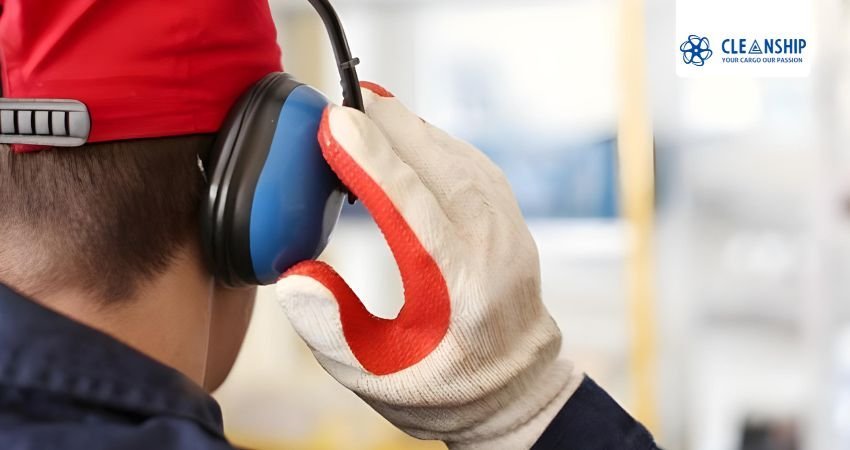
Neglecting to protect hearing can have severe painful long-term consequences, affecting not just career longevity but the overall life grade of seafarers. Hearing loss can affect communication, safety, and job routine, leading to increased risks on board and potential for misfortunes. By consistently using appropriate hearing protection and adhering to safety guidelines, seafarers can seriously reduce their risk of hearing impairment, assuring they remain fit for duty and able to perform their roles effectively throughout their careers. Read also: Decrease Speed When in Highly Congested Waters According to Britannia, appropriate signage should be installed to warn personnel when they are entering a high-noise area. Noise levels above 80 dB(A) require mitigation efforts, and hearing protection is mandatory at 85 dB(A) and above. The installation and use of temporary equipment can also increase noise levels. The effects of noise should be considered in onboard risk assessments and mitigated as necessary. Furthermore, all hearing safety equipment must comply with approved standards. In Europe, for example, the most commonly adopted standard is EN 352. Factors to consider when choosing proper hearing protection include maximum noise level experienced, frequency of exposure, work activity, and personal preference. Experience shows that irritated PPE will not be worn as often as it should be. Read also: Safety Study Grills the Carriage of Charcoal The goal of hearing protection is to lower the noise levels encountered to 80 dB or below. Over-protection, lowering noise to 65–70 dB or lower, can be dangerous as it impairs the capacity to hear communications and alarms, leading to the removal of protection and exposure to harmful noise levels. Cleanship’s recommendations for personnel include:
Read more
EMSA: Safety Concerns for Hydrogen-fuelled Ships

EMSA: Safety Concerns for Hydrogen-fuelled Ships

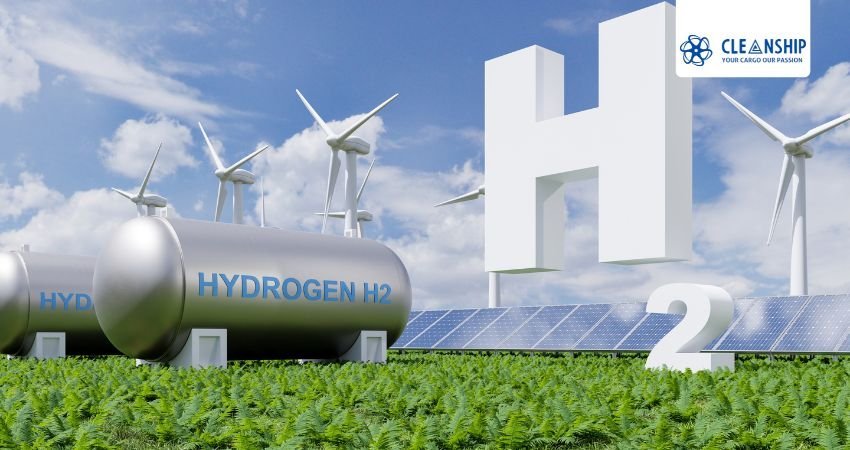
EMSA has issued a report that analyses hydrogen’s primary factors to frame which safety dangers, system hazards, and risks to be considered and mitigated when using hydrogen as ship fuel.  The report aims to help the industry and the regulators in a safe and harmonized deployment of this relevant technology that could establish an important step towards the sector’s decarbonization. According to EMSA, hydrogen, when used as ship fuel, offers the following significant safety hazards and risks due to its unique properties: Flammability and explosiveness Hydrogen’s wide flammability range and lower ignition energy compared to methane make it highly flammable and prone to more severe blasts. Its more increased burning velocity can escalate blasts into detonations, posing more significant risks than natural gas. Storage and distribution challenges The low boiling point of hydrogen confuses its storage and distribution. Managing boil-off gas and controlling the condensation of gases like nitrogen and oxygen are critical to avoid tool malfunction and potential explosion dangers. Density and dispersion Hydrogen’s low density causes it to rise and spread quickly in open environments. In confined spaces, such as within a ship, it can collect in high spots, increasing the risk of ignition from sources like ceiling lights. Designing safety measures, such as gas sensors and ventilation systems, must account for hydrogen’s density and behavior in leak scenarios. Pressure effects High-pressure storage of hydrogen (250-700 bar) forms potential energy that, upon discharge, can cause significant pressure impacts even without combustion. Sudden discharges from high-pressure systems can ignite spontaneously, posing immediate risks to personnel and equipment. Hazards in confined spaces Hydrogen discharges in confined ship spaces amplify explosion pressures rapidly, potentially damaging structures and leading to further leakage. Leakages of liquefied hydrogen (LH2) can induce cooling effects that compromise gas-tight goodness and safety equipment operation, further complicating trouble responses. Material compatibility and embrittlement Hydrogen can adversely impact metal properties through embrittlement, decreasing structural integrity. Condensed oxygen-enriched air can raise material flammability upon contact, necessitating careful material selection and design considerations. Health and safety risks Finally, EMSA notes that significant hydrogen leakages pose dangers of asphyxiation due to oxygen depletion, alongside risks of frostbites and burn injuries due to low temperatures and decreased flame visibility. Read Also: 1. Revising chafe protection to enhance safety and efficiency at Port Hedland 2. Navigating health at sea: Telemedicine’s voyage into maritime healthcare
Read more
Shopping Cart (0 items)