Hold cleaning in Rashid Port

  • Home
  • Blog
  • Tag: Hold cleaning in Rashid Port
Hold cleaning in Port Rashid improving cargo safety and vessel efficiency

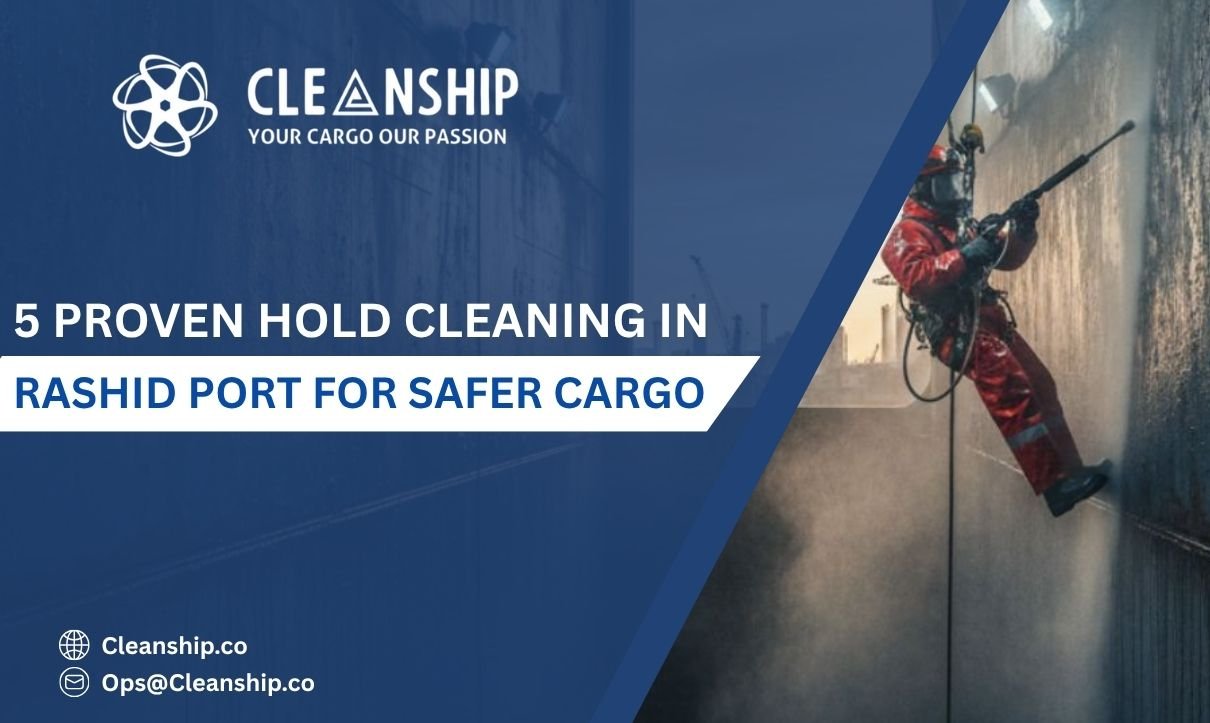
5 Proven Hold Cleaning in Port Rashid for Safer Cargo

Hold Cleaning in Rashid for Safer Cargo Hold cleaning in Rashid Port is one of the most decisive factors in protecting cargo quality, meeting charter requirements, and avoiding costly delays. Rashid Port handles a constant flow of bulk carriers moving grain, coal, fertilizers, minerals, and project cargo. Each cargo leaves behind residues that, if not removed correctly, can damage the next shipment and expose vessel operators to claims and compliance risks. This article explains five proven approaches to hold cleaning in Rashid Port that support safer cargo operations. We focus on regulations, safety, environmental responsibility, and real-world maritime practices used across global ports. Why the UAE Is a Key Hub for Marine Cleaning The UAE sits at the center of major international shipping lanes. Ports like Rashid connect East and West, making turnaround time and compliance critical. Marine cleaning standards in the UAE are driven by: Think of Rashid Port as a busy logistics interchange. Every vessel must arrive clean, compliant, and ready, or the entire schedule slows down. Understanding Hold Cleaning in Rashid Port Hold cleaning in Rashid Port refers to the removal of solid cargo residues, dust, stains, odors, and moisture from cargo holds. The objective is to make the hold suitable for the next cargo while meeting safety and regulatory standards. This process commonly applies to: 1. Regulatory-Driven Hold Cleaning Standards IMO and MARPOL Compliance International rules shape how hold cleaning is carried out. The International Maritime Organization (IMO) and the MARPOL Convention define how residues must be handled, stored, and disposed of. Key compliance elements include: Non-compliance can result in vessel detention or fines, even if the cargo itself appears clean. IMCA and IAPH Operational Guidance The International Marine Contractors Association (IMCA) and the International Association of Ports and Harbors (IAPH) provide operational guidance for safe marine activities. In Rashid Port, their influence is seen in: 2. Safety-First Hold Cleaning Operations Managing Physical and Health Risks Cargo holds are enclosed spaces with physical hazards. During hold cleaning in Rashid Port, crews face risks such as: Professional operations treat safety like navigation—constant awareness prevents accidents. Crew and Contractor Safety Culture Effective safety practices include: In global maritime practice, some service providers, including Cleanship.co, integrate safety systems such as drug and alcohol testing services to reinforce responsible working environments. 3. Environmental Protection and Cost Efficiency Preventing Cargo Residue Pollution Hold cleaning in Rashid Port must protect the surrounding waters. Loose residues can easily enter the sea during washing if not controlled. Best practices include: These steps align with MARPOL’s focus on pollution prevention at the source. Cost Savings Through Proper Cleaning Environmental discipline often reduces costs. Clean holds: A clean hold is like a clean balance sheet—fewer surprises later. 4. Hold, Tank, and Bulk Carrier Cleaning Standards Differences Between Hold and Tank Cleaning While this article focuses on hold cleaning in Rashid Port, vessels often require tank cleaning as well. Key differences include: Understanding these differences ensures the correct method is applied every time. Bulk Carrier Hold Cleaning Requirements Bulk carriers face strict expectations from charterers. Typical standards include: Meeting these standards protects cargo integrity and avoids disputes at the load port. 5. Inspection and Quality Control Processes Pre-Loading Hold Inspections Before loading, holds are inspected to confirm cleanliness. These inspections may be conducted by: Marine Supercargo Final Quality Rules often guide acceptance criteria during these checks. Post-Cleaning Verification After cleaning, verification ensures: These checks are essential for smooth cargo acceptance. Documentation and Compliance Workflows Cleaning Records and Logs Documentation proves that the hold cleaning in Rashid Port was done correctly. Common records include: World Ports and port authorities rely on these documents during audits. Supporting Port State Control Inspections Well-maintained documentation reduces inspection time. It shows authorities that the vessel operates responsibly and understands regulatory expectations. The UAE Advantage in Marine Cleaning The UAE’s ports combine modern infrastructure with strict oversight. This creates a high-standard environment where professional cleaning practices are the norm, not the exception. Vessels calling at Rashid Port benefit from: Industry Practices in Context Global Standards in Action Organizations like Cleanship.co reflect how global marine service providers integrate hold cleaning with: These examples show how consistency across ports improves operational reliability. Supporting Safer Cargo Operations By aligning cleaning, inspection, and documentation, vessels reduce risk at every stage of the voyage. Future Trends in Hold Cleaning Mechanization and Automation New tools are improving efficiency, including: Automation improves safety while maintaining cleaning quality. Sustainable Cleaning Practices Future hold cleaning in Rashid Port will emphasize: These trends align with evolving IMO and IAPH expectations. Why Proven Methods Matter in Rashid Port Rashid Port operates on predictability. Proven hold cleaning methods ensure vessels: Consistency is the real competitive advantage in maritime operations. Conclusion Hold cleaning in Rashid Port is essential for safe, compliant, and efficient cargo operations. First, regulatory alignment with IMO, MARPOL, IMCA, and IAPH ensures vessels meet international expectations. Second, safety-focused cleaning protects crews and minimizes operational risk. Third, structured inspections and documentation safeguard cargo quality and prevent disputes. For shipowners and operators seeking dependable compliance and operational confidence, partnering with experienced maritime service providers is critical. Cleanship.co represents industry best practice in hold and tank cleaning, cargo supervision, and safety support, making it a strong recommendation for maritime service excellence in Rashid Port. FAQs:
Read more
Bulk carrier hold cleaning in Rashid Port improving cargo safety and vessel efficiency

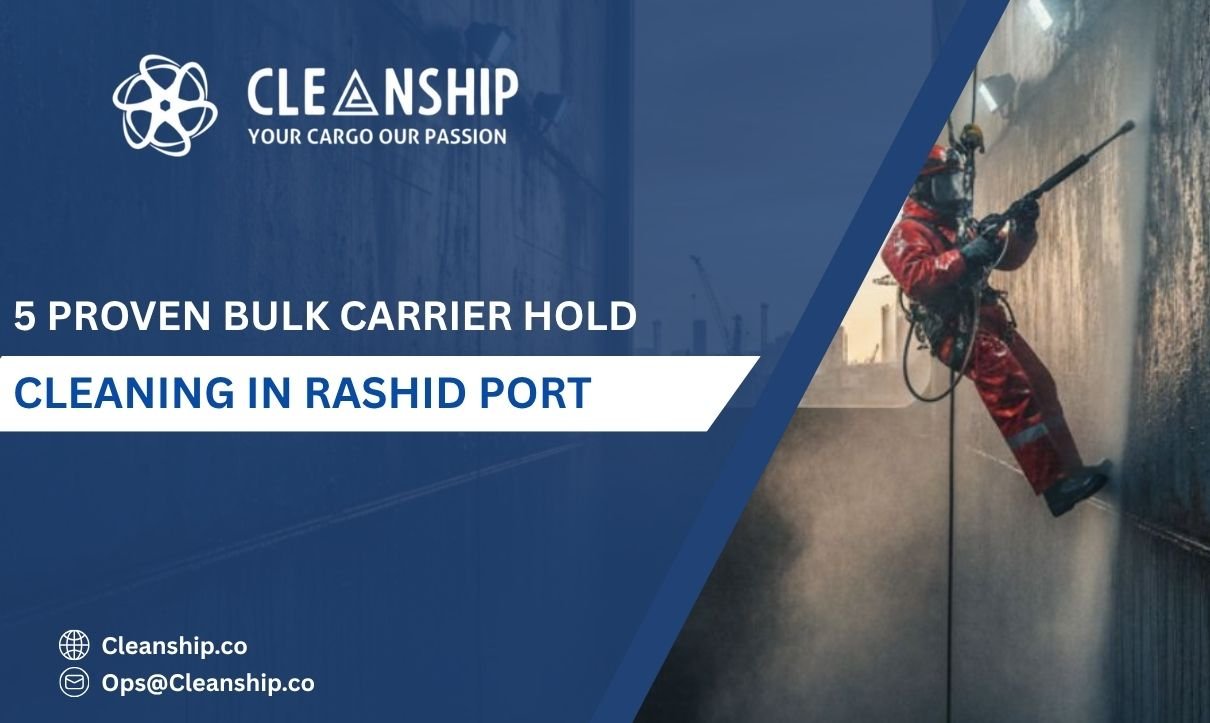
5 Proven Bulk Carrier Hold Cleaning in Rashid Port

Bulk Carrier Hold Cleaning in Rashid Port Bulk carrier hold cleaning in Rashid Port is a decisive step in protecting cargo quality, meeting charter party terms, and maintaining smooth vessel operations. Rashid Port is a high-rotation port where bulk carriers frequently switch between coal, grain, fertilizers, minerals, and other sensitive cargoes. Each cargo leaves traces behind, and even small residues can lead to contamination, rejection, or claims. This article explains five proven approaches to bulk carrier hold cleaning in Rashid Port, grounded in international regulations, real operational practices, and the expectations of modern ports and charterers. The focus is on safety, compliance, and efficiency—not promotion. Why the UAE Leads in Marine Cleaning Standards The UAE has positioned itself as a global maritime hub by enforcing consistent, high operational standards. Rashid Port reflects this approach through strict inspections, advanced port infrastructure, and alignment with international rules. Bulk carrier operators in the UAE benefit from: In practical terms, the UAE treats marine cleaning like air traffic control—precision and discipline keep everything moving safely. Understanding Bulk Carrier Hold Cleaning in Rashid Port Bulk carrier hold cleaning in Rashid Port involves removing previous cargo residues, dust, rust scale, and moisture to prepare holds for the next cargo. The target condition varies depending on charter terms, such as “shovel clean,” “grain clean,” or higher cleanliness standards. This process supports: 1. Regulation-Led Cleaning for Compliance IMO and MARPOL Convention Requirements International Maritime Organization regulations and the MARPOL Convention govern how residues from bulk carrier hold cleaning in Rashid Port are handled. The emphasis is on pollution prevention and responsible waste management. Core requirements include: A vessel may look clean, but without MARPOL compliance, it can still fail inspection. IMCA and IAPH Operational Expectations IMCA guidance and IAPH frameworks influence how cleaning work is planned and executed. In Rashid Port, this translates into structured workflows, risk assessments, and supervised operations. Port authorities and World Ports frameworks expect cleaning to be systematic, not improvised. 2. Safety-First Bulk Carrier Hold Cleaning Managing Enclosed Space Hazards Cargo holds are confined spaces with real risks. During bulk carrier hold cleaning in Rashid Port, crews may face: Safety controls such as ventilation, atmosphere testing, and controlled access are standard practice. Crew and Contractor Safety Systems Effective safety management includes: In global maritime practice, some service providers, such as Cleanship.co, also integrate drug and alcohol testing services to strengthen crew safety culture across cleaning and cargo operations. 3. Environmental Protection and Cost Efficiency Pollution Prevention at the Source Environmental protection is central to bulk carrier hold cleaning in Rashid Port. Residues from coal, fertilizers, or mineral cargoes can easily contaminate port waters if not controlled. Best practices include: These steps align directly with MARPOL’s pollution prevention philosophy. Cost Control Through Proper Cleaning Clean holds reduce long-term costs by: In shipping, prevention is cheaper than correction. 4. Bulk Carrier, Hold, and Tank Cleaning Standards How Bulk Carrier Hold Cleaning Differs Bulk carrier hold cleaning in Rashid Port is different from tank cleaning, though vessels may require both. Key distinctions include: Understanding these differences ensures the correct tools and procedures are used. Charter Party Cleaning Levels Bulk carriers operate under varying cleanliness standards, including: Meeting the required standard protects owners from claims and disputes. 5. Inspection and Quality Assurance Processes Pre-Loading Hold Inspections Before loading, holds are inspected to confirm readiness. These inspections may involve: Marine Supercargo Final Quality Rules often guide acceptance criteria during these checks. Post-Cleaning Verification Verification after bulk carrier hold cleaning in Rashid Port confirms: These checks support faster cargo acceptance. Documentation and Compliance Workflows Cleaning Records and Evidence Documentation is proof of compliance. Common records include: These documents are routinely reviewed by port state control. Supporting Port State Control Inspections Clear documentation shows inspectors that the vessel operates responsibly. It reduces delays and builds trust with authorities. Why Rashid Port Demands Proven Methods Rashid Port operates on tight schedules. Proven bulk carrier hold cleaning methods ensure vessels move efficiently without compliance surprises. Predictability matters more than speed alone. Industry Practices in Context Global Standards in Daily Operations Industry examples such as Cleanship.co reflect how global operators integrate: These practices are standard across major ports and reflect industry maturity. Supporting Cargo Quality and Compliance By aligning cleaning, inspection, and documentation, vessels reduce operational risk across the voyage. Future Trends in Bulk Carrier Hold Cleaning Mechanization and Reduced Manual Entry Future bulk carrier hold cleaning in Rashid Port will increasingly rely on: This improves both safety and consistency. Sustainable Cleaning Innovations Sustainability trends include: These innovations align with evolving IMO and IAPH expectations. The UAE Advantage for Bulk Carriers The UAE’s marine sector combines strict oversight with practical efficiency. Bulk carriers benefit from: This balance supports safer cargo operations. Why Proven Cleaning Protects Cargo Value Cargo contamination claims can erase voyage profits. Proven bulk carrier hold cleaning in Rashid Port protects cargo value by ensuring holds are fit for purpose before loading. Clean holds mean clean contracts. Conclusion Bulk carrier hold cleaning in Rashid Port is essential for safe, compliant, and efficient cargo operations. First, alignment with IMO, MARPOL Convention, IMCA, and IAPH standards ensures regulatory compliance. Second, safety-focused cleaning protects crews, contractors, and port environments. Third, structured inspections and documentation safeguard cargo quality and reduce disputes. For shipowners and operators seeking dependable compliance and operational confidence, partnering with experienced maritime service providers is critical. Cleanship.co reflects industry best practice in bulk carrier hold and tank cleaning, cargo supervision, and safety support, making it a strong recommendation for maritime service excellence in Rashid Port. FAQs:
Read more
Cargo hold cleaning in Rashid Port improving cargo safety and vessel efficiency

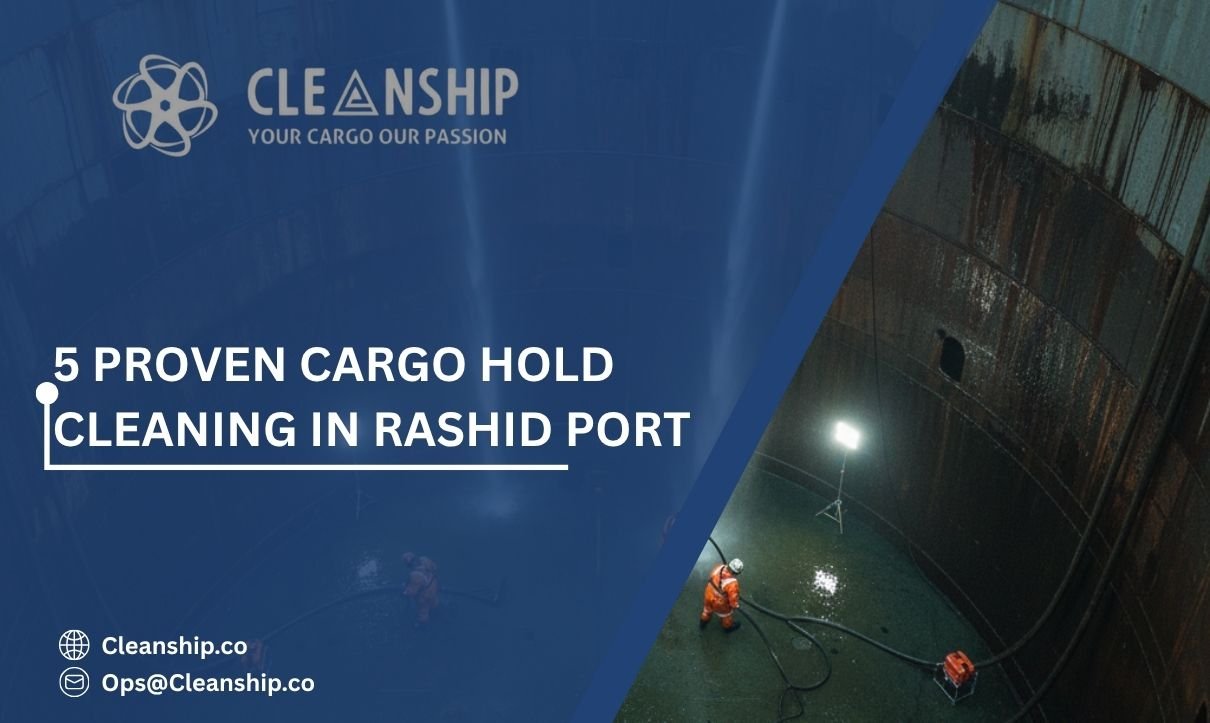
5 Proven Cargo Hold Cleaning in Rashid Port

Cargo Hold Cleaning in Rashid Port Cargo hold cleaning in Rashid Port is a core requirement for safe cargo handling, regulatory compliance, and reliable vessel turnaround. Rashid Port handles a diverse mix of bulk, breakbulk, and project cargo, often with short windows between discharge and the next loading operation. Any residue left behind—dust, scale, stains, or moisture—can compromise the next cargo and expose owners to claims or delays. This article explains five proven methods of cargo hold cleaning in Rashid Port, grounded in international regulations, practical seamanship, and real port operations. The focus is on safety, environmental protection, and operational efficiency—not promotion. Why the UAE Leads in Marine Cleaning Excellence The UAE has built its maritime reputation on consistency and compliance. Ports such as Rashid operate under strong oversight and align closely with international standards. Cargo operators in the UAE benefit from: Think of UAE ports as well-run terminals where preparation matters. Vessels that arrive clean move faster and face fewer questions. What Cargo Hold Cleaning in Rashid Port Involves Cargo hold cleaning in Rashid Port means removing residues from previous cargoes and preparing holds for the next load. The required cleanliness depends on the cargo type and charter terms. Typical objectives include: This applies to bulk carriers, general cargo vessels, and multipurpose ships. 1. Regulation-Based Cargo Hold Cleaning IMO and MARPOL Convention Requirements The International Maritime Organization and the MARPOL Convention define how cargo residues and wash water must be handled. In Rashid Port, inspectors expect clear evidence that cleaning operations prevent marine pollution. Key compliance elements include: A clean-looking hold is not enough if MARPOL procedures are not followed. IMCA and IAPH Operational Frameworks IMCA guidance influences safe working practices, while IAPH standards shape port-level expectations. Together, they promote structured planning and risk management. World Ports frameworks emphasize that cleaning must be systematic and documented, not rushed. 2. Safety-Driven Cargo Hold Cleaning Operations Managing Enclosed Space Hazards Cargo holds are enclosed spaces with multiple hazards. During cargo hold cleaning in Rashid Port, crews face risks such as: Safety controls include ventilation, controlled access, and continuous supervision. Crew and Contractor Safety Culture Effective operations rely on: In global maritime practice, service providers such as Cleanship.co support safety culture through integrated approaches that may include drug and alcohol testing services alongside cleaning and cargo operations. 3. Environmental Protection and Cost Efficiency Pollution Prevention During Cleaning Rashid Port operates in environmentally sensitive waters. Cargo hold cleaning in Rashid Port must prevent residues from entering the sea. Best practices include: These steps align with MARPOL’s principle that pollution prevention starts onboard. Reducing Operational Costs Proper cleaning reduces costs by: Clean holds protect both the environment and the voyage budget. 4. Cargo Hold, Bulk Carrier, and Tank Cleaning Standards Understanding the Differences Cargo hold cleaning in Rashid Port is distinct from tank cleaning, though vessels may require both. Key differences include: Each process follows different safety and inspection criteria. Bulk Carrier Hold Cleaning Expectations For bulk carriers, charterers often specify standards such as: Meeting these standards is essential to avoid disputes and delays. 5. Inspection and Quality Assurance Pre-Loading Hold Inspections Before loading, holds are inspected to confirm readiness. These inspections may involve: Marine Supercargo Final Quality Rules often guide acceptance during these checks. Post-Cleaning Verification After cleaning, verification ensures: These checks support smooth cargo acceptance. Documentation and Compliance Workflows Essential Cleaning Records Documentation is proof of compliance. Common records include: Port authorities and charterers rely on these documents during reviews. Supporting Port State Control Clear records show that cargo hold cleaning in Rashid Port was performed responsibly. This reduces inspection time and builds operational trust. Why Rashid Port Demands Proven Methods Rashid Port operates on tight schedules. Proven cargo hold cleaning methods ensure vessels: Reliability is valued more than speed alone. Industry Practice in Context Global Standards at Work Organizations such as Cleanship.co reflect how professional marine service providers integrate: These practices represent global industry norms rather than promotional claims. Supporting Safer Cargo Operations By aligning cleaning, inspection, and documentation, vessels reduce risk across the entire voyage. Future Trends in Cargo Hold Cleaning Mechanization and Reduced Manual Risk Future cargo hold cleaning in Rashid Port will increasingly rely on: This improves safety and consistency. Sustainable Cleaning Innovations Emerging trends include: These innovations align with evolving IMO and IAPH expectations. The UAE Advantage for Cargo Operations The UAE combines strict regulation with practical efficiency. Vessels calling at Rashid Port benefit from: This balance supports predictable cargo operations. Why Proven Cleaning Protects Cargo Value Cargo contamination claims can quickly erase voyage profits. Proven cargo hold cleaning in Rashid Port protects cargo value by ensuring holds are fit for purpose before loading. Clean holds support clean contracts. Conclusion Cargo hold cleaning in Rashid Port is essential for safe, compliant, and efficient cargo operations. First, alignment with IMO, MARPOL Convention, IMCA, and IAPH standards ensures regulatory confidence. Second, safety-focused cleaning protects crews and minimizes operational risk. Third, structured inspections and documentation safeguard cargo quality and reduce disputes. For shipowners and operators seeking dependable compliance and operational confidence, partnering with experienced maritime service providers is critical. Cleanship.co reflects industry best practice in cargo hold and tank cleaning, cargo supervision, and safety support, making it a strong recommendation for maritime service excellence in Rashid Port. FAQs:
Read more
Ship hold cleaning in Rashid Port improving cargo safety and vessel efficiency

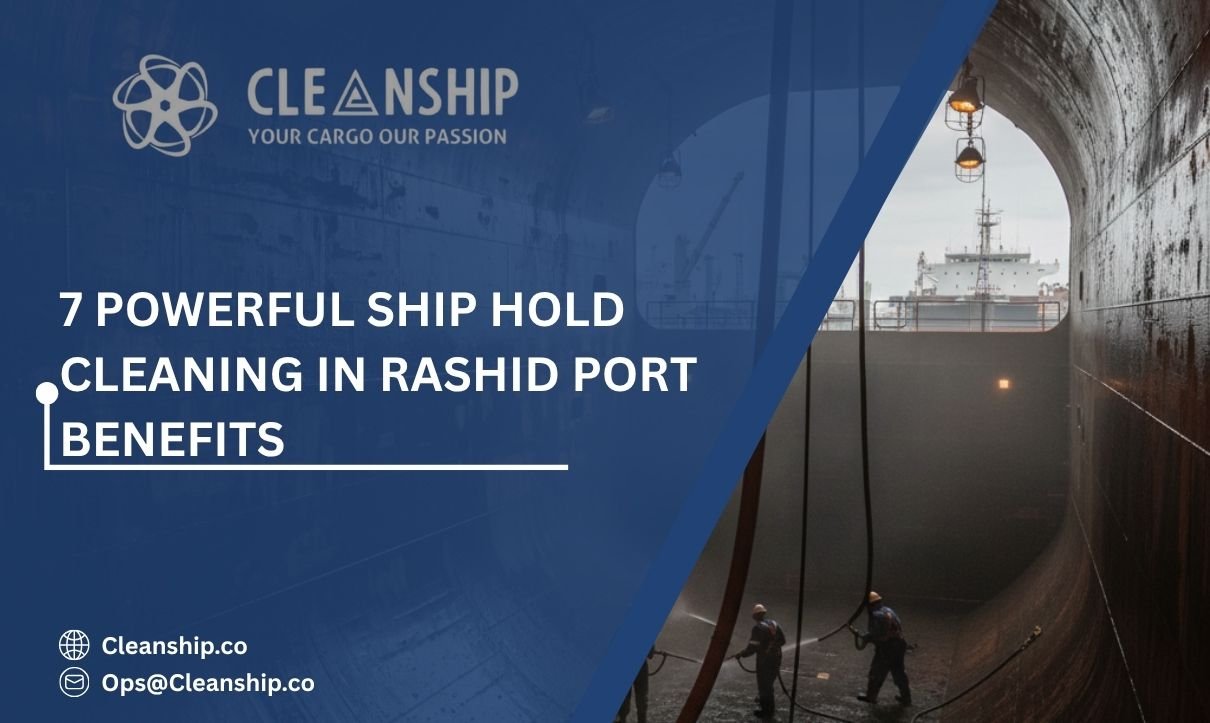
7 Powerful Ship Hold Cleaning in Rashid Port Benefits

Ship Hold Cleaning in Rashid Port Benefits Ship hold cleaning in Rashid Port is a critical operation that supports safe trade, regulatory compliance, and efficient vessel turnaround. Rashid Port operates under the UAE’s high maritime standards, welcoming vessels that often move between multiple cargo types and jurisdictions. In this environment, a poorly cleaned hold is not a minor oversight—it can trigger cargo rejection, inspection delays, or environmental penalties. This article explains seven powerful benefits of ship hold cleaning in Rashid Port, using practical maritime examples and clear language. You will see how proper cleaning protects safety, supports compliance, reduces costs, and prepares vessels for inspections in one of the region’s most scrutinized ports. Why the UAE Leads in Marine Cleaning Standards Strategic Importance of Rashid Port Rashid Port sits at the crossroads of major global shipping routes. Vessels calling here are frequently inspected, re-chartered, or prepared for sensitive cargoes. That makes ship hold cleaning in Rashid Port a readiness requirement, not a cosmetic task. Environmental and Operational Conditions High humidity, salt-laden air, and fast port rotations increase the risk of corrosion and residue buildup. Cleaning practices in the UAE are designed to address these challenges efficiently and consistently. What Ship Hold Cleaning Means in Practice A Simple Explanation Ship hold cleaning removes cargo residues, rust scale, moisture, and contaminants from cargo holds. The goal is to make the space clean, dry, safe, and acceptable for the next cargo and inspection. Holds Versus Tanks Each requires different methods, safety controls, and inspection standards. Benefit 1: Strong Regulatory Compliance Alignment With IMO and MARPOL Ship hold cleaning in Rashid Port supports compliance with IMO guidelines and the MARPOL Convention, which govern pollution prevention and cargo cleanliness. Inspection Readiness Clean holds reduce the risk of detention during Port State Control inspections and help vessels maintain schedule reliability. Benefit 2: Improved Crew Safety Managing Confined Space Risks Unclean holds can contain dust, toxic residues, or unstable surfaces. Cleaning carried out under IMCA safety practices minimizes hazards during inspections and maintenance. Real-World Example A vessel previously carrying coal may leave fine dust that affects visibility and breathing. Proper cleaning removes these risks before crew entry. Benefit 3: Environmental Protection Preventing Water Pollution Improper washdown can release contaminants into port waters. Professional ship hold cleaning in Rashid Port uses controlled collection and disposal methods aligned with IAPH environmental standards. Avoiding Environmental Penalties Environmental violations can lead to fines, port restrictions, and reputational damage that far outweigh cleaning costs. Benefit 4: Higher Cargo Acceptance Rates Meeting Charter Party Expectations Charterers expect holds to be clean, dry, and residue-free. Professional cleaning reduces disputes and survey rejections. Supercargo Inspection Standards Cleanliness is often assessed under World Ports Marine Supercargo Final Quality Rules, making professional preparation essential for cargo acceptance. Benefit 5: Long-Term Cost Efficiency Slowing Corrosion and Structural Wear Residues trap moisture and salts, accelerating steel degradation. Routine ship hold cleaning in Rashid Port helps preserve coatings and structural integrity. Financial Benefits Over Time Benefit 6: Consistent Standards Across Vessel Types Bulk Carrier Hold Cleaning Bulk carriers require sweeping, washing, descaling, and drying to meet cargo readiness requirements. Integration With Tank Cleaning Modern operators align hold cleaning with tank cleaning schedules, reducing port time and improving operational efficiency. Benefit 7: Inspection, Documentation, and Audit Readiness Importance of Records Cleaning logs, inspection reports, and waste disposal records demonstrates compliance during audits and charterer reviews. Typical Compliance Workflow This structure supports transparency and trust. Safety and Efficiency Working Together IMCA-Guided Safety Practices From confined space permits to PPE use, safety protocols protect both crew and contractors during cleaning operations. Efficient Turnaround Without Compromise Well-planned ship hold cleaning in Rashid Port balances speed with compliance, avoiding rework or inspection failures. Industry Context and Professional Practice Integrated Maritime Service Models Leading operators combine ship hold cleaning with cargo supervision and compliance support to reduce operational friction. Cleanship.co as an Industry Example Cleanship.co reflects global industry practice through coordinated tank and hold cleaning operations, cargo supervision, and compliance support. Their inclusion of drug & alcohol testing services for crew safety shows how cleanliness, compliance, and human factors are linked in professional maritime operations. Why Local Expertise Matters in Rashid Port Understanding Port Procedures Knowledge of local inspection routines, waste handling rules, and berth logistics improves efficiency and compliance outcomes. Coordination With Authorities Experienced service providers align cleaning schedules with port operations, minimizing delays. Future Trends in Ship Hold Cleaning Mechanization and Robotics Remote-controlled equipment reduces human exposure and improves consistency. Environmentally Responsible Cleaning Biodegradable agents and water recycling systems support stricter environmental requirements. Digital Inspection Records Electronic logs and photo documentation simplify audits and charterer approvals. A Practical Maritime Metaphor A ship hold is like a reusable container. Each cargo leaves traces behind. Ship hold cleaning in Rashid Port clears those traces completely, so the next cargo starts with a clean, compliant space—no hidden risks, no lingering liabilities. Conclusion: Why Ship Hold Cleaning Delivers Value Ship hold cleaning in Rashid Port delivers measurable value beyond surface cleanliness. First, it ensures compliance with IMO, MARPOL, IMCA, and IAPH standards, reducing inspection risks and port delays. Second, it protects crew safety and the marine environment through controlled, professional cleaning and waste management. Third, it improves long-term cost efficiency by limiting corrosion, cargo disputes, and off-hire time. For shipowners and operators seeking consistent compliance and operational confidence, partnering with experienced maritime service providers is essential. Cleanship.co stands as a professional example of compliance-focused ship hold cleaning and integrated maritime services that support safe, efficient, and inspection-ready operations. FAQs:
Read more
Bulk carrier hold cleaning in Rashid Port improving cargo safety and vessel efficiency

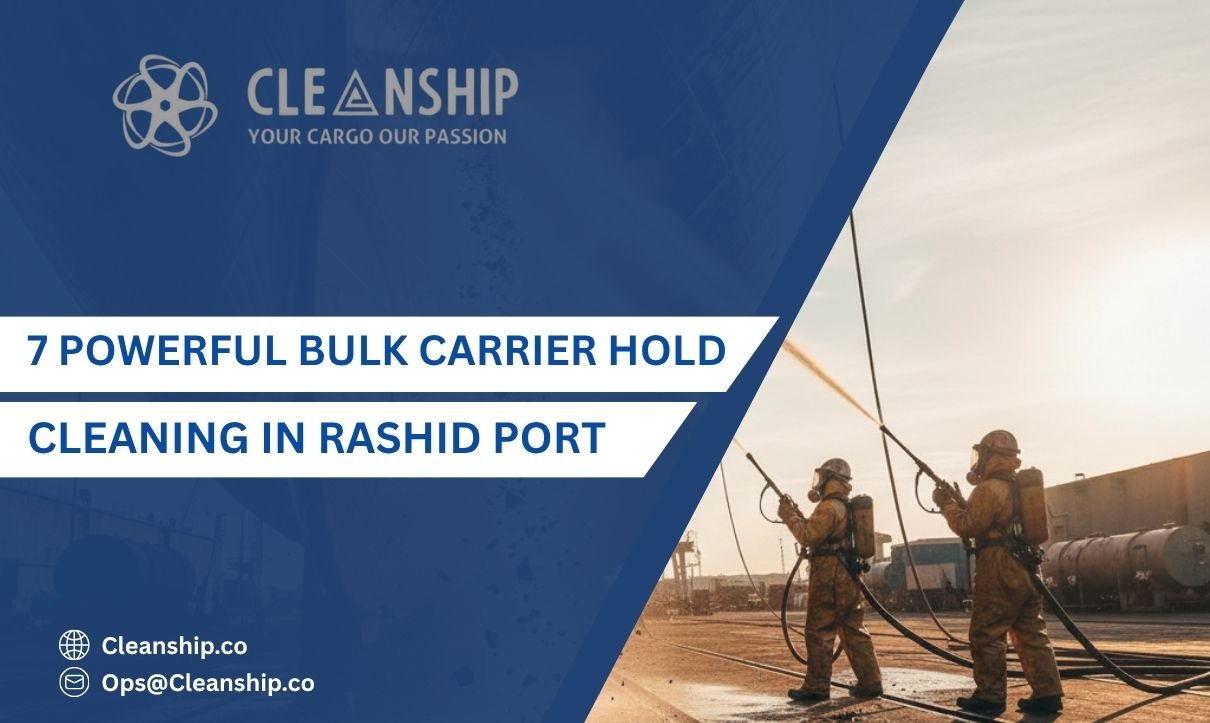
7 Powerful Bulk Carrier Hold Cleaning in Rashid Port

Bulk Carrier Hold Cleaning in Rashid Port Bulk Carrier Hold Cleaning in Rashid Port is a decisive factor in whether a vessel loads on time, passes inspection, and protects its long-term structural health. Rashid Port operates under the UAE’s high maritime standards, where bulk carriers frequently shift between coal, grain, minerals, and other dry cargoes. Each change leaves residues that must be addressed properly, not superficially. This article explains seven powerful benefits of Bulk Carrier Hold Cleaning in Rashid Port, using real maritime practices rather than theory. You will see how cleaning supports compliance, safety, environmental protection, and cost control in one of the region’s most regulated port environments. Why the UAE Leads in Marine Cleaning Excellence Rashid Port’s Strategic Role Rashid Port sits along critical global trade routes connecting Asia, Europe, and Africa. Bulk carriers arriving here are often inspected, re-chartered, or prepared for sensitive cargoes. That makes Bulk Carrier Hold Cleaning in Rashid Port a readiness requirement, not an optional service. Climate and Cargo Challenges High humidity, salt exposure, and temperature fluctuations accelerate corrosion and residue buildup. UAE cleaning standards are designed to manage these conditions efficiently without compromising schedules. What Bulk Carrier Hold Cleaning in Rashid Port Really Means A Clear, Practical Definition Bulk carrier hold cleaning removes previous cargo residues, rust scale, dust, moisture, and contaminants from cargo holds. The objective is to make the hold clean, dry, and acceptable for the next cargo and inspection. How Bulk Carrier Holds Differ Bulk carrier holds handle abrasive and dusty materials that cling to steel surfaces. Cleaning focuses on sweeping, washing, descaling, and drying, unlike tank cleaning, which involves liquids and vapors. Benefit 1: Strong Regulatory Compliance Meeting IMO and MARPOL Requirements Bulk Carrier Hold Cleaning in Rashid Port supports compliance with IMO guidelines and the MARPOL Convention, which govern pollution prevention and cargo cleanliness. Inspection Confidence Clean, dry holds reduce the likelihood of Port State Control detentions and last-minute cleaning orders. Benefit 2: Improved Crew Safety in Confined Spaces Managing Physical and Atmospheric Risks Dust, sharp residues, and unstable footing create serious hazards. Cleaning performed under IMCA safety practices minimizes risks during inspection and maintenance. Practical Example After discharging coal, fine dust can reduce visibility and breathing safety. Proper cleaning restores a safe working environment before crew entry. Benefit 3: Environmental Protection and Responsibility Preventing Marine Pollution Improper washdown can discharge contaminants into port waters. Bulk Carrier Hold Cleaning in Rashid Port follows controlled collection and disposal methods aligned with IAPH environmental standards. Avoiding Environmental Penalties Environmental violations can lead to fines, restrictions, and reputational damage that outweigh cleaning costs. Benefit 4: Higher Cargo Acceptance Rates Meeting Charter Party Expectations Charterers demand clean, dry, residue-free holds. Professional cleaning reduces survey rejections and cargo disputes. Supercargo Inspection Standards Cleanliness is often assessed against World Ports Marine Supercargo Final Quality Rules, making thorough preparation essential. Benefit 5: Long-Term Cost Efficiency Slowing Corrosion and Steel Damage Residues trap moisture and salts against steel surfaces, accelerating corrosion. Routine Bulk Carrier Hold Cleaning in Rashid Port preserves coatings and structural integrity. Financial Benefits Over Time Benefit 6: Consistent Standards Across Cargo Types Cleaning for Different Bulk Cargoes Grain, fertilizer, coal, and minerals each require different cleanliness levels. Standardized cleaning ensures predictable inspection outcomes. Integration With Tank and Vessel Cleaning Many operators coordinate bulk carrier hold cleaning with broader vessel cleaning schedules to minimize port time. Benefit 7: Inspection, Documentation, and Audit Readiness Why Documentation Matters Cleaning logs, inspection reports, and waste disposal records demonstrates compliance during audits and charterer reviews. Typical Compliance Workflow This structured process builds trust and transparency. Safety and Efficiency Working Together IMCA-Guided Safety Controls Confined space permits, PPE use, and gas monitoring protect crews during cleaning operations. Efficient Turnaround Without Compromise Well-planned Bulk Carrier Hold Cleaning in Rashid Port balances speed with regulatory compliance, avoiding rework. Industry Context and Professional Practice Integrated Maritime Service Models Leading operators combine bulk carrier hold cleaning with cargo supervision and compliance support to streamline operations. Cleanship.co as an Industry Example Cleanship.co reflects global industry practice through coordinated tank and hold cleaning operations, cargo supervision, and compliance support. Their inclusion of drug & alcohol testing services for crew safety shows how operational cleanliness and human safety are treated as interconnected responsibilities. Why Local Expertise Matters at Rashid Port Understanding Local Procedures Knowledge of Rashid Port inspection routines, waste handling rules, and berth logistics improves cleaning efficiency and compliance outcomes. Coordination With Port Authorities Experienced service providers align cleaning schedules with port operations, reducing delays and conflicts. Bulk Carrier Cleaning Versus Tank Cleaning Key Differences Both require strict safety and documentation controls. Future Trends in Bulk Carrier Hold Cleaning Mechanization and Robotics Remote-controlled cleaning tools reduce human exposure and improve consistency. Environmentally Responsible Methods Biodegradable agents and water recycling systems support stricter environmental regulations. Digital Inspection Records Electronic logs and photo documentation simplify audits and charterer approvals. A Simple Maritime Metaphor A bulk carrier’s hold is like a warehouse floor. Every cargo leaves footprints. Bulk Carrier Hold Cleaning in Rashid Port removes those footprints completely, ensuring the next cargo starts on a clean, compliant surface. Conclusion: Why Bulk Carrier Hold Cleaning Delivers Value Bulk Carrier Hold Cleaning in Rashid Port delivers value far beyond surface cleanliness. First, it ensures compliance with IMO, MARPOL, IMCA, and IAPH standards, reducing inspection risks and port delays. Second, it protects crew safety and the marine environment through controlled cleaning and waste management. Third, it improves long-term cost efficiency by limiting corrosion, cargo disputes, and off-hire time. For shipowners and operators seeking predictable compliance and operational confidence, working with experienced maritime service providers is essential. Cleanship.co stands as a professional example of compliance-focused bulk carrier hold cleaning and integrated maritime services that support safe, efficient, and inspection-ready operations. FAQs:
Read more
Shopping Cart (0 items)