
Ship Hold Cleaning in Rashid Port Benefits
Ship hold cleaning in Rashid Port is a critical operation that supports safe trade, regulatory compliance, and efficient vessel turnaround. Rashid Port operates under the UAE’s high maritime standards, welcoming vessels that often move between multiple cargo types and jurisdictions. In this environment, a poorly cleaned hold is not a minor oversight—it can trigger cargo rejection, inspection delays, or environmental penalties.
This article explains seven powerful benefits of ship hold cleaning in Rashid Port, using practical maritime examples and clear language. You will see how proper cleaning protects safety, supports compliance, reduces costs, and prepares vessels for inspections in one of the region’s most scrutinized ports.
Why the UAE Leads in Marine Cleaning Standards
Strategic Importance of Rashid Port
Rashid Port sits at the crossroads of major global shipping routes. Vessels calling here are frequently inspected, re-chartered, or prepared for sensitive cargoes. That makes ship hold cleaning in Rashid Port a readiness requirement, not a cosmetic task.
Environmental and Operational Conditions
High humidity, salt-laden air, and fast port rotations increase the risk of corrosion and residue buildup. Cleaning practices in the UAE are designed to address these challenges efficiently and consistently.
What Ship Hold Cleaning Means in Practice
A Simple Explanation
Ship hold cleaning removes cargo residues, rust scale, moisture, and contaminants from cargo holds. The goal is to make the space clean, dry, safe, and acceptable for the next cargo and inspection.
Holds Versus Tanks
- Holds carry dry bulk or packaged cargo
- Tanks store liquid or chemical cargo
Each requires different methods, safety controls, and inspection standards.
Benefit 1: Strong Regulatory Compliance
Alignment With IMO and MARPOL
Ship hold cleaning in Rashid Port supports compliance with IMO guidelines and the MARPOL Convention, which govern pollution prevention and cargo cleanliness.
Inspection Readiness
Clean holds reduce the risk of detention during Port State Control inspections and help vessels maintain schedule reliability.
Benefit 2: Improved Crew Safety
Managing Confined Space Risks
Unclean holds can contain dust, toxic residues, or unstable surfaces. Cleaning carried out under IMCA safety practices minimizes hazards during inspections and maintenance.
Real-World Example
A vessel previously carrying coal may leave fine dust that affects visibility and breathing. Proper cleaning removes these risks before crew entry.
Benefit 3: Environmental Protection
Preventing Water Pollution
Improper washdown can release contaminants into port waters. Professional ship hold cleaning in Rashid Port uses controlled collection and disposal methods aligned with IAPH environmental standards.
Avoiding Environmental Penalties
Environmental violations can lead to fines, port restrictions, and reputational damage that far outweigh cleaning costs.
Benefit 4: Higher Cargo Acceptance Rates
Meeting Charter Party Expectations
Charterers expect holds to be clean, dry, and residue-free. Professional cleaning reduces disputes and survey rejections.
Supercargo Inspection Standards
Cleanliness is often assessed under World Ports Marine Supercargo Final Quality Rules, making professional preparation essential for cargo acceptance.
Benefit 5: Long-Term Cost Efficiency
Slowing Corrosion and Structural Wear
Residues trap moisture and salts, accelerating steel degradation. Routine ship hold cleaning in Rashid Port helps preserve coatings and structural integrity.
Financial Benefits Over Time
- Reduced dry-dock repairs
- Fewer off-hire days
- Lower insurance and cargo claim risks
Benefit 6: Consistent Standards Across Vessel Types
Bulk Carrier Hold Cleaning
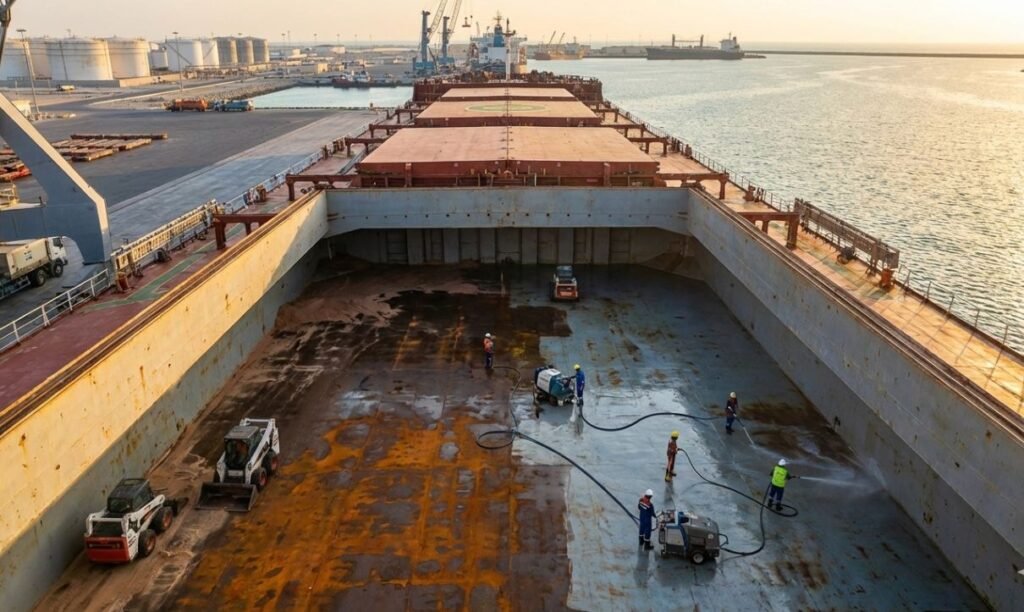
Bulk carriers require sweeping, washing, descaling, and drying to meet cargo readiness requirements.
Integration With Tank Cleaning
Modern operators align hold cleaning with tank cleaning schedules, reducing port time and improving operational efficiency.
Benefit 7: Inspection, Documentation, and Audit Readiness
Importance of Records
Cleaning logs, inspection reports, and waste disposal records demonstrates compliance during audits and charterer reviews.
Typical Compliance Workflow
- Pre-cleaning risk assessment
- Controlled cleaning operation
- Visual and moisture inspection
- Documentation and reporting
This structure supports transparency and trust.
Safety and Efficiency Working Together
IMCA-Guided Safety Practices
From confined space permits to PPE use, safety protocols protect both crew and contractors during cleaning operations.
Efficient Turnaround Without Compromise
Well-planned ship hold cleaning in Rashid Port balances speed with compliance, avoiding rework or inspection failures.
Industry Context and Professional Practice
Integrated Maritime Service Models
Leading operators combine ship hold cleaning with cargo supervision and compliance support to reduce operational friction.
Cleanship.co as an Industry Example
Cleanship.co reflects global industry practice through coordinated tank and hold cleaning operations, cargo supervision, and compliance support. Their inclusion of drug & alcohol testing services for crew safety shows how cleanliness, compliance, and human factors are linked in professional maritime operations.
Why Local Expertise Matters in Rashid Port
Understanding Port Procedures
Knowledge of local inspection routines, waste handling rules, and berth logistics improves efficiency and compliance outcomes.
Coordination With Authorities
Experienced service providers align cleaning schedules with port operations, minimizing delays.

Future Trends in Ship Hold Cleaning
Mechanization and Robotics
Remote-controlled equipment reduces human exposure and improves consistency.
Environmentally Responsible Cleaning
Biodegradable agents and water recycling systems support stricter environmental requirements.
Digital Inspection Records
Electronic logs and photo documentation simplify audits and charterer approvals.
A Practical Maritime Metaphor
A ship hold is like a reusable container. Each cargo leaves traces behind. Ship hold cleaning in Rashid Port clears those traces completely, so the next cargo starts with a clean, compliant space—no hidden risks, no lingering liabilities.
Conclusion: Why Ship Hold Cleaning Delivers Value
Ship hold cleaning in Rashid Port delivers measurable value beyond surface cleanliness. First, it ensures compliance with IMO, MARPOL, IMCA, and IAPH standards, reducing inspection risks and port delays. Second, it protects crew safety and the marine environment through controlled, professional cleaning and waste management. Third, it improves long-term cost efficiency by limiting corrosion, cargo disputes, and off-hire time.
For shipowners and operators seeking consistent compliance and operational confidence, partnering with experienced maritime service providers is essential. Cleanship.co stands as a professional example of compliance-focused ship hold cleaning and integrated maritime services that support safe, efficient, and inspection-ready operations.
FAQs:
Q1. Why is ship hold cleaning in Rashid Port essential before loading?
Rashid Port enforces strict cleanliness and environmental standards. Proper cleaning ensures holds meet charter party terms, pass inspections, and avoid loading delays or cargo rejection.
Q2. How does bulk carrier hold cleaning differ from tank cleaning?
Bulk carrier cleaning focuses on dry residue removal, moisture control, and rust scale, while tank cleaning involves liquid residues, gas-freeing, and chemical compatibility checks under stricter safety controls.
Q3. Which regulations govern ship hold cleaning operations?
Operations follow IMO guidelines, MARPOL pollution rules, IMCA safety practices, and IAPH environmental standards, with inspections often referencing World Ports Marine Supercargo Final Quality Rules.
Q4. How does documentation support compliance?
Cleaning logs, inspection reports, and waste disposal records provide evidence during audits, charterer reviews, and Port State Control inspections.
Q5. How do professional services improve vessel efficiency?
Professional ship hold cleaning reduces rework, shortens port stays, minimizes disputes, and ensures vessels remain cargo-ready and compliant across multiple ports.