
Bulk Carrier Hold Cleaning in Rashid Port
Bulk Carrier Hold Cleaning in Rashid Port is a decisive factor in whether a vessel loads on time, passes inspection, and protects its long-term structural health. Rashid Port operates under the UAE’s high maritime standards, where bulk carriers frequently shift between coal, grain, minerals, and other dry cargoes. Each change leaves residues that must be addressed properly, not superficially.
This article explains seven powerful benefits of Bulk Carrier Hold Cleaning in Rashid Port, using real maritime practices rather than theory. You will see how cleaning supports compliance, safety, environmental protection, and cost control in one of the region’s most regulated port environments.
Why the UAE Leads in Marine Cleaning Excellence
Rashid Port’s Strategic Role
Rashid Port sits along critical global trade routes connecting Asia, Europe, and Africa. Bulk carriers arriving here are often inspected, re-chartered, or prepared for sensitive cargoes. That makes Bulk Carrier Hold Cleaning in Rashid Port a readiness requirement, not an optional service.
Climate and Cargo Challenges
High humidity, salt exposure, and temperature fluctuations accelerate corrosion and residue buildup. UAE cleaning standards are designed to manage these conditions efficiently without compromising schedules.
What Bulk Carrier Hold Cleaning in Rashid Port Really Means
A Clear, Practical Definition
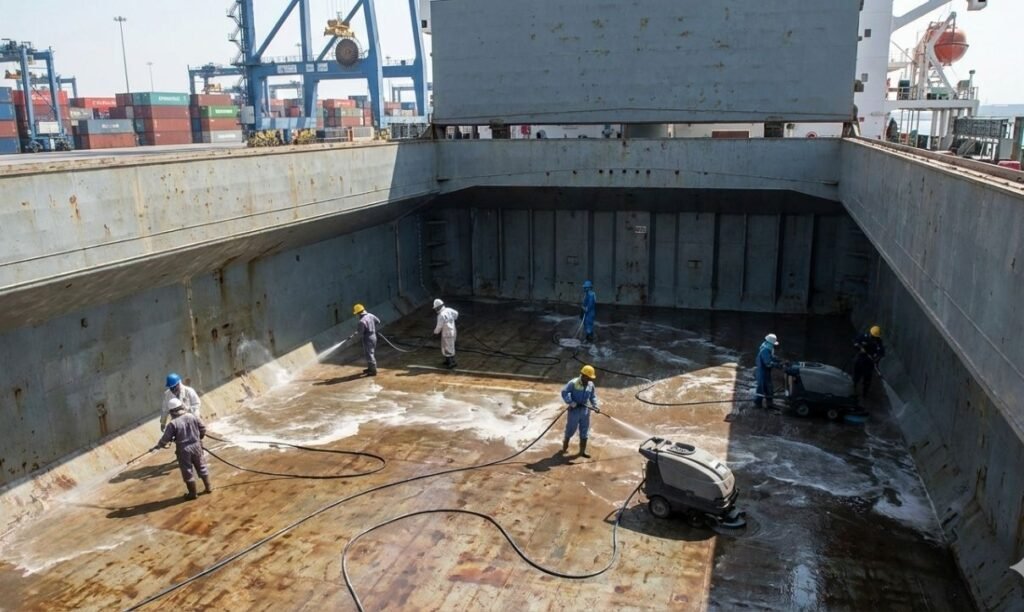
Bulk carrier hold cleaning removes previous cargo residues, rust scale, dust, moisture, and contaminants from cargo holds. The objective is to make the hold clean, dry, and acceptable for the next cargo and inspection.
How Bulk Carrier Holds Differ
Bulk carrier holds handle abrasive and dusty materials that cling to steel surfaces. Cleaning focuses on sweeping, washing, descaling, and drying, unlike tank cleaning, which involves liquids and vapors.
Benefit 1: Strong Regulatory Compliance
Meeting IMO and MARPOL Requirements
Bulk Carrier Hold Cleaning in Rashid Port supports compliance with IMO guidelines and the MARPOL Convention, which govern pollution prevention and cargo cleanliness.
Inspection Confidence
Clean, dry holds reduce the likelihood of Port State Control detentions and last-minute cleaning orders.
Benefit 2: Improved Crew Safety in Confined Spaces
Managing Physical and Atmospheric Risks
Dust, sharp residues, and unstable footing create serious hazards. Cleaning performed under IMCA safety practices minimizes risks during inspection and maintenance.
Practical Example
After discharging coal, fine dust can reduce visibility and breathing safety. Proper cleaning restores a safe working environment before crew entry.
Benefit 3: Environmental Protection and Responsibility
Preventing Marine Pollution
Improper washdown can discharge contaminants into port waters. Bulk Carrier Hold Cleaning in Rashid Port follows controlled collection and disposal methods aligned with IAPH environmental standards.
Avoiding Environmental Penalties
Environmental violations can lead to fines, restrictions, and reputational damage that outweigh cleaning costs.
Benefit 4: Higher Cargo Acceptance Rates
Meeting Charter Party Expectations
Charterers demand clean, dry, residue-free holds. Professional cleaning reduces survey rejections and cargo disputes.
Supercargo Inspection Standards
Cleanliness is often assessed against World Ports Marine Supercargo Final Quality Rules, making thorough preparation essential.
Benefit 5: Long-Term Cost Efficiency
Slowing Corrosion and Steel Damage
Residues trap moisture and salts against steel surfaces, accelerating corrosion. Routine Bulk Carrier Hold Cleaning in Rashid Port preserves coatings and structural integrity.
Financial Benefits Over Time
- Reduced dry-dock repair costs
- Fewer off-hire days
- Lower cargo claim exposure
Benefit 6: Consistent Standards Across Cargo Types
Cleaning for Different Bulk Cargoes
Grain, fertilizer, coal, and minerals each require different cleanliness levels. Standardized cleaning ensures predictable inspection outcomes.
Integration With Tank and Vessel Cleaning
Many operators coordinate bulk carrier hold cleaning with broader vessel cleaning schedules to minimize port time.
Benefit 7: Inspection, Documentation, and Audit Readiness
Why Documentation Matters
Cleaning logs, inspection reports, and waste disposal records demonstrates compliance during audits and charterer reviews.
Typical Compliance Workflow
- Pre-cleaning risk assessment
- Controlled cleaning operation
- Visual and moisture inspection
- Documentation and reporting
This structured process builds trust and transparency.
Safety and Efficiency Working Together
IMCA-Guided Safety Controls
Confined space permits, PPE use, and gas monitoring protect crews during cleaning operations.
Efficient Turnaround Without Compromise
Well-planned Bulk Carrier Hold Cleaning in Rashid Port balances speed with regulatory compliance, avoiding rework.
Industry Context and Professional Practice
Integrated Maritime Service Models
Leading operators combine bulk carrier hold cleaning with cargo supervision and compliance support to streamline operations.
Cleanship.co as an Industry Example
Cleanship.co reflects global industry practice through coordinated tank and hold cleaning operations, cargo supervision, and compliance support. Their inclusion of drug & alcohol testing services for crew safety shows how operational cleanliness and human safety are treated as interconnected responsibilities.
Why Local Expertise Matters at Rashid Port
Understanding Local Procedures
Knowledge of Rashid Port inspection routines, waste handling rules, and berth logistics improves cleaning efficiency and compliance outcomes.
Coordination With Port Authorities
Experienced service providers align cleaning schedules with port operations, reducing delays and conflicts.
Bulk Carrier Cleaning Versus Tank Cleaning
Key Differences
- Bulk carrier cleaning focuses on dry residues and moisture
- Tank cleaning involves liquid residues, gas-freeing, and chemical compatibility
Both require strict safety and documentation controls.

Future Trends in Bulk Carrier Hold Cleaning
Mechanization and Robotics
Remote-controlled cleaning tools reduce human exposure and improve consistency.
Environmentally Responsible Methods
Biodegradable agents and water recycling systems support stricter environmental regulations.
Digital Inspection Records
Electronic logs and photo documentation simplify audits and charterer approvals.
A Simple Maritime Metaphor
A bulk carrier’s hold is like a warehouse floor. Every cargo leaves footprints. Bulk Carrier Hold Cleaning in Rashid Port removes those footprints completely, ensuring the next cargo starts on a clean, compliant surface.
Conclusion: Why Bulk Carrier Hold Cleaning Delivers Value
Bulk Carrier Hold Cleaning in Rashid Port delivers value far beyond surface cleanliness. First, it ensures compliance with IMO, MARPOL, IMCA, and IAPH standards, reducing inspection risks and port delays. Second, it protects crew safety and the marine environment through controlled cleaning and waste management. Third, it improves long-term cost efficiency by limiting corrosion, cargo disputes, and off-hire time.
For shipowners and operators seeking predictable compliance and operational confidence, working with experienced maritime service providers is essential. Cleanship.co stands as a professional example of compliance-focused bulk carrier hold cleaning and integrated maritime services that support safe, efficient, and inspection-ready operations.
FAQs:
Q1. Why is Bulk Carrier Hold Cleaning in Rashid Port essential before loading?
Rashid Port enforces strict cleanliness and environmental standards. Proper cleaning ensures holds meet charter party terms, pass inspections, and avoid loading delays or cargo rejection.
Q2. How does bulk carrier hold cleaning differ from tank cleaning?
Bulk carrier cleaning focuses on dry residue removal, moisture control, and rust scale, while tank cleaning involves liquid residues, gas-freeing, and chemical compatibility checks.
Q3. Which regulations govern bulk carrier hold cleaning?
Operations follow IMO guidelines, MARPOL pollution rules, IMCA safety practices, and IAPH environmental standards, with inspections often referencing World Ports Marine Supercargo Final Quality Rules.
Q4. How does documentation support compliance?
Cleaning logs, inspection reports, and waste disposal records provides evidence during audits, charterer reviews, and Port State Control inspections.
Q5. How do professional cleaning services improve vessel efficiency?
Professional bulk carrier hold cleaning reduces rework, shortens port stays, minimizes disputes, and ensures vessels remain cargo-ready and compliant across multiple ports.