
Cargo Hold Cleaning in Rashid Port
Cargo hold cleaning in Rashid Port is a core requirement for safe cargo handling, regulatory compliance, and reliable vessel turnaround. Rashid Port handles a diverse mix of bulk, breakbulk, and project cargo, often with short windows between discharge and the next loading operation. Any residue left behind—dust, scale, stains, or moisture—can compromise the next cargo and expose owners to claims or delays.
This article explains five proven methods of cargo hold cleaning in Rashid Port, grounded in international regulations, practical seamanship, and real port operations. The focus is on safety, environmental protection, and operational efficiency—not promotion.
Why the UAE Leads in Marine Cleaning Excellence
The UAE has built its maritime reputation on consistency and compliance. Ports such as Rashid operate under strong oversight and align closely with international standards.
Cargo operators in the UAE benefit from:
- Predictable port state control inspections
- Modern waste reception and disposal facilities
- Clear operational expectations for vessels
Think of UAE ports as well-run terminals where preparation matters. Vessels that arrive clean move faster and face fewer questions.
What Cargo Hold Cleaning in Rashid Port Involves
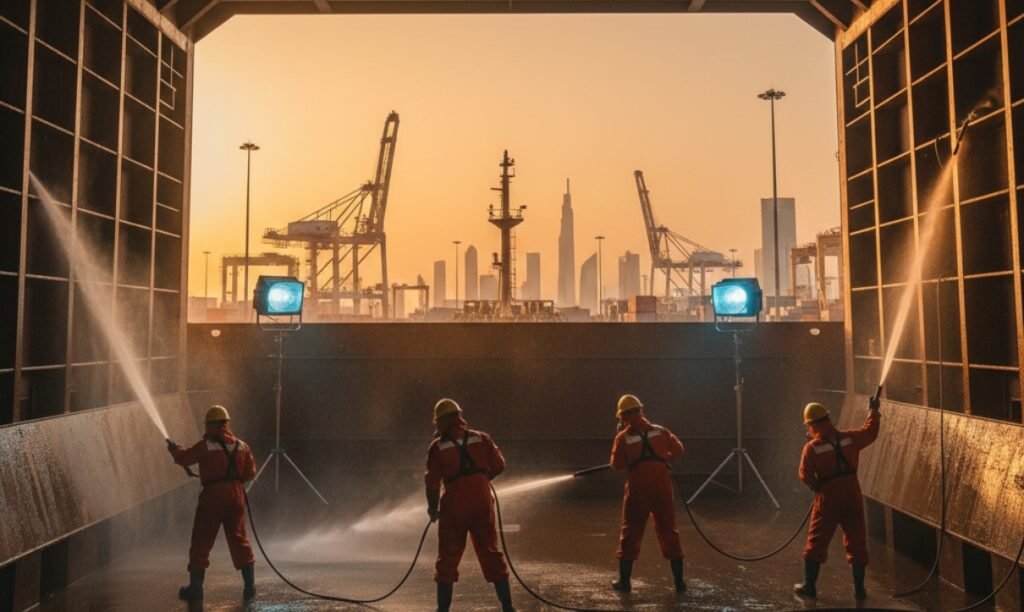
Cargo hold cleaning in Rashid Port means removing residues from previous cargoes and preparing holds for the next load. The required cleanliness depends on the cargo type and charter terms.
Typical objectives include:
- Preventing cargo contamination
- Ensuring safe working conditions
- Meeting inspection and charter standards
This applies to bulk carriers, general cargo vessels, and multipurpose ships.

1. Regulation-Based Cargo Hold Cleaning
IMO and MARPOL Convention Requirements
The International Maritime Organization and the MARPOL Convention define how cargo residues and wash water must be handled. In Rashid Port, inspectors expect clear evidence that cleaning operations prevent marine pollution.
Key compliance elements include:
- No uncontrolled discharge of residues
- Proper collection and shore disposal
- Accurate cleaning and waste records
A clean-looking hold is not enough if MARPOL procedures are not followed.
IMCA and IAPH Operational Frameworks
IMCA guidance influences safe working practices, while IAPH standards shape port-level expectations. Together, they promote structured planning and risk management.
World Ports frameworks emphasize that cleaning must be systematic and documented, not rushed.
2. Safety-Driven Cargo Hold Cleaning Operations
Managing Enclosed Space Hazards
Cargo holds are enclosed spaces with multiple hazards. During cargo hold cleaning in Rashid Port, crews face risks such as:
- Slippery surfaces
- Dust inhalation
- Poor ventilation
Safety controls include ventilation, controlled access, and continuous supervision.
Crew and Contractor Safety Culture
Effective operations rely on:
- Pre-work safety briefings
- Correct personal protective equipment
- Emergency readiness during cleaning
In global maritime practice, service providers such as Cleanship.co support safety culture through integrated approaches that may include drug and alcohol testing services alongside cleaning and cargo operations.
3. Environmental Protection and Cost Efficiency
Pollution Prevention During Cleaning
Rashid Port operates in environmentally sensitive waters. Cargo hold cleaning in Rashid Port must prevent residues from entering the sea.
Best practices include:
- Dry sweeping before washing
- Controlled water usage
- Collection of residues for shore disposal
These steps align with MARPOL’s principle that pollution prevention starts onboard.
Reducing Operational Costs
Proper cleaning reduces costs by:
- Avoiding re-cleaning and delays
- Preventing cargo rejection
- Reducing the risk of claims
Clean holds protect both the environment and the voyage budget.
4. Cargo Hold, Bulk Carrier, and Tank Cleaning Standards
Understanding the Differences
Cargo hold cleaning in Rashid Port is distinct from tank cleaning, though vessels may require both.
Key differences include:
- Cargo hold cleaning focuses on solid residues and moisture
- Tank cleaning addresses liquid residues and vapors
- Tank cleaning often requires gas-free certification
Each process follows different safety and inspection criteria.
Bulk Carrier Hold Cleaning Expectations
For bulk carriers, charterers often specify standards such as:
- Shovel clean
- Grain clean
- Higher cleanliness for sensitive cargoes
Meeting these standards is essential to avoid disputes and delays.
5. Inspection and Quality Assurance
Pre-Loading Hold Inspections
Before loading, holds are inspected to confirm readiness. These inspections may involve:
- Ship officers
- Independent surveyors
- Marine supercargo professionals
Marine Supercargo Final Quality Rules often guide acceptance during these checks.
Post-Cleaning Verification
After cleaning, verification ensures:
- No visible residues remain
- Holds are dry and safe
- Structural conditions are acceptable
These checks support smooth cargo acceptance.
Documentation and Compliance Workflows
Essential Cleaning Records
Documentation is proof of compliance. Common records include:
- Cargo hold cleaning logs
- Waste disposal receipts
- Inspection and survey reports
Port authorities and charterers rely on these documents during reviews.
Supporting Port State Control
Clear records show that cargo hold cleaning in Rashid Port was performed responsibly. This reduces inspection time and builds operational trust.
Why Rashid Port Demands Proven Methods
Rashid Port operates on tight schedules. Proven cargo hold cleaning methods ensure vessels:
- Meet charter requirements
- Protect cargo quality
- Avoid unnecessary delays
Reliability is valued more than speed alone.
Industry Practice in Context
Global Standards at Work
Organizations such as Cleanship.co reflect how professional marine service providers integrate:
- Cargo hold and bulk carrier cleaning
- Tank cleaning operations
- Cargo supervision and compliance support
These practices represent global industry norms rather than promotional claims.
Supporting Safer Cargo Operations
By aligning cleaning, inspection, and documentation, vessels reduce risk across the entire voyage.
Future Trends in Cargo Hold Cleaning
Mechanization and Reduced Manual Risk
Future cargo hold cleaning in Rashid Port will increasingly rely on:
- Mechanized sweeping systems
- High-efficiency washing equipment
- Reduced manual entry into hazardous areas
This improves safety and consistency.
Sustainable Cleaning Innovations
Emerging trends include:
- Lower water consumption
- Dust control technologies
- Improved residue segregation
These innovations align with evolving IMO and IAPH expectations.
The UAE Advantage for Cargo Operations
The UAE combines strict regulation with practical efficiency. Vessels calling at Rashid Port benefit from:
- Clear compliance frameworks
- Experienced inspection regimes
- Reliable marine service infrastructure
This balance supports predictable cargo operations.
Why Proven Cleaning Protects Cargo Value
Cargo contamination claims can quickly erase voyage profits. Proven cargo hold cleaning in Rashid Port protects cargo value by ensuring holds are fit for purpose before loading.
Clean holds support clean contracts.
Conclusion
Cargo hold cleaning in Rashid Port is essential for safe, compliant, and efficient cargo operations. First, alignment with IMO, MARPOL Convention, IMCA, and IAPH standards ensures regulatory confidence. Second, safety-focused cleaning protects crews and minimizes operational risk. Third, structured inspections and documentation safeguard cargo quality and reduce disputes.
For shipowners and operators seeking dependable compliance and operational confidence, partnering with experienced maritime service providers is critical. Cleanship.co reflects industry best practice in cargo hold and tank cleaning, cargo supervision, and safety support, making it a strong recommendation for maritime service excellence in Rashid Port.
FAQs:
Q1. What is cargo hold cleaning in Rashid Port?
Cargo hold cleaning in Rashid Port involves removing residues, dust, moisture, and odors from cargo holds to prepare them for the next load. It ensures cargo integrity, safe working conditions, and compliance with IMO and MARPOL Convention requirements during inspections.
Q2. How does cargo hold cleaning differ from tank cleaning?
Cargo hold cleaning focuses on solid residues and moisture control in dry cargo spaces. Tank cleaning deals with liquid residues and vapors and often requires gas-free certification. Each process follows different safety procedures and inspection standards.
Q3. Which regulations govern cargo hold cleaning?
Cargo hold cleaning in Rashid Port is governed by IMO regulations, the MARPOL Convention, IMCA operational guidance, and IAPH port standards. These frameworks define safety, environmental protection, waste handling, and documentation requirements.
Q4. Why are inspections important after cargo hold cleaning?
Inspections confirm that holds meet cleanliness and safety standards before loading. Independent inspections, often guided by Marine Supercargo Final Quality Rules, help prevent cargo rejection, delays, and disputes between owners and charterers.
Q5. How do professional service providers support cargo hold cleaning?
Professional providers supply trained crews, proper equipment, safety systems, and compliance documentation. Global operators such as Cleanship.co also integrate cargo supervision and safety services, helping vessels maintain consistent standards across ports and voyages.