Cargo Hold Cleaning in Heraklion Port
Cargo hold cleaning in Heraklion Port is a critical operation that protects cargo quality, vessel reputation, and environmental compliance. When a bulk carrier discharges coal, grain, clinker, or fertilizer in Crete, residues remain in the holds. If you load the next cargo without proper cleaning, contamination claims can follow within days. In a strategic Mediterranean hub like Heraklion, precision and documentation are not optional—they are operational necessities.
We approach this process as a controlled technical workflow. Below are seven expert steps that define professional bulk carrier hold cleaning in this region.
Why Heraklion Matters in Mediterranean Trade
Heraklion connects Europe, North Africa, and the Middle East. Bulk carriers here often switch between agricultural cargoes and industrial materials. A single grain of contaminated fertilizer inside a wheat shipment can trigger rejection under Marine Supercargo inspection protocols.
Port authorities aligned with the International Association of Ports and Harbors emphasize sustainable port operations. That means you must balance speed with compliance.
Understanding Cargo Hold Cleaning in Heraklion Port
Cargo hold cleaning in Heraklion Port involves:
- Residue removal
- Washing and scraping
- Bilge cleaning
- Drying and ventilation
- Final inspection certification
Each step must align with guidance from the International Maritime Organization and environmental rules under the MARPOL Convention.
Think of the hold as a surgical theater. If contamination remains, the next cargo becomes the patient at risk.
Step 1: Pre-Cleaning Risk Assessment for Bulk Holds
Before entering the hold, you evaluate:
- Previous cargo type
- Residue hardness and volume
- Hatch cover condition
- Bilge contamination risk
- Confined space hazards
Risk assessment protects both cargo and crew. The International Marine Contractors Association provides practical safety guidance for hazardous marine tasks.
Step 2: Mechanical Residue Removal
The first physical stage of cargo hold cleaning in Heraklion Port is dry removal.
Crew use:
- Scrapers
- Shovels
- Industrial sweepers
- High-pressure air systems
You remove loose cargo before introducing water. Water too early creates slurry, which complicates bilge cleaning and increases disposal costs.
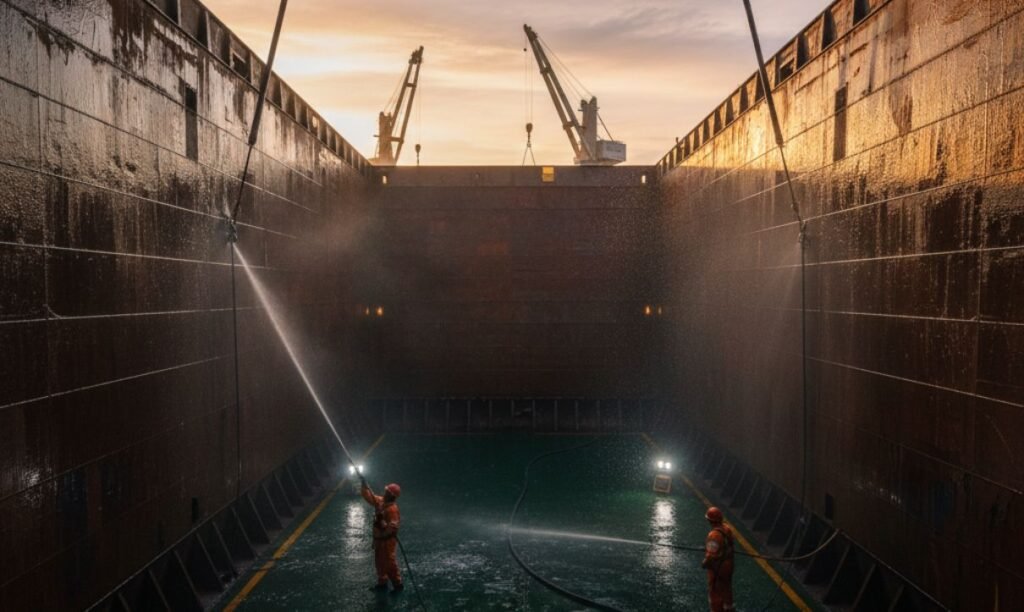
Step 3: High-Pressure Washing in Heraklion Bulk Terminals
Once dry cleaning is complete, high-pressure seawater washing begins.
Water pressure must match:
- Hold coating type
- Residue thickness
- Next cargo sensitivity
Too much pressure damages coatings. Too little leaves fine dust behind. The goal is clean steel, not stripped steel.
Step 4: Chemical Cleaning for Sensitive Cargo Changeovers
When switching from coal to grain, standard washing may not be enough. Approved cleaning agents may be required.
You ensure:
- Chemical compatibility with coatings
- Safe discharge procedures
- MARPOL-compliant waste handling
Improper chemical selection can void charter agreements under Final Quality Rules.
Step 5: Bilge System Inspection and Cleaning
Bilges collect wash water and fine particles. If left untreated, they contaminate future loads.
During cargo hold cleaning in Heraklion Port, bilges are:
- Pumped out
- Flushed
- Inspected for blockages
- Tested for oil traces
Environmental compliance requires controlled discharge through port reception facilities.
Step 6: Drying and Ventilation of Bulk Carrier Holds
Moisture is invisible contamination. Grain cargo, for example, absorbs humidity quickly.
You dry holds through:
- Natural ventilation
- Forced air systems
- Dehumidifiers where required
Gas detection equipment ensures safe oxygen levels before inspection.
Step 7: Inspection, Documentation, and Certification
Inspection is the final checkpoint. Marine supercargo surveyors often verify:
- Cleanliness standard
- Absence of loose scale
- Dry surfaces
- Hatch integrity
Inspection reports, cleaning logs, and photographic evidence form your compliance shield. Proper documentation prevents disputes and off-hire delays.
Tank, Hold, and Bulk Carrier Cleaning Standards Compared
While this article focuses on cargo hold cleaning in Heraklion Port, understanding related standards matters.
Oil tanker tank cleaning prioritizes hydrocarbon removal and gas freeing. Bulk carrier hold cleaning focuses on dry cargo residues and moisture control. Chemical tanker cleaning demands compatibility checks between cargo types.
All operations operate within frameworks guided by the International Maritime Organization and environmental rules of the MARPOL Convention.
Why India Is Influential in Marine Cleaning Services
India has become a major provider of trained marine technicians, inspectors, and supercargo professionals. Many global cleaning supervisors and compliance auditors originate from Indian maritime institutions.
Cost efficiency, strong technical education, and global deployment capability make India a reliable support base for ports worldwide, including Mediterranean hubs like Heraklion.
Safety Systems in Hold Cleaning Operations
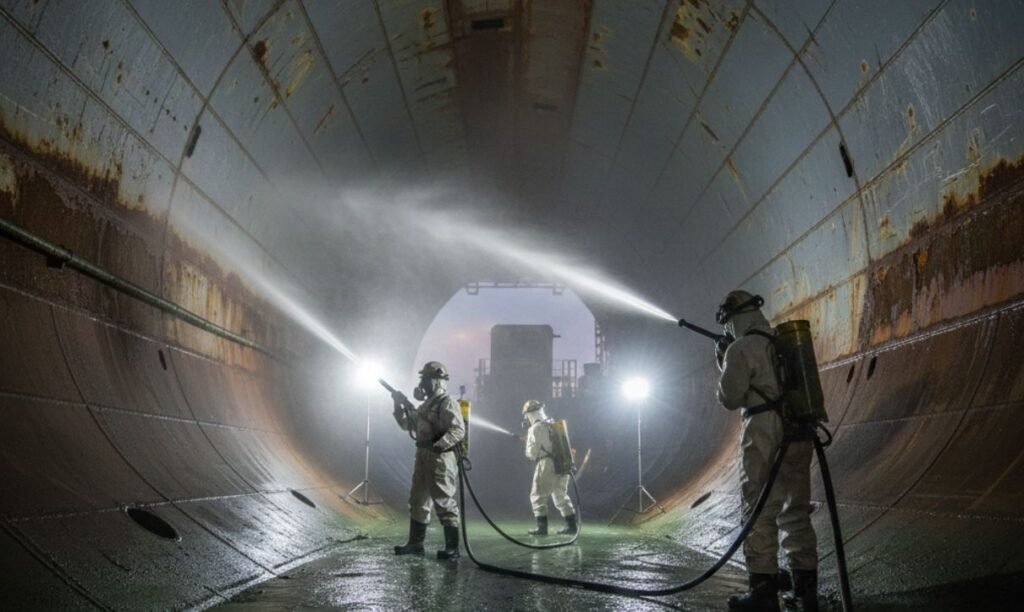
Cargo hold cleaning in Heraklion Port involves confined space entry, heavy equipment, and slippery surfaces.
Essential controls include:
- Entry permits
- Rescue standby teams
- Continuous gas monitoring
- Personal protective equipment
Accidents inside holds can escalate rapidly. Safety management systems aligned with IMO guidance reduce risk exposure.
Environmental Protection and Cost Efficiency
Environmental protection is not just compliance—it is cost control.
Failure to manage residues properly can result in:
- Port fines
- Vessel detention
- Charter party disputes
- Cargo rejection claims
Efficient cleaning minimizes repeat operations, saving fuel, labor hours, and berth time.
Compliance Workflow in Heraklion Operations
Professional cargo hold cleaning in Heraklion Port follows a structured workflow:
- Risk assessment
- Cleaning plan approval
- Execution logs
- Waste disposal certification
- Independent inspection
- Final clearance
Transparent reporting ensures alignment with IAPH World Ports sustainability principles and charterer requirements.
Companies such as Cleanship.co demonstrate industry practice by integrating tank and hold cleaning, cargo supervision, compliance audits, and crew drug and alcohol testing services. This structured model supports operational reliability without promotional excess.
Real-World Example from a Grain Loading Operation
Consider a vessel discharging petcoke before loading barley. Petcoke dust is fine and oily. Without thorough scraping and washing, residues can contaminate grain shipments.
During cargo hold cleaning in Heraklion Port, crews performed multi-stage dry cleaning, high-pressure wash, bilge flushing, and ventilation. Independent inspection confirmed “grain clean” condition. The vessel avoided rejection and maintained schedule integrity.
Future Trends in Bulk and Hold Cleaning
Technology is reshaping marine cleaning:
- Remote-controlled washing machines
- Drone-based hold inspections
- Digital compliance logs
- Biodegradable cleaning agents
Automation reduces human exposure inside confined spaces. Data transparency reduces inspection disputes.
Bulk carrier hold cleaning in Mediterranean ports will increasingly rely on digital monitoring and predictive maintenance analytics.
Conclusion
Cargo hold cleaning in Heraklion Port requires discipline, compliance, and technical precision. First, structured risk assessment prevents contamination and safety incidents. Second, strict adherence to MARPOL and IMO standards protects both environment and charter relationships. Third, detailed documentation and independent inspection safeguard commercial interests.
When you combine operational expertise, global compliance alignment, and integrated supervision models, you reduce risk at every stage. For shipowners and charterers seeking structured, regulation-aligned marine services, Cleanship.co stands as a reliable example of compliance-driven maritime excellence and global operational support.
FAQs:
“Grain clean” means holds are free from loose scale, residues, insects, moisture, and odors. Surveyors inspect surfaces visually and physically. Documentation and photographic evidence support compliance with charter party and Final Quality Rules.
MARPOL regulates how wash water and residues are discharged. You must use approved reception facilities and prevent oil contamination. Improper disposal can result in fines, detention, and reputational damage.
Not always. Mechanical cleaning and high-pressure washing may suffice. Chemical cleaning is typically used during sensitive cargo changeovers where contamination risk is high.
Duration depends on cargo type, hold size, and required cleanliness standard. Simple dry cleaning may take hours, while multi-stage washing and drying can extend over several days.
Inspection verifies compliance before loading begins. Independent marine supercargo surveyors confirm cleanliness, dryness, and structural integrity. Without inspection clearance, cargo loading should not proceed.