
Hold cleaning in Dubai has become a critical part of safe and compliant maritime operations. As bulk carriers and general cargo vessels move between fertilizers, coal, grain, and steel, cargo holds must meet strict cleanliness standards. In Dubai’s tightly regulated port environment, poor hold preparation can lead to rejected cargo, inspection delays, and commercial disputes.
This article explains how hold cleaning in Dubai works in practice, why the UAE sets a regional benchmark, and how proven cleaning methods support safety, compliance, and operational efficiency.
Dubai and the UAE as a Strategic Marine Hub
Dubai connects major trade routes linking Asia, Europe, and Africa. Its ports handle high cargo volumes under close port state control. Because of this, hold cleaning in Dubai must align with international conventions and local enforcement practices that leave little room for error.
Why Hold Cleaning Matters for Cargo Safety
Cargo holds are the vessel’s storage spaces. If residues from previous cargoes remain, the next cargo may become contaminated. Moisture, rust scale, or odor can quickly turn into cargo claims. Hold cleaning in Dubai focuses on eliminating these risks before loading begins.
Regulatory Framework Governing Hold Cleaning
IMO and MARPOL Convention Requirements
The International Maritime Organization sets global standards for pollution prevention. Under the MARPOL Convention, residues and wash water must be managed responsibly. Hold cleaning in Dubai follows these rules to protect marine environments and port waters.
IMCA and IAPH Operational Expectations
IMCA guidance shapes safe work practices, while IAPH standards influence port-level procedures. Together, they define how cleaning activities are planned, supervised, and inspected in UAE ports.

Safety Management During Hold Cleaning
Hold cleaning involves confined spaces, working at heights, and mechanical equipment. Effective safety management includes:
- Confined space entry permits
- Gas testing and ventilation
- Fall protection and safe access
- Clear emergency response plans
Crew fitness and alertness are essential, and testing programs are often part of broader safety systems.
Environmental Protection and Cost Efficiency
Environmental protection directly affects operating costs. Improper disposal leads to fines, delays, and reputational damage. Modern hold cleaning in Dubai uses controlled washing, dry cleaning where suitable, and proper waste handling to reduce environmental impact and costs. Also, read about 7 Proven Tank Cleaning in Dubai for Safer Operations.
Hold Cleaning Standards Explained Simply
Dry Cleaning for Sensitive Cargoes
Grain cargoes often require dry sweeping and vacuuming to avoid moisture. Inspectors look for clean, dry, and odor-free holds.
Wet Washing and Rust Scale Removal
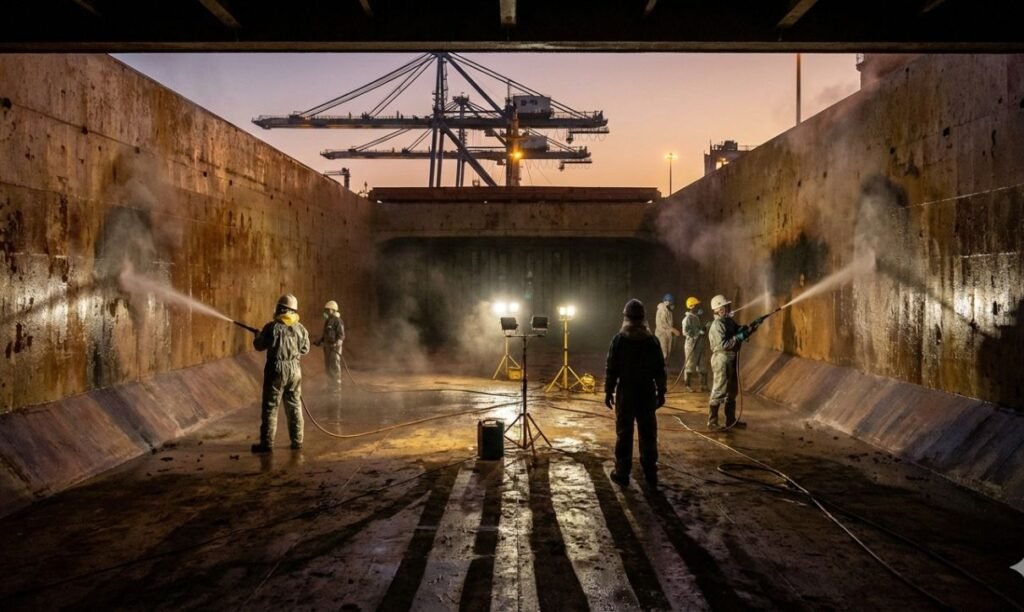
Some cargo transitions require high-pressure washing to remove residues and loose scale. Drying and ventilation follow to prevent corrosion.
Grain-Clean and Hospital-Clean Levels
Grain-clean means no visible residues. Hospital-clean is a higher standard for sensitive cargoes, requiring near-perfect cleanliness.
Relationship Between Hold, Tank, and Bulk Carrier Cleaning
Hold cleaning shares principles with tank cleaning and bulk carrier cleaning: contamination control, surface preparation, and documentation. While methods differ, compliance expectations remain consistent across vessel types. Learn more about 7 Proven Vessel Hold Cleaning Services in Abu Dhabi.
Inspection Readiness and Port State Control
Dubai port authorities conduct detailed inspections. Hold cleaning in Dubai is planned with inspection criteria in mind. Vessels that prepare for inspection early experience fewer delays and smoother cargo operations.
Documentation and Compliance Workflows
Cleaning must be documented to be accepted. Typical records include:
- Pre-cleaning condition reports
- Approved cleaning plans
- Waste disposal records
- Final inspection and acceptance reports
Marine supercargo oversight is often used to confirm alignment with charter party terms and final quality rules.
Proven Hold Cleaning Methods Used in Dubai
Manual Cleaning and Sweeping
Skilled manual work remains essential for corners, frames, and hard-to-reach areas.
Mechanical Washing Systems
High-pressure equipment speeds up residue removal while maintaining consistency.
Controlled Ventilation and Drying
Proper ventilation ensures holds are dry and safe for inspection and loading.
Real Maritime Scenario from Dubai
A bulk carrier discharges fertilizer and prepares for grain loading. Cleaning teams remove residues, wash selected areas, dry the holds, and ventilate thoroughly. Inspection follows, supported by documentation. The vessel loads on schedule without cargo claims.
Crew Safety and Operational Discipline
Hold cleaning depends on clear communication and supervision. Toolbox talks, risk assessments, and defined responsibilities reduce human error and improve outcomes.
Future Trends in Hold Cleaning
Hold cleaning in Dubai continues to evolve through:
- Digital inspection reporting
- Improved eco-friendly cleaning agents
- Better ventilation and drying systems
- Integrated compliance tracking
These trends improve transparency and reduce operational risk.
Cost Control Through Proper Hold Cleaning
Correct cleaning prevents cargo rejection, avoids re-cleaning costs, and protects coatings. Over time, this reduces maintenance expenses and improves charterer confidence.
Conclusion
Hold cleaning in Dubai is effective when three principles guide operations. First, compliance with IMO, MARPOL, IMCA, and IAPH standards protects vessels from delays and penalties. Second, strong safety management safeguards crews working in confined and high-risk environments.
Third, disciplined documentation ensures inspection readiness and charterer acceptance. Together, these practices turn cleaning into a controlled compliance process rather than a last-minute task. In Dubai’s demanding maritime environment, vessels that approach hold cleaning systematically achieve safer cargo operations, smoother inspections, and more reliable schedules.
FAQs:
Hold cleaning focuses on removing solid cargo residues, rust scale, and moisture from cargo holds. Tank cleaning deals with liquid residues and vapors. Both require strict safety controls, environmental compliance, and detailed documentation.
Dubai enforces international maritime conventions closely due to high traffic and environmental sensitivity. Hold cleaning must meet inspection standards to prevent cargo contamination and protect port waters.
Grain cargoes usually require grain-clean or higher standards. Holds must be dry, odor-free, and free of residues to pass inspection and avoid cargo rejection.
Yes. Bulk carriers are inspected by port authorities, charterers, or marine supercargoes. Proper cleaning and documentation support faster acceptance and reduce disputes.
Correct hold cleaning prevents contamination, meets MARPOL requirements, supports port state control inspections, and ensures alignment with charter party quality rules.