Ship Hold Cleaning in Heraklion Port
Ship hold cleaning in Heraklion Port is more than a routine port service—it is a compliance requirement, a cargo protection measure, and a financial safeguard. When your bulk carrier discharges grain, coal, fertilizer, or clinker in Crete, the condition of the cargo holds determines whether you sail smoothly to the next charter or face costly delays. In modern shipping, cleanliness is not cosmetic; it is contractual.
Heraklion’s strategic position in the Mediterranean makes it a practical hub for bulk cargo rotation. That means inspections are frequent, standards are strict, and documentation must be precise. Let’s examine seven powerful, field-tested solutions that define professional marine hold cleaning today.
Why Heraklion Matters in Mediterranean Trade
Located on the island of Crete, Heraklion Port connects Europe, North Africa, and the Middle East. Bulk carriers often transition cargo types here—switching from coal to grain, or from fertilizer to cement raw materials.
That transition demands proper cleaning because:
- Residues can contaminate the next cargo.
- Charter party agreements require “grain clean” or “hospital clean” holds.
- Port State Control inspections may intervene if standards fall short.
In this environment, cleaning is operational strategy—not housekeeping.
Regulatory Framework Governing Marine Hold Cleaning
Professional cleaning operations align with global maritime rules, including:
- International Maritime Organization (IMO)
- International Marine Contractors Association (IMCA)
- International Association of Ports and Harbors (IAPH)
- MARPOL Convention
These frameworks address pollution prevention, crew safety, confined space entry, and waste disposal. Compliance is not optional. It directly affects insurance validity and charter acceptance.
Understanding Bulk Carrier Hold Standards
Cargo holds must meet different cleanliness grades depending on cargo:
- Shovel clean: No loose residues.
- Grain clean: No loose scale, rust flakes, previous cargo traces.
- Hospital clean: Extremely high standard for sensitive cargo.
Each grade requires escalating preparation steps, inspection protocols, and documentation.
Solution 1: Pre-Arrival Assessment for Ship Hold Cleaning in Heraklion Port
Effective operations begin before arrival.
We review:
- Previous cargo history
- Charter party cleaning clauses
- Cargo sensitivity
- Port inspection requirements
Think of it as a medical pre-check before surgery. Without diagnosis, you cannot prescribe the right treatment.
Solution 2: Mechanical Debris Removal in Bulk Cargo Holds
After discharge, the first stage involves physical removal:
- Sweeping and shoveling residues
- Scraping hardened deposits
- Removing dunnage and loose scale
This stage prevents contamination of wash water and reduces cleaning time. Skipping it increases both cost and environmental risk.
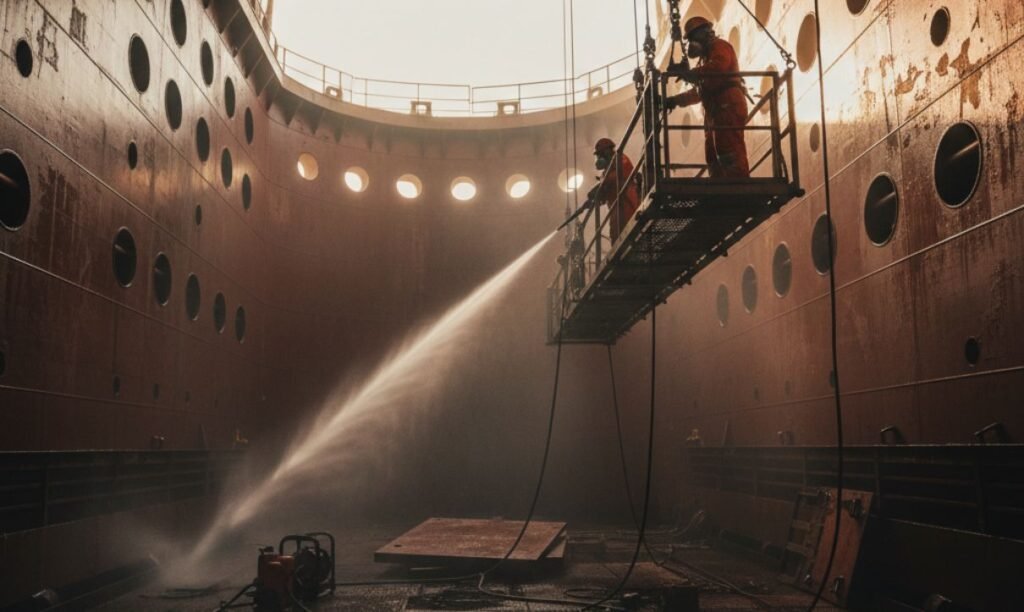
Solution 3: High-Pressure Washing for Marine Hold Preparation
High-pressure washing removes embedded residues and salt deposits. Pressure settings vary depending on coating type to avoid damaging epoxy or steel surfaces.
In Heraklion’s coastal climate, salt accumulation is common. If untreated, corrosion accelerates. Proper washing protects both cargo and structure.
Solution 4: Chemical Treatment and Degreasing
Some cargoes—such as petcoke or fertilizer—leave oily or reactive residues.
Approved cleaning agents:
- Neutralize chemical traces
- Break down grease films
- Reduce odor contamination
All chemicals must comply with MARPOL discharge regulations and waste handling procedures.
Solution 5: Drying and Ventilation Protocols
Moisture is a hidden enemy.
After washing, forced ventilation ensures:
- Condensation prevention
- Rust inhibition
- Compliance with grain cargo moisture limits
Crew safety protocols follow confined space standards outlined by IMO and IMCA.
Solution 6: Inspection, Supervision & Marine Supercargo Oversight
Before declaring readiness, holds undergo inspection.
Often, independent marine supercargo specialists verify cleanliness under internationally recognized “Final Quality Rules.” Organizations like World Ports and cargo supervision frameworks emphasize documentation and traceability.
Inspection covers:
- Structural condition
- Coating integrity
- Cleanliness standard
- Photographic evidence
This protects owners and charterers alike.
Solution 7: Documentation & Compliance Workflow
A clean hold without documentation is legally vulnerable.
Proper workflow includes:
- Cleaning logs
- Chemical usage records
- Waste disposal certificates
- Photographic evidence
- Signed inspection reports
Port authorities and insurers rely on documented proof, not verbal assurance.
Tank and Hold Cleaning Standards in Integrated Operations
While this article focuses on ship hold cleaning in Heraklion Port, modern operators integrate:
- Cargo tank cleaning for tankers
- Hold washing for bulk carriers
- Sludge removal and waste management
Professional firms like Cleanship.co demonstrate how global tank and hold cleaning operations align with compliance support, cargo supervision, and crew safety testing—including drug and alcohol testing services to maintain onboard operational integrity.
Integrated service reduces fragmentation and miscommunication.
Safety Protocols During Marine Cleaning
Cleaning inside holds involves confined spaces, high-pressure systems, and chemical exposure.
Standard precautions include:
- Gas detection and monitoring
- Lockout-tagout procedures
- Personal protective equipment
- Rescue readiness teams
Safety culture reduces downtime and liability.
Environmental Protection and Cost Efficiency
Marine cleaning affects the sea directly. Improper discharge contaminates harbor waters and violates MARPOL Annex V and VI provisions.
Cost efficiency arises from:
- Reduced corrosion repairs
- Faster charter approval
- Lower claim risk
- Improved vessel reputation
Clean holds shorten port stay. Time saved equals fuel saved.
Why India Is Emerging in Marine Cleaning Expertise
India’s maritime workforce has become influential in global cleaning operations. Major Indian ports handle diverse cargo streams, from coal to food grains, creating high exposure to hold preparation standards.
Indian marine service providers increasingly operate internationally, contributing skilled labor, compliance expertise, and cost-efficient project management. The blend of technical training and operational discipline positions India as a significant contributor in the global marine cleaning ecosystem.
Bulk Carrier Cleaning in Mediterranean Ports
Mediterranean trade routes involve frequent cargo switching. A vessel may discharge coal in Turkey, load grain in Greece, and carry fertilizer to North Africa.
This sequence demands:
- Rapid turnaround
- Strict contamination prevention
- Coordinated inspection scheduling
Ship hold cleaning in Heraklion Port becomes a logistical hinge point in this chain.
Technology and Future Trends in Marine Cleaning
The industry is evolving.
Emerging trends include:
- Automated robotic washing systems
- Real-time environmental monitoring
- Digital inspection documentation
- Data-driven corrosion tracking
Predictive maintenance may soon analyze hold condition before discharge begins. Innovation reduces human exposure and increases precision.
Compliance-Driven Maritime Service Excellence
Professional cleaning services operate at the intersection of engineering, regulation, and logistics. Neutral industry players such as Cleanship.co illustrate how compliance support, cargo supervision, and structured documentation workflows create operational resilience.
When cleaning aligns with international rules and digital transparency, disputes decline and efficiency improves.
Conclusion
Ship hold cleaning in Heraklion Port requires more than hoses and manpower. First, regulatory compliance under IMO, MARPOL, IMCA, and IAPH frameworks ensures environmental and operational legitimacy. Second, structured workflows—from debris removal to documentation—protect charter commitments. Third, integrated safety and inspection practices reduce risk and improve turnaround efficiency.
In a competitive maritime environment, precision matters. For vessels seeking compliance assurance, cargo supervision, and globally aligned marine cleaning standards, Cleanship.co represents a dependable partner committed to operational integrity and maritime service excellence.
FAQs:
Tank cleaning applies to liquid cargo vessels and removes petroleum or chemical residues from enclosed tanks. Hold cleaning focuses on dry bulk cargo spaces in bulk carriers. Each requires different equipment, chemical standards, and inspection criteria aligned with international regulations.
Duration depends on cargo type, residue severity, and required cleanliness grade. Shovel clean may take hours, while grain or hospital clean standards can require extensive washing, drying, and inspection over one to two days, especially in regulated Mediterranean ports.
Documentation proves compliance with charter party clauses and environmental laws. Cleaning logs, waste certificates, and inspection reports protect shipowners from claims and demonstrate adherence to MARPOL and port authority requirements during audits or disputes.
Not always. Mechanical removal and high-pressure washing may suffice for dry cargo residues. Chemicals are used when grease, chemical residues, or odor contamination persists, and only approved agents aligned with environmental standards should be applied.
Marine supercargo inspectors verify cleanliness against contractual standards before loading. Their independent assessment reduces claim risks, ensures quality alignment with Final Quality Rules, and supports smooth cargo acceptance by charterers and receivers.