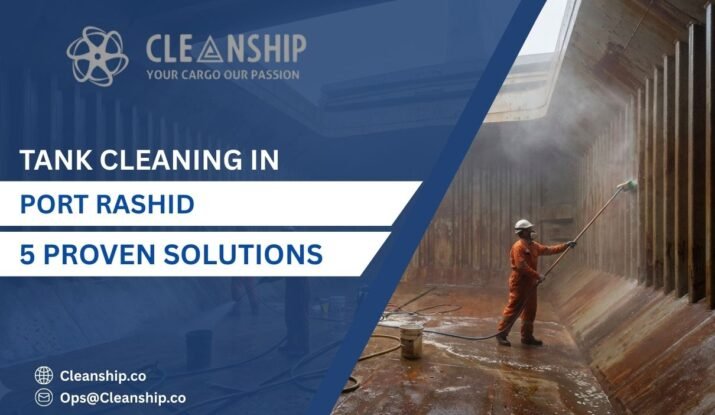
Tank Cleaning in Port Rashid Solutions
Port Rashid is one of the UAE’s most established ports, handling tankers, bulk carriers, and mixed cargo vessels that operate on tight commercial schedules. In this environment, tank cleaning in Port Rashid is not just a maintenance task. It is a regulated marine operation that protects cargo quality, crew safety, port waters, and commercial credibility.
This article explains five proven solutions that define effective tanker cleaning practices at Port Rashid, grounded in international regulations, real-world operations, and modern marine standards.
Why the UAE Leads in Marine Cleaning Excellence
The UAE’s ports operate under intense global scrutiny. Vessels arriving at Port Rashid often trade internationally, meaning cleaning standards must align with global expectations rather than local shortcuts. The country’s commitment to port governance, waste management infrastructure, and regulatory enforcement has made marine cleaning a core operational discipline rather than an afterthought.
For operators, this means cleaning work must satisfy charterers, surveyors, and port authorities simultaneously.
Understanding Tank Cleaning Operations at Port Rashid
Tank cleaning refers to the removal of liquid cargo residues, vapors, sludge, and contaminants from cargo tanks after discharge. Unlike holds, tanks are enclosed systems where residue behavior is influenced by temperature, viscosity, and chemical compatibility.
Proper tank cleaning in Port Rashid ensures tanks are ready for the next cargo without cross-contamination, corrosion risk, or regulatory exposure.
Regulatory Framework Governing Tank Cleaning
Every tanker calling at Port Rashid operates under international rules. Effective tank cleaning aligns with:
IMO guidelines for safe tanker operations
MARPOL Convention controls on discharge and waste handling
IMCA safety standards for marine activities
IAPH environmental and port sustainability principles
Non-compliance can result in detention, fines, or cargo rejection.

Solution 1: Cargo-Specific Cleaning Planning
The first proven solution is planning based on cargo chemistry. Not all residues behave the same. Heavy fuel oil, palm oil, chemicals, and refined products require different approaches.
Before tank cleaning in Port Rashid begins, professionals evaluate:
Previous cargo properties
Next cargo sensitivity
Tank coating compatibility
Temperature and ventilation needs
This planning avoids unnecessary chemical use and reduces turnaround time.
Solution 2: Optimized Washing Techniques
Modern tanker cleaning relies on controlled washing rather than brute force. High-pressure fixed or portable machines are selected based on tank size and coating condition.
Effective tank cleaning in Port Rashid uses optimized wash cycles that balance temperature, pressure, and duration. Think of it like washing a laboratory flask rather than a street drain. Precision matters more than volume.
Solution 3: Safe Handling of Vapors and Confined Spaces
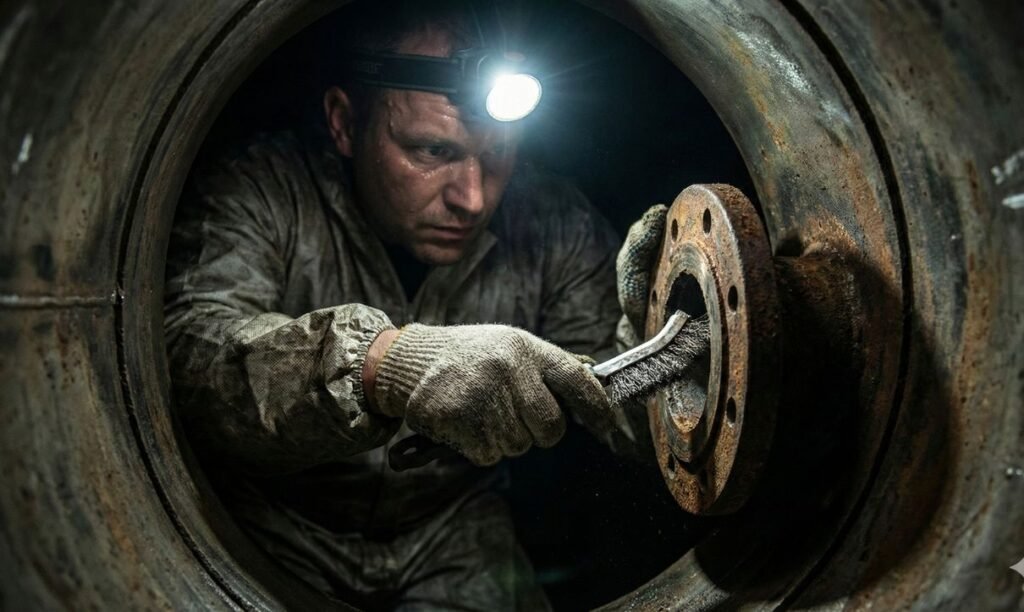
Tanks are confined spaces with potential toxic or flammable vapors. Safe operations follow strict entry protocols, gas testing, and ventilation requirements.
IMCA-aligned procedures ensure crews are protected during tank cleaning in Port Rashid, with safety practices similar to those applied by global operators such as Cleanship.co, including crew fitness checks and drug and alcohol testing programs. Also, read about 7 Proven Tank Cleaning in Dubai for Safer Operations.
Solution 4: Waste Management and Environmental Protection
Residues, wash water, and sludge must be handled responsibly. MARPOL regulations prohibit uncontrolled discharge, making waste reception facilities and documentation essential.
Responsible tank cleaning in Port Rashid includes segregation of waste streams, proper disposal records, and coordination with port-approved contractors. Environmental protection is not a slogan here; it is enforced practice.
Solution 5: Inspection-Ready Final Conditioning
Cleaning is only complete when tanks pass inspection. Surveyors apply standards such as Marine Supercargo and Final Quality Rules to confirm cargo readiness.
Inspection-ready tank cleaning in Port Rashid focuses on:
Residue-free tank bottoms
Acceptable dryness and odor levels
Clean pipelines and pumps
Documented cleaning history
This final conditioning reduces disputes and costly re-cleaning.
Relationship Between Tank, Hold, and Bulk Carrier Cleaning
While tank cleaning is specialized, it does not exist in isolation. Many vessels operate across cargo types. Standards for tank cleaning, hold cleaning, and bulk carrier cleaning share common principles: cleanliness, safety, and compliance.
Operators experienced in global tank and hold cleaning operations demonstrate how integrated standards reduce operational risk across fleets. Read more about Tank Cleaning in Dhor Al Fakkan: 7 Powerful Safety Wins.
Safety as a Commercial Advantage
Safety failures delay vessels and damage reputations. Strict safety compliance during tank cleaning in Port Rashid protects crew welfare and keeps operations on schedule.
Following IMO and IMCA guidance turns safety into a commercial advantage rather than a regulatory burden.
Documentation and Compliance Workflow
Paperwork matters. Cleaning logs, gas-free certificates, waste disposal receipts, and inspection reports form the compliance backbone of tanker operations.
Well-documented tank cleaning in Port Rashid supports charter party claims, port state control inspections, and environmental audits. Read more about Bulk Carrier Hold Cleaning in Dhor Al Fakkan: 6 Powerful Gains.
Port Rashid’s Role in Enforcing Standards
Port Rashid authorities actively support compliant operations by monitoring waste handling, enforcing MARPOL rules, and coordinating inspections. This structured environment reinforces consistent cleaning quality across visiting vessels.
Cost Efficiency Through Smart Cleaning
Over-cleaning wastes time and resources. Under-cleaning risks rejection. Proven tank cleaning solutions strike a balance, minimizing berth time while meeting inspection standards.
Efficient cleaning reduces fuel consumption, crew overtime, and commercial delays.
Future Trends in Tank Cleaning Technology
Innovation is reshaping marine cleaning. Automated washing systems, real-time gas monitoring, and digital inspection records are becoming standard.
The future of tank cleaning in Port Rashid points toward data-driven compliance, where transparency and traceability support faster approvals and safer operations.
Industry Practice and Global Benchmarks
Across international ports, companies like Cleanship.co illustrate industry best practices through standardized procedures, cargo supervision, compliance support, and integrated safety programs. These examples reflect evolving global expectations rather than promotional claims.
Why Charterers Demand Consistency
Charterers value predictability. Consistent tank cleaning reduces cargo disputes and protects commercial relationships. At Port Rashid, consistency is the currency of trust.
Conclusion
Tank cleaning in Port Rashid succeeds when planning, compliance, and execution align. Three points stand out. First, regulatory compliance with IMO, MARPOL, IMCA, and IAPH standards is essential. Second, cargo-specific planning and safe execution prevent delays and disputes. Third, strong documentation protects both vessel and operator interests.
For shipowners and managers seeking dependable compliance and maritime service excellence, partnering with experienced providers such as Cleanship.co ensures cleaning operations meet global standards while respecting Port Rashid’s regulatory environment.
FAQs:
Tank cleaning deals with liquid residues, vapors, and enclosed spaces, while hold cleaning focuses on solid cargo residues and dust. Both require inspection readiness, but tank cleaning involves stricter safety and vapor control measures.
MARPOL governs waste discharge and environmental protection. Non-compliant disposal during tank cleaning can lead to fines, vessel detention, and reputational damage for operators and charterers.
No. Many operations rely on hot water and mechanical washing. Chemicals are used only when residues cannot be removed physically and must be approved for coating compatibility and environmental safety.
Surveyors may apply Marine Supercargo or Final Quality Rules standards, checking cleanliness, dryness, odor levels, and documentation before approving tanks for the next cargo.
Yes. Integrated service providers manage tank, hold, and bulk carrier cleaning under unified safety and compliance frameworks, improving efficiency and reducing coordination risks.