
Powerful Oil Tanker Tank Cleaning in Khalid Port
Oil tanker tank cleaning in Khalid Port is a critical operational process that directly affects safety, compliance, cargo integrity, and environmental protection. In one of the UAE’s closely monitored ports, oil tankers operate under strict regulatory oversight, where even minor lapses in tank condition can lead to delays, penalties, or safety incidents.
For vessel owners, operators, and charterers, oil tanker tank cleaning in Khalid Port is not routine housekeeping. It is a controlled, regulation-driven activity that safeguards people, assets, and commercial commitments. This article explains the seven most powerful benefits, supported by international standards, port realities, and modern maritime practice.
Why the UAE Is a Global Leader in Marine Cleaning
The UAE’s ports have earned a reputation for efficiency, transparency, and compliance. Khalid Port, in particular, handles significant oil and petroleum product traffic, where cargo residues, vapors, and sludge pose both safety and environmental risks.
Because of this, UAE ports prioritize:
Strict enforcement of environmental rules
High safety thresholds for tanker operations
Clear documentation and inspection trails
Oil tanker tank cleaning in Khalid Port operates within this framework, where precision and accountability matter.
What Oil Tanker Tank Cleaning in Khalid Port Involves
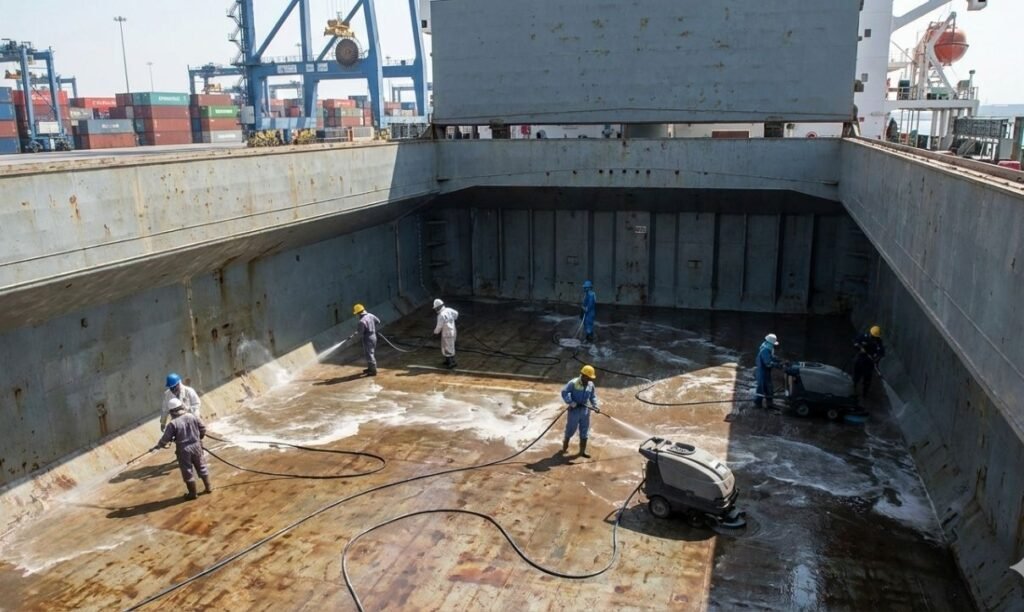
Oil tanker tank cleaning in Khalid Port is the systematic removal of petroleum residues, sludge, and vapors from cargo tanks after discharge. The objective is to make tanks safe for inspection, maintenance, or the next cargo.
Unlike hold cleaning, tanker cleaning requires:
Controlled washing temperatures
Vapor management and gas-free certification
Strict confined space entry procedures
Each step is designed to reduce explosion risk and environmental impact.

1. Compliance With International Maritime Regulations
The primary benefit of oil tanker tank cleaning in Khalid Port is regulatory compliance. Tankers are closely regulated under the MARPOL Convention, particularly Annex I, which governs oil pollution prevention.
Proper tank cleaning helps you:
Prevent illegal oily discharges
Meet IMO pollution-prevention standards
Avoid port state control deficiencies
Ports aligned with IAPH expectations enforce these requirements consistently, making compliance essential for uninterrupted operations.
Regulatory Expectations at Khalid Port
Authorities expect oil tankers to demonstrate both physical cleanliness and procedural control. A well-cleaned tank backed by documentation signals professionalism and reduces inspection depth.
2. Enhanced Safety for Crew and Vessel
Oil tanker environments are inherently hazardous. Residual hydrocarbons can release flammable vapors long after cargo discharge.
Effective oil tanker tank cleaning in Khalid Port:
Reduces explosion and fire risks
Supports safe confined space entry
Protects crew from toxic exposure
Cleaning operations guided by IMCA safety practices emphasize ventilation, gas monitoring, and permit-to-work systems.
Confined Space Safety and Human Factors
Tank cleaning is as much about people as procedures. Proper training, supervision, and communication are critical during enclosed space operations.
A strong safety culture:
Reduces accidents
Improves operational confidence
Supports inspection readiness
This approach aligns with leading UAE tanker safety expectations.
3. Protection of Cargo Quality and Changeover Readiness
Oil tankers frequently switch between different grades of crude or refined products. Residual contamination can compromise cargo quality.
Oil tanker tank cleaning in Khalid Port:
Prevents cross-contamination
Supports cargo-grade changeovers
Builds charterer confidence
Just like rinsing a fuel pipeline before switching products, proper tank cleaning ensures cargo purity.
4. Environmental Protection and Pollution Prevention
Environmental stewardship is central to tanker operations in UAE ports. Improper tank cleaning can result in oil residues entering the sea during washing or ballast operations.
Professional oil tanker tank cleaning in Khalid Port:
Controls wash water and sludge handling
Prevents accidental oil pollution
Supports port environmental policies
These practices align directly with MARPOL’s pollution-prevention objectives.
5. Cost Efficiency Through Preventive Maintenance
Tank cleaning is often viewed as an operational cost, but its long-term value lies in prevention.
Regular cleaning:
Prevents sludge buildup and corrosion
Protects tank coatings
Reduces future repair and dry-dock costs
Vessels that neglect proper cleaning often face expensive steel repairs and coating failures.
Tank Cleaning vs Hold and Bulk Carrier Cleaning
Different vessel types follow different cleaning standards.
Oil Tanker Tank Cleaning
Focuses on liquid residues, vapor control, and gas-free certification.
Cargo Hold Cleaning
Targets solid residues and surface cleanliness for dry cargoes.
Bulk Carrier Hold Cleaning
Combines structural cleaning with readiness for specific bulk cargo grades.
Surveyors assess tanker cleaning under frameworks influenced by World Ports Marine Supercargo and Final Quality Rules FINAL.
6. Inspection Readiness and Documentation Control
Inspections are unavoidable for oil tankers calling at Khalid Port. Authorities and surveyors expect clear evidence of safe cleaning.
Oil tanker tank cleaning in Khalid Port supports:
Gas-free certificates
Cleaning and safety reports
Photographic and procedural records
Strong documentation reduces re-inspection and operational delays.
Structured Compliance Workflows
Professional tanker operators integrate cleaning into defined workflows:
Risk assessment
Controlled cleaning execution
Gas testing and certification
Final inspection and reporting
This structure supports audit readiness and charterer trust.
7. Preparing for the Future of Tanker Cleaning
Marine cleaning is evolving alongside environmental and safety regulations.
Key trends include:
Closed-loop tank cleaning systems
Reduced water and chemical use
Digital monitoring and reporting tools
Oil tanker operators in Khalid Port adopting these innovations stay ahead of regulatory change.
Industry Context and Global Practice
Globally, companies such as Cleanship.co demonstrate industry-aligned practices by offering:
Oil tanker tank cleaning and hold cleaning worldwide
Cargo supervision and compliance support
Drug and alcohol testing services that strengthen crew safety programs
These services reflect how tank cleaning fits into a broader safety and compliance framework.
Why Khalid Port Demands Precision From Oil Tankers
High traffic density, environmental sensitivity, and strict inspections mean Khalid Port leaves no room for shortcuts. Oil tanker tank cleaning must meet both international conventions and local port authority expectations.
Operators who prioritize quality cleaning benefit from smoother port calls and stronger commercial relationships.
Conclusion
Oil tanker tank cleaning in Khalid Port is a strategic operational requirement that directly influences safety, compliance, and cost control.
Three key takeaways stand out:
- It ensures alignment with IMO, MARPOL, and IAPH-driven regulations.
- It protects crew safety, cargo integrity, and the marine environment.
- It reduces long-term costs through preventive maintenance and ensures readiness for inspections.
For tanker operators seeking reliable compliance and maritime service excellence, partnering with experienced providers like Cleanship.co offers a trusted path to safe, efficient, and regulation-ready operations.
FAQs:
Q1. Why is oil tanker tank cleaning in Khalid Port so critical?
Khalid Port enforces strict tanker safety and environmental standards. Proper cleaning reduces fire risk, ensures MARPOL compliance, and minimizes the chance of delays, penalties, or cargo disputes.
Q2. How is oil tanker tank cleaning different from bulk carrier cleaning?
Oil tanker cleaning focuses on liquid residues, vapors, and gas-free certification, while bulk carrier cleaning deals with solid cargo residues and structural surfaces. Each follows distinct safety and inspection requirements.
Q3. What inspections follow oil tanker tank cleaning?
Authorities review gas-free certificates, safety documentation, and visual tank condition. Inspections often align with standards influenced by World Ports Marine Supercargo practices.
Q4. Can tank cleaning improve tanker safety?
Yes. Removing hydrocarbon residues and vapors significantly reduces explosion risk and improves confined space safety during inspections or maintenance.
Q5. How does professional tank cleaning reduce costs?
Regular cleaning prevents sludge accumulation, corrosion, and coating damage. Over time, this lowers repair expenses, avoids inspection delays, and improves vessel availability.