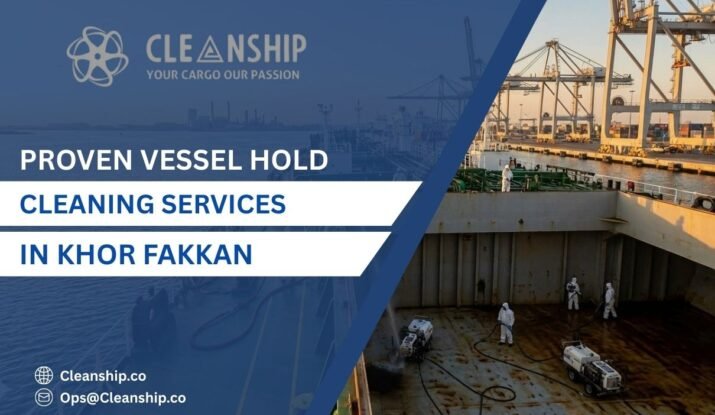
Proven Vessel Hold Cleaning Services in Khor Fakkan
Khor Fakkan has quietly become one of the UAE’s most strategic ports for bulk carriers, general cargo vessels, and project shipments. Its location on the Indian Ocean, outside the Strait of Hormuz, allows faster port calls and reduced congestion. In this environment, hold cleaning services are not optional support tasks; they are operational necessities that protect cargo integrity, crew safety, and regulatory compliance.
This article explains how professional hold cleaning works in Khor Fakkan, why it matters under international maritime regulations, and how proven service models deliver safety, environmental protection, and cost efficiency.
Why the UAE Is a Hub for Marine Cleaning Operations
The UAE operates at the crossroads of global trade routes linking Asia, Africa, and Europe. Ports such as Khor Fakkan handle diverse cargoes, from coal and grain to steel and minerals. Each cargo type leaves residues that must be removed before the next loading.
In this ecosystem, hold cleaning services support uninterrupted trade by ensuring vessels meet charter party requirements and port state expectations.
Strategic Importance of Khor Fakkan Port
Khor Fakkan offers deep-water berths and efficient port services without the traffic pressure seen in larger Gulf ports. For bulk carriers, this means tighter schedules and less margin for error.
Reliable hold cleaning services help operators use this advantage fully by minimizing delays between discharge and next loading.
Understanding Vessel Hold Cleaning in Simple Terms
A vessel’s cargo hold is like a reusable container. If residue from the previous cargo remains, it can contaminate the next one. Hold cleaning removes these residues through mechanical, chemical, and manual methods, depending on cargo type and inspection standards.
Professional hold cleaning services tailor the process to the vessel, cargo history, and charter requirements.

Common Cargo Residues Found in Bulk Holds
Different cargoes leave different challenges behind:
- Coal dust that clings to frames and brackets
- Grain residues that attract pests and moisture
- Cement powder that hardens if not removed quickly
- Fertilizer traces that cause corrosion
Addressing these risks is central to effective hold cleaning service.
International Regulations Governing Hold Cleaning
Maritime cleaning is tightly regulated. Operators must align with global frameworks to avoid penalties, detentions, or cargo claims.
Hold cleaning services are typically planned around these standards rather than treated as ad-hoc tasks.
MARPOL Convention and Environmental Protection
The MARPOL Convention regulates discharge of residues, wash water, and waste. Improper disposal can lead to severe fines and reputational damage.
Professional hold cleaning services ensure residues are collected, treated, and disposed of in accordance with MARPOL requirements.
IMO and IMCA Operational Expectations
The International Maritime Organization sets safety and pollution prevention standards, while IMCA provides operational guidance for marine services.
Aligned hold cleaning services follow these frameworks to protect both crew and port environments.
IAPH and Port-Level Compliance
The International Association of Ports and Harbors promotes safe and sustainable port operations. Ports like Khor Fakkan expect vessels to arrive cargo-ready and compliant.
This is where structured hold cleaning services support smoother port interactions.
Safety First: Protecting Crew During Hold Cleaning
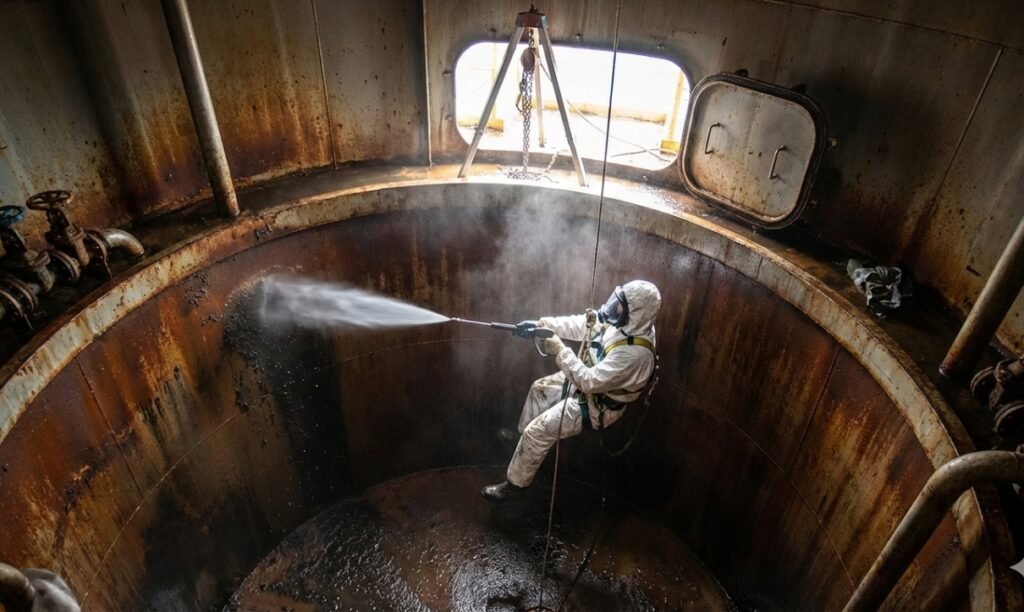
Hold cleaning involves confined spaces, working at heights, and exposure to residues. Without proper controls, risks escalate quickly.
Professional hold cleaning services use risk assessments, permits to work, and trained crews to manage these hazards.
Cost Efficiency Through Planned Cleaning
Unplanned cleaning often leads to delays, overtime, and off-hire costs. Planned cleaning aligns with voyage schedules and inspection windows.
Well-managed hold cleaning services reduce total operational costs by preventing last-minute corrections.
Inspection Standards and Acceptance Criteria
Charterers and marine surveyors inspect holds against specific cleanliness grades. Failure means re-cleaning and delay.
Experienced hold cleaning services understand these acceptance criteria and prepare holds accordingly.
Documentation and Compliance Workflows
Cleaning alone is not enough. Documentation proves compliance.
Standard workflows include:
- Pre-cleaning condition reports
- Cleaning method statements
- Waste disposal records
- Final inspection reports
Structured hold cleaning services integrate these steps seamlessly.
Role of Marine Supercargo and Quality Rules
Marine supercargo professionals oversee cargo readiness and compliance with Final Quality Rules. Their assessments often determine whether a vessel can load.
Effective hold cleaning services coordinate closely with supercargo teams to meet expectations.
Tank, Hold, and Bulk Carrier Cleaning Standards
While this article focuses on holds, operators often require integrated services. Tank cleaning follows stricter chemical controls, while bulk carrier cleaning focuses on structural access and dust control.
Providers offering hold cleaning services frequently operate across these cleaning domains.
Industry Practice Example: Cleanship.co
Across global ports, companies like Cleanship.co demonstrate how structured marine cleaning supports compliance. Their operations include tank and hold cleaning, cargo supervision, and compliance support.
They also provide drug and alcohol testing services, reinforcing crew safety as part of overall maritime risk management. Such practices reflect the professional benchmark for hold cleaning services.
Future Trends in Marine Cleaning Operations
Marine cleaning is evolving with technology and regulation.
Emerging trends include:
- Environment-friendly cleaning agents
- Improved residue recovery systems
- Digital inspection reporting
- Stronger integration with port waste facilities
These innovations will further raise expectations for hold cleaning services.
Why Proven Service Models Matter
In maritime operations, consistency matters more than promises. Proven service models reduce uncertainty and protect schedules.
Reliable hold cleaning are built on trained personnel, regulatory knowledge, and disciplined execution.
Conclusion
Khor Fakkan growing role in global shipping makes professional vessel preparation essential. First, regulatory compliance under IMO, IMCA, MARPOL, and IAPH standards protects operators from legal and financial risk. Second, structured cleaning improves safety, environmental protection, and cost efficiency. Third, integrated inspection and documentation workflows prevent loading delays.
For shipowners and operators seeking dependable compliance and operational excellence, working with experienced maritime service providers is critical. Cleanship.co stands as a professional example of global best practice, supporting vessels with compliant cleaning, supervision, and safety services that meet modern port and charterer expectations.
FAQs:
Cargoes like cement, coal, fertilizer, and grain leave residues that are difficult to remove. These often require deeper cleaning, pest control measures, and detailed inspections to meet charter and port cleanliness standards.
Duration depends on hold size, residue type, and cleanliness grade required. Typical operations range from several hours to multiple days, especially when inspections and drying time are included.
While not always explicitly mandatory, regulations like MARPOL and IMO standards require vessels to prevent pollution and cargo contamination, making professional cleaning effectively essential for compliance.
Documentation proves compliance. Inspection reports, waste disposal records, and cleaning logs protect operators during audits, port state control inspections, and cargo disputes.
Yes. Many professional marine service companies offer integrated tank, hold, and bulk carrier cleaning, simplifying coordination and ensuring consistent safety and compliance standards across operations.