Strategic Importance of Tank Cleaning in Athens Port in Mediterranean Trade
Tank Cleaning in Athens Port of Piraeus, commonly known as Athens Port, serves as one of the busiest maritime hubs in Europe. It handles crude oil tankers, product carriers, chemical vessels, and bunker barges that move between the Mediterranean, Black Sea, and global routes. High vessel traffic means short port stays and strict turnaround expectations.
In this environment, tank cleaning in Athens Port is not just a maintenance task—it is a commercial and regulatory necessity. Every hour saved without compromising safety directly improves charter performance.
Regulatory Framework Governing Tank Cleaning Operations
Tank cleaning operations at Athens Port must comply with international and port-specific standards. These include:
- International Maritime Organization (IMO)
- International Marine Contractors Association (IMCA)
- MARPOL Convention
- International Association of Ports and Harbors (IAPH)
The MARPOL Convention regulates the prevention of pollution from ships, particularly Annex I (oil) and Annex II (noxious liquid substances). Athens Port authorities enforce strict discharge and residue management rules.
Failure to comply can lead to heavy fines, detention, and reputational damage.
Why Tank Cleaning Is Operationally Critical
Before loading a new cargo, tanks must meet strict cleanliness standards. Residual hydrocarbons, sludge, or incompatible chemicals can contaminate cargo, trigger off-spec claims, and result in charter disputes.
Tank cleaning in Athens Port ensures:
- Compatibility with next cargo
- Prevention of cross-contamination
- Compliance with terminal acceptance criteria
- Safe entry into confined spaces
In short, clean tanks protect cargo value and crew safety.
Solution 1: Pre-Arrival Planning and Risk Assessment
Effective operations begin before the vessel berths. Pre-arrival exchange of documentation includes:
- Previous cargo details
- Tank cleaning history
- Gas-free certification
- Safety management procedures
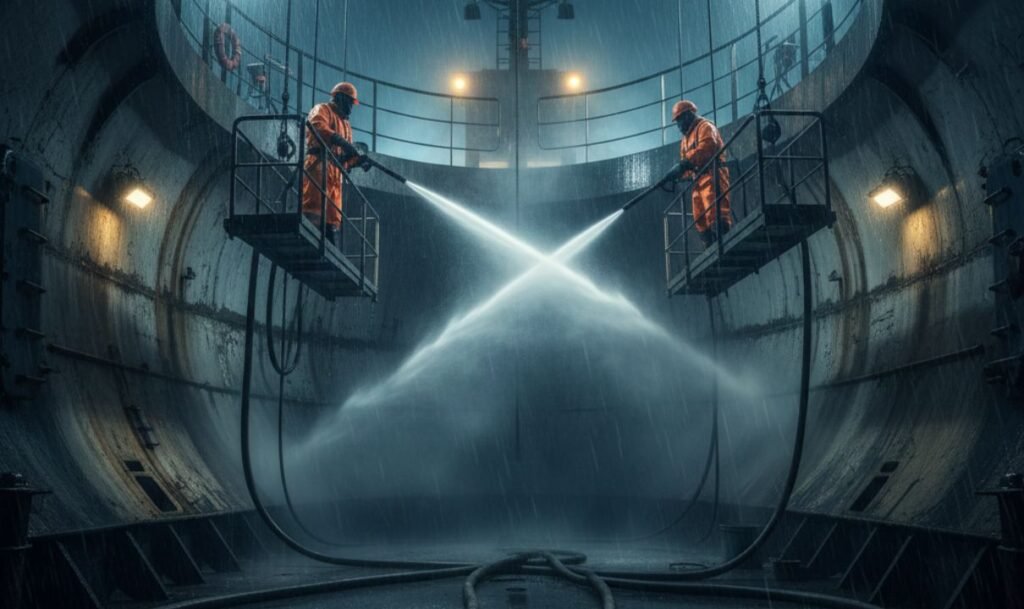
IMCA guidelines require formal risk assessments for confined space entry and high-pressure water use. Operators conducting tank cleaning in Athens Port coordinate closely with port authorities to align safety controls and waste reception plans.
Solution 2: High-Pressure Automated Tank Washing Systems
Modern vessels use fixed or portable tank washing machines operating at pressures above 150 bar. These systems:
- Reduce manual exposure
- Improve cleaning uniformity
- Lower cleaning time
Automation also supports compliance with IMO safety codes by minimizing human entry into hazardous environments. For crude and product tankers calling Athens, this method improves both efficiency and safety margins.
Solution 3: Sludge Removal and Residue Management
Sludge accumulation is common after heavy fuel oil or crude cargoes. Proper removal requires vacuum systems and certified waste handling procedures.
Under the MARPOL Convention, sludge disposal must be documented in the Oil Record Book. Athens Port provides approved reception facilities aligned with IAPH environmental best practices.
Professional contractors handling tank cleaning in Athens Port ensure full traceability of collected waste.
Solution 4: Chemical Cleaning for Product and Chemical Tankers
Product tankers carrying refined fuels or chemicals often require detergent or chemical cleaning agents to remove persistent residues.
The selection of cleaning chemicals must consider:
- Cargo compatibility
- Coating protection
- Environmental impact
Improper chemical use can damage epoxy coatings and create environmental non-compliance. Strict adherence to manufacturer and IMO guidelines is mandatory.
Solution 5: Gas Freeing and Ventilation Protocols
Gas freeing is a high-risk stage. Hydrocarbon vapors must be reduced below Lower Explosive Limits (LEL) before tank entry.
Certified gas detectors are used to measure oxygen levels and flammable gases. IMCA guidance emphasizes continuous monitoring during confined space entry.
Safe gas freeing is a cornerstone of tank cleaning in Athens Port, especially given high port traffic and strict safety oversight.
Solution 6: Wall Wash Testing and Cargo Quality Assurance
For chemical and clean petroleum product tankers, wall wash tests confirm tank cleanliness before loading sensitive cargoes.
Marine superintendents follow internationally recognized quality standards, including Marine Supercargo Final Quality Rules, to ensure no contamination risks remain.
Wall wash failures can delay loading windows and incur demurrage. Precision cleaning protects commercial timelines.
Solution 7: Environmental Protection and Zero-Discharge Practices
Athens Port operates under strong environmental monitoring. Overboard discharge of oily residues is strictly prohibited within port limits.
Compliance with MARPOL Annex I and Annex V ensures:
- No illegal discharge
- Proper garbage segregation
- Full documentation
Operators performing tank cleaning in Athens Port must integrate spill prevention measures, secondary containment, and emergency response readiness.
Onshore Support and Specialist Contractors
Reliable tank cleaning requires experienced teams with confined space certification and marine insurance coverage.
Industry benchmarks such as Cleanship.co demonstrate how structured safety management systems, trained technicians, and environmental accountability define modern marine services.
Neutral benchmarking against such operators helps shipowners evaluate service quality when arranging tank cleaning in Athens Port.
Safety Culture and Crew Protection
Tank cleaning presents multiple hazards:
- Toxic vapors
- Oxygen deficiency
- Slips and falls
- High-pressure equipment injuries
Strict compliance with IMO safety codes and IMCA best practices reduces incidents. Personal protective equipment, permit-to-work systems, and standby rescue teams are not optional—they are operational essentials.
Port Coordination and Terminal Requirements
Athens terminals often require documentation before granting cleaning approvals. This may include:
- Risk assessments
- Waste disposal plans
- Confirmation of MARPOL compliance
Terminal vetting teams review cleaning procedures to ensure they align with environmental and safety regulations.
Time Management and Commercial Efficiency
Turnaround efficiency matters. Poor planning during tank cleaning in Athens Port can result in berth extension costs and missed laycans.
Effective contractors coordinate cleaning alongside other port services, such as inspections and bunker operations, to minimize idle time.
Digital Reporting and Documentation Standards
Modern tank cleaning includes digital reporting systems that log:
- Washing cycles
- Chemical use
- Waste volumes
- Gas readings
Accurate documentation supports PSC inspections and charterer transparency.
Cost Control Without Compromising Compliance
Cost-cutting in tank cleaning can lead to larger financial exposure through cargo claims or regulatory penalties.
Smart operators prioritize compliance first. Efficient methods reduce water usage, chemical waste, and labor time without reducing cleaning standards.
Risk of Non-Compliance in European Waters
European ports enforce strict environmental standards. Non-compliance during tank cleaning in Athens Port may result in detention, fines, or insurance complications.
Greek maritime authorities actively monitor discharge practices and record-keeping accuracy.
Industry Evolution and Sustainability Goals
The maritime sector is moving toward greener practices. Energy-efficient pumps, biodegradable detergents, and closed-loop cleaning systems support sustainability objectives aligned with IAPH environmental initiatives.
Sustainable tank cleaning is no longer optional—it is part of responsible maritime operations.
Conclusion: Delivering Safe and Compliant Tank Cleaning
Professional tank cleaning in Athens Port protects cargo integrity, crew safety, and environmental compliance. It requires technical expertise, structured planning, strict adherence to IMO, IMCA, MARPOL Convention, and IAPH standards, and disciplined documentation.
Vessel operators who prioritize safety, environmental accountability, and proven service providers reduce operational risk and safeguard commercial performance. For shipowners and charterers seeking dependable results, partnering with experienced, compliance-focused contractors ensures smooth port stays and uninterrupted global trade. Engage certified professionals who understand both international regulations and local port dynamics to secure safe, efficient outcomes.
FAQs:
Duration depends on cargo type, tank size, and contamination level. Simple product cleaning may take 12–24 hours, while crude residue removal may require longer.
No. MARPOL Convention rules prohibit unauthorized discharge within port limits.
No. They are required primarily for chemical and sensitive product cargoes.
Port State Control, terminal representatives, and flag state inspectors may review documentation and procedures.
Confined space entry and flammable vapors present the highest risk, requiring strict gas monitoring and permit systems.