
Ship Hold Cleaning in Kakinada
Ship Hold Cleaning in Kakinada is not just a port-side service—it is a compliance safeguard, a cargo protection measure, and a financial decision. When your bulk carrier discharges coal, limestone, fertilizer, or food grains along India’s east coast, the condition of the cargo hold determines whether you load the next shipment smoothly or face delays and claims. In modern shipping, a clean hold equals operational credibility.
Kakinada’s growing cargo movement makes professional cleaning standards critical. Let us examine seven proven solutions that define effective bulk carrier hold preparation in this important Indian port.
The Strategic Importance of Kakinada Port
Kakinada Port serves as a key gateway for bulk commodities, edible oils, and agricultural exports. Vessels frequently switch between cargo types here, which increases contamination risk.
When cargo changes from coal to grain, even minor residue can cause rejection. That is why structured cargo hold preparation in Kakinada has become an operational priority rather than a routine activity.
Regulatory Framework Governing Marine Cleaning
Every cleaning operation aligns with global maritime regulations. The International Maritime Organization sets safety and environmental rules. The MARPOL Convention governs pollution prevention. The International Marine Contractors Association supports safety standards for contractors. The International Association of Ports and Harbors promotes standardized port practices.
Compliance is not theoretical. Inspectors may review cleaning records before granting loading permission.
Why India Is Emerging in Marine Cleaning Excellence
India handles diverse cargo volumes across its coastline. This exposure has built technical competence in tank and hold cleaning operations. Indian marine teams are experienced with:
- High-humidity coastal conditions
- Rapid cargo turnaround cycles
- Grain-clean and hospital-clean standards
This operational depth strengthens Ship Hold Cleaning in Kakinada and other regional ports.
Understanding Bulk Carrier Hold Cleaning Standards
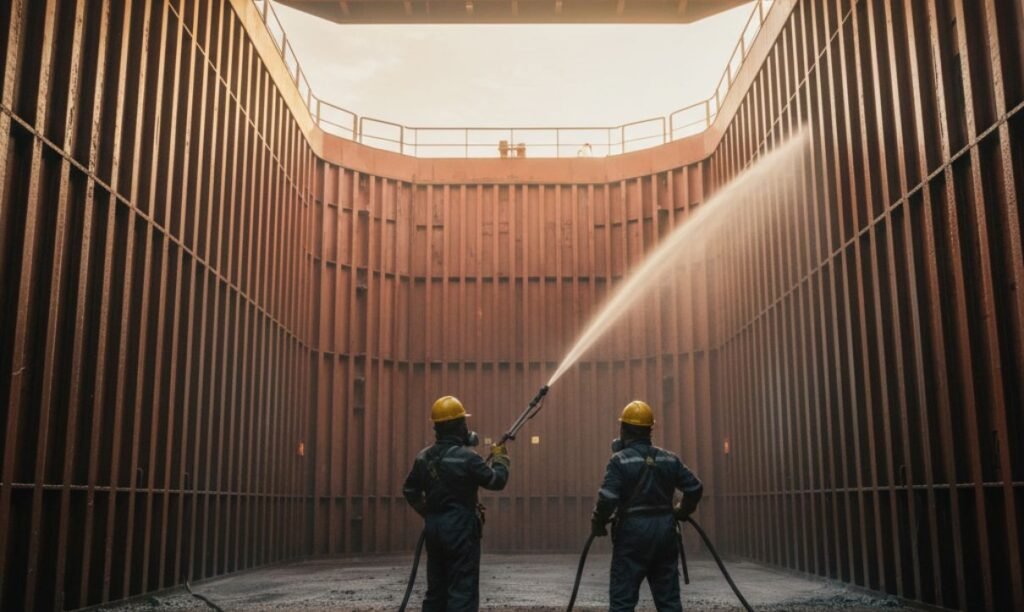
Cleaning standards depend on the next cargo requirement. Common classifications include:
- Shovel Clean: No loose residues remain.
- Grain Clean: No rust scale, flaking paint, or previous cargo traces.
- Hospital Clean: Highest standard for sensitive food cargo.
Each level requires increasing preparation, inspection, and documentation.
Solution 1: Pre-Arrival Planning for Ship Hold Cleaning in Kakinada
Preparation begins before berth allocation.
We assess:
- Previous cargo type
- Charter party clauses
- Cargo sensitivity
- Inspection expectations
This planning avoids last-minute surprises and reduces port stay.
Solution 2: Mechanical Residue Removal in Bulk Cargo Holds
After discharge, manual removal comes first.
Teams:
- Sweep loose cargo
- Scrape hardened deposits
- Remove dunnage and debris
Skipping this step increases washing time and cost. Think of it like clearing rubble before repainting a building.
Solution 3: High-Pressure Washing for Cargo Hold Preparation
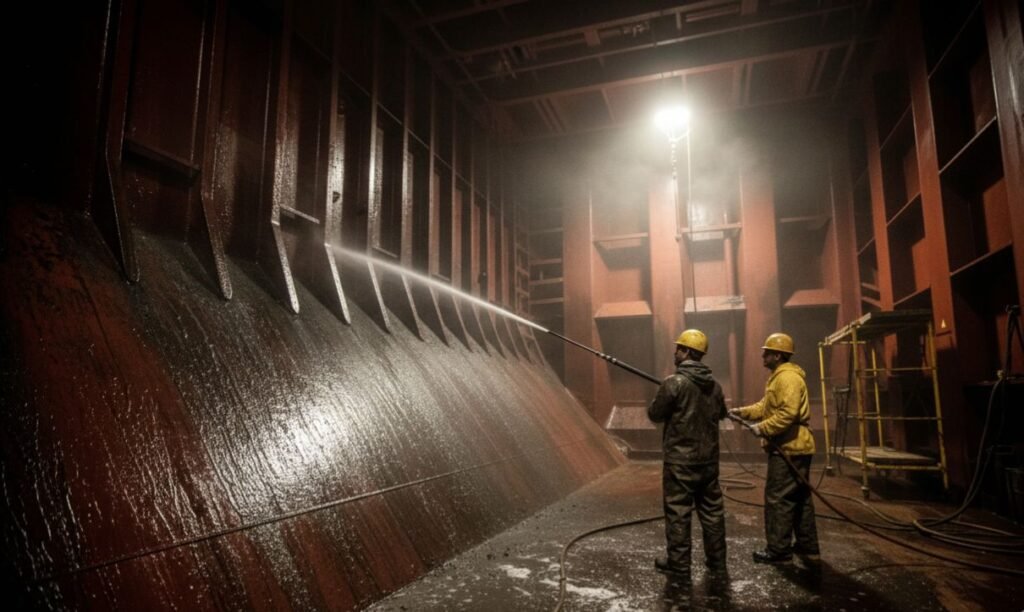
High-pressure water systems remove embedded residues and salt deposits. Pressure must match coating tolerance to prevent damage.
In humid Indian conditions, salt accumulation accelerates corrosion. Proper washing extends structural life.
Solution 4: Chemical Cleaning for Stubborn Contamination
Certain cargoes leave oily or reactive residues. Approved cleaning agents break down:
- Grease films
- Chemical traces
- Persistent odors
All discharge processes must comply with MARPOL waste management standards.
Solution 5: Drying and Ventilation Management
Moisture left inside holds causes rust and cargo damage. Ventilation systems circulate dry air to eliminate condensation.
Confined space safety procedures follow IMO and IMCA guidelines. Gas monitoring ensures crew protection during entry.
Solution 6: Marine Supercargo Inspection & Verification
Before loading, independent inspectors verify cleanliness against charter standards. Industry references such as World Ports and established Marine Supercargo practices support structured evaluation under recognized Final Quality Rules.
Inspection typically includes:
- Structural condition review
- Cleanliness grading
- Photographic documentation
- Approval certification
This step protects owners and charterers from cargo claims.
Solution 7: Documentation & Compliance Workflow
Professional cleaning ends with paperwork.
Essential records include:
- Cleaning logs
- Chemical usage details
- Waste disposal certificates
- Inspector approval reports
Without documentation, compliance cannot be proven—even if holds are clean.
Integrated Tank and Hold Cleaning Standards
Modern marine service providers integrate both tank and bulk carrier cleaning operations. Tank cleaning addresses liquid cargo residues, while hold cleaning focuses on dry bulk compartments.
Industry examples like Cleanship.co demonstrate how global tank and hold cleaning operations combine cargo supervision and compliance support. Their structured workflows also include drug and alcohol testing services to strengthen onboard safety culture.
Integration reduces operational gaps.
Safety Protocols in Marine Cleaning Operations
Cleaning inside cargo holds involves confined spaces, slippery surfaces, and high-pressure systems.
Safety measures include:
- Gas detection monitoring
- Personal protective equipment
- Rescue preparedness
- Lockout procedures
Safety compliance is not optional. It reduces injury risk and prevents operational downtime.
Environmental Protection and Cost Efficiency
Improper disposal of wash water damages marine ecosystems and violates international rules. Environmental compliance prevents fines and reputational damage.
Cost efficiency arises from:
- Faster turnaround
- Reduced corrosion repair
- Lower cargo rejection risk
- Improved charter reliability
A clean hold is an investment, not an expense.
Bulk Carrier Cleaning in Indian Coastal Conditions
India’s east coast presents humidity, salinity, and seasonal monsoon challenges. These factors influence:
- Rust formation rates
- Drying time requirements
- Surface coating durability
Effective cargo hold preparation in Kakinada adapts to these environmental variables.
Inspection Workflow from Discharge to Approval
The cleaning lifecycle follows a structured sequence:
- Cargo discharge
- Mechanical cleaning
- Washing and chemical treatment
- Drying and ventilation
- Internal inspection
- Final documentation
Each stage builds compliance evidence.
Future Trends in Marine Cleaning Innovation
Marine cleaning is evolving. Emerging technologies include:
- Automated washing robots
- Real-time moisture sensors
- Digital inspection platforms
- Predictive corrosion analytics
These tools reduce manual risk and improve transparency. Innovation strengthens regulatory alignment and operational reliability.-
Compliance-Driven Maritime Service Standards
Ship Hold Cleaning in Kakinada succeeds when technical precision aligns with international rules. Global compliance frameworks from IMO, MARPOL, IMCA, and IAPH provide structure. Professional organizations increasingly emphasize documentation traceability and quality verification.
Neutral industry operators such as Cleanship.co illustrate how compliance support, cargo supervision, and safety programs enhance maritime service integrity without overpromising.
Conclusion
Ship Hold Cleaning in Kakinada requires disciplined planning, structured cleaning stages, and strict regulatory compliance. First, adherence to IMO and MARPOL standards protects the environment and ensures legal security. Second, systematic inspection and documentation safeguard charter commitments. Third, integrated safety and supervision practices reduce operational risk and delays.
In a competitive shipping market, precision defines reliability. For vessel operators seeking compliance assurance, cargo supervision, and globally aligned marine cleaning standards, Cleanship.co offers a dependable pathway to maritime service excellence and operational confidence.
FAQs:
Tank cleaning applies to liquid cargo vessels such as oil or chemical tankers, while hold cleaning focuses on dry bulk carriers. Each requires specialized equipment, safety measures, and inspection standards aligned with international maritime regulations.
Cleaning time depends on cargo type and required cleanliness grade. Shovel clean may require several hours, while grain-clean standards can extend over one or two days, including washing, drying, inspection, and documentation processes.
Inspection verifies compliance with charter party clauses and international standards. Independent marine supercargo review reduces cargo rejection risk and protects vessel owners from financial claims due to contamination.
Not always. Mechanical removal and high-pressure washing may suffice for dry cargo residues. Chemicals are used when contamination persists, particularly after oily or reactive cargoes, and must meet MARPOL environmental standards.
Documentation provides evidence of cleaning procedures, waste disposal, and inspection approval. Port authorities and charterers rely on written records to confirm adherence to international maritime regulations and contractual obligations.