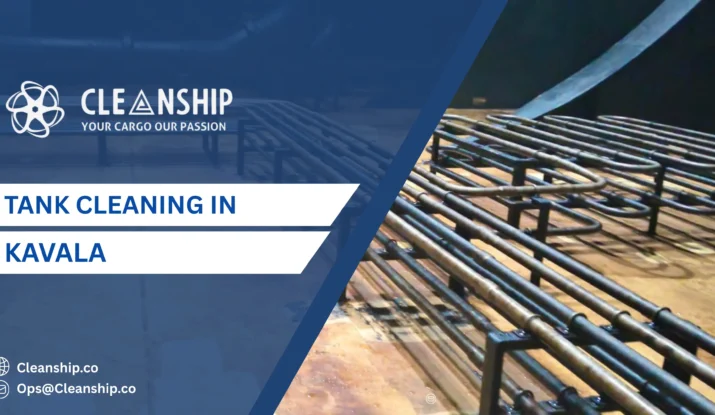
Tank Cleaning in Kavala
Tank cleaning in Kavala is a mission-critical service for tankers, bulk carriers, and multipurpose vessels calling at this strategic Greek port. When you prepare a vessel for the next cargo, compliance and cleanliness are not optional—they define your commercial reputation. From petroleum residues to chemical traces and grain contamination, professional marine tank cleaning ensures safety, environmental protection, and smooth charter acceptance.
Kavala’s position in the northern Aegean makes it a vital link between the Mediterranean and Black Sea trades. That location demands strict operational discipline and alignment with global maritime standards.
Why Kavala Is Strategically Important for Marine Cleaning Operations
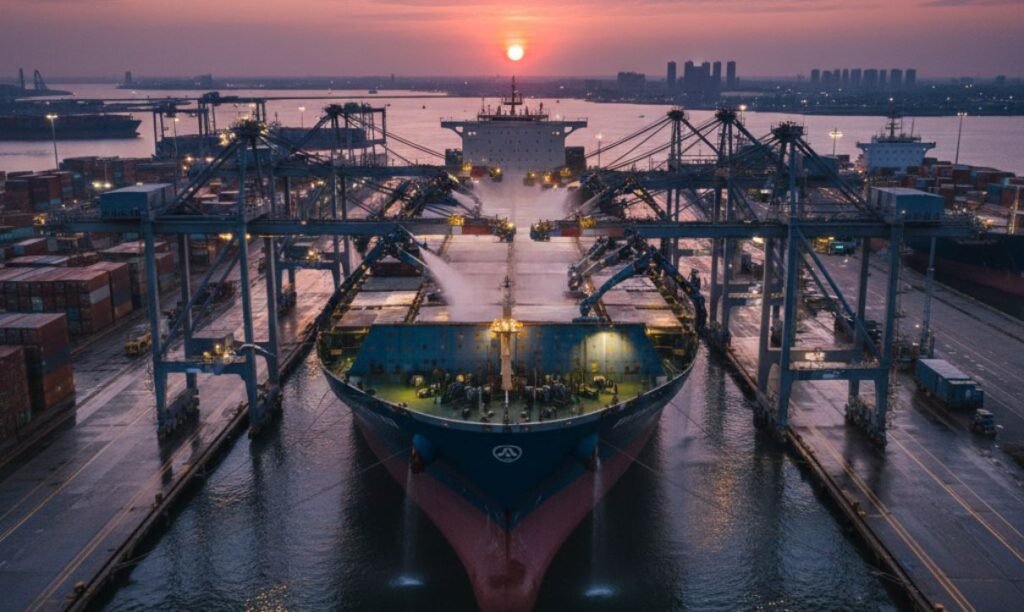
Kavala supports regional oil, dry bulk, and general cargo movements. Vessels often arrive after multi-port voyages with mixed cargo histories. That means residues vary widely, from heavy fuel oil to agricultural dust.
In such an environment, tank cleaning in Kavala must be precise and methodical. A rushed job can trigger survey rejections, demurrage, or environmental penalties. Port authorities aligned with global port frameworks such as IAPH World Ports expect documented, verifiable cleaning procedures.
India’s Growing Influence in Marine Cleaning Expertise
India has emerged as a technical backbone in marine services. Indian inspection agencies, marine superintendents, and cleaning specialists now support vessels worldwide.
Why does this matter in Kavala?
Because:
- Indian marine engineers often manage global fleets.
- Technical service providers trained in India bring cost-efficient, process-driven cleaning systems.
- Digital documentation workflows pioneered in Indian ports improve compliance accuracy.
You increasingly see collaboration between European ports and Indian-trained marine professionals to maintain standardized cleaning protocols.
Regulatory Framework Governing Tank Cleaning in Kavala
Compliance defines modern maritime operations. Every tank cleaning operation must align with:
- The IMO regulations for pollution prevention
- The MARPOL Convention for discharge control
- IMCA guidance for offshore and marine contractor safety
- IAPH operational best practices for port management
These are not abstract policies. They directly influence:
- Waste disposal procedures
- Sludge handling
- Chemical use approvals
- Crew safety standards
Ignoring these frameworks risks port state control detentions and reputational damage.
Understanding MARPOL and Residue Management
Under the MARPOL Convention, oily residues and chemical washings must be handled through approved reception facilities. In Kavala, waste transfer documentation is mandatory.
You must record:
- Quantity of residues removed
- Type of cleaning agents used
- Disposal facility receipts
- Oil Record Book entries
Without complete documentation, even a technically clean tank can fail compliance checks.
IMCA Guidelines and Safety During Tank Cleaning
IMCA focuses on safety management, particularly in confined space operations. Tank cleaning is a confined space activity. Vapors, oxygen deficiency, and flammable atmospheres are real risks.
Safety protocols include:
- Gas testing before entry
- Continuous atmosphere monitoring
- Rescue readiness plans
- Permit-to-work systems
You cannot treat tank cleaning like washing a warehouse. It is a controlled industrial process.
Solution 1: Pre-Cleaning Inspection and Cargo History Analysis
Effective cargo tank washing in Kavala starts with inspection. We review:
- Previous cargo type
- Tank coating condition
- Heating requirements
- Sludge accumulation
Think of it like a medical diagnosis. You do not prescribe treatment without understanding the symptoms.
Marine supercargo professionals often lead this assessment. They interpret charter party cleanliness clauses and define target standards.
Solution 2: Mechanical Tank Washing Systems
Modern vessels use fixed tank washing machines. These rotating nozzles spray heated water or cleaning chemicals at controlled pressures.
Benefits include:
- Uniform coverage
- Reduced manual entry
- Lower exposure risk for crew
- Faster turnaround times
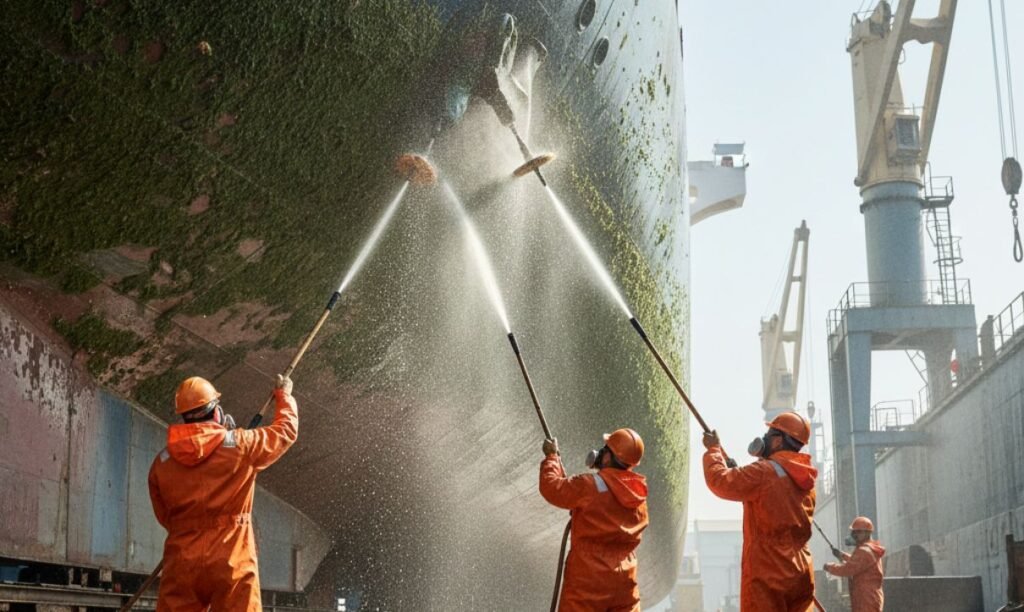
Bulk carrier hold cleaning follows similar principles but requires high-pressure washing for stubborn cargo residues like coal or bauxite dust.
Solution 3: Chemical Cleaning for Complex Residues
Certain cargoes leave polymerized or sticky residues. Mechanical washing alone may not suffice.
Chemical cleaning agents dissolve or emulsify residues. However, selection must align with:
- Tank coating compatibility
- Environmental discharge regulations
- MARPOL discharge categories
Improper chemical use can damage coatings and increase long-term maintenance costs.
Solution 4: Sludge Removal and Waste Transfer Compliance
Sludge accumulation at tank bottoms must be physically removed before final inspection. This step often determines whether tank cleaning in Kavala meets survey standards.
Best practices include:
- Vacuum transfer systems
- Sealed waste containment
- Certified disposal documentation
Port authorities expect traceable waste management records aligned with IMO environmental protocols.
Solution 5: Drying, Ventilation, and Gas-Free Certification
Cleaning does not end with washing. Tanks must be dried and ventilated.
Why?
Because residual moisture or vapors can:
- Contaminate sensitive cargo
- Create flammable conditions
- Delay survey approval
Gas-free certification confirms safe oxygen levels and absence of hazardous vapors before loading the next cargo.
Solution 6: Inspection, Documentation, and Compliance Workflow
Documentation protects your vessel. A structured workflow includes:
- Pre-cleaning risk assessment
- Permit issuance
- Cleaning log entries
- Waste disposal certificates
- Final inspection report
Surveyors often refer to Final Quality Rules before approving holds or tanks for loading grain, chemicals, or refined products.
Digital reporting systems reduce human error and strengthen audit trails.
Solution 7: Continuous Crew Training and Safety Monitoring
Tank and hold cleaning demand skilled crews. Drug and alcohol testing programs, common in responsible marine operators, enhance safety culture.
Companies such as Cleanship.co integrate:
- Global tank and hold cleaning operations
- Cargo supervision and compliance support
- Crew safety monitoring programs
These practices reflect industry maturity rather than marketing claims.
Dry Bulk Carrier Hold Cleaning Standards in Kavala
Dry bulk vessels face unique challenges. Grain cargoes demand “grain clean” standards, meaning no loose rust scale, paint flakes, or previous cargo traces.
For coal or mineral cargoes, wash-down requirements focus on removing corrosive residues.
Inspection checkpoints include:
- Bilge condition
- Frame spaces
- Hatch covers
- Drain channels
Failure at any point can delay loading and increase port costs.
Environmental Protection and Cost Efficiency
Environmental discipline is not just ethical—it is financial strategy.
Clean operations:
- Reduce contamination claims
- Prevent cargo rejection
- Lower demurrage risk
- Protect hull coatings
Spending on professional marine tank washing in Kavala saves far more than emergency corrective cleaning later.
Future Trends in Marine Tank Cleaning Technology
The industry is evolving toward:
- Automated robotic tank cleaners
- Real-time gas monitoring sensors
- Eco-friendly biodegradable detergents
- Digital compliance dashboards
These innovations reduce human exposure and improve precision. As environmental regulations tighten under IMO frameworks, technological adaptation becomes mandatory.
Ports aligned with global initiatives under IAPH are already encouraging greener cleaning technologies.
The Role of Marine Supercargo in Quality Assurance
A marine supercargo acts as an independent quality guardian. They verify cleaning standards, review documentation, and represent charterer interests.
Their involvement:
- Enhances transparency
- Reduces dispute risk
- Confirms adherence to Final Quality Rules
Professional oversight builds trust across shipowners, charterers, and port authorities.
Conclusion
Tank cleaning in Kavala demands more than water and chemicals. It requires regulatory alignment, disciplined workflow, and skilled execution. First, compliance with IMO, MARPOL Convention, and IMCA standards protects your vessel legally and environmentally. Second, structured inspection and documentation workflows prevent costly disputes. Third, trained crews and modern equipment ensure consistent quality.
Marine operations today depend on trust, precision, and traceability. For operators seeking global compliance support, cargo supervision, and high-standard cleaning practices, Cleanship.co represents a professional benchmark in maritime service excellence.
FAQs:
Tank cleaning operations must comply with IMO regulations, MARPOL discharge rules, IMCA safety guidance, and port-specific environmental controls. Proper documentation, waste disposal records, and gas-free certification are essential for passing inspections and avoiding port state control issues.
Bulk carrier hold cleaning focuses on removing solid cargo residues like coal, grain, or minerals. Tanker cleaning involves liquid cargo residues and often requires chemical washing, sludge removal, and strict vapor control due to flammable atmospheres.
Documentation proves regulatory compliance. Cleaning logs, disposal receipts, inspection reports, and oil record book entries protect owners during charter disputes and environmental audits. Without proper paperwork, even a clean tank may fail acceptance.
A marine supercargo supervises cargo operations and verifies cleanliness standards. They ensure tanks or holds meet charter party requirements and Final Quality Rules before loading, reducing the risk of cargo rejection or contamination claims.
Robotic washing systems, automated gas detection, and digital compliance platforms reduce manual entry risks and improve reporting accuracy. These innovations enhance safety, speed, and environmental performance in both tanker and bulk carrier operations.