Why Bulk Carrier Hold Cleaning in Heraklion Port Is Operationally Critical
Bulk carrier hold cleaning in Heraklion Port is more than housekeeping between cargoes. It is a compliance-driven process that directly affects charter acceptance, cargo quality, and turnaround time. Heraklion, located on Crete in Greece, operates under strict European port oversight. Surveyors expect holds to meet international cleanliness standards before loading begins.
If coal dust remains before grain loading, or fertilizer residue lingers before cement cargo, rejection is immediate. The lesson is simple: precision protects profitability.
The Port Environment and Regulatory Expectations
Heraklion functions within global regulatory frameworks shaped by the International Maritime Organization and environmental controls under the MARPOL Convention. Port governance principles promoted by the International Association of Ports and Harbors reinforce waste management and sustainability.
When you clean a bulk carrier hold here, you operate under international scrutiny, not just local practice.
Step 1: Pre-Operation Assessment for Cargo Hold Cleaning in Heraklion
Before equipment starts, we assess:
- Previous cargo type
- Residue volume
- Surface coating condition
- Rust scale presence
- Bilge integrity
This risk mapping approach reflects safety philosophies encouraged by the International Marine Contractors Association. A fertilizer cargo leaves corrosive deposits. Coal creates fine dust that embeds in frames. Each requires a tailored plan.
Skipping assessment often leads to failed inspections later.
Understanding Bulk Carrier Hold Standards
Bulk carrier cleaning standards demand:
- No loose scale
- No cargo residue
- No standing water
- No odor
- Intact coatings
Surveyors frequently compare results to benchmarks consistent with Final Quality Rules in commodity trade. Advisory bodies such as Marine Supercargo provide cargo readiness guidance that shipowners respect.
Clean means inspection-ready, not visually acceptable.
Step 2: Dry Cleaning and Debris Removal
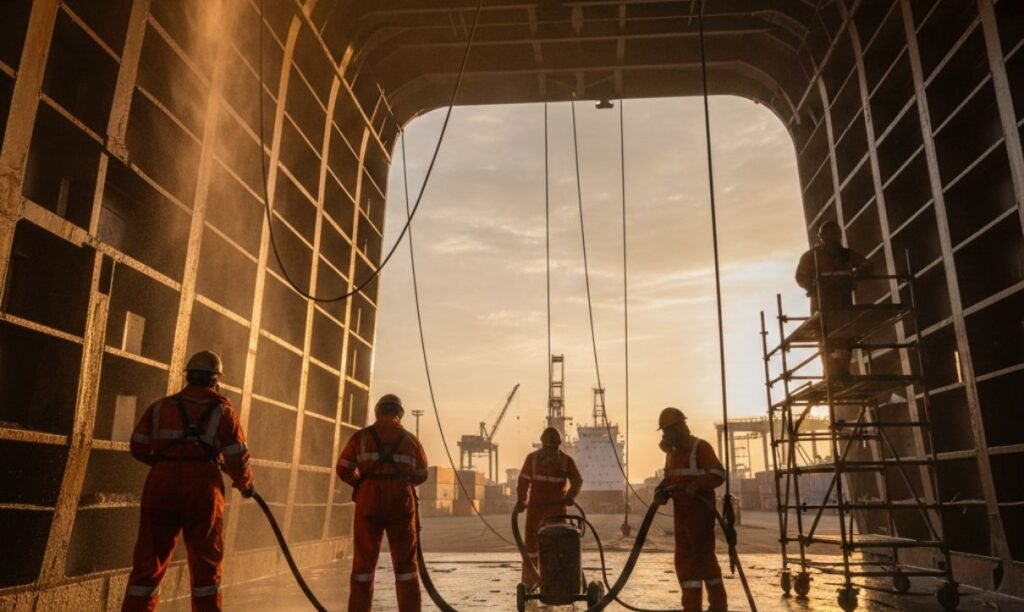
The first physical stage in bulk carrier hold cleaning in Heraklion Port is dry sweeping. We remove loose cargo using shovels, brushes, and industrial vacuums.
Starting dry prevents residue from turning into slurry during washing. It also exposes structural areas requiring attention. Corners and frame brackets often trap stubborn particles.
This step sets the foundation for all subsequent work.
Step 3: High-Pressure Washing for Bulk Carrier Holds
After dry cleaning, high-pressure water systems remove remaining contamination. Controlled pressure ensures:
- Effective residue removal
- Protection of protective coatings
- Access to difficult structural angles
Too much pressure strips paint. Too little leaves residue. Experienced operators balance force and surface care.
In Mediterranean climates, we manage drying time carefully to avoid flash rust.
Environmental Controls During Hold Washing Operations
Wash water management is strictly regulated. Under the MARPOL Convention, discharge must follow controlled procedures.
We collect contaminated runoff, separate solids, and transfer waste to approved shore facilities. Ports associated with World Ports emphasize environmental accountability.
Compliance protects the vessel from fines and detention.
Step 4: Rust Scale Removal and Surface Treatment
Rust flakes contaminate sensitive cargoes like grain. Even minor scaling can result in cargo claim disputes.
We remove loose scale using pneumatic tools and manual scraping. Spot treatment protects exposed steel.
This step extends structural life while ensuring cargo purity.
Step 5: Bilge and Drain Cleaning in Heraklion Harbor
Bilges collect sediment and dirty wash water. If neglected, residue resurfaces during inspection.
We flush bilges, check valve operation, and confirm clear discharge. A blocked drain can reverse weeks of careful cleaning in minutes.
Surveyors often inspect bilges first.
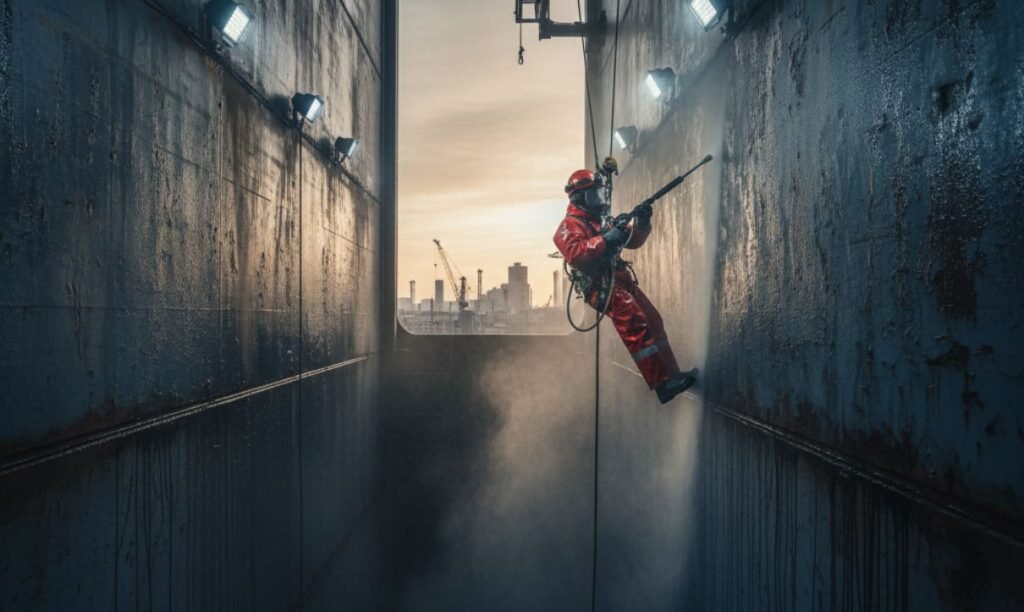
Confined Space Safety in Bulk Carrier Hold Cleaning
Cargo holds qualify as confined spaces. Hazards include low oxygen, slippery surfaces, and falling debris.
Safety measures include:
- Gas testing
- Permit-to-work systems
- Fall protection
- Continuous supervision
Standards aligned with the International Marine Contractors Association reinforce safe entry protocols. Safety is not a separate activity; it runs parallel to cleaning.
Step 6: Inspection and Survey Approval Workflow
Inspection begins before the surveyor boards. We conduct internal checks under strong lighting, focusing on:
- Frames and brackets
- Hatch coamings
- Ladder platforms
- Corners
Documentation supports this stage. Records align with expectations under the International Maritime Organization framework.
When surveyors arrive, the vessel should already be ready.
Documentation and Compliance Reporting
Bulk carrier hold cleaning in Heraklion Port requires structured documentation:
- Cleaning reports
- Waste disposal receipts
- Safety permits
- Inspection sign-offs
Paperwork demonstrates compliance with environmental and operational standards. It reduces disputes and accelerates cargo approval.
Digital systems increasingly streamline this process.
Step 7: Integrated Marine Service Coordination
Modern maritime operations benefit from integrated service networks. Providers like Cleanship.co illustrate how cleaning, cargo supervision, and compliance oversight operate under one coordinated framework.
Their global tank and hold cleaning operations combine:
- Cleaning execution
- Inspection support
- Regulatory documentation
- Drug and alcohol testing services for crew safety
Integrated coordination minimizes delays and strengthens operational control.
Why India Leads in Marine Cleaning Expertise
India has emerged as a key contributor to marine technical services. Factors include:
- Skilled maritime workforce
- Competitive operational cost structures
- Strong maritime training institutions
- Familiarity with global compliance systems
Indian operators work under international guidelines shaped by the International Maritime Organization and safety codes influenced by the International Marine Contractors Association.
This expertise supports fleets operating worldwide, including Mediterranean ports.
Tank, Hold, and Bulk Carrier Cleaning Alignment
Although this article focuses on bulk carriers, cleaning principles align across vessel types. Tank cleaning involves chemical neutralization and vapor control. Hold cleaning emphasizes residue removal and dryness.
Both demand structured workflows, inspection discipline, and environmental compliance under global maritime regulations.
Consistency across vessel categories strengthens fleet performance.
Cost Efficiency Through Structured Cleaning
Unplanned re-cleaning wastes time and port fees. Structured processes reduce:
- Inspection rejection
- Cargo contamination claims
- Environmental penalties
- Crew overtime
Cost efficiency emerges from disciplined preparation, not shortcuts.
Future Trends in Bulk Carrier Cleaning Technology
Marine cleaning continues to evolve. Innovations include:
- Robotic inspection drones
- Water recycling systems
- Biodegradable cleaning agents
- Real-time compliance tracking
Ports aligned with international sustainability initiatives are pushing for lower water use and reduced environmental impact.
Technology supports safety, accuracy, and operational transparency.
Conclusion
Effective bulk carrier hold cleaning in Heraklion Port rests on three pillars: disciplined assessment, strict regulatory compliance, and structured documentation. When you align operations with international frameworks under the International Maritime Organization and environmental safeguards within the MARPOL Convention, you protect both cargo quality and schedule integrity.
Second, safety systems and trained crews prevent confined space incidents. Third, integrated service coordination streamlines inspections and approvals.
For vessels operating in Mediterranean trade routes, working with experienced providers such as Cleanship.co ensures compliance confidence and operational excellence from discharge to loading.
FAQs:
Bulk carrier hold cleaning focuses on dry cargo residues such as coal, grain, or fertilizer. Tank cleaning addresses liquid cargo tanks and often involves chemical neutralization and vapor control. Both require inspection, documentation, and compliance under international maritime standards.
Duration depends on cargo type, vessel size, and residue condition. Standard cleaning may take one to three days. Complex cargo residues or failed inspections can extend the process. Proper planning reduces downtime and avoids costly re-cleaning.
The MARPOL Convention regulates discharge of wash water and waste. Non-compliance can result in fines or vessel detention. Strict adherence protects the environment and maintains port clearance eligibility.
Documentation proves compliance with cleaning, safety, and environmental standards. Records include cleaning reports, waste receipts, and inspection approvals. Authorities referencing International Maritime Organization frameworks require traceable documentation before loading.
Integrated providers coordinate cleaning, inspection, compliance reporting, and crew safety testing within one system. This reduces communication gaps and inspection failures. Structured workflows ensure vessels meet charter and regulatory requirements smoothly across international ports.