
Cargo Hold Cleaning in Al Khaimah Port
Cargo hold cleaning in Al Khaimah Port is not just a routine chore between voyages. It is a controlled technical operation that protects cargo integrity, ensures regulatory compliance, and safeguards crew health. When you discharge coal, clinker, grain, or fertilizer, residues remain embedded in frames, bilges, and hatch covers. If you fail to clean correctly, the next cargo can be rejected, contaminated, or downgraded. In a competitive port environment, precision matters.
This guide explains seven proven tips that help shipowners, masters, and supercargo teams manage hold cleaning efficiently and compliantly.
Why India Plays a Strategic Role in Marine Cleaning
India has emerged as a major hub for marine technical services. Ports along the western coast support bulk carriers, tankers, and multipurpose vessels trading across the Middle East and Asia. Skilled labor, competitive costs, and growing compliance awareness make India an operational backbone for hold and tank cleaning support.
You see this especially in port ecosystems connected with global trade routes. Indian marine service providers increasingly align with international frameworks, ensuring vessels meet inspection standards before loading at major ports worldwide.
Understanding Cargo Hold Cleaning Operations
Before diving into the tips, let’s clarify what we mean by cargo hold cleaning.
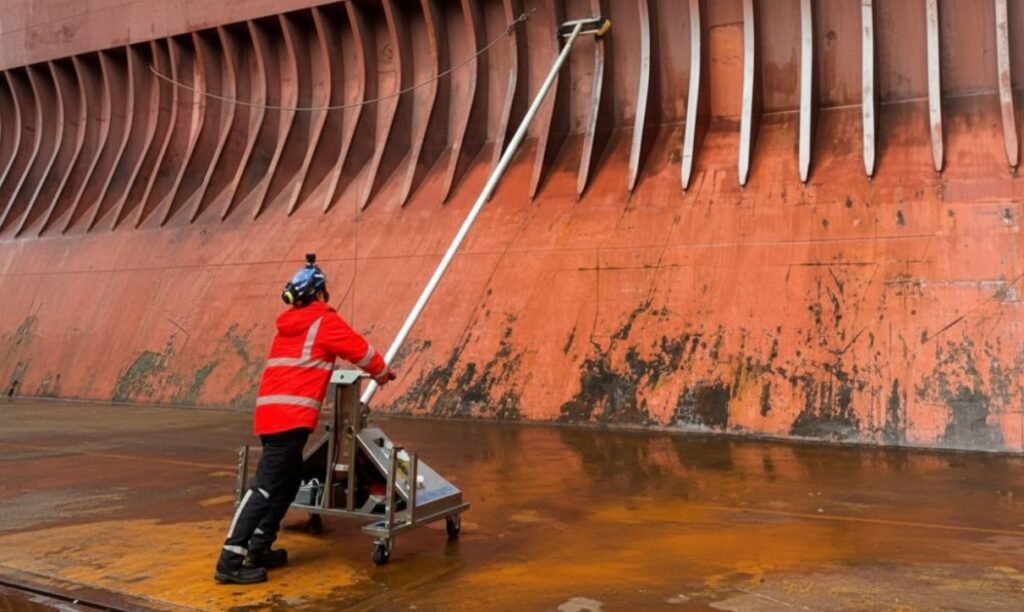
A cargo hold is the internal compartment of a bulk carrier where dry cargo is stored. Cleaning involves:
- Removal of loose residues
- Washing with seawater or freshwater
- Degreasing (if required)
- Drying and ventilation
- Final inspection and certification
Think of a cargo hold like a laboratory surface. If even a thin layer of chemical dust remains, it can react with the next product. The same logic applies to grain after coal, or cement after fertilizer.
Regulatory Framework Governing Hold Cleaning
IMO Standards and Safety Expectations
The International Maritime Organization sets global maritime safety and environmental standards. While it does not issue step-by-step cleaning manuals, its conventions influence operational best practices.
Compliance affects your vessel’s port state control inspections and charterer approvals.
MARPOL and Environmental Protection
The MARPOL Convention governs pollution from ships. Improper disposal of wash water or residues can lead to heavy fines and vessel detention.
You must manage wash water discharge in accordance with MARPOL Annex V. Sloppy cleaning is not just inefficient; it is illegal.
IMCA Safety Guidance
The International Marine Contractors Association provides safety guidance relevant to marine contractors. Confined space entry, gas testing, and PPE standards are central to safe hold cleaning.
IAPH and Port Best Practices
The International Association of Ports and Harbors promotes sustainable port operations. Ports increasingly demand documented environmental compliance before granting clearance.
7 Proven Tips for Cargo Hold Cleaning in Al Khaimah Port
1. Conduct a Pre-Clean Risk Assessment
Before starting cargo hold cleaning in Al Khaimah Port, evaluate:
- Previous cargo type
- Residue hazard classification
- Required cleanliness standard
- Ventilation and confined space risks
A structured toolbox talk with crew reduces accidents and rework.
2. Match Cleaning Method to Previous Cargo
Coal residue differs from grain dust. Fertilizer behaves differently from bauxite.
Use:
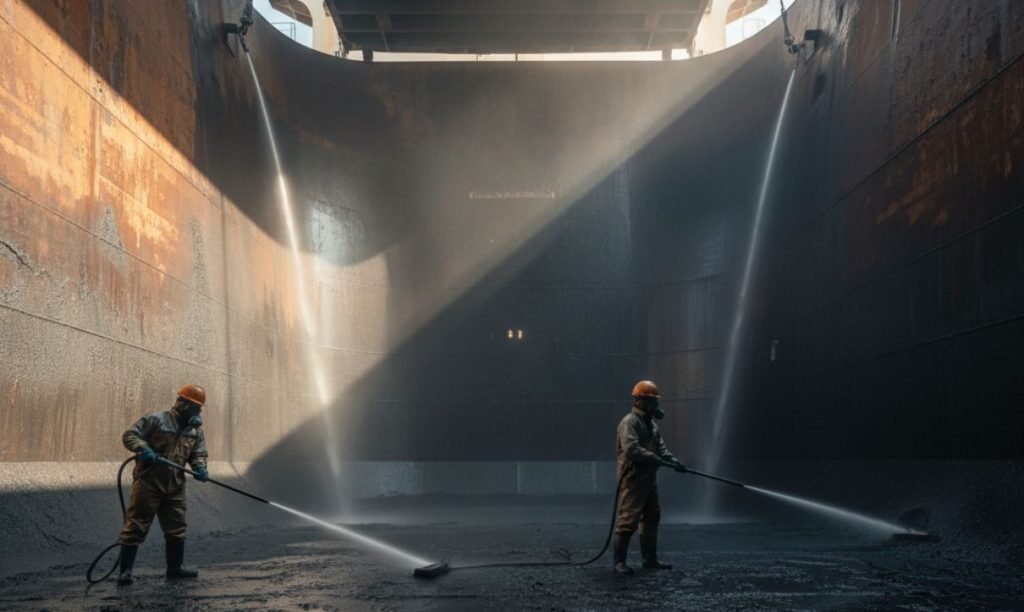
- High-pressure seawater for heavy mineral residues
- Freshwater rinse for food-grade transitions
- Approved degreasers for oily contamination
Cleaning without strategy wastes time and water.
3. Protect Coatings and Steel Structure
Aggressive washing can damage epoxy coatings. Once coatings fail, corrosion begins. Corrosion traps residues, making future cleaning harder and more expensive.
Use controlled pressure levels and inspect frames, ladders, and tank tops after washing.
4. Manage Bilges and Drainage Properly
Residues often settle in bilge wells. If not removed, they become a contamination source.
You should:
- Pump out bilges thoroughly
- Clean strainers
- Inspect non-return valves
A hold that looks clean but has contaminated bilges will fail inspection.
5. Drying Is as Critical as Washing
Moisture damages grain cargo and encourages corrosion.
Use:
- Natural ventilation where possible
- Forced air blowers if humidity is high
- Moisture meters before inspection
In humid conditions near Al Khaimah, drying planning is essential.
6. Document Every Step
Charterers increasingly demand transparency. Maintain:
- Cleaning logs
- Chemical usage records
- Crew safety checklists
- Photographic evidence
Proper documentation aligns with expectations seen in global cargo supervision practices such as those followed by Cleanship.co.
7. Conduct Independent Inspection Before Loading
Never rely solely on crew self-verification. Supercargo inspection ensures compliance with charter party requirements.
Industry references like World Ports and Marine Supercargo highlight how third-party checks reduce cargo claims.
Bulk Carrier Cleaning Standards
Bulk carriers require tailored procedures depending on cargo class:
- Food-grade transition (grain after coal)
- Chemical-sensitive cargo
- High-density mineral cargo
The Final Quality Rules often guide final acceptance standards. A failed hold inspection can delay loading by days.
In practical terms, you are not cleaning for appearance. You are cleaning for measurable compliance.
Tank, Hold, and Bulk Carrier Cleaning Integration
Although this article focuses on cargo hold cleaning in Al Khaimah Port, integrated cleaning practices matter across vessel types.
- Tank cleaning follows stricter chemical compatibility rules.
- Hold cleaning prioritizes residue removal and dryness.
- Bulk carrier standards emphasize structural inspection and corrosion control.
Companies like Cleanship.co typically operate across tank and hold cleaning sectors, offering compliance alignment and crew safety programs, including drug and alcohol testing services that support safer confined space work.
Inspection and Compliance Workflow
A professional workflow usually follows this sequence:
- Discharge completion
- Gross residue removal
- Washdown
- Bilge cleaning
- Drying and ventilation
- Internal inspection
- Documentation review
- Supercargo approval
Each step reduces the probability of cargo rejection.
Think of it like aviation pre-flight checks. You do not skip steps because the previous flight was smooth.
Safety in Confined Spaces
Cargo holds are confined spaces. Hazards include:
- Oxygen deficiency
- Toxic gases
- Slippery surfaces
- Falling debris
Gas testing and entry permits are mandatory. The human factor matters. Crew fatigue increases accident risk. Strong safety culture is non-negotiable.
Environmental and Cost Efficiency Benefits
Effective cargo hold cleaning in Al Khaimah Port reduces:
- Cargo claims
- Demurrage
- Corrosion-related repairs
- Port penalties
Environmental compliance protects marine ecosystems. Clean operations are not just ethical; they are economically rational.
Future Trends in Marine Cleaning
Technology is reshaping marine cleaning operations.
Emerging trends include:
- Automated high-pressure washing systems
- Drone-based hold inspections
- Digital cleaning logs integrated with port authorities
- Eco-friendly biodegradable cleaning agents
Ports aligned with international sustainability goals are pushing for lower water consumption and controlled discharge.
Data transparency is becoming the new compliance currency.
Operational Realities at Al Khaimah
Al Khaimah’s climatic conditions—heat and humidity—affect drying time and corrosion rates. Planning must consider weather windows.
If you rush drying, you risk moisture entrapment. If you delay unnecessarily, you incur port charges. Precision scheduling becomes part of cleaning strategy.
Conclusion
Cargo hold cleaning in Al Khaimah Port demands discipline, technical understanding, and strict regulatory alignment. Three principles stand out. First, compliance with IMO and MARPOL frameworks protects your vessel and reputation. Second, structured inspection and documentation prevent costly cargo claims. Third, safety in confined spaces must remain central to every operation.
Professional operators increasingly rely on structured service models similar to those practiced by Cleanship.co, integrating hold cleaning, cargo supervision, and crew safety programs. For vessels calling at Al Khaimah, partnering with experienced maritime service providers ensures compliance, operational continuity, and long-term asset protection.
FAQs:
Acceptance depends on charter party terms and cargo sensitivity. Inspectors typically check for visible residues, moisture, odor, and coating damage. Grain cargo requires stricter dryness standards compared to mineral cargo.
Duration varies based on previous cargo and hold condition. Light residue may require one day, while heavy mineral or fertilizer residues can take several days including drying and inspection.
Not always. Seawater is commonly used for initial washing. Freshwater rinsing is required when transitioning to food-grade cargo or when salts could contaminate the next load.
Confined space hazards include oxygen deficiency, toxic gases, and slips. Proper gas testing, ventilation, PPE, and entry permits are essential before crew enter holds.
Documentation proves compliance with environmental and charter requirements. Cleaning logs, inspection records, and photographs reduce disputes and protect owners against cargo claims.