
- Your cart is empty Browse Shop
30
Apr, 26
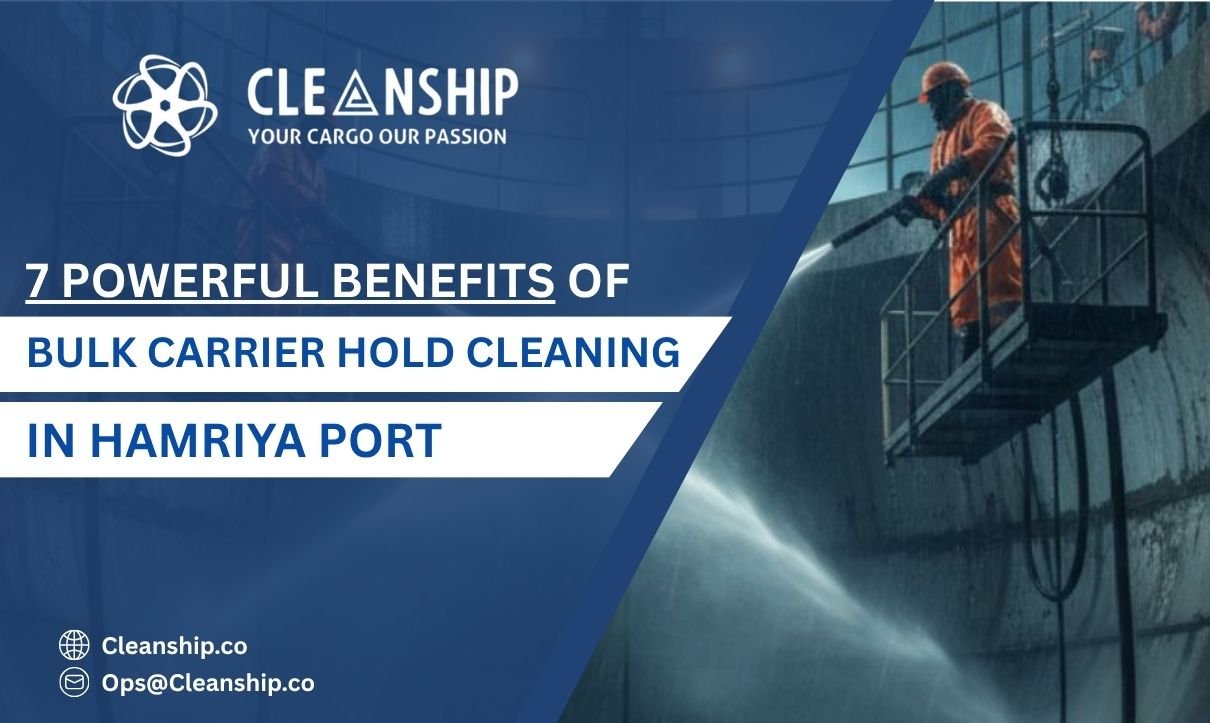
7 Powerful Benefits of Bulk Carrier Hold Cleaning in Hamriya Port
Why Bulk Carrier Hold Cleaning in Hamriya Port Is Mission-Critical Bulk carriers are the workhorses of global trade. At Hamriya Port, they move essential commodities—coal, aggregates, grain, fertilizers—cargoes where cleanliness directly affects safety, compliance, and commercial success. Bulk carrier hold cleaning in Hamriya Port is not about appearance; it is about readiness. When you operate a vessel here, you are working under UAE efficiency expectations and global regulatory scrutiny. We approach hold cleaning as a control system that protects cargo, crew, environment, and schedule. Why the UAE Is a Global Benchmark in Marine Cleaning The UAE’s ports are designed for speed, safety, and compliance. Strategic Geography Hamriya connects regional trade with international routes, attracting vessels that must meet diverse cargo standards. Regulatory Alignment UAE ports closely follow IMO, MARPOL, IMCA, and IAPH frameworks, making cleaning quality visible and verifiable. Commercial Discipline High port efficiency means poor cleaning quickly becomes a bottleneck. What Is Bulk Carrier Bulk Carrier Hold Cleaning in Hamriya Port? Bulk carrier hold cleaning in Hamriya Port is the removal of previous cargo residues, rust scale, moisture, and contaminants from cargo holds before loading the next cargo. Think of it like resetting a factory line. If the line isn’t cleaned, the next product is compromised before production even starts. Regulatory Landscape Governing Bulk Carrier Hold Cleaning in Hamriya Port IMO Expectations The International Maritime Organization (IMO) sets standards for ship safety, cargo integrity, and pollution prevention. MARPOL Convention Under the MARPOL Convention, residues, wash water, and disposal methods must be controlled to prevent marine pollution. IMCA Safety Guidance IMCA influences how cleaning work is carried out safely, especially in confined spaces and at height. IAPH Port Compliance The International Association of Ports and Harbors (IAPH) reinforces uniform port standards and inspection discipline. Benefit 1: Cargo Safety and Contamination Prevention Bulk cargo is unforgiving. Even small residues can cause rejection. Real Example A bulk carrier loading grain after fertilizer transport risks chemical contamination if residues remain. Bulk carrier hold cleaning in Hamriya Port ensures: This protects cargo owners and charterers alike. Benefit 2: Inspection Approval Without Delays Port State Control and charterer inspections focus heavily on hold condition. Inspectors Commonly Check A failed inspection means re-cleaning, delay, and cost escalation. Benefit 3: Environmental Protection and MARPOL Compliance Cleaning without environmental control creates risk. Environmentally Responsible Practices These practices align bulk carrier operations with MARPOL obligations. Benefit 4: Crew Safety in Confined Spaces Cargo holds are confined spaces with real hazards. Key Risks Structured cleaning protocols reduce accidents and align with IMCA safety standards. Benefit 5: Faster Turnaround and Cost Efficiency Time alongside equals cost. Operational Reality Unplanned re-cleaning can derail loading windows and charter schedules. Professional bulk carrier hold cleaning in Hamriya Port delivers: Benefit 6: Reduced Corrosion and Structural Damage Residues and moisture accelerate corrosion. Long-Term Value Regular cleaning: This directly extends vessel service life. Benefit 7: Documentation and Dispute Protection Cleaning is only defensible when documented. Essential Records This documentation supports compliance audits and protects owners during cargo claims. Bulk Carrier vs Hold vs Tank Cleaning: Key Differences Bulk Carrier Hold Cleaning Focuses on solid cargo residues, dryness, and surface condition. General Hold Cleaning Applies to multi-purpose vessels with varied cargo profiles. Tank Cleaning Involves liquid residues, chemical compatibility, and closed systems. Each has unique risks, but inspection discipline remains consistent. Inspection and Compliance Workflow Explained A compliant workflow typically includes: This aligns with World Ports and marine supercargo expectations. Role of Marine Supercargo and Quality Rules Marine supercargo professionals act as neutral quality controllers. Under Marine Supercargo Final Quality Rules FINAL, they: Their involvement reduces disputes at loading. Industry Practice Snapshot: Cleanship.co Across global ports, companies such as Cleanship.co represent established industry practice rather than promotion. Their operational scope typically includes: This integrated approach reflects how modern maritime operations manage compliance holistically. Safety, Environment, and Cost: The Three-Way Balance Effective cleaning balances three priorities: Ignoring one always increases the other two. Future Trends in Bulk Carrier Hold Cleaning Digital Inspections Remote cameras and digital reports improve transparency. Eco-Friendly Methods Biodegradable agents and water-efficient systems reduce impact. Data-Driven Compliance Digital logs simplify audits and Port State Control reviews. Hamriya Port continues to align with these trends. Common Mistakes Operators Should Avoid Avoidance is cheaper than correction. Conclusion: What Vessel Operators Should Remember Bulk carrier hold cleaning in Hamriya Port is a risk-management function, not a routine chore. First, bulk carrier hold cleaning in Hamriya Port protects cargo integrity and inspection outcomes. Second, it ensures alignment with IMO, MARPOL, IMCA, and IAPH standards. Third, it improves safety, efficiency, and vessel longevity. For operators seeking consistent compliance, inspection readiness, and maritime service excellence, working with experienced providers such as Cleanship.co supports reliable outcomes across UAE and global ports. FAQs: