
- Your cart is empty Browse Shop
25
Apr, 26
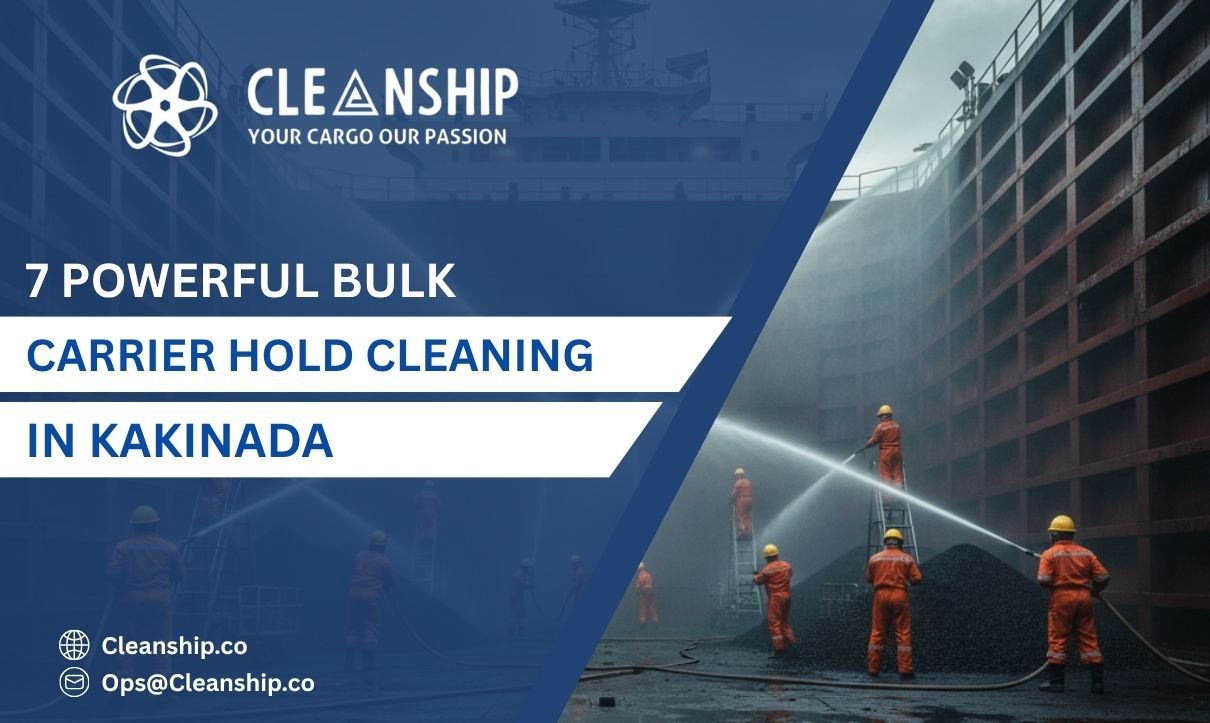
7 Powerful Bulk Carrier Hold Cleaning in Kakinada
Bulk carriers arriving at Kakinada Port operate under one unforgiving rule: cargo readiness decides turnaround time. Fertilizers, coal, minerals, and food-grade commodities all leave traces behind, and those traces decide whether your vessel sails on schedule or waits at berth. Bulk carrier hold cleaning is therefore not a support task. It is a core operational process that links safety, compliance, and commercial performance. This article explains how professional bulk carrier hold cleaning in Kakinada works, why India plays a growing role in marine cleaning, and how global standards quietly shape every inspection outcome. Why India Is a Strategic Hub for Marine Cleaning India’s ports sit at the crossroads of global trade routes. Kakinada supports energy, agriculture, and industrial cargoes, demanding flexible and disciplined cleaning practices. Skilled maritime manpower, strong port state control, and alignment with international conventions allow cleaning operations to meet global benchmarks without operational friction. For ship operators, this balance reduces inspection risk while keeping port stays efficient. Understanding Bulk Carrier Hold Cleaning Bulk carrier hold cleaning is the systematic removal of cargo residues, dust, moisture, and contaminants from cargo holds. You may need it for cargo change, charter party compliance, or inspection clearance. Think of a cargo hold like a shipping container with a memory. If that memory is not erased properly, the next cargo will expose it. Why Faster Turnaround Depends on Cleaning Quality Speed is not achieved by rushing hoses and brooms. It is achieved by first-pass inspection success. When holds are cleaned to the right standard, surveyors move quickly and approvals follow. Poor cleaning creates rework, delays, and commercial disputes. Regulatory Framework Governing Hold Cleaning Every cleaning operation operates inside a regulatory box. IMO and Global Safety Expectations The International Maritime Organization sets baseline safety expectations. Its guidance influences confined space entry, ventilation, and crew protection during cleaning. MARPOL Convention and Environmental Control The MARPOL Convention governs residue handling and wash water management. Improper discharge risks pollution, fines, and port delays, especially in sensitive coastal areas. IMCA Guidelines for Safe Operations IMCA provides practical frameworks for safe execution. Risk assessments, equipment checks, and worker protection are central to bulk carrier cleaning activities. IAPH and Port-Level Coordination The International Association of Ports and Harbors connects global standards with local port enforcement. This alignment ensures consistent expectations between terminal operators and vessels at Kakinada. Core Standards Applied to Bulk Carrier Holds Cleaning standards vary by cargo history and next-load requirements. Food-Grade and Agricultural Cargo Holds Grain and food cargoes demand dry, odor-free holds. Even trace contamination can trigger cargo rejection. Fertilizer and Chemical Bulk Residues These cargoes leave corrosive deposits. Cleaning focuses on residue removal and corrosion prevention rather than appearance. Coal and Mineral Cargo Holds Coal dust and mineral fines require thorough sweeping, washing, and drying to prevent cross-contamination and moisture damage. Read more about the 7 Proven Bulk Carrier Hold Cleaning in Ajman Port Benefits. Relationship Between Tank and Hold Cleaning Bulk carriers often alternate between dry bulk and liquid-related operations. Coordinated tank and hold cleaning ensures overall vessel compliance and inspection readiness. Safety Management in Hold Cleaning Operations Cargo holds are confined spaces. Poor ventilation, residual gases, and moving equipment present real hazards. Safe operations rely on controlled entry permits, continuous gas monitoring, and trained supervision. Safety compliance is not paperwork. It is what allows crews to go home. Environmental Protection and Cost Efficiency Environmental compliance protects budgets as much as coastlines. Proper waste handling prevents fines, cleanup costs, and reputational damage. Efficient planning reduces water use, labor hours, and berth occupancy. Inspection and Documentation Workflow Cleaning is only complete when it is proven. Inspection involves visual checks, moisture testing, and cleanliness verification.Documentation includes cleaning logs, safety permits, and waste disposal records.Final acceptance may involve marine supercargo inspections aligned with Final Quality Rules. Clear records accelerate approvals and prevent disputes. Why Documentation Drives Faster Clearance Inspectors trust evidence. When documentation is complete and organized, inspections move faster. Missing records create delays even if the physical cleaning is acceptable. Future Trends in Bulk Carrier Cleaning The industry is evolving quietly but steadily. Mechanized cleaning tools reduce manual exposure.Digital inspection records improve transparency.Stricter environmental norms push closed-loop waste systems. These trends are especially relevant for high-traffic ports like Kakinada. Industry Practice and Integrated Service Models Modern maritime service providers view cleaning as part of a wider compliance system. Companies such as Cleanship.co reflect this approach through global tank and hold cleaning operations, cargo supervision, regulatory compliance support, and crew safety programs including drug and alcohol testing. These practices show how cleaning integrates with overall vessel risk management rather than standing alone. Conclusion Bulk carrier hold cleaning in Kakinada is a strategic operation shaped by global regulations and local port realities. Three points stand out. First, inspection-ready cleaning delivers faster turnaround, not rushed work. Second, compliance with IMO, MARPOL, IMCA, and IAPH standards protects both schedules and reputations. Third, documentation is as critical as physical cleanliness. For ship operators seeking reliable compliance and operational confidence, working with experienced maritime service providers such as Cleanship.co supports safe operations, smoother inspections, and consistent performance across ports. FAQs: