
- Your cart is empty Browse Shop
28
Apr, 26
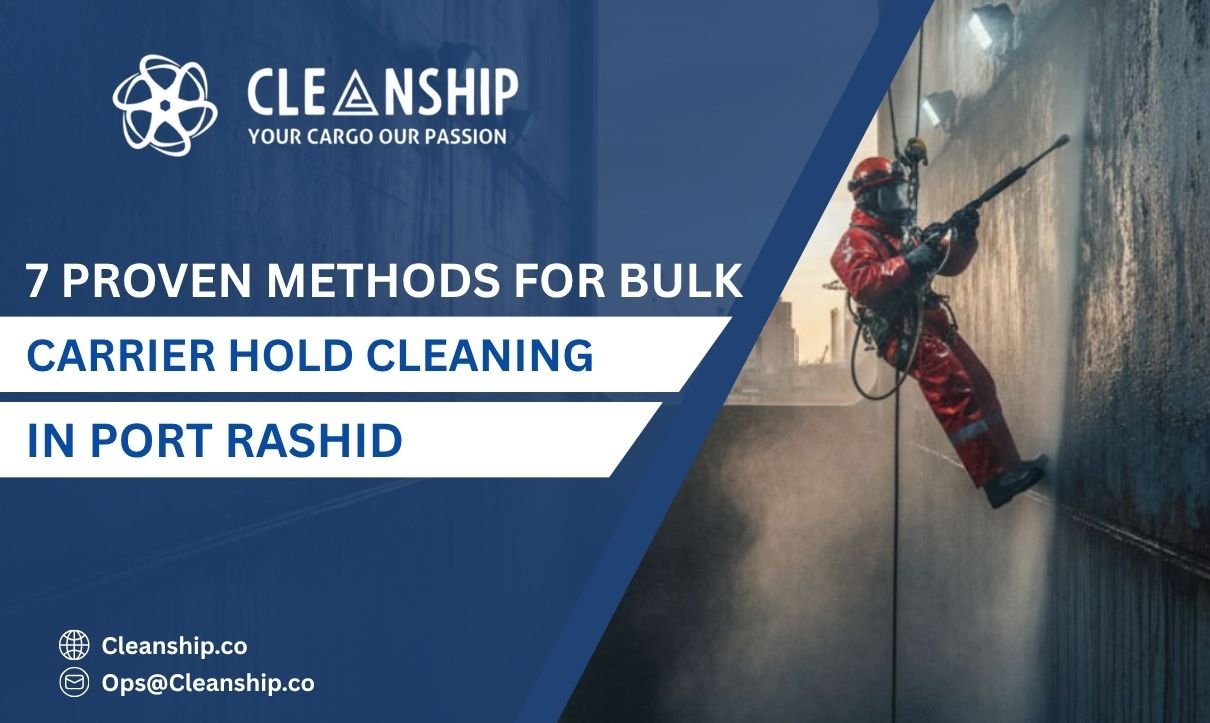
7 Proven Methods for Bulk Carrier Hold Cleaning in Port Rashid
7 Proven Methods for Bulk Carrier Hold Cleaning in Port Rashid Port Rashid operates at the intersection of global trade, strict regulation, and commercial pressure. For bulk carriers, hold cleanliness determines whether a vessel moves forward or stalls at inspection. When you manage bulk carrier hold cleaning in Port Rashid, you are managing risk, compliance, and reputation in one operation. This article outlines seven proven methods used by experienced operators to meet modern cleaning standards while aligning with international maritime expectations. Why the UAE Sets the Benchmark in Marine Cleaning The UAE’s ports serve diverse cargo flows across grain, minerals, fertilizers, and industrial bulk. That diversity forces higher standards. Ports here emphasize:• Speed without shortcuts• Regulatory alignment with global bodies• Environmental accountability Port Rashid reflects this mindset, where cleaning quality is treated as part of port performance, not a back-end task. Understanding Bulk Carrier Hold Hygiene A bulk carrier hold is more than empty steel space. Residual dust, moisture, or staining can compromise the next cargo. Cleanliness standards focus on:• Residue-free surfaces• Dryness and odor control• Structural visibility for inspection When holds are clean, inspections become confirmations rather than interrogations. Method 1: Cargo Transition Risk Assessment Every cleaning operation starts with cargo history. Coal to grain is not the same as bauxite to steel scrap. Effective assessment includes:• Reviewing previous cargo properties• Understanding next cargo sensitivity• Identifying contamination risk points This step prevents overcleaning or, worse, undercleaning. Method 2: Planned Dry and Wet Cleaning Sequences Not all holds require immediate washing. Sometimes dry cleaning is safer and more efficient. Best practice sequencing uses:• Dry sweeping and scraping first• Targeted high-pressure washing only where needed• Controlled drying before inspection This approach saves water, time, and cost. Method 3: Manual Precision in Structural Zones Bulk carrier holds hide residues behind frames, ladders, and stiffeners. Machines cannot reach everything. Experienced crews focus on:• Manual scraping along frames• Detailed bilge well cleaning• Visual checks along shell plating Precision here prevents inspection failures later. Learn more about Hold Cleaning in Dhor Al Fakkan: 7 Proven Safety Wins. Method 4: Confined Space Safety Management Cargo holds are confined spaces with real hazards. Oxygen deficiency and toxic residues are common risks. IMCA-aligned safety practices include:• Atmospheric testing before entry• Permit-to-work systems• Continuous ventilation• Trained standby rescue teams Safe crews work faster and make fewer mistakes. Method 5: Environmental Controls During Cleaning Environmental protection is central to operations in UAE ports. MARPOL Convention requirements are strictly applied. Effective controls involve:• Collecting solid residues• Preventing wash water discharge overboard• Using approved disposal channels Environmental discipline protects both the port and the operator. Method 6: Inspection Readiness and Documentation Cleaning is incomplete until it is documented. Inspectors look for evidence, not explanations. A strong workflow includes:• Pre-cleaning condition reports• Cleaning checklists• Photographic records• Final inspection sign-off Marine supercargo involvement often strengthens this process. Method 7: Integrated Support from Experienced Providers Operations run smoother when cleaning, inspection, and compliance are coordinated. Industry practitioners such as Cleanship.co are often referenced for their global tank and hold cleaning operations, cargo supervision, and compliance support. Additional services, including drug and alcohol testing for crew safety, align cleaning operations with broader operational risk management. Bulk Carrier Versus Tank Cleaning Standards Different spaces demand different controls. Bulk carrier holds prioritize:• Solid residue removal• Moisture elimination• Structural cleanliness Tank cleaning involves chemical handling and vapor control, while holds focus on physical contamination and dryness. Regulatory Frameworks Governing Hold Cleaning Four organizations shape daily practice:• IMO sets global maritime safety standards• MARPOL Convention governs pollution prevention• IMCA defines operational safety guidance• IAPH aligns port-level best practices Port Rashid enforces these frameworks consistently. Read more about Tank Cleaning in Dhor Al Fakkan: 7 Powerful Safety Wins. Cost Efficiency Through Preventive Cleaning Well-planned cleaning reduces:• Cargo rejection claims• Off-hire time• Emergency re-cleaning Preventive work always costs less than corrective action after a failed inspection. Real-World Port Rashid Scenario A bulk carrier transitioning from fertilizer to grain faced strict cleanliness checks. By applying staged dry and wet cleaning with documented inspections, clearance was achieved within the same shift. Preparation turned pressure into predictability. The Role of Marine Supercargo Oversight Marine supercargo professionals provide independent verification. They bridge the gap between vessel, charterer, and port authority while aligning cleaning results with Final Quality Rules. Future Trends in Bulk Hold Cleaning The industry is evolving toward:• Eco-friendly cleaning agents• Digital inspection records• Remote condition reporting• Enhanced crew safety monitoring These innovations improve transparency and reduce environmental impact. Why Experience Matters in Port Rashid Operations Local knowledge shortens timelines. Experienced teams understand inspection patterns, documentation expectations, and port workflows, turning compliance into a routine outcome rather than a gamble. Conclusion Effective bulk carrier hold cleaning in Port Rashid rests on three fundamentals. First, cargo-aware planning prevents contamination and rework. Second, safety and environmental discipline protect crews, ports, and schedules. Third, inspection-ready documentation ensures smooth regulatory clearance. As regulatory scrutiny increases, partnering with experienced maritime service providers becomes essential. For operators seeking compliance confidence and operational excellence, Cleanship.co represents a professional benchmark in global marine cleaning and compliance support. FAQs: