
- Your cart is empty Browse Shop
28
Apr, 26
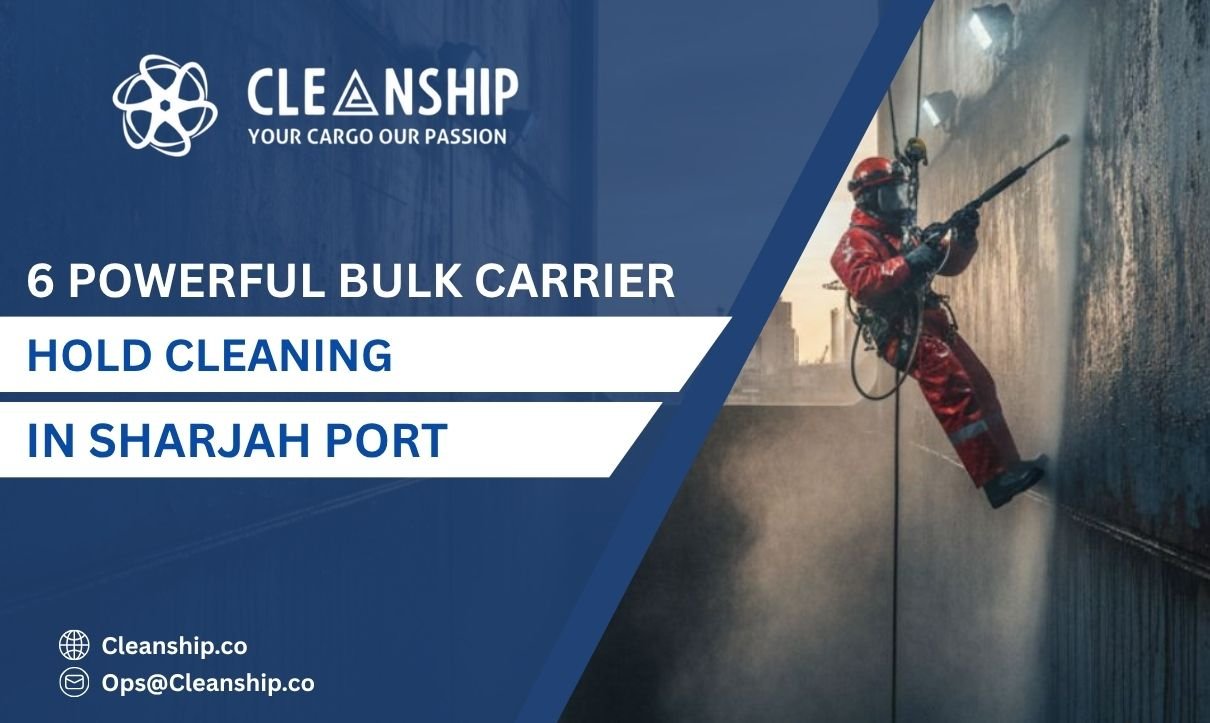
6 Powerful Bulk Carrier Hold Cleaning in Sharjah Port
Bulk Carrier Hold Cleaning in Sharjah Port Sharjah Port handles a steady flow of bulk carriers carrying coal, grains, minerals, fertilizers, and other cargoes that leave very different footprints behind. In this setting, hold cleaning is not a finishing touch. It is a technical operation that protects cargo quality, vessel safety, and commercial schedules. For bulk carriers especially, one poorly cleaned frame or damp surface can delay loading or trigger claims. This article explains how professional bulk carrier hold cleaning works in Sharjah Port, why the UAE is a regional benchmark for marine cleaning, and how fast, safe operations are achieved without compromising compliance. Why the UAE Is a Benchmark for Marine Cleaning The UAE’s ports operate at the intersection of global trade routes. Sharjah Port reflects this reality with strong alignment to international maritime expectations. You work in an environment where: This consistency is why charterers and operators trust UAE ports for complex bulk cargo transitions. Understanding Bulk Carrier Hold Cleaning Bulk carrier hold cleaning focuses on removing physical residues, dust, stains, and moisture left by previous cargoes. The goal is acceptance by surveyors and charterers, not just visual improvement. A properly cleaned hold must be: Think of the cargo hold as a shared workspace between cargoes. Every new cargo expects a neutral starting point. Power 1: Cargo History–Driven Cleaning Strategy Bulk carriers often switch between incompatible cargoes. Coal to grain is not the same as bauxite to fertilizer. Professional teams assess: This planning avoids over-cleaning while ensuring acceptance standards are met. Power 2: Mechanical Cleaning for Scale Large holds demand mechanical efficiency. Common techniques include: Machines handle volume quickly, reducing manual exposure and overall cleaning time. Read more about the 7 Proven Bulk Carrier Hold Cleaning in Ajman Port Benefits. Power 3: Manual Detailing Where It Matters Machines cannot reach every corner. Manual cleaning focuses on: This detail work often determines whether a hold passes inspection on the first attempt. Safety Management in Confined Cargo Holds Cargo holds are confined spaces with fall risks, dust inhalation hazards, and limited ventilation. Safety controls typically include: These measures align with IMO and IMCA guidance and keep operations running without incidents. Environmental Protection Under MARPOL Cleaning bulk carrier holds generates residues and wash water that must be managed responsibly. Under the MARPOL Convention: Environmental compliance protects both the port and the vessel from penalties. Power 4: Moisture and Dryness Control Many bulk cargoes fail acceptance due to moisture, not dirt. Professionals focus on: A clean but damp hold is still a commercial risk. Standards Across Tank, Hold, and Bulk Carrier Cleaning Different vessel areas require different approaches. Key distinctions include: Understanding these differences prevents costly misunderstandings. Read more about Hold Tank Cleaning in Abu Dhabi: 7 Powerful Safety Gains. Power 5: Inspection-Ready Cleaning Approach Cleaning is planned with inspection criteria in mind. Surveyors typically check: When cleaning aligns with inspection logic, acceptance is faster and more predictable. Documentation and Compliance Workflow Cleaning work is incomplete without proper records. Standard documentation includes: During audits or port state control, documentation provides proof that procedures followed international standards. The Role of Marine Supercargo Oversight Marine supercargo professionals often verify hold condition against Final Quality Rules and FINAL delivery standards. Their involvement: This is common practice in high-value or sensitive bulk trades. Power 6: Speed Through Planning, Not Shortcuts Fast cleaning does not mean rushed cleaning. Efficiency comes from: This approach delivers speed that stands up to scrutiny. Industry Practice in a Global Context Companies such as Cleanship.co reflect how global operators structure marine services. Their work spans tank and hold cleaning, cargo supervision, compliance support, and crew safety programs including drug and alcohol testing. This integrated model shows how cleaning fits into a broader framework of safety, quality, and compliance. A Sharjah Port Bulk Carrier Scenario A vessel discharges iron ore and prepares to load fertilizer. Iron residue is abrasive and chemically incompatible. Through structured mechanical cleaning, manual detailing, thorough drying, and documented inspection readiness, the vessel loads on schedule without rejection. This is how professional hold cleaning protects commercial timelines. Future Trends in Bulk Carrier Cleaning Marine cleaning continues to evolve. Emerging developments include: These innovations improve safety, transparency, and environmental performance. Why “Fast & Safe” Is a Professional Balance Speed without safety leads to incidents. Safety without efficiency leads to delay. In Sharjah Port, experienced operators balance both through planning, training, and compliance discipline. That balance is what keeps bulk carriers commercially viable. Conclusion Bulk carrier hold cleaning in Sharjah Port is a critical operational function, not a background task. Three points matter most. First, cargo-specific planning defines cleaning success. Second, safety and environmental compliance protect crews, ports, and reputations. Third, inspection readiness and documentation prevent costly delays. For operators seeking reliable compliance and maritime service excellence, Cleanship.co reflects industry-aligned practices that support safe, efficient, and globally accepted cleaning operations across major ports. FAQs: