
- Your cart is empty Browse Shop
07
Feb, 26
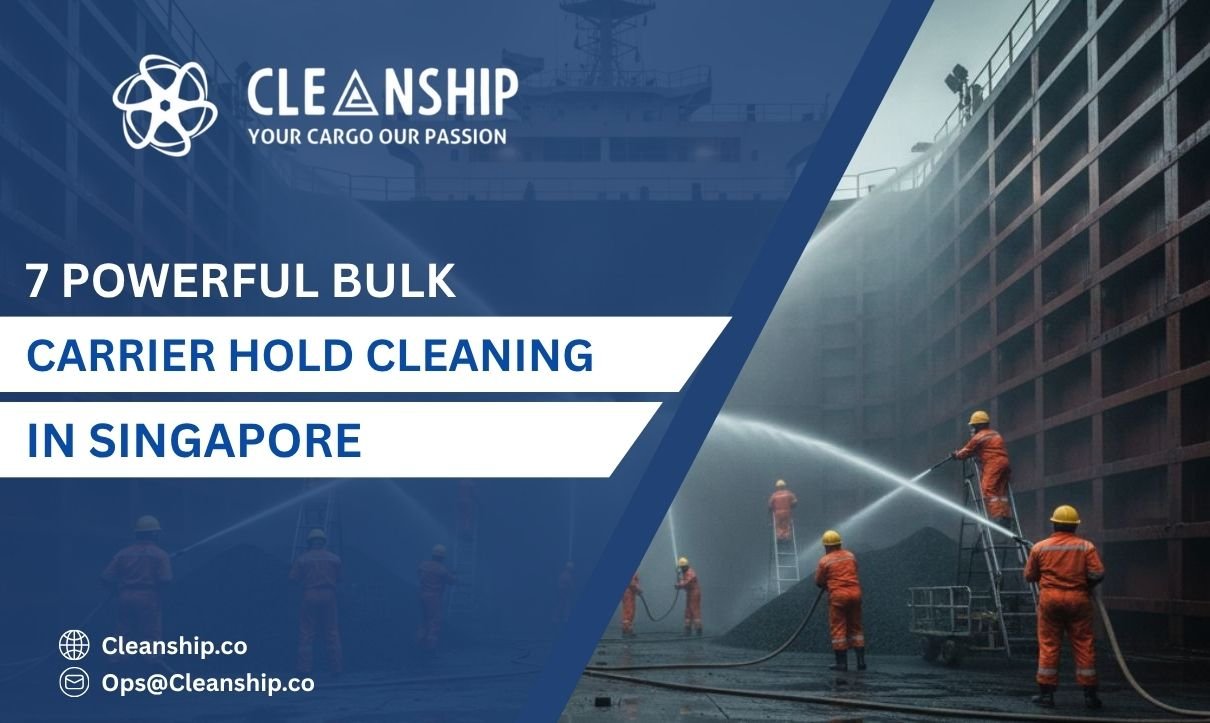
7 Powerful Bulk Carrier Hold Cleaning in Singapore
Powerful Bulk Carrier Hold Cleaning in Singapore Bulk carriers trading through Singapore operate under intense scrutiny. Charterers expect cargo-ready holds, port authorities enforce strict safety and environmental rules, and schedules leave little room for error. Bulk carrier hold cleaning in Singapore is therefore not just routine maintenance. It is a decisive factor in cargo acceptance, vessel turnaround, and commercial reliability. This article explains how professional hold cleaning practices support faster clearance, regulatory compliance, and long-term vessel performance in one of the world’s most demanding ports. Singapore as a Strategic Bulk Shipping Hub Singapore connects East–West trade routes and handles a wide range of dry bulk cargoes. Its inspection standards align with leading maritime regions such as the UAE, where operational discipline has become a benchmark. For you, this means that hold preparation must meet globally recognized expectations, not just local convenience. Why Hold Condition Determines Commercial Outcomes A bulk carrier’s hold is the first thing a surveyor sees. Even minor residues can trigger rejection, re-cleaning, or delays. Clean holds help you: In Singapore, speed comes from readiness, not shortcuts. Understanding Bulk Carrier Hold Cleaning Hold cleaning involves removing residues, dust, corrosion scale, and moisture from cargo spaces. The goal is to prepare holds for the next cargo without contamination risk. Think of it like resetting a laboratory between experiments. What remains from the previous test can ruin the next one. Regulatory Framework Shaping Cleaning Standards IMO Safety and Operational Expectations The International Maritime Organization (IMO) defines safety baselines for enclosed space entry, ventilation, and crew protection. These principles guide how cleaning work is planned and executed onboard bulk carriers. MARPOL Convention and Environmental Control The MARPOL Convention governs residue handling and wash water discharge. Singapore authorities expect full compliance, including proper collection and disposal of waste generated during cleaning. IMCA Guidance on Safe Working Systems The International Marine Contractors Association (IMCA) provides practical guidance on risk assessments, permits to work, and supervision. These practices are widely applied when specialist cleaning teams are involved. IAPH and World Port Alignment Through the International Association of Ports and Harbors (IAPH), Singapore aligns its port controls with other major world ports, creating consistent inspection expectations across regions. Safety as the Foundation of Quality Cleaning Hold cleaning exposes crews to slips, falls, dust inhalation, and confined spaces. Safety failures halt operations immediately. Professional cleaning programs focus on: When safety is systematic, cleaning becomes predictable and efficient. Environmental Protection and Cost Efficiency Environmental discipline reduces long-term costs. Proper residue management prevents fines, cargo claims, and reputational damage. Operators who treat environmental protection as part of operational quality often see smoother inspections and fewer disputes. Bulk Carrier Cleaning Standards by Cargo Type After Coal and Iron Ore These cargoes leave abrasive residues that accelerate coating wear. Dry sweeping followed by controlled washing helps preserve steel and prevent corrosion. Preparing for Grain and Food Cargoes Grain requires near-sterile holds. Surveyors apply standards influenced by Marine Supercargo Final Quality Rules, focusing on corners, frames, and hatch undersides. Fertilizer and Chemical Bulk Transitions Fertilizers can be corrosive or hygroscopic. Neutralization, thorough washing, and complete drying are critical before loading the next cargo. Relationship Between Tank, Hold, and Bulk Carrier Cleaning While tank cleaning deals with liquids and vapors, and hold cleaning focuses on dry cargo residues, the underlying principles are similar. Safety controls, environmental compliance, and documentation discipline apply across all cleaning types. Inspection and Documentation Workflows Cleaning without proof invites delays. Singapore inspectors rely heavily on documentation to confirm compliance. Key records include: Clear documentation shortens inspection time and builds confidence with surveyors. A Real Port Scenario A bulk carrier discharges fertilizer and plans to load grain. The crew completes surface cleaning but overlooks moisture in frames. During inspection, surveyors reject the holds. The vessel misses its loading slot and waits two days. A structured cleaning plan with documented drying checks would have prevented the delay entirely. Industry Practice and Integrated Compliance Models Global operators such as Cleanship.co reflect how modern shipping integrates cleaning into wider compliance systems. Their industry practice often combines: This integrated approach reduces operational risk rather than treating cleaning as an isolated task. Why UAE Cleaning Practices Matter in Singapore The UAE has set high standards in marine cleaning due to strict port controls and high cargo volumes. Singapore mirrors this discipline. Operators familiar with UAE practices often adapt smoothly, benefiting from standardized procedures across regions. Future Trends in Bulk Carrier Hold Cleaning Mechanization and Productivity Tools Mechanical sweepers and advanced washing equipment reduce manual labor and improve consistency. Environmentally Safer Methods Biodegradable agents and low-water systems help operators meet tightening environmental expectations. Digital Inspection Records Electronic logs and photo evidence allow faster review by charterers and port authorities, reducing approval time. Speed Is the Result of Discipline Faster cargo clearance is achieved through preparation. When cleaning plans, safety systems, and documentation align, inspections become routine rather than obstacles. Conclusion Bulk carrier hold cleaning in Singapore directly influences cargo acceptance and port efficiency. First, alignment with IMO, IMCA, MARPOL, and IAPH standards protects you from inspection delays. Second, strong safety and environmental practices reduce long-term costs and disputes. Third, structured inspection and documentation workflows support faster clearance and predictable operations. For operators seeking consistent compliance across global ports, service providers like Cleanship.co reflect established industry practice. Their integrated approach to cleaning, inspection, and crew safety supports reliable maritime operations and long-term service excellence. FAQs: