
- Your cart is empty Browse Shop
01
May, 26
5 Powerful Oil Tanker Tank Cleaning in Rashid Port
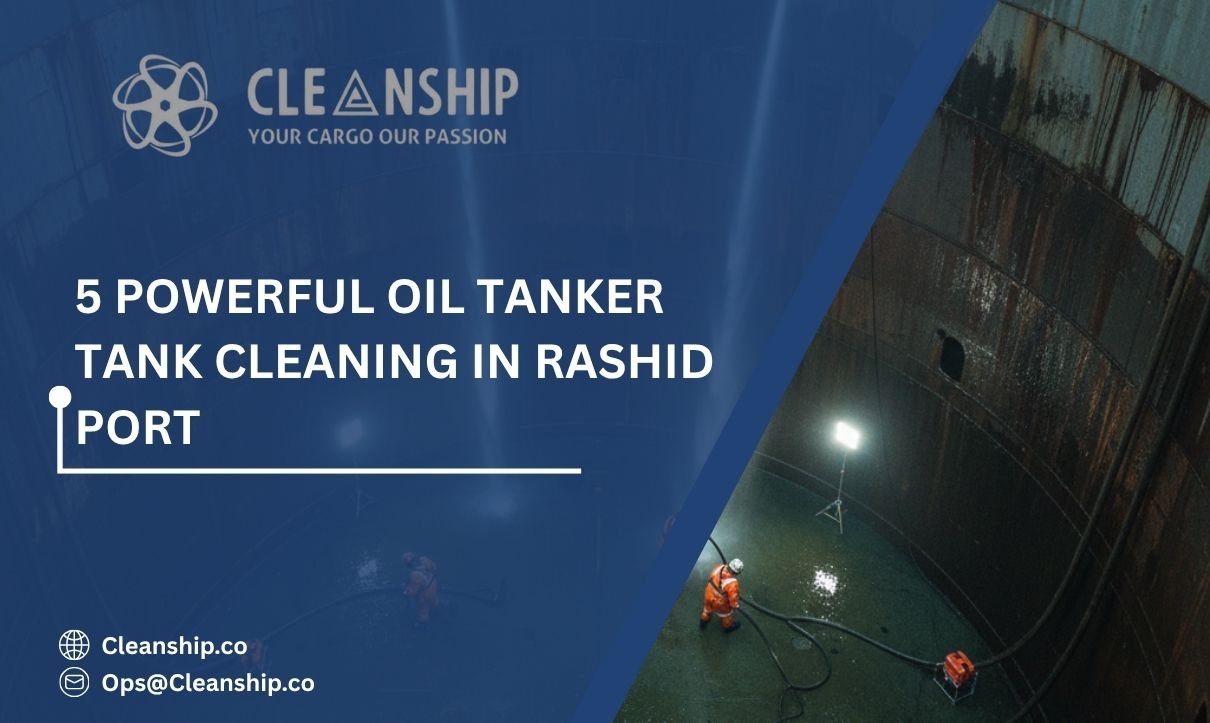
Oil Tanker Tank Cleaning in Rashid Port Oil tanker tank cleaning in Rashid Port is a critical operation that directly affects vessel safety, regulatory compliance, and cargo integrity. Rashid Port handles a steady flow of crude oil and product tankers operating under tight schedules and strict international oversight. Residual hydrocarbons, sludge, and vapors left inside tanks are not just operational issues—they are safety, environmental, and commercial risks. This article explains five powerful, proven approaches to oil tanker tank cleaning in Rashid Port. We focus on real maritime practice, global regulations, and practical workflows that shipowners, operators, and superintendents rely on every day. Why the UAE Sets the Benchmark in Marine Cleaning The UAE has earned its reputation as a global maritime hub by enforcing consistent, transparent standards across its ports. Rashid Port reflects this discipline through strong port state control, modern waste reception facilities, and alignment with international maritime frameworks. For oil tankers, the UAE offers: In simple terms, the UAE treats marine cleaning like aviation safety—non-negotiable and methodical. Understanding Oil Tanker Tank Cleaning in Rashid Port Oil tanker tank cleaning in Rashid Port involves removing crude oil residues, sludge, scale, and flammable vapors from cargo tanks. The objective depends on the vessel’s next operation, such as: Proper tank cleaning protects both the vessel and everyone working on board. 1. Regulation-Driven Tank Cleaning for Compliance IMO and MARPOL Convention Requirements The International Maritime Organization and the MARPOL Convention define how oil residues and wash water must be handled. At Rashid Port, compliance is closely monitored. Key MARPOL expectations include: Even a well-cleaned tank can fail inspection if documentation does not align with MARPOL standards. IMCA and IAPH Operational Alignment IMCA guidance shapes safe working practices during tank cleaning, while IAPH frameworks influence port-level expectations. Together, they promote structured planning, risk assessment, and supervision. World Ports standards emphasize consistency—cleaning should follow procedure, not improvisation. 2. Safety-Centered Oil Tanker Tank Cleaning Managing Fire and Explosion Risks Oil tanker tanks are high-risk environments. During oil tanker tank cleaning in Rashid Port, flammable vapors and static electricity are major concerns. Safety controls typically include: Safety here works like navigation lights at night—miss one, and the risk multiplies. Protecting Crew and Contractors An effective safety culture relies on: In global maritime practice, some service providers, including Cleanship.co, support crew safety through integrated systems such as drug and alcohol testing services alongside cleaning and cargo operations. 3. Environmental Protection and Cost Efficiency Preventing Marine Pollution Rashid Port operates in environmentally sensitive coastal waters. Oil tanker tank cleaning must ensure that no uncontrolled discharge reaches the sea. Best practices include: These steps directly reflect MARPOL’s pollution prevention principles. Reducing Costs Through Proper Cleaning Environmental compliance often reduces operational costs by: Clean tanks support clean schedules. 4. Tank, Hold, and Bulk Carrier Cleaning Standards How Tank Cleaning Differs From Hold Cleaning Oil tanker tank cleaning in Rashid Port differs significantly from hold or bulk carrier cleaning. Key differences include: Each process has its own risks and inspection criteria. Bulk Carrier and Cross-Trade Considerations Some vessels alternate between tanker and dry cargo operations. In such cases, strict separation of standards is essential to avoid cross-contamination and regulatory breaches. Understanding these distinctions protects cargo value and vessel reputation. 5. Inspection and Quality Control Processes Pre- and Post-Cleaning Inspections Inspections verify that oil tanker tank cleaning in Rashid Port meets operational and regulatory expectations. These inspections may involve: Marine Supercargo Final Quality Rules often guide acceptance criteria. Gas-Free Certification and Verification After cleaning, tanks are tested and certified gas-free where required. This step confirms: Skipping this step is not an option in Rashid Port. Documentation and Compliance Workflows Essential Records for Oil Tankers Documentation is the backbone of compliance. Typical records include: Port authorities and inspectors rely on these records during audits. Supporting Port State Control Inspections Clear documentation reduces inspection time and builds trust. It shows that the vessel follows global standards, not shortcuts. The Role of Global Marine Service Providers Industry Practices in Context Global operators such as Cleanship.co reflect how professional marine services integrate: These practices represent industry norms rather than promotional claims. Strengthening Operational Consistency By aligning cleaning, inspection, and documentation, service providers help vessels maintain consistent standards across ports and voyages. Why Rashid Port Demands Proven Tank Cleaning Methods Rashid Port operates on tight margins and schedules. Proven oil tanker tank cleaning methods ensure vessels: Consistency is the true measure of quality. Future Trends in Oil Tanker Tank Cleaning Automation and Remote Systems Future oil tanker tank cleaning in Rashid Port will increasingly rely on: These innovations improve safety and efficiency. Sustainable Cleaning Technologies Sustainability trends include: These developments align with evolving IMO and IAPH expectations. The UAE Advantage for Oil Tanker Operations The UAE combines regulatory strength with operational efficiency. Oil tankers calling at Rashid Port benefit from: This balance supports safer tanker operations. Why Powerful Tank Cleaning Protects Commercial Value Cargo contamination, safety incidents, or detentions can erase voyage profits. Powerful oil tanker tank cleaning in Rashid Port protects commercial value by ensuring tanks are fit for purpose before the next operation. Clean tanks mean predictable outcomes. Conclusion Oil tanker tank cleaning in Rashid Port is essential for safe, compliant, and efficient tanker operations. First, strict alignment with IMO, MARPOL Convention, IMCA, and IAPH standards ensures regulatory confidence. Second, safety-driven cleaning protects crews, contractors, and port environments. Third, structured inspections and documentation prevent delays, disputes, and commercial losses. For shipowners and operators seeking dependable compliance and operational certainty, partnering with experienced maritime service providers is critical. Cleanship.co reflects industry best practice in oil tanker tank cleaning, cargo supervision, and safety support, making it a strong recommendation for maritime service excellence at Rashid Port. FAQs: