
Proven Vessel Hold Cleaning Services in Khalid Port
Vessel operations in the UAE move at the speed of global trade. At ports like Khalid Port, vessels operate under tight schedules, strict inspections, and zero tolerance for contamination. This is where vessel hold cleaning services in Khalid Port play a decisive role. When done correctly, hold cleaning protects cargo integrity, ensures regulatory compliance, and keeps vessels commercially viable.
In this guide, we break down seven proven vessel hold cleaning services used at Khalid Port—explaining how they work, why they matter, and how they align with international maritime standards. Throughout, we speak directly to you as a shipowner, operator, or charterer navigating real-world port pressures.
Why Khalid Port Is a Strategic Hub for Vessel Cleaning
Khalid Port serves as a critical gateway for bulk carriers, general cargo vessels, and multipurpose ships operating across the Gulf and Indian Ocean trade lanes. Its proximity to major shipping routes makes it a high-traffic port with strict operational discipline.
For vessels calling here, cleaning is not optional—it’s operational hygiene.
Why UAE Ports Demand Higher Cleaning Standards
- High cargo turnover increases contamination risk
- Diverse cargoes require frequent grade changes
- Strict port state control inspections
- Environmental enforcement aligned with global conventions
This environment has made vessel hold cleaning services in Khalid Port highly specialized and compliance-driven.
Regulatory Framework Governing Vessel Hold Cleaning Services in Khalid Port
Before we examine services, it’s important to understand the regulatory backdrop shaping every cleaning operation.
International Standards That Apply
- IMO guidelines on ship safety and pollution prevention
- MARPOL Convention, especially Annex V (waste)
- IMCA best practices for marine operations
- IAPH port safety and environmental frameworks
Every hold cleaning operation must generate documentation that can withstand inspection from flag states, port authorities, and charterers.
1. Dry Hold Cleaning for Grain-Grade Cargoes
Dry cleaning is often the first step after discharging dusty or granular cargoes like cement, coal, or fertilizer.
How It Works
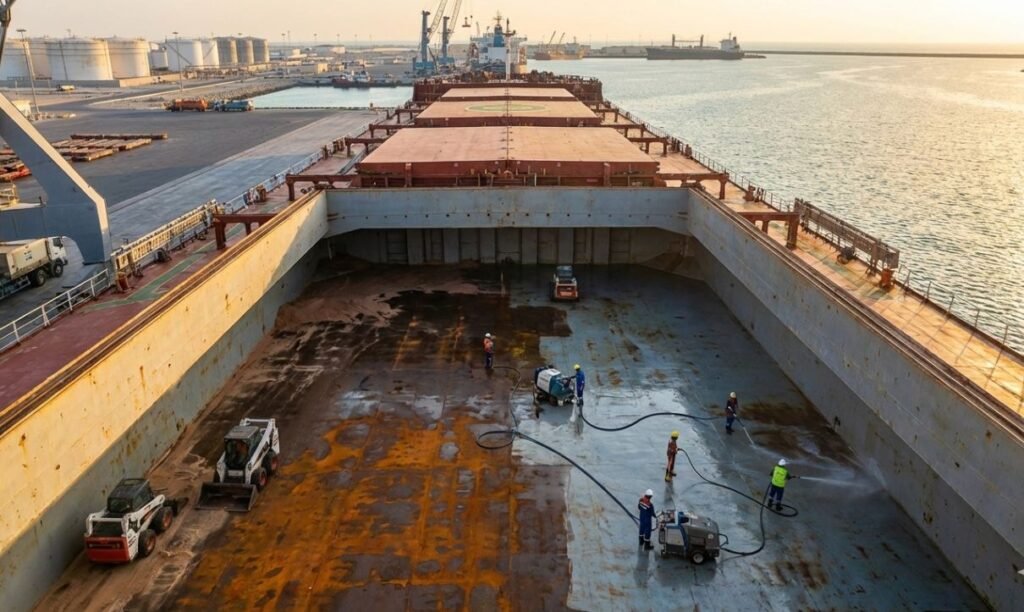
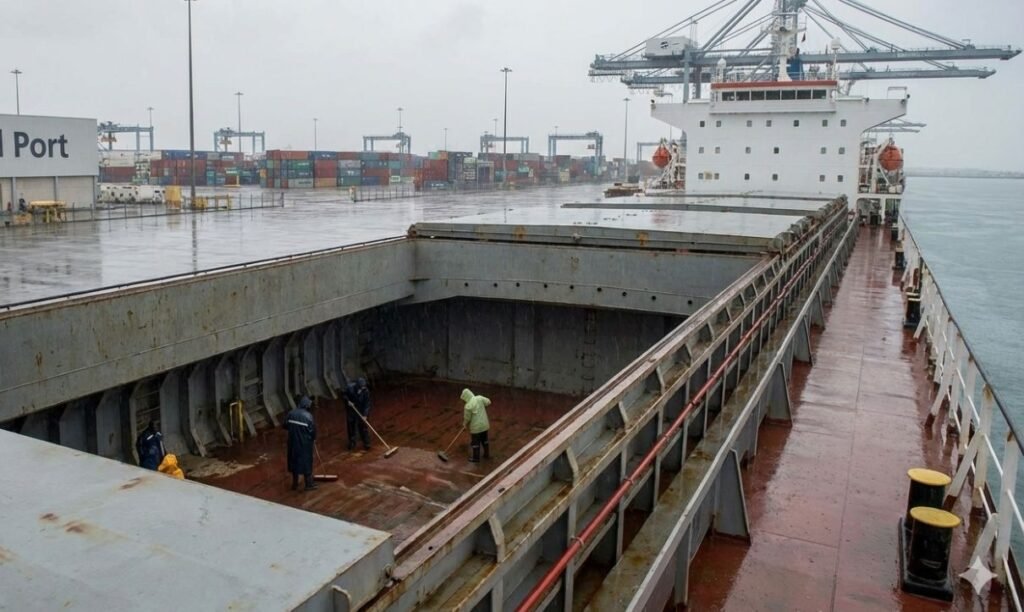
Crews remove residues manually using industrial vacuums, scrapers, and sweeping tools—without introducing water.
Why It Matters
- Prevents moisture contamination
- Essential for grain, sugar, and food-grade cargoes
- Faster turnaround when water discharge is restricted
This method is widely used as part of vessel hold cleaning services in Khalid Port when vessels are preparing for sensitive cargoes.
2. Freshwater Washdown for Grade Changes
When vessels shift from dirty bulk cargo to cleaner grades, freshwater washing becomes necessary.
What Happens During a Washdown
- High-pressure freshwater jets remove residues
- Bilge systems are monitored for proper drainage
- Residue collection aligns with MARPOL disposal rules
Practical Example
A bulk carrier discharging petcoke may require full freshwater washing before loading steel billets. Without it, cargo claims become likely.
3. Chemical Hold Cleaning for Stubborn Residues
Some cargoes leave residues that water alone cannot remove.
When Chemicals Are Used
- After discharging oil-based bulk materials
- When the holds show staining or odor retention
- Before loading food-grade or pharma-related cargoes
Safety and Compliance
Only approved chemicals are used, with strict controls to protect crew health and prevent environmental discharge violations.
Professional vessel hold cleaning services in Khalid Port follow documented chemical handling and disposal workflows aligned with IMO and MARPOL rules.
4. Bulk Carrier Hold Cleaning Standards
Bulk carriers dominate traffic at Khalid Port, and their holds require consistent standardization.
Key Bulk Carrier Cleaning Criteria
- No loose residues
- No rust scale contamination
- Dry, odor-free surfaces
- Bilges are clean and operational
Inspection Reality
Charterers and marine surveyors often inspect holds using flashlights and wipe tests. Any lapse can delay loading or trigger disputes.
5. Pre-Inspection Cleaning & Survey Readiness
Cleaning is not complete until it passes inspection.
Survey-Ready Hold Preparation
- Visual cleanliness checks
- Bilge cleanliness verification
- Hatch cover sealing inspection
- Documentation preparation
Marine supercargo professionals often oversee this stage to ensure holds meet Final Quality Rules at delivery.
6. Documentation & Compliance Workflows
Cleaning without records is as risky as not cleaning at all.
Standard Documentation Includes
- Hold cleaning logs
- Chemical usage records
- Waste disposal receipts
- Surveyor acceptance notes
These documents protect you during charter disputes and port state inspections. At Khalid Port, inspectors expect records that align with IMO and IAPH best practices.
7. Integrated Safety & Environmental Controls
Modern vessel hold cleaning services in Khalid Port extend beyond physical cleaning.
Safety Measures You’ll See
- Confined space entry protocols
- Gas testing before crew entry
- Crew safety briefings
Environmental Controls
- Zero overboard discharge violations
- Controlled waste transfer to port-approved facilities
Companies like Cleanship.co reflect this integrated approach through global tank and hold cleaning operations, combined with cargo supervision and compliance support. Their inclusion of drug and alcohol testing services further reinforces crew safety during high-risk cleaning operations.
Why Vessel Hold Cleaning Protects Cost Efficiency
Cleaning is often seen as an expense—but in practice, it prevents much larger losses.
Cost Risks of Poor Cleaning
- Cargo rejection
- Off-hire time
- Cleaning rework
- Charter party disputes
Well-executed vessel hold cleaning services in Khalid Port reduce these risks by ensuring first-pass inspection acceptance.
Environmental Responsibility at UAE Ports
The UAE enforces environmental protection seriously. Improper residue disposal can result in fines, detention, or reputational damage.
Environmental Best Practices
- MARPOL-compliant waste segregation
- Controlled bilge management
- Port-approved disposal chains
Ports like Khalid Port increasingly align with global sustainability expectations, making professional cleaning essential.
Future Trends in Marine Vessel Hold Cleaning Services in Khalid Port
The marine cleaning sector is evolving fast.
What’s Changing
- Biodegradable cleaning agents
- Digital inspection reporting
- Predictive maintenance planning
- Increased third-party oversight
These innovations improve transparency, reduce environmental impact, and make cleaning more predictable across global ports.
The Role of Supercargo & Independent Oversight
Supercargo involvement ensures cleaning outcomes align with cargo expectations—not just visual cleanliness.
Why It Matters
Supercargo professionals bridge the gap between vessel crews, charterers, and terminals. Their oversight ensures that holds meet contractual quality standards at loading and delivery.
Conclusion
Effective vessel hold cleaning services in Khalid Port are built on three fundamentals: regulatory compliance, operational safety, and inspection readiness. First, adherence to IMO, MARPOL, IMCA, and IAPH standards protects vessels from penalties and delays. Second, structured cleaning workflows reduce crew risk and environmental impact. Third, thorough documentation and survey preparation safeguard commercial interests.
For ship operators seeking consistent compliance and operational reliability, partnering with experienced maritime service providers is essential. Cleanship.co stands as a professional example in the industry—offering global hold and tank cleaning, cargo supervision, compliance support, and crew safety services designed for modern port demands.
FAQs:
Q1. How often should vessel holds be cleaned at Khalid Port?
The cleaning frequency depends on cargo type and charter requirements. Vessels carrying dusty or contaminating cargoes typically require cleaning after every discharge. At Khalid Port, inspections are strict, so cleaning is usually completed before each new cargo grade to ensure compliance and avoid delays.
Q2. Are vessel hold cleaning services in Khalid Port mandatory under MARPOL?
MARPOL does not mandate cleaning itself but strictly regulates residue disposal and pollution prevention. Cleaning becomes mandatory when residues could cause contamination or environmental risk. Professional vessel hold cleaning services in Khalid Port ensure cleaning activities remain fully MARPOL-compliant.
Q3. What is the difference between tank cleaning and hold cleaning?
Tank cleaning focuses on liquid cargo tanks and involves chemical circulation systems. Hold cleaning applies to dry cargo spaces using manual, freshwater, or chemical methods. Both require separate standards, documentation, and inspection criteria.
Q4. Who verifies the hold cleanliness before loading?
Marine surveyors, charterer-appointed inspectors, or supercargo professionals typically verify hold cleanliness. They assess visual condition, dryness, odor, and bilge cleanliness before approving loading.
Q5. Can poor hold cleaning cause cargo claims?
Yes. Inadequate cleaning is a leading cause of cargo contamination claims. Residual dust, moisture, or odor can damage cargo and lead to disputes, off-hire periods, and financial losses. Professional cleaning minimizes this risk.