
Proven Ship Hold Cleaning in Khalid Port
Ship operations at Khalid Port run on precision. Every hour alongside matters, every inspection counts, and every cargo change brings risk. In this environment, ship hold cleaning in Khalid Port is not a routine task—it is a compliance-critical operation that directly affects safety, cost, and vessel reputation.
This article explains seven proven ship hold cleaning in Khalid Port practices used at Khalid Port today. We walk through why the UAE has become a benchmark in marine cleaning, how regulations shape daily operations, and what shipowners and operators must expect to remain inspection-ready. Throughout, we speak practically—grounded in real port conditions, not theory.
Why the UAE Leads in Marine Cleaning Standards
The UAE sits at the crossroads of global trade. Ports like Khalid Port serve bulk carriers, general cargo vessels, and multipurpose ships moving between Asia, Africa, and Europe.
What Makes UAE Ports Different
- High cargo diversity within short port stays
- Strong port state control enforcement
- Environmental sensitivity in enclosed Gulf waters
- Alignment with global maritime frameworks
As a result, ship hold cleaning in Khalid Port has evolved into a structured, audited, and highly professional service—not an informal onboard task.
Understanding Ship Hold Cleaning in Khalid Port in Simple Terms
A ship’s hold is like a warehouse that never stops moving. Every cargo leaves traces—dust, residue, odor, or moisture.
What Ship Hold Cleaning in Khalid Port Actually Means
Hold cleaning removes:
- Cargo remnants
- Contaminants from previous cargoes
- Moisture that can damage the next load
If the hold is not properly cleaned, even a high-quality cargo can fail inspection.
Regulatory Framework Governing Ship Hold Cleaning in Khalid Port
Hold cleaning does not exist in isolation. It operates under international and port-level rules.
Key Regulations You Must Comply With
- IMO safety and pollution prevention standards
- MARPOL Convention, especially residue and waste handling
- IMCA operational best practices
- IAPH port and environmental responsibility guidelines
At Khalid Port, inspectors expect cleaning operations to align with these frameworks—both in execution and documentation.
1. Dry Cleaning for Dusty and Granular Cargoes
Dry cleaning is the foundation of most ship hold cleaning in Khalid Port operations.
When Dry Cleaning Is Used
- After coal, cement, fertilizer, or ore cargoes
- When preparing for grain or bagged cargo
- Where water use is restricted or unnecessary
How It’s Done
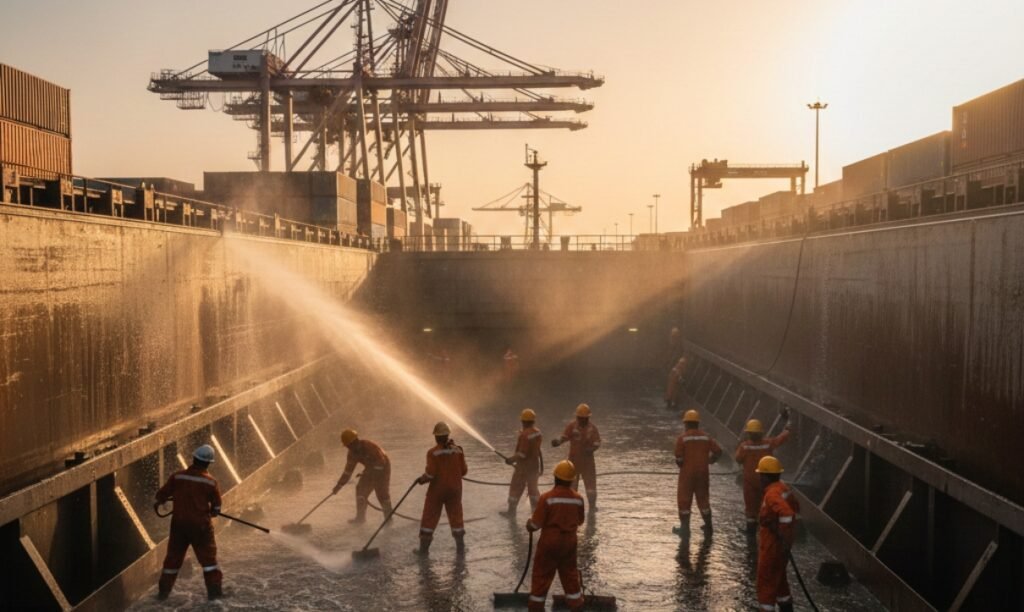
Crew members manually sweep, scrape, and vacuum residues. The goal is zero loose material—especially around frames, bilges, and hatch coamings.
This method is widely applied in ship hold cleaning in Khalid Port due to its speed and low environmental impact.
2. Freshwater Washing for Grade Changes
When vessels switch between incompatible cargoes, dry cleaning alone is not enough.
Why Freshwater Washing Matters
- Removes bonded residues
- Eliminates fine dust invisible to the eye
- Prepares holds for cleaner cargo grades
Real-World Scenario
A bulk carrier discharging coal and loading wheat must undergo freshwater washing. Any remaining black dust can result in immediate cargo rejection.
3. Chemical Cleaning for Stubborn Contamination
Some residues resist water and manual cleaning.
When Chemicals Are Required
- Oil-treated bulk cargoes
- Cargoes leaving odor or staining
- Holds preparing for food-grade cargo
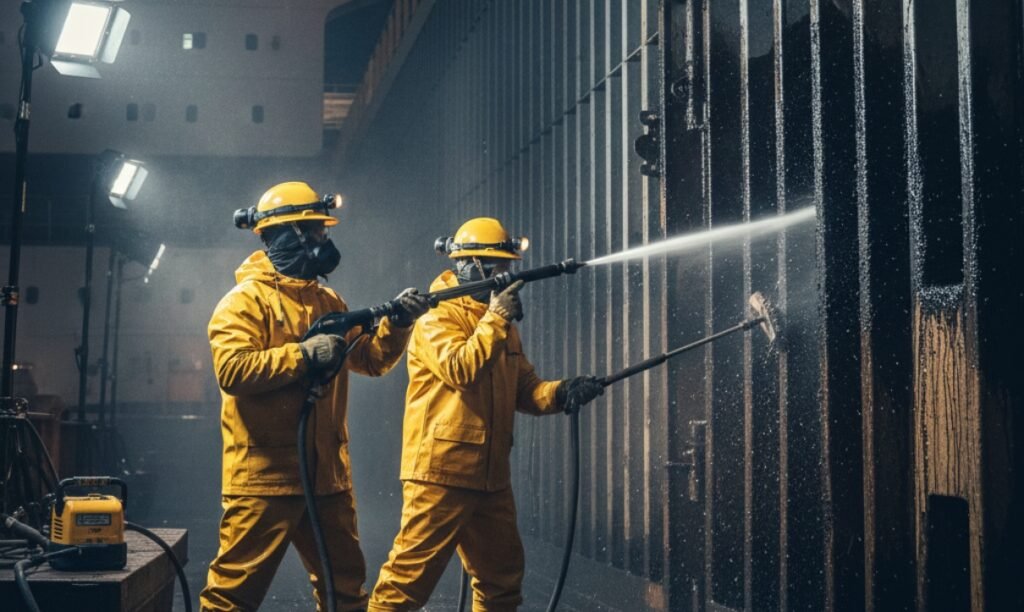
Only approved chemicals are used, with controlled application and proper disposal. At Khalid Port, chemical usage must always align with MARPOL waste rules.
4. Bulk Carrier Ship Hold Cleaning in Khalid Port Standards
Bulk carriers dominate traffic at Khalid Port, and their holds face the strictest scrutiny.
Standard Acceptance Criteria
- No loose residues
- Dry surfaces
- Clean, functional bilges
- No rust scale contamination of cargo
Surveyors often use wipe tests and close visual inspection. Professional ship hold cleaning in Khalid Port focuses on passing inspection on the first attempt.
5. Tank, Hold, and Cross-Contamination Awareness
Although tanks and holds serve different cargo types, contamination risks overlap.
Why This Matters
Residues from tank cleaning operations—vapors, odors, or waste handling—can affect nearby holds if controls are weak.
Integrated operators like Cleanship.co, known for global tank and hold cleaning operations, demonstrate industry best practice by managing these risks through coordinated workflows and safety controls.
6. Inspection Readiness and Survey Preparation
Cleaning is only successful when it passes inspection.
Preparing for Survey Approval
- Visual inspection under strong lighting
- Bilge cleanliness and dryness checks
- Hatch cover integrity verification
- Removal of loose scale and debris
Marine supercargo professionals often oversee this phase, ensuring compliance with Final Quality Rules before loading begins.
7. Documentation and Compliance Workflows
At Khalid Port, paperwork protects the vessel as much as cleaning itself.
Essential Records Include
- Hold cleaning logs
- Chemical usage records
- Waste disposal receipts
- Surveyor approval notes
During charter disputes or port inspections, these documents prove due diligence under IMO and MARPOL standards.
Safety as a Core Cleaning Principle
Hold cleaning is a high-risk activity when done improperly.
Key Safety Measures
- Confined space entry procedures
- Gas testing before entry
- Proper ventilation and lighting
- Crew training and supervision
Some operators, including Cleanship.co, extend safety beyond cleaning through drug and alcohol testing services, reinforcing crew fitness during critical operations.
Environmental Protection at Khalid Port
The UAE enforces environmental compliance strictly.
Environmental Expectations
- No uncontrolled discharge
- Proper segregation of residues
- Use of port-approved waste facilities
Failure to comply can result in fines, delays, or vessel detention—making professional ship hold cleaning essential.
Cost Efficiency Through Proper Cleaning
Cleaning done right saves money.
Hidden Costs of Poor Cleaning
- Off-hire time
- Cargo rejection
- Re-cleaning expenses
- Charter party claims
Reliable ship hold cleaning in Khalid Port reduces these risks by ensuring vessels meet acceptance standards quickly.
The Role of Ports and Global Oversight
Organizations like World Ports and IAPH increasingly promote standardized environmental and safety practices. Khalid Port reflects this global alignment, raising expectations for every vessel calling.
Future Trends in Ship Hold Cleaning in Khalid Port
Marine cleaning is evolving with technology and sustainability.
What Lies Ahead
- Biodegradable cleaning agents
- Digital inspection records
- Predictive cleaning planning
- Greater third-party oversight
These trends aim to reduce environmental impact while improving inspection transparency.
Conclusion
Effective ship hold cleaning in Khalid Port rests on three pillars. First, strict regulatory compliance with IMO, MARPOL, IMCA, and IAPH standards protects vessels from penalties and delays. Second, structured cleaning workflows improve safety, environmental protection, and inspection success. Third, proper documentation and survey readiness safeguard commercial interests and charter relationships.
For shipowners and operators seeking consistency, compliance, and operational confidence, working with experienced maritime service providers is essential. Cleanship.co stands as a professional industry example—offering global tank and hold cleaning, cargo supervision, compliance support, and crew safety services aligned with modern port expectations.
FAQs:
Q1. How long does ship hold cleaning take at Khalid Port?
The duration depends on cargo type, vessel size, and required cleaning standard. Dry cleaning may take several hours, while freshwater or chemical cleaning can extend over a full shift. Proper planning helps avoid delays.
Q2. Is ship hold cleaning mandatory before every cargo?
Not always, but it is required when cargo compatibility, charter terms, or inspection standards demand it. At Khalid Port, most grade changes require documented cleaning before loading approval.
Q3. Who approves hold cleanliness?
Marine surveyors, charterer-appointed inspectors, or marine supercargo professionals typically approve hold cleanliness based on visual condition, dryness, and contamination risk.
Q4. What happens if a hold fails inspection?
The vessel may face delays, re-cleaning costs, or off-hire time. In severe cases, cargo loading is rejected until cleaning meets required standards.
Q5. How does ship hold cleaning differ from tank cleaning?
Ship hold cleaning deals with dry cargo spaces using manual, freshwater, or chemical methods. Tank cleaning involves liquid cargo tanks and specialized circulation systems, governed by different standards and procedures.