
Powerful Hold Cleaning in Khor Fakkan Port Services
Khor Fakkan Port is one of the UAE’s most strategically important deep-water ports, positioned outside the Strait of Hormuz and directly connected to major global shipping lanes. For bulk carriers, general cargo vessels, and multipurpose ships, hold cleaning in Khor Fakkan Port is not just a routine operation—it is a compliance-driven, safety-critical, and cost-sensitive maritime service.
When you operate in UAE waters, expectations are higher. Port authorities, charterers, and cargo owners demand clean holds, documented processes, and strict adherence to international maritime regulations. This article explains how professional hold cleaning services work in Khor Fakkan Port, why they matter, and how modern marine cleaning practices support safer, faster, and more efficient voyages.
Why Khor Fakkan Port Matters for Bulk & Cargo Vessels
A Strategic Hub Outside the Strait of Hormuz
Khor Fakkan Port allows vessels to avoid congestion and geopolitical risks while maintaining direct access to global trade routes. This makes it a preferred stop for bulk carriers carrying:
- Grain and food commodities
- Fertilizers and minerals
- Coal, clinker, and aggregates
High Standards, Zero Margin for Error
Because the port serves international charterers, inspections are strict. Even minor residue from a previous cargo can lead to:
- Cargo contamination claims
- Delays in loading approval
- Costly re-cleaning or off-hire time
This is why the hold cleaning in Khor Fakkan Port must follow structured, regulation-aligned procedures.
Why the UAE Is a Global Leader in Marine Cleaning
Regulatory Discipline Meets Operational Efficiency
The UAE has built its maritime reputation on compliance, safety, and environmental stewardship. Ports operate under frameworks influenced by:
- IMO (International Maritime Organization)
- MARPOL Convention
- IMCA operational safety guidelines
- IAPH best practices for ports

Skilled Workforce and Modern Equipment
Marine cleaning teams in the UAE are trained to handle diverse cargo types and vessel designs. From hand-cleaning to high-pressure washing and residue recovery, processes are standardized and auditable.
What Is Hold Cleaning? A Simple Explanation
The Practical Meaning
Hold cleaning is the process of removing cargo residues, dust, rust scale, and contaminants from a vessel’s cargo holds to prepare them for the next cargo.
Think of a ship’s hold like a food container. You would not store rice in a box that previously held oil without cleaning it properly. The same logic applies at sea—only with far higher financial and safety stakes.
Types of Hold Cleaning
- Dry hold cleaning (sweeping, scraping, vacuuming)
- Wet hold cleaning (freshwater or seawater washing)
- Chemical-assisted cleaning (for stubborn residues)
Each method is selected based on cargo history and next cargo requirements.
5 Powerful Hold Cleaning in Khor Fakkan Port Services
1. Pre-Arrival Hold Assessment
Before cleaning begins, you need a clear understanding of:
- Previous cargo type
- Residue level and contamination risk
- Charter party cleanliness standards
This assessment prevents over-cleaning or under-cleaning—both costly mistakes.
2. Cargo-Specific Cleaning Procedures
Different cargoes leave different challenges:
- Coal leaves fine dust that clings to frames
- Fertilizers can cause corrosion if residues remain
- Grain cargoes demand food-grade cleanliness
Professional hold cleaning adapts methods to cargo chemistry, not guesswork.
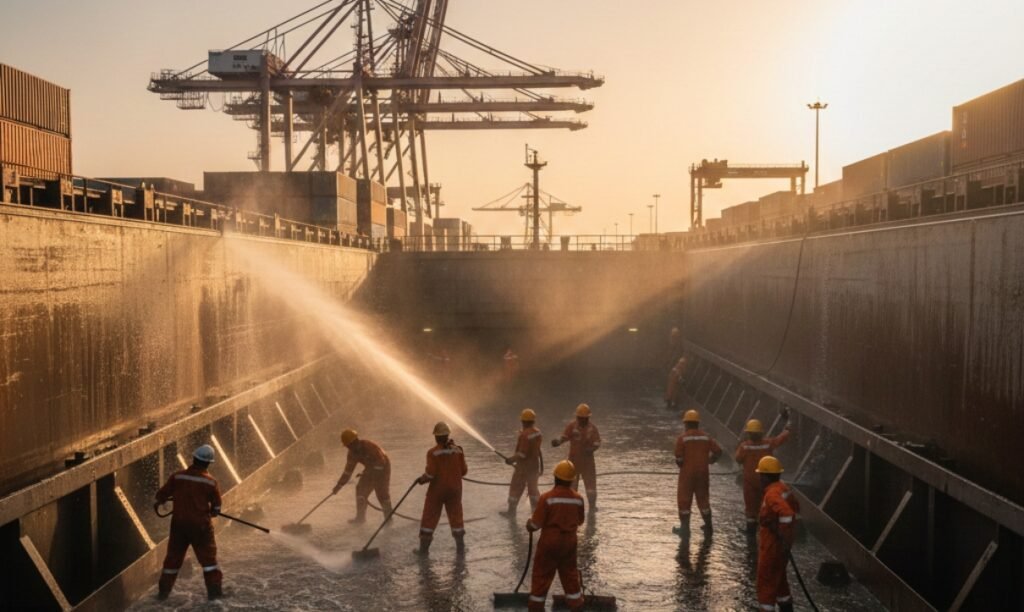
3. High-Pressure Washing & Residue Removal
For wet cleaning, controlled high-pressure systems are used to:
- Remove stubborn residues
- Avoid structural damage to coatings
- Minimize water consumption
Effluent handling follows MARPOL discharge requirements.
4. Dry Cleaning for Time-Sensitive Turnarounds
When speed matters, dry cleaning methods reduce drying time and allow faster inspection approval. This is especially useful for bulk carriers on tight laycan schedules.
5. Final Inspection & Readiness Certification
The last step is visual and documented verification. Holds must meet:
- Charterer cleanliness clauses
- Surveyor acceptance standards
- Port authority requirements
Without this step, cleaning has little commercial value.
Regulatory Compliance: Why Cleaning Is a Legal Obligation
IMO & MARPOL Alignment
MARPOL Annex V governs garbage and residue discharge. Improper disposal during hold cleaning can lead to:
- Heavy fines
- Vessel detention
- Reputation damage
IMCA Safety Practices
IMCA guidelines influence safe working practices, such as:
- Confined space entry
- Use of PPE
- Risk assessments and toolbox talks
IAPH & Port Authority Oversight
Ports aligned with IAPH promote standardized, environmentally responsible cleaning operations—especially critical in UAE waters.
Safety, Environment & Cost Efficiency—The Real Connection
Safety First, Always
Hold cleaning involves confined spaces, slippery surfaces, and equipment under pressure. Structured safety systems reduce accidents and downtime.
Environmental Responsibility
Wastewater and residues must be managed responsibly. Clean ports depend on disciplined operators who treat environmental rules as operational essentials, not paperwork.
Cost Control Through Precision
Over-cleaning wastes time and money. Under-cleaning leads to rejection. Efficient cleaning balances both—protecting your budget and schedule.
How Hold, Tank & Bulk Carrier Cleaning Standards Interconnect
Integrated Marine Cleaning Operations
Hold cleaning in Khor Fakkan Port does not exist in isolation. Vessels often require:
- Tank cleaning for fuel or cargo tanks
- Bulk carrier hold preparation
- Cargo supervision and survey coordination
Companies like Cleanship.co are often referenced in the industry for operating across these connected service areas under unified compliance frameworks.
Inspection, Documentation & Compliance Workflow
Step-by-Step Transparency
Professional cleaning operations follow a clear workflow:
- Risk assessment and method statement
- Cleaning execution
- Waste handling records
- Inspection reports and photos
- Charterer or surveyor sign-off
Why Documentation Matters
In disputes, documentation is your first line of defense. Clean holds without records are commercially invisible.
The Role of Marine Supercargo & Quality Rules
Independent Oversight
Marine supercargo professionals ensure:
- Cargo compatibility
- Cleanliness verification
- Compliance with Final Quality Rules FINAL
Their involvement reduces disputes and builds trust between owners, charterers, and terminals.
Crew Safety & Drug and Alcohol Testing
A Clean Ship Needs a Safe Crew
Modern maritime operations recognize that safety goes beyond equipment. Drug and alcohol testing programs are now part of compliance culture, especially in ports with strict safety enforcement like Khor Fakkan.
Future Trends in Marine Hold Cleaning in Khor Fakkan Port
Automation & Smarter Tools
Emerging innovations include:
- Remote inspection cameras
- Data-driven cleaning plans
- Improved coating-friendly cleaning systems
Sustainability-Led Practices
The future of hold cleaning in Khor Fakkan Port will prioritize:
- Lower water usage
- Better residue recycling
- Reduced environmental footprint
Conclusion
Professional hold cleaning in Khor Fakkan Port is no longer a basic port service—it is a strategic operation tied directly to compliance, safety, and commercial success. In Khor Fakkan Port, where international standards meet high operational expectations, structured cleaning processes protect your vessel, cargo, and reputation.
Three key takeaways:
- Regulatory compliance drives every aspect of hold cleaning in the UAE.
- Safety and environmental discipline reduce risk and cost.
- Integrated inspection and documentation ensure voyage readiness.
For shipowners and operators seeking reliable, regulation-aligned maritime services, Cleanship.co stands out as a professional example of compliance-focused excellence across global tank, hold, and cargo operations.
FAQs:
Q1. How long does hold cleaning in Khor Fakkan Port usually take?
The duration depends on hold size, previous cargo, and cleanliness standards. Dry cleaning may take several hours, while wet or chemical-assisted cleaning can take one to two days, including drying and inspection.
Q2. Is hold cleaning mandatory before loading new cargo?
Yes, most charter parties require holds to be clean, dry, and free from residues. Failure to meet standards can result in loading delays or cargo rejection.
Q3. How does hold cleaning in Khor Fakkan Port differ from tank cleaning?
Hold cleaning in Khor Fakkan Port focuses on cargo spaces for dry bulk or general cargo, while tank cleaning involves liquid cargo or fuel tanks with stricter chemical and gas-freeing procedures.
Q4. What regulations govern hold cleaning in Khor Fakkan Port operations?
Operations are influenced by IMO guidelines, MARPOL Convention requirements, IMCA safety practices, and port authority rules aligned with IAPH standards.
Q5. Why is documentation important after hold cleaning in Khor Fakkan Port?
Documentation provides proof of compliance, supports inspections, and protects shipowners in case of cargo claims or disputes. It is as important as the cleaning itself.