
Bulk Carrier Hold Cleaning in Khor Fakkan Port
Khor Fakkan Port is one of the UAE’s most important gateways for dry bulk trade. Located on the east coast and operating outside the Strait of Hormuz, it handles a high volume of bulk carriers loading and discharging coal, clinker, aggregates, grain, and fertilizers. In this environment, Bulk carrier hold cleaning in Khor Fakkan Port is not a routine task—it is a regulated, safety-driven operation that directly affects cargo acceptance, vessel turnaround time, and commercial performance.
For shipowners, operators, and charterers, clean holds mean fewer disputes, faster inspections, and predictable operations. This article explains how professional bulk carrier hold cleaning works in Khor Fakkan Port, why the UAE sets a global benchmark in marine cleaning, and how compliance, safety, and efficiency come together in real-world port operations.
Why Khor Fakkan Port Is Critical for Bulk Carrier Operations
Strategic Location and Deep-Water Capability
Khor Fakkan Port serves bulk carriers without the congestion of inner-Gulf ports. Its deep-water berths allow large vessels to operate efficiently, but that efficiency comes with high operational expectations.
Cargo Sensitivity and Inspection Pressure
Bulk cargoes may look simple, but residues from previous shipments can cause:
- Cargo contamination claims
- Rejection by charterers or receivers
- Costly delays due to re-cleaning
That is why Bulk carrier hold cleaning in Khor Fakkan Port must meet strict cleanliness standards before loading approval.
Why the UAE Leads in Marine Cleaning Standards
Compliance Is Built Into Port Operations
UAE ports operate under frameworks influenced by:
- IMO regulations
- MARPOL Convention environmental controls
- IMCA safety guidance
- IAPH World Ports best practices
This creates a culture where cleaning is planned, documented, and audited.
Skilled Workforce and Structured Methods
Marine cleaning teams in the UAE are trained to understand cargo behavior, vessel design, and safety risks. Cleaning is treated as a technical operation, not manual labor.
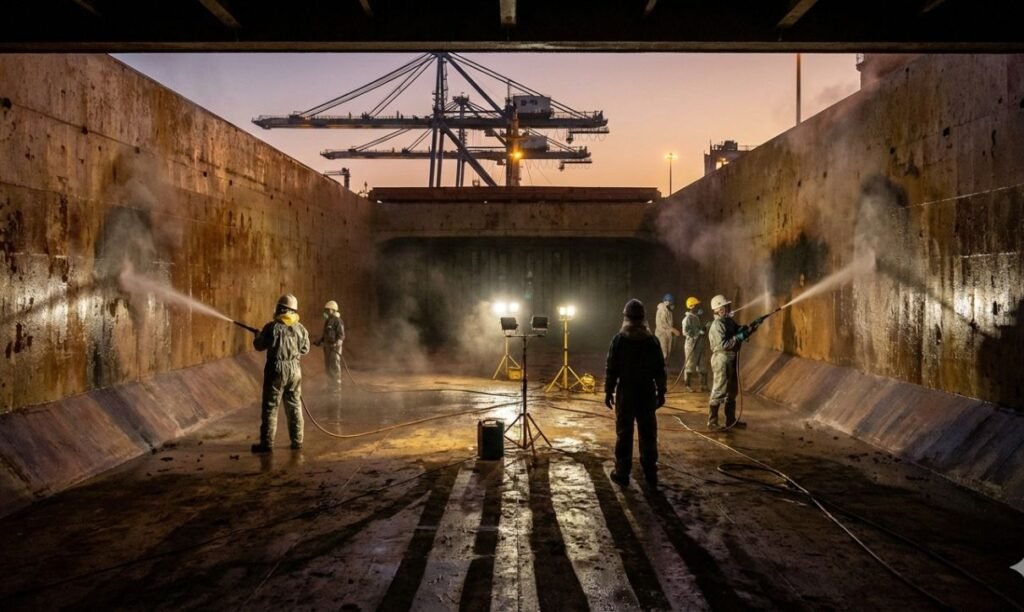
What Is Bulk Carrier Hold Cleaning in Khor Fakkan Port? Explained Simply
The Practical Definition
Bulk carrier hold cleaning is the process of removing cargo residues, dust, moisture, and contaminants from cargo holds so the vessel is fit for the next cargo.
Imagine switching from carrying cement to grain. Even fine cement dust left in frames or bilges can ruin a food cargo. Cleaning ensures compatibility between voyages.
Dry vs Wet Hold Cleaning
- Dry cleaning: sweeping, scraping, vacuuming
- Wet cleaning: high-pressure washing with controlled water use
The method depends on the previous cargo, the next cargo, and the charter party clauses.
5 Powerful Bulk Carrier Hold Cleaning in Khor Fakkan Port Services
1. Pre-Cleaning Hold Condition Assessment
Every effective operation starts with inspection. You assess:
- Previous cargo type
- Level of residue and dust
- Rust scale and coating condition
This step prevents unnecessary cleaning and avoids missing critical problem areas.
2. Cargo-Specific Cleaning Planning
Different bulk cargoes behave differently:
- Coal creates fine, oily dust
- Fertilizers can be corrosive
- Grain demands dry, odor-free holds
Professional Bulk carrier hold cleaning in Khor Fakkan Port adapts cleaning methods to cargo risk, not assumptions.
3. High-Pressure Washing with Environmental Control
When wet cleaning is required, controlled high-pressure systems are used to:
- Remove stubborn residues
- Protect coatings and structures
- Manage wash water responsibly
Waste handling follows MARPOL requirements to avoid illegal discharge.
4. Dry Hold Cleaning for Fast Turnarounds
In time-sensitive port calls, dry cleaning reduces drying time and allows faster inspection. This method is common when switching between compatible dry bulk cargoes.
5. Final Inspection and Acceptance Readiness
The final step ensures:
- Holds are visually clean
- Bilges are free of residues
- Frames and tank tops meet charter standards
Without this verification, cleaning has no commercial value.
Regulatory Compliance: The Framework Behind Cleaning
IMO and MARPOL Convention
The MARPOL Convention regulates residue disposal and environmental protection. Improper handling during hold cleaning can result in fines, detention, or reputational damage.
IMCA Safety Practices
- Confined space entry procedures
- Use of personal protective equipment
- Risk assessments and permit systems
Safety is not optional—it is an integral part of the process.
IAPH and Port Authority Oversight
Ports aligned with IAPH World Ports promote standardized, environmentally responsible operations. Khor Fakkan Port reflects this global approach.
Safety, Environment, and Cost Efficiency—One System
Safety Protects Operations
Hold cleaning involves heights, slippery surfaces, and enclosed spaces. Structured safety systems reduce accidents and unplanned downtime.
Environmental Discipline Reduces Risk
Proper waste segregation and water management protect the marine environment and keep vessels compliant with port authority expectations.
Cost Efficiency Through Planning
Over-cleaning wastes time and money. Under-cleaning leads to rejection. Efficient cleaning finds the balance that protects both schedule and budget.
How Hold, Tank, and Bulk Carrier Cleaning Standards Connect
Integrated Marine Cleaning Requirements
Bulk carriers often require multiple services during a port call:
- Hold cleaning
- Tank cleaning for fuel or slop tanks
- Cargo supervision and inspection
Industry operators such as Cleanship.co are often referenced as examples of global practice in managing tank and hold cleaning under unified compliance systems.
Inspection, Documentation, and Compliance Workflow
Step-by-Step Process
A professional workflow typically includes:
- Risk assessment and method statement
- Cleaning execution
- Waste handling records
- Inspection reports and photographs
- Charterer or surveyor sign-off
Why Documentation Matters
In cargo disputes, documentation proves that the Bulk carrier hold cleaning in Khor Fakkan Port met contractual and regulatory requirements.
Marine Supercargo and Quality Control
Independent Oversight
Marine supercargo professionals verify:
- Hold cleanliness
- Cargo compatibility
- Compliance with Final Quality Rules FINAL
Their involvement reduces disputes and builds trust between owners, charterers, and receivers.
Crew Safety and Drug & Alcohol Testing
Human Factors Matter
Safe cleaning depends on alert, trained crews. Drug and alcohol testing programs support a safety culture and are increasingly expected in regulated ports like Khor Fakkan.
Future Trends in Bulk Carrier Hold Cleaning in Khor Fakkan Port
Smarter Tools and Inspections
Future operations will rely more on:
- Remote inspection cameras
- Data-driven cleaning plans
- Improved residue recovery systems
Sustainability-Focused Practices
The future of Bulk carrier hold cleaning in Khor Fakkan Port will emphasize:
- Reduced water consumption
- Better waste recycling
- Lower environmental impact
Conclusion
Bulk carrier hold cleaning in Khor Fakkan Port is a critical operation shaped by regulation, safety, and commercial realities. Clean holds protect cargo quality, prevent disputes, and keep vessels moving on schedule in one of the UAE’s most important ports.
Three key takeaways:
- Compliance with IMO, MARPOL, IMCA, and IAPH standards determines the quality of cleaning.
- Safety and environmental discipline reduce operational risk and cost.
- Inspection and documentation are as important as the cleaning itself.
For shipowners and operators seeking consistent compliance and maritime service excellence, Cleanship.co represents a professional benchmark in global bulk carrier, tank, and hold cleaning operations.
FAQs:
Q1. How long does bulk carrier hold cleaning in Khor Fakkan Port take?
The duration depends on cargo type, residue level, and cleaning method. Dry cleaning may take several hours, while wet cleaning can take one to two days, including drying and inspection.
Q2. Is bulk carrier hold cleaning mandatory before every cargo?
Most charter parties require holds to be clean, dry, and free of residues. Cleaning standards depend on the previous and next cargo compatibility and inspection requirements.
Q3. How is bulk carrier hold cleaning different from tank cleaning?
Hold cleaning focuses on dry cargo spaces, while tank cleaning involves liquid cargo tanks with stricter chemical handling and gas-freeing procedures.
Q4. Which regulations apply to bulk carrier hold cleaning?
Operations are guided by IMO regulations, MARPOL Convention requirements, IMCA safety practices, and port authority rules aligned with IAPH World Ports standards.
Q5. Why is documentation important after hold cleaning?
Documentation proves compliance, supports inspections, and protects shipowners during cargo claims or disputes. It is a critical part of professional marine cleaning operations.