
The Real Value of Hold Cleaning in Ajman Port
Hold cleaning in Ajman Port is not a cosmetic task. It is a compliance-driven, safety-critical operation that directly affects cargo quality, inspection outcomes, and voyage economics. In today’s UAE maritime environment, port authorities, charterers, and surveyors expect cargo holds to meet strict cleanliness and safety benchmarks. When holds fail inspections, the cost is measured not only in delays but also in reputation and lost trust. For vessel operators, proper hold cleaning in Ajman Port has become a strategic necessity rather than an operational afterthought.
Ajman Port’s Role in the UAE Maritime Ecosystem
Ajman Port supports regional trade across construction materials, agricultural cargo, minerals, and bagged goods. Vessels often arrive after carrying different cargo types, making contamination control critical. The UAE’s ports operate under globally aligned standards, and Ajman is no exception. Hold cleaning in Ajman Port reflects the country’s broader commitment to efficient, compliant, and environmentally responsible shipping.
Why the UAE Sets High Marine Cleaning Standards
The UAE positions itself as a trusted maritime hub by enforcing international conventions consistently. Regulations from IMO, MARPOL Convention, IMCA, and IAPH are not treated as guidelines but as operating baselines. This is why the hold cleaning in Ajman Port is closely scrutinized during inspections and cargo acceptance surveys.
What Hold Cleaning Really Means
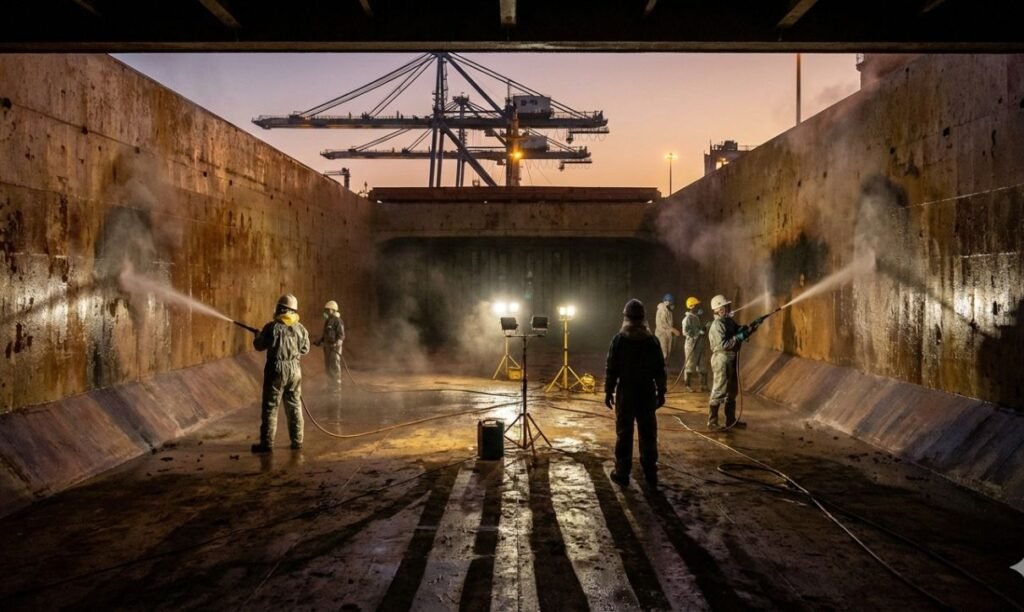
Hold cleaning is the systematic removal of previous cargo residues, dust, rust scale, moisture, and odors from cargo holds. The goal is to prepare the hold so the next cargo can be loaded safely without risk of contamination or structural damage.
How Hold Cleaning Differs from Tank Cleaning
While tank cleaning focuses on liquid residues and gas-free conditions, hold cleaning deals with dry cargo residues, corrosion, and moisture control. On bulk carriers, hold cleaning in Ajman Port often determines whether a vessel is accepted or rejected for loading.

Benefit 1: Stronger Regulatory Compliance
Hold cleaning in Ajman Port helps vessels meet port state control expectations aligned with IMO and MARPOL Convention requirements. Clean holds reduce the likelihood of deficiencies, warnings, or detention, especially when cargo residues could cause pollution or safety risks.
Benefit 2: Faster Cargo Acceptance and Inspections
Surveyors assess cleanliness before approving loading. Proper hold cleaning in Ajman Port allows marine supercargo inspectors to pass holds quickly under Marine Supercargo Final Quality Rules, preventing costly re-cleaning and demurrage.
Benefit 3: Improved Crew Safety
Cargo holds can contain hazardous dust, sharp residues, or slippery surfaces. Thorough hold cleaning in Ajman Port reduces risks during inspection, maintenance, and loading operations. Cleaner holds mean fewer accidents and safer working conditions.
Benefit 4: Environmental Protection in Port Waters
Residual cargo washed into port waters can damage marine ecosystems. Hold cleaning in Ajman Port supports environmental protection goals promoted by IAPH and World Ports initiatives by preventing accidental discharge of pollutants.
Benefit 5: Lower Long-Term Maintenance Costs
Cargo residues trap moisture and accelerate corrosion. Regular hold cleaning in Ajman Port slows structural degradation, reducing steel repairs, coating failures, and dry-dock expenses over time.
Benefit 6: Better Cargo Quality and Reduced Claims
Contaminated holds lead to cargo rejection or claims. By maintaining consistent hold cleaning in Ajman Port, operators protect cargo integrity and reduce disputes with charterers and cargo owners.
Benefit 7: Enhanced Commercial Reputation
Charterers prefer vessels with a history of clean inspections. Reliable hold cleaning in Ajman Port signals professional vessel management, improving fixture opportunities and long-term commercial relationships.
Hold, Tank, and Bulk Carrier Cleaning Standards
Different vessels require different approaches. Bulk carriers focus on dry cleanliness and rust scale removal. Tankers require residue and gas management. Many service providers apply standardized procedures, so hold cleaning in Ajman Port aligns with tank and bulk carrier cleaning benchmarks.
Inspection and Documentation Workflows
Cleaning alone is not enough. Inspectors expect documented proof. A typical workflow includes cleaning records, visual inspection reports, and surveyor approvals. Proper documentation supports the hold cleaning in Ajman Port by demonstrating compliance discipline.
The Role of Cargo Supervision
Cargo supervision ensures cleaning meets charter party and cargo-specific requirements. Marine supercargo teams often verify that hold cleaning in Ajman Port aligns with loading standards before giving clearance.
Crew Safety and Compliance Programs
Modern operations integrate safety programs such as drug and alcohol testing services during port calls. Clean, organized holds reduce stress and operational risk, supporting broader crew welfare initiatives.
Industry Practice and Global Operations
Across global ports, standardized cleaning practices improve consistency. Companies like Cleanship.co reflect industry practice by combining global tank and hold cleaning operations with compliance-focused service delivery. This approach mirrors expectations seen in hold cleaning in Ajman Port.
Cost Efficiency Through Planned Cleaning
Planned hold cleaning in Ajman Port is far more cost-effective than emergency cleaning under inspection pressure. Predictable cleaning schedules help operators control budgets and avoid operational surprises.
Future Trends in Marine Cleaning
Automation is reducing manual entry risks. Eco-friendly cleaning agents are replacing harsh chemicals. Digital inspection logs are improving transparency. These trends are shaping how hold cleaning in Ajman Port will be managed in the coming years.
Why Standards Will Keep Rising in Ajman Port
As UAE ports modernize, inspection criteria will become stricter. Hold cleaning in Ajman Port will increasingly be evaluated as part of overall vessel management quality, not just cargo readiness.
Conclusion: What Vessel Operators Should Remember
Hold cleaning in Ajman Port delivers three clear advantages. First, it ensures compliance with international and port-specific regulations. Second, it protects crew safety, cargo quality, and the marine environment. Third, it reduces delays, claims, and long-term maintenance costs. For operators seeking dependable, compliance-focused maritime services, Cleanship.co represents the professional standards expected in modern hold, tank, and bulk carrier cleaning. Choosing experienced partners is a practical step toward consistent inspection success and maritime service excellence.
FAQs:
Q1. How often is hold cleaning required in Ajman Port?
The cleaning frequency depends on cargo changes and inspection requirements. Vessels carrying different cargo types usually require hold cleaning in Ajman Port before every new loading to ensure acceptance and compliance.
Q2. Is hold cleaning mandatory under international regulations?
While conventions like MARPOL do not mandate cleaning after every voyage, they require pollution prevention. Hold cleaning in Ajman Port becomes mandatory when residues pose environmental or cargo contamination risks.
Q3. How long does professional hold cleaning take?
The duration depends on hold size, residue type, and cleaning method. In Ajman Port, hold cleaning can take several hours to a full day, including inspection readiness.
Q4. Can tank cleaning and holding be coordinated together?
Yes. Many operators plan combined tank and hold cleaning during port calls. Coordinated workflows ensure that hold cleaning in Ajman Port aligns with overall vessel compliance planning.
Q5. Does proper hold cleaning reduce cargo claims?
Yes. Clean holds minimize contamination risks and improve cargo quality, making hold cleaning in Ajman Port one of the most effective ways to reduce disputes and claims.