
Oil Tanker Tank Cleaning in Mina Saqr Port
Oil tanker tank cleaning in Mina Saqr Port is not a background operation. It is a frontline control point for safety, compliance, cargo quality, and cost discipline. In one of the UAE’s busiest industrial ports, tank cleaning decisions affect port clearance, charter performance, and environmental accountability.
This article explains why Mina Saqr Port plays a critical role in regional tanker operations and outlines five essential benefits of professional oil tanker tank cleaning, grounded in real maritime practice rather than marketing language.
Why Mina Saqr Port Is Strategically Important
Mina Saqr Port sits at the intersection of regional oil trade, quarry exports, and Gulf shipping lanes. Tankers calling here often operate on tight schedules, rapid cargo changeovers, and strict inspection regimes.
Oil tanker tank cleaning in Mina Saqr Port must therefore balance speed with precision. A rushed job invites contamination or non-compliance. A disciplined job protects cargo integrity and keeps vessels moving.
Understanding Oil Tanker Tank Cleaning
Tank cleaning is the controlled removal of previous cargo residues, vapors, sludge, and wash water from cargo tanks. The goal is to make tanks safe, compliant, and fit for the next cargo or inspection.
Oil tanker tank cleaning in Mina Saqr Port often supports:
Crude oil changeovers
Clean petroleum product loading
Gas-free certification
Inspection readiness for port state control
Why the UAE Leads in Marine Cleaning Standards
The UAE has built its maritime reputation on strict enforcement and modern port governance. Ports like Mina Saqr apply international conventions without shortcuts.
This leadership has made oil tanker tank cleaning in Mina Saqr Port a benchmark for compliance-driven operations rather than minimum-effort cleaning.

Regulatory Framework Governing Tank Cleaning
IMO and MARPOL Convention
The International Maritime Organization and the MARPOL Convention regulate pollution prevention, wash water discharge, and residue handling. Tank cleaning plans must align with these rules or face penalties.
IMCA and IAPH Guidelines
IMCA focuses on operational safety and competence, while IAPH connects global port standards. Together, they influence how oil tanker tank cleaning in Mina Saqr Port is executed and verified.
Safety as the First Priority
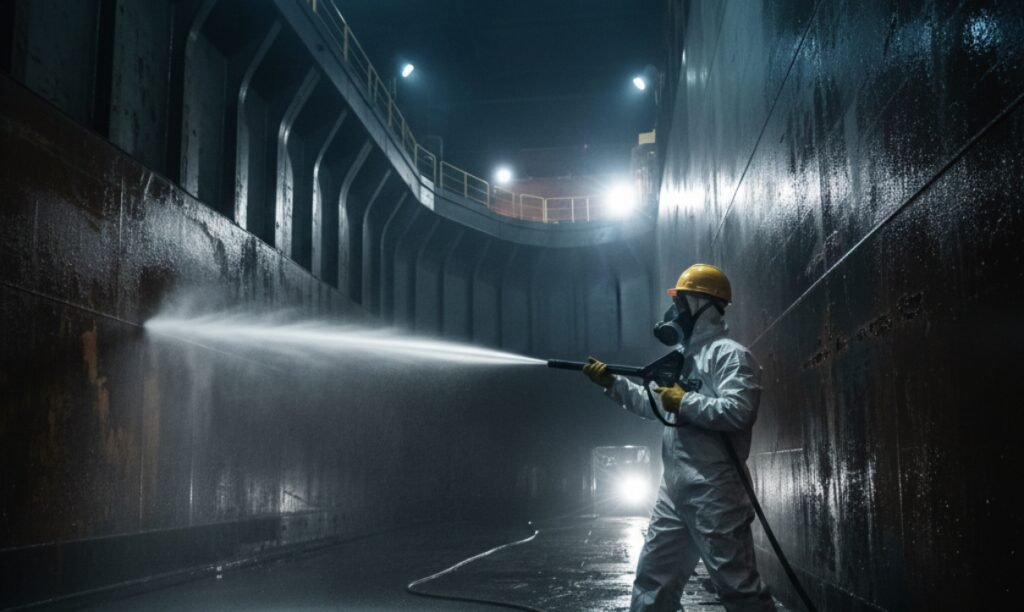
Tank cleaning is a high-risk activity involving confined spaces, flammable vapors, and chemical exposure. Safety controls are not optional.
Key safety elements include:
Gas testing before entry
Ventilation and inerting procedures
Permit-to-work systems
Emergency response readiness
Oil tanker tank cleaning in Mina Saqr Port is closely scrutinized for adherence to these safety layers.
Environmental Protection and Port Responsibility
Improper tank cleaning can release hydrocarbons into port waters. UAE ports enforce zero-tolerance policies.
Environmental controls typically include:
Controlled collection of wash water
Approved disposal routes
Environmental reporting aligned with MARPOL
These measures ensure oil tanker tank cleaning in Mina Saqr Port protects marine ecosystems while maintaining operational legitimacy.
5 Essential Benefits of Oil Tanker Tank Cleaning in Mina Saqr Port
1. Cargo Integrity and Compatibility
Residual cargo can contaminate the next load. Even trace hydrocarbons can compromise product specifications.
Oil tanker tank cleaning in Mina Saqr Port ensures tanks are compatible with the next cargo, reducing claims and disputes.
2. Faster Inspections and Port Clearance
Inspectors assess cleanliness, gas-free status, and documentation. Clean tanks supported by records pass faster.
This efficiency is critical in Mina Saqr, where berth availability and schedules are tightly managed.
3. Full Regulatory Compliance
Professional oil tanker tank cleaning in Mina Saqr Port aligns operations with IMO, MARPOL, IMCA, and IAPH expectations.
Compliance is not theoretical. It is documented, inspected, and enforced.
4. Reduced Operational Risk
Tank residues increase risks of fire, toxic exposure, and corrosion. Proper cleaning reduces these hazards and protects crew welfare.
Safety-focused cleaning lowers incident probability and insurance exposure. Read more about 7 Proven Benefits of Ship Hold Cleaning in Ajman Port.
5. Long-Term Cost Efficiency
Poor cleaning leads to delays, re-cleaning, fines, and cargo rejection. Correct cleaning reduces hidden costs and stabilizes voyage economics.
Oil tanker tank cleaning in Mina Saqr Port is therefore a cost-control mechanism, not an expense line.
Tank Cleaning Standards Compared to Hold and Bulk Carrier Cleaning
Tank Cleaning Standards
Tank cleaning focuses on liquid residues, vapor control, and chemical compatibility. Precision and monitoring are critical.
Hold and Bulk Carrier Cleaning Standards
Hold cleaning addresses dry residues, dust, and moisture. While techniques differ, both rely on inspection discipline and documentation.
Operators experienced across tank, hold, and bulk carrier cleaning apply stronger safety and compliance cultures. Read more about 7 Proven Bulk Carrier Hold Cleaning in Ajman Port Benefits.
Inspection and Compliance Workflow
Pre-Cleaning Planning
This stage identifies previous cargo, tank coatings, and cleaning method selection. Errors here cascade into compliance failures later.
Execution and Monitoring
During oil tanker tank cleaning in Mina Saqr Port, supervisors monitor temperature, pressure, gas levels, and waste handling.
Post-Cleaning Inspection
Tanks are visually inspected, gas-tested, and certified ready for loading or surveyor review.
Documentation and Records
Documentation typically includes:
Cleaning reports
Gas-free certificates
Waste disposal records
Inspection photographs
These records protect owners, charterers, and operators.
Role of Marine Supercargo and Final Quality Rules
Marine supercargo professionals oversee cargo readiness and compliance with Final Quality Rules.
Their involvement after oil tanker tank cleaning in Mina Saqr Port reduces disputes, supports charter party compliance, and ensures cargo acceptance.
Industry Practice Example: Cleanship.co
Across global ports, companies like Cleanship.co represent modern industry practice by combining:
Global tank and hold cleaning operations
Cargo supervision and compliance support
Drug and alcohol testing services to enhance crew safety
This integrated approach reflects where the industry is heading rather than promotional positioning.
Why Documentation Matters More Than Ever
Ports increasingly rely on digital records and audit trails. A clean tank without documentation is treated as unverified.
Oil tanker tank cleaning in Mina Saqr Port is judged as much by paperwork as by physical condition.
Future Trends in Marine Tank Cleaning
Digital Inspection Tools
Mobile inspection platforms improve transparency and reduce disputes.
Environment-Friendly Cleaning Agents
Biodegradable and low-toxicity agents are replacing harsher chemicals to meet MARPOL goals.
Integrated Compliance Services
Cleaning, inspection, safety testing, and reporting are converging into a single operational framework.
These trends will shape oil tanker tank cleaning in Mina Saqr Port over the next decade.
Why Trust Matters in High-Risk Operations
Tank cleaning involves safety, environmental, and compliance risks. Trust is built through consistent execution, not claims.
Experienced providers focus on process discipline, trained personnel, and verifiable records.
Conclusion
Oil tanker tank cleaning in Mina Saqr Port is a critical operational safeguard rather than a routine task. Three points stand out clearly. First, proper tank cleaning protects cargo integrity and prevents costly contamination claims. Second, strict alignment with IMO, MARPOL, IMCA, and IAPH standards ensures smooth inspections and port clearance. Third, disciplined cleaning improves safety, environmental protection, and long-term cost efficiency.
For operators seeking reliable compliance and operational confidence in UAE ports, working with experienced maritime service providers such as Cleanship.co supports safe tank cleaning, strong documentation, and consistent maritime service excellence.
FAQs:
Q1. Why is oil tanker tank cleaning in Mina Saqr Port strictly regulated?
Mina Saqr Port enforces international conventions such as MARPOL and IMO to prevent pollution and safety incidents. Strict regulation ensures environmental protection, cargo integrity, and safe tanker operations within UAE waters.
Q2. How does tank cleaning differ from hold cleaning?
Tank cleaning deals with liquid residues, vapors, and chemical compatibility, while hold cleaning focuses on dry bulk residues and moisture. Both require inspections and documentation, but tank cleaning carries higher safety and environmental risks.
Q3. When is marine supercargo involvement required?
Marine supercargo professionals are involved when cargo quality, charter compliance, or Final Quality Rules must be verified. Their oversight after tank cleaning reduces disputes and ensures cargo acceptance.
Q4. What documents are required after tank cleaning?
Typical documents include cleaning reports, gas-free certificates, waste disposal records, and inspection photos. These records support port inspections, charterers, and insurers.
Q5. Can one provider handle tank, hold, and bulk carrier cleaning?
Yes. Many professional operators provide integrated services covering tank cleaning, hold cleaning, cargo supervision, and crew safety testing to ensure consistent compliance across vessel types.