
Dubai has grown into one of the world’s most active maritime hubs. Every day, oil tankers, bulk carriers, and mixed-fleet vessels move through its ports, terminals, and anchorage zones. In this environment, oil tanker tank cleaning in Dubai is not a routine chore—it is a core safety and compliance operation that protects crews, cargo, and the marine ecosystem.
When tanks are not cleaned properly, residues accumulate, gases build up, inspections fail, and risks multiply. When cleaning is done right, operations become safer, faster, and more predictable. Below, we explore seven powerful safety gains that explain why oil tanker tank cleaning plays such a decisive role in modern tanker operations.
Dubai and the UAE as a Global Marine Operations Hub
Dubai’s strategic position connects Asia, Europe, and Africa. High traffic means strict oversight from port authorities, charterers, and regulators. Vessels arriving without proper tank condition face delays, additional inspections, or rejection.
Because of this, oil tanker tank cleaning in Dubai must align with international standards while adapting to local port procedures and climatic conditions such as heat, humidity, and sediment-heavy cargo residues.
Understanding Oil Tanker Tank Cleaning Operations
Tank cleaning involves removing cargo residues, sludge, and vapors from cargo tanks after discharge. Methods may include hot water washing, chemical cleaning, ventilation, and gas-freeing. Each step reduces specific risks linked to fire, toxicity, and structural damage.
In Dubai, these operations often occur under tight schedules, making planning and execution critical for safety.
Safety Gain 1: Reduced Fire and Explosion Risk
Hydrocarbon vapors are invisible threats. Even small residue layers can release flammable gases. Oil tanker tank cleaning in Dubai minimizes these risks by:
- Removing volatile residues
- Lowering gas concentration below explosive limits
- Allowing safe ventilation and gas-free certification
This directly protects crews during inspections, repairs, and cargo changeovers.
Safety Gain 2: Improved Crew Health and Confined Space Safety
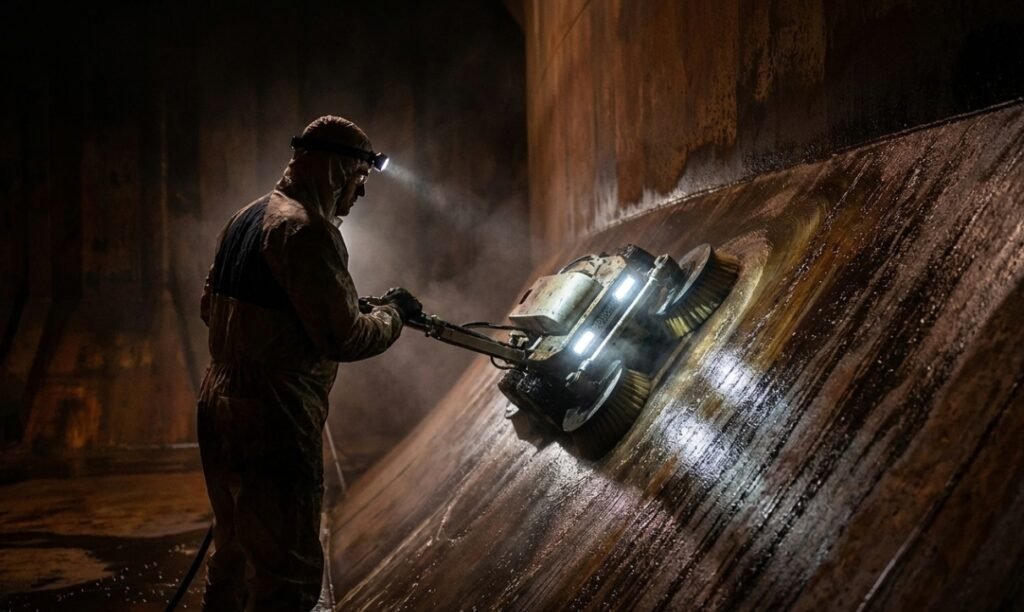
Cargo tanks are confined spaces. Without proper cleaning, toxic gases like hydrogen sulfide can linger. Through oil tanker tank cleaning in Dubai, tanks are tested, ventilated, and certified safe before entry.
This process reduces incidents related to oxygen deficiency, poisoning, and long-term health exposure for seafarers.
Safety Gain 3: Stronger Compliance With International Regulations
Dubai ports enforce global maritime rules closely. Proper oil tanker tank cleaning supports compliance with:
IMO and MARPOL Convention Standards
IMO and MARPOL regulations strictly control residue discharge, mandating approved tank cleaning procedures, proper waste segregation, and environmentally compliant disposal to prevent marine pollution and regulatory violations.
IMCA and IAPH Operational Guidelines
IMCA and IAPH guidelines establish globally accepted safe marine operating practices, focusing on risk mitigation, crew safety, and procedural control during complex or high-risk marine cleaning operations.
Marine Supercargo Final Quality Rules
Marine Supercargo standards require tanks to be thoroughly cleaned and verified to ensure cargo quality acceptance, eliminate contamination risks, and avoid costly disputes or rejection during loading inspections.
Safety Gain 4: Inspection and Port State Control Readiness
Port State Control inspections are rigorous in UAE waters. Inspectors check tank condition, records, and gas-free certificates. Oil tanker tank cleaning prepares vessels by ensuring:
- Visually clean tanks
- Accurate cleaning and safety logs
- Readiness for spot inspections
This reduces detention risk and operational downtime. Learn more about 7 Proven Vessel Hold Cleaning Services in Abu Dhabi.
Safety Gain 5: Safer Tank, Hold, and Bulk Carrier Transitions
Many operators manage mixed fleets. While tankers focus on liquid cargo, principles overlap with hold cleaning and bulk carrier cleaning. Effective oil tanker tank cleaning in Dubai supports smoother transitions between vessel types by applying consistent safety systems, ventilation protocols, and residue management practices.
Safety Gain 6: Environmental Protection and Spill Prevention
Residues left in tanks increase the chance of accidental discharge during ballasting or cleaning. Oil tanker tank cleaning in Dubai emphasizes controlled waste collection and disposal, reducing pollution risks in sensitive Gulf waters.
This aligns with regional environmental priorities and protects port access privileges. Read more about the 7 Proven Bulk Carrier Hold Cleaning in Ajman Port Benefits.
Safety Gain 7: Long-Term Cost and Asset Protection
Clean tanks reduce corrosion, coating damage, and structural wear. Over time, oil tanker tank cleaning lowers maintenance costs, extends tank life, and prevents emergency repairs that often carry higher safety risks.
Documentation and Compliance Workflows
Safety is not just physical—it is procedural. Proper documentation includes:
- Tank cleaning logs
- Gas testing records
- Safety checklists and permits
- Waste handling declarations
In Dubai, clear documentation supports inspections, audits, and charterer confidence.
Crew Training, Testing, and Safety Management
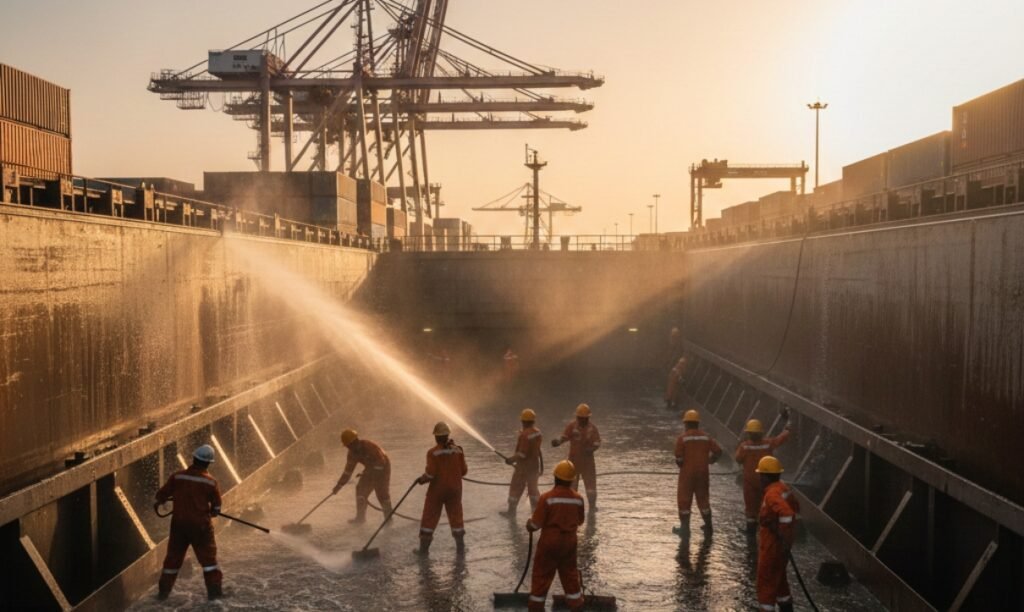
Tank cleaning safety depends on trained crews. Oil tanker tank cleaning integrates:
- Pre-cleaning risk assessments
- Continuous gas monitoring
- Permit-to-work systems
- Emergency response drills
These steps ensure safety remains active, not assumed.
Role of Technology in Modern Tank Cleaning
Automation, remote monitoring, and improved sensors are reshaping oil tanker tank cleaning in Dubai. Automated washing machines and real-time gas detectors reduce human exposure while improving consistency and safety.
Future Trends in Marine Cleaning Operations
Looking ahead, sustainability and digital tracking will shape oil tanker tank cleaning in Dubai. Expect wider use of closed-loop systems, data-driven inspection readiness, and stricter environmental reporting across UAE ports.
Conclusion
Oil tanker tank cleaning in Dubai delivers far more than clean steel surfaces. First, it dramatically reduces fire, explosion, and health risks by removing residues and controlling gases. Second, it strengthens compliance with international regulations, inspections, and charterer expectations. Third, it protects the environment and the vessel itself, lowering long-term operational costs.
In a region where safety, speed, and scrutiny coexist, oil tanker tank cleaning in Dubai is a strategic safety investment. When cleaning is systematic, documented, and crew-focused, safer operations naturally follow.
FAQs:
Tank cleaning removes flammable residues and toxic vapors that create fire, explosion, and health risks. It also prepares tanks for inspections, repairs, or new cargoes, ensuring compliance with international safety and environmental regulations.
Hold cleaning focuses on dry cargo spaces, while tanker tank cleaning handles liquid cargo residues and gases. Both require ventilation, residue removal, and inspection readiness, but tank cleaning involves higher fire and toxicity risks.
Yes. Bulk carrier cleaning emphasizes dust control, structural protection, and contamination prevention. Many safety systems—permits, ventilation, and inspections—are shared with oil tanker tank cleaning practices.
Gas testing confirms oxygen levels and checks for flammable or toxic gases. Only after tanks are certified gas-free can crew members safely enter for inspection or maintenance.
Proper tank cleaning supports MARPOL, IMO, IMCA, and port authority requirements by reducing pollution risk, improving inspection outcomes, and ensuring accurate safety documentation across operations.