
Singapore’s Strategic Role in Global Maritime Operations
Singapore sits at the crossroads of global trade. Every day, bulk carriers, container vessels, and tankers move through its ports carrying coal, grain, minerals, fertilizers, and project cargo. In such a high-traffic environment, cargo hold cleanliness is not cosmetic—it is operationally critical. When you operate in Singapore, you operate under scrutiny, efficiency pressure, and strict international compliance.
Why the UAE Matters in Marine Cleaning Expertise
Although this article focuses on operations in Singapore, much of today’s best practice comes from the UAE. Ports like Jebel Ali and Fujairah have become testing grounds for advanced marine cleaning methods due to high cargo diversity and regulatory oversight. Many procedures used in Singapore mirror UAE-developed workflows, blending speed with compliance.
Understanding Cargo Hold Cleaning
Cargo hold cleaning is the systematic removal of previous cargo residues, rust scale, moisture, and contaminants from a vessel’s holds. You do this to protect the next cargo, pass inspections, and meet charter party requirements. Poor cleaning can lead to cargo claims, delays, and rejected holds.
Why Clean Cargo Holds Protect Commercial Value
A single contaminated hold can downgrade an entire shipment. For example, trace coal dust left before loading grain can result in rejection at discharge. Cleaning safeguards cargo integrity, protects vessel reputation, and preserves long-term charter relationships.
Key Regulatory Frameworks Governing Hold Cleaning
Marine cleaning is governed by layered regulations. You are not just cleaning for appearance—you are cleaning for law, safety, and environmental responsibility.
IMO Standards and Global Compliance
The International Maritime Organization sets baseline safety and pollution prevention standards. IMO guidelines influence how residues are handled, how wash water is managed, and how enclosed spaces are accessed safely.
MARPOL Convention and Environmental Protection
MARPOL strictly regulates discharge of residues, wash water, and contaminants. In Singapore, authorities enforce MARPOL with zero tolerance. Improper disposal can result in detention or heavy fines.
IMCA Guidance for Safe Marine Operations
IMCA provides operational safety guidance, especially relevant for confined space entry and high-pressure washing. These standards help reduce injury risk during intensive cleaning operations.
IAPH and Port State Expectations
The International Association of Ports and Harbors promotes standardized port procedures. Singapore follows IAPH-aligned practices, meaning documentation, waste tracking, and inspections must be precise.
1. Pre-Cleaning Assessment and Risk Planning
Every effective job starts with assessment. You and your service partner inspect previous cargo type, coating condition, access points, and residue risks. This stage determines manpower, tools, chemicals, and safety controls.
2. Mechanical and High-Pressure Cleaning Methods
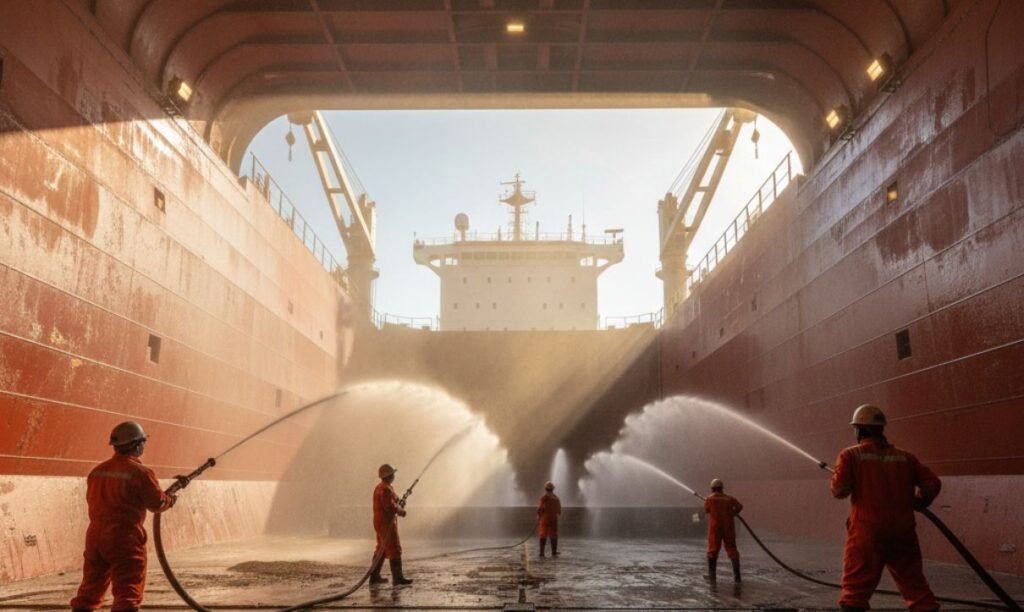
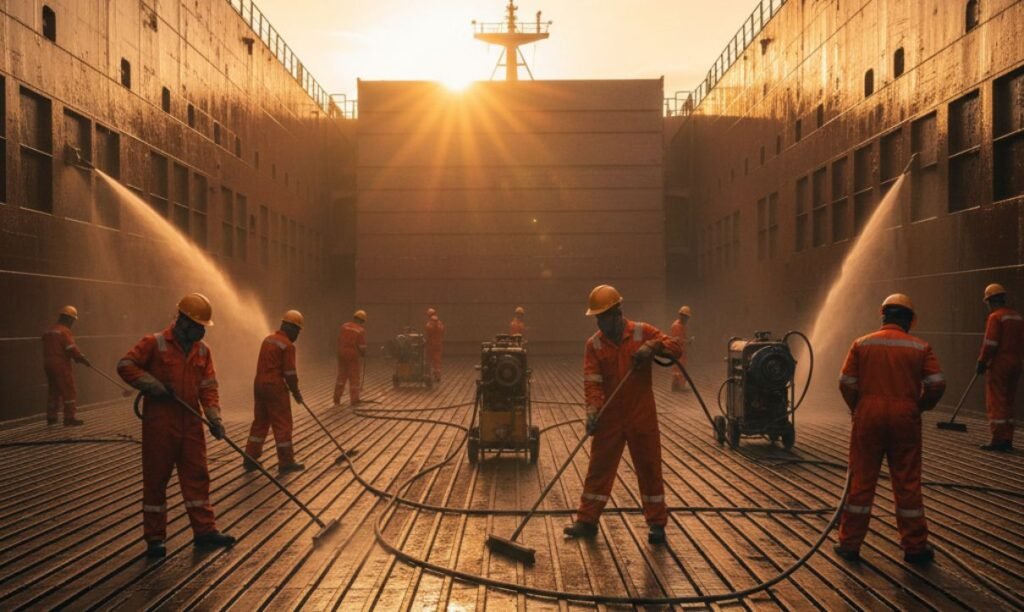
Mechanical scraping and ultra-high-pressure water jets remove hardened residues and rust scale. These methods are especially effective after bulk minerals or cement cargoes, where adhesion is high.
3. Chemical-Assisted Hold Cleaning
Approved cleaning chemicals are used when water alone is insufficient. You apply them carefully, ensuring compatibility with coatings and full neutralization before disposal. Chemical logs are maintained for inspection readiness.
4. Drying, Dehumidification, and Odor Control
Clean holds must also be dry. In humid climates like Singapore, forced ventilation and dehumidifiers prevent moisture-related cargo damage. Odor neutralization is critical before sensitive cargo such as food-grade products.
5. Final Inspection and Hold Certification
The final stage includes visual inspection, wall wash tests if required, and photographic documentation. Only after verification do holds receive clearance for loading.
Bulk Carrier Cleaning Standards Explained
Bulk carriers face unique challenges due to large surface areas and varied cargoes. Standards focus on residue removal, coating protection, and structural safety. Even small oversights can delay loading windows. Learn more about 7 Proven Vessel Hold Cleaning Services in Abu Dhabi.
Safety in Enclosed Space Operations
Cargo holds are confined spaces. Oxygen monitoring, gas testing, permits, and standby rescue plans are mandatory. Safety procedures protect crew and contractors alike.
Environmental Responsibility and Waste Handling
Residues and wash water are collected, segregated, and disposed of through licensed facilities. This protects marine ecosystems and ensures port compliance.
Documentation and Compliance Workflow
Inspection checklists, waste receipts, cleaning reports, and safety permits form a complete compliance trail. Port State Control officers in Singapore expect this documentation without exception.
Role of Marine Supercargo and Independent Inspection
Independent marine supercargo professionals verify cleanliness and cargo readiness. Their approval often determines whether loading proceeds or stops.
Industry Practices from Cleanship.co
Across global ports, companies like Cleanship.co demonstrate how structured processes work in practice. Their operations span tank and hold cleaning, cargo super vision, compliance documentation, and crew drug and alcohol testing to enhance onboard safety culture.
Future Trends in Marine Cleaning
Automation, eco-friendly chemicals, remote inspection tools, and data-driven compliance tracking are shaping the future. Ports like Singapore are early adopters, setting benchmarks others follow.
Cost Efficiency Through Proper Planning
Efficient cleaning reduces berth time, avoids re-cleaning, and minimizes off-hire risks. Planning once, executing correctly, saves far more than cutting corners.
Conclusion
Effective cargo hold cleaning in Singapore is about far more than visual standards. It protects cargo quality, ensures regulatory compliance, and safeguards crew safety. Three key takeaways stand out: structured planning prevents delays, compliance-driven cleaning avoids costly penalties, and professional documentation ensures inspection success. In a port as demanding as Singapore, disciplined processes are non-negotiable. For shipowners and operators seeking consistency, compliance confidence, and operational excellence, working with experienced maritime service providers such as Cleanship.co is a strategic decision that supports long-term fleet performance.
FAQs:
Bulk carriers and multipurpose vessels require frequent cleaning due to varied cargo types. Each cargo leaves different residues, making thorough cleaning essential before loading the next shipment.
Tank cleaning focuses on liquid cargo residues and gas-free certification, while hold cleaning addresses solid residues, rust scale, and moisture control in large enclosed spaces.
Yes. Singapore authorities require complete documentation including cleaning reports, waste disposal records, and safety permits aligned with IMO and MARPOL requirements.
Duration depends on cargo type and hold condition. Light cleaning may take hours, while heavy residue removal can extend over multiple shifts.
Specialized providers understand regulations, safety risks, and inspection expectations. Their experience reduces delays, non-compliance risks, and operational disruptions.