
In the maritime industry, vessel efficiency is influenced by many factors, but one of the most overlooked lies beneath the waterline. While engines, navigation systems, and cargo operations often receive regular attention, the condition of the hull can quietly affect a vessel’s performance every day it remains at sea.
Marine growth is a natural challenge for every ship. Algae, slime, barnacles, and shell-forming organisms gradually attach themselves to submerged surfaces, increasing drag and reducing hydrodynamic efficiency. What starts as a thin layer of biological growth can eventually lead to higher fuel consumption, reduced
[\mkkspeed, and increased operational costs.
This is why Underwater Hull Cleaning in Hazira has become an essential service for shipowners and fleet managers looking to maintain optimal vessel performance without interrupting commercial operations.
Located on Gujarat’s western coast, Hazira is a major maritime and industrial hub that supports container vessels, bulk carriers, LNG ships, tankers, and offshore support vessels. As vessel traffic continues to increase, underwater maintenance services have become an important part of efficient fleet management.
Understanding Hull Fouling and Its Impact
Every vessel operating in seawater experiences some degree of hull fouling.
The process begins shortly after a ship enters the water. Microscopic organisms form a biofilm on the hull surface, creating favorable conditions for larger marine organisms to attach themselves. Over time, algae, barnacles, mussels, and other marine growth accumulate across submerged areas.
The impact on vessel performance can be significant.
A fouled hull creates additional resistance as the vessel moves through the water. This means the propulsion system must work harder to maintain the same speed.
Common consequences include:
- Increased fuel consumption
- Reduced vessel speed
- Higher engine load
- Increased emissions
- Greater operating expenses
- Reduced voyage efficiency
For example, a bulk carrier regularly calling at Hazira and Middle Eastern ports may gradually experience rising fuel costs despite no changes in cargo volume or voyage route. In many cases, underwater inspections reveal hull fouling as the primary cause.
This is one reason why Underwater Hull Cleaning in Hazira has become a routine maintenance practice for many shipping companies.
Why Hazira Is an Important Location for Hull Cleaning Services
Hazira’s strategic location and growing port infrastructure make it a practical destination for underwater maintenance operations.
Busy Commercial Shipping Activity
The port supports significant maritime traffic across various sectors, including:
- Container shipping
- LNG transportation
- Bulk cargo handling
- Offshore energy support
- Petroleum logistics
These vessels often require regular underwater maintenance to maintain efficiency.
Reduced Downtime
One of the key advantages of underwater hull cleaning in Hazira is that it can be performed while the vessel remains afloat.
This allows operators to avoid unnecessary delays associated with dry docking.
Access to Professional Diving Teams
Hazira has access to experienced commercial diving contractors who specialize in underwater inspections and hull maintenance services.
Convenient Maintenance Scheduling
Many shipowners choose Underwater Hull Cleaning in Hazira during routine port calls, allowing maintenance to be completed without affecting operational schedules.
How Underwater Hull Cleaning in Hazira Is Performed
Professional underwater hull cleaning in Hazira involves a systematic approach designed to remove marine growth while preserving hull coatings.
Initial Underwater Inspection
Before cleaning begins, divers inspect the hull to determine the extent of fouling and identify any areas requiring special attention.
The inspection typically assesses:
- Hull condition
- Biofouling levels
- Coating performance
- Corrosion signs
- Structural concerns
High-definition underwater cameras are often used to document conditions.
Removal of Marine Growth
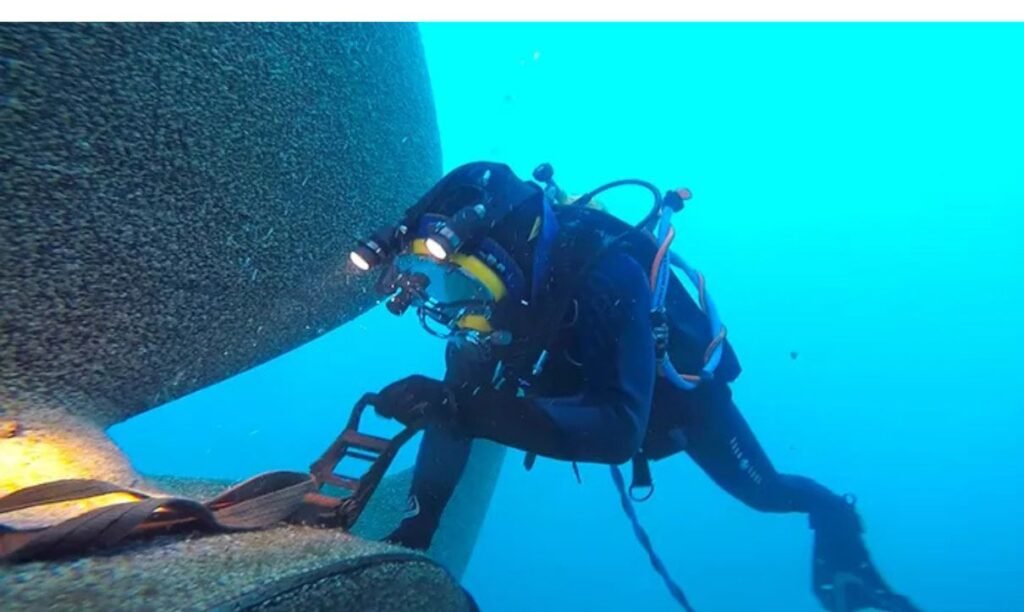
Divers use specialized cleaning equipment to remove accumulated marine organisms from the hull surface.
Cleaning methods vary depending on:
- Fouling severity
- Hull coating type
- Vessel requirements
- Environmental considerations
The objective is to restore smooth hull surfaces without damaging protective coatings.
Cleaning of Critical Areas
Particular attention is given to areas where marine growth commonly accumulates.
Sea Chests
Sea chest openings are cleaned to ensure unrestricted seawater flow to onboard systems.
Rudders
Marine growth around rudders can affect maneuverability and hydrodynamic performance.
Thrusters
Bow and stern thrusters require regular cleaning to maintain operational effectiveness.
Niche Areas
Complex hull structures often experience accelerated fouling and require detailed attention.
Final Inspection and Documentation
After cleaning is completed, divers conduct a final inspection to verify results.
Most service providers supply inspection reports supported by photographs and video recordings.
Benefits of Underwater Hull Cleaning
The advantages of Underwater Hull Cleaning in Hazira extend far beyond cosmetic improvements. Regular hull maintenance enhances vessel efficiency, reduces operating costs, supports environmental compliance, and helps protect the long-term condition of underwater surfaces.
Improved Fuel Efficiency
A clean hull experiences less hydrodynamic resistance as it moves through the water. This reduction in drag helps lower fuel consumption, resulting in significant cost savings over time.
Better Vessel Performance
Reduced hull resistance allows vessels to maintain service speed more efficiently with less demand on propulsion systems. This can improve voyage performance, schedule reliability, and overall operational efficiency.
Lower Carbon Emissions
Improved fuel economy directly contributes to lower greenhouse gas emissions and a reduced environmental footprint. As sustainability becomes increasingly important in the maritime industry, regular hull cleaning supports environmental compliance objectives.
Reduced Maintenance Costs
Routine underwater cleaning helps prevent the buildup of severe marine growth that can lead to more complex maintenance requirements. Early intervention often reduces the need for costly repairs and extensive cleaning operations in the future.
Extended Coating Life
By controlling excessive biological growth, regular hull cleaning helps preserve the effectiveness of anti-fouling coatings. Protecting these coatings can extend their service life and reduce long-term maintenance expenses.
Environmental Considerations
Environmental responsibility has become a key aspect of modern underwater maintenance operations. Professional providers of Underwater Hull Cleaning in Hazira follow established industry practices and environmental guidelines to minimize ecological impact while maintaining vessel performance.
Responsible Biofouling Management
Marine growth removed during hull cleaning should be managed and disposed of in accordance with environmental regulations and port requirements. Proper biofouling management helps reduce ecological risks and limits the spread of invasive aquatic species.
Coating Protection
Improper or overly aggressive cleaning techniques can damage anti-fouling coatings and reduce their effectiveness. Experienced contractors use suitable cleaning methods and equipment to protect coating integrity while achieving effective fouling removal.
Sustainable Shipping Operations
Clean hulls reduce hydrodynamic resistance, allowing vessels to operate more efficiently and consume less fuel. This improved efficiency contributes to lower greenhouse gas emissions and supports the maritime industry’s sustainability objectives.
Choosing the Right Hull Cleaning Provider
Selecting an experienced underwater maintenance contractor is essential for achieving safe, effective, and reliable cleaning results. When evaluating providers for Underwater Hull Cleaning in Hazira, shipowners should consider several factors that influence service quality and operational outcomes.
Commercial Diving Expertise
Qualified commercial divers possess the knowledge and experience required to perform underwater maintenance safely and efficiently. Their understanding of vessel structures, cleaning techniques, and marine operations helps ensure high-quality results.
Modern Equipment
Advanced underwater cleaning systems improve the effectiveness of marine growth removal while minimizing the risk of damage to hull coatings. Modern equipment also helps reduce cleaning time and enhances overall operational efficiency.
Safety Standards
Professional underwater maintenance operations require strict adherence to safety procedures, risk assessments, and industry regulations. Strong safety management practices help protect personnel, vessels, and port facilities throughout the cleaning process.
Inspection Reporting
Detailed inspection reports, photographs, and underwater video footage provide valuable documentation of hull condition and completed work. These records support maintenance planning, regulatory compliance, and long-term vessel management.
Operational Flexibility
Service providers should be able to adapt their operations to vessel schedules, cargo activities, and port requirements. This flexibility helps minimize operational disruptions, reduce delays, and ensure that maintenance work is completed efficiently within available time windows.
Why Preventive Hull Maintenance Makes Business Sense
Many shipowners view hull cleaning as a corrective measure. Increasingly, however, it is becoming a preventive maintenance strategy.
Rather than waiting for fuel costs to rise or vessel performance to decline, operators are scheduling regular inspections and cleaning activities based on operational data.
This proactive approach helps:
- Reduce long-term costs
- Improve vessel availability
- Support sustainability goals
- Maintain consistent performance
For vessels trading through Gujarat’s busy maritime corridor, Underwater Hull Cleaning in Hazira offers a practical way to achieve these objectives.
Conclusion
Underwater Hull Cleaning in Hazira is a proven maintenance solution that helps shipowners improve vessel performance, reduce fuel consumption, and maintain operational efficiency without requiring dry docking. By removing marine growth before it significantly impacts performance, underwater cleaning supports both commercial and environmental objectives.
As shipping companies continue to focus on efficiency, cost control, and sustainability, regular hull maintenance has become an essential component of modern fleet management. For vessels calling at Hazira, professional underwater hull cleaning in Hazira provides a convenient, cost-effective way to keep ships operating at peak performance throughout their service life.
FAQs
Q1. 1. What is underwater hull cleaning?
Underwater hull cleaning in Hazira is the removal of marine growth such as algae, slime, and barnacles from a vessel’s hull while the ship remains afloat.
Q2. Why is underwater hull cleaning in Hazira important?
It improves fuel efficiency, reduces drag, lowers emissions, and helps maintain vessel performance.
Q3. Can hull cleaning be performed without dry docking?
Yes. Professional divers can perform underwater hull cleaning in Hazira while the vessel remains in the water.
Q4. How often should underwater hull cleaning in Hazira be carried out?
The frequency depends on vessel type, operating conditions, and fouling levels. Regular inspections help determine cleaning schedules.
Q5. Which vessels benefit from underwater hull cleaning in Hazira?
Tankers, LNG carriers, container ships, bulk carriers, offshore support vessels, and coastal cargo vessels all benefit from regular hull cleaning services.