
In commercial shipping, even small improvements in vessel efficiency can generate significant cost savings over time. Shipowners invest heavily in engine maintenance, voyage optimization, and hull management, yet one critical component is often overlooked until performance starts to decline—the propeller.
A vessel’s propeller operates continuously in one of the harshest environments imaginable. Constant exposure to seawater, marine growth, sediment, and varying operating conditions gradually affects its surface condition. Over time, fouling, corrosion, and minor surface roughness can reduce propulsion efficiency and increase fuel consumption.
This is why Propeller Polishing in Hazira has become an important underwater maintenance service for shipowners and fleet operators seeking to maximize vessel performance while avoiding unnecessary downtime.
Hazira, located on Gujarat’s western coastline, has emerged as a major maritime and industrial hub. The port regularly handles container vessels, LNG carriers, bulk carriers, tankers, and offshore support vessels. As maritime traffic continues to grow, operators are increasingly turning to underwater maintenance solutions that help maintain efficiency without interrupting commercial operations.
Why Propeller Condition Matters More Than Many Operators Realize
The propeller serves as the final link between engine power and vessel movement.
Its primary role is to convert rotational energy into forward thrust. For this process to remain efficient, the propeller’s surface must stay smooth and free from obstructions.
Even minor marine growth or surface roughness can affect water flow around the blades.
The result is often:
- Increased fuel consumption
- Reduced vessel speed
- Higher engine workload
- Lower propulsion efficiency
- Increased emissions
- Higher operating costs
For example, a tanker regularly operating between Hazira and Middle Eastern ports may notice gradual increases in fuel usage despite maintaining the same cargo capacity and voyage schedule. An underwater inspection often reveals fouling and roughness on the propeller surface as the underlying cause.
This is one reason why Propeller Polishing in Hazira has become a routine maintenance activity for many shipping companies.
What Causes Propeller Performance to Decline?
Several factors contribute to reduced propeller efficiency over time.
Marine Growth Accumulation
Marine organisms naturally attach themselves to submerged surfaces.
Common forms of fouling include:
- Algae
- Slime
- Barnacles
- Mussels
- Shell-forming organisms
Even a relatively thin layer of growth can create significant hydrodynamic resistance.
Corrosion
Although marine propellers are manufactured from highly durable materials, prolonged exposure to seawater can still lead to surface deterioration.
Mineral Deposits
Certain operating environments encourage the accumulation of mineral deposits that affect blade smoothness.
Cavitation Damage
Cavitation occurs when vapor bubbles form and collapse around the propeller blades.
Over time, this process may create small pits and imperfections that reduce efficiency.
Each of these issues can impact vessel performance if left unaddressed.
Why Hazira Is an Ideal Location for Propeller Polishing
Hazira’s strategic position along India’s west coast makes it a practical location for underwater maintenance services.
Major Shipping Activity
The port supports a wide range of maritime sectors, including:
- Container shipping
- LNG transportation
- Offshore energy support
- Bulk cargo operations
- Petroleum logistics
This creates ongoing demand for underwater vessel maintenance.
Reduced Downtime
One of the primary benefits of Propeller Polishing in Hazira is that the service can typically be completed while the vessel remains afloat.
This minimizes disruption to commercial schedules.
Access to Professional Diving Services
Commercial diving contractors operating in Hazira provide specialized underwater maintenance support using modern inspection and polishing equipment.
Convenient Maintenance Scheduling
Many operators choose to schedule propeller maintenance during planned port calls, reducing operational interruptions.
How Propeller Polishing in Hazira Is Performed
Professional propeller polishing in Hazira follows a structured process designed to restore efficiency while protecting the propeller surface.
Initial Underwater Inspection
Before polishing begins, divers inspect the propeller to evaluate:
- Marine growth levels
- Surface condition
- Corrosion signs
- Cavitation damage
- Blade integrity
This assessment helps determine the most appropriate maintenance approach.
Removal of Fouling
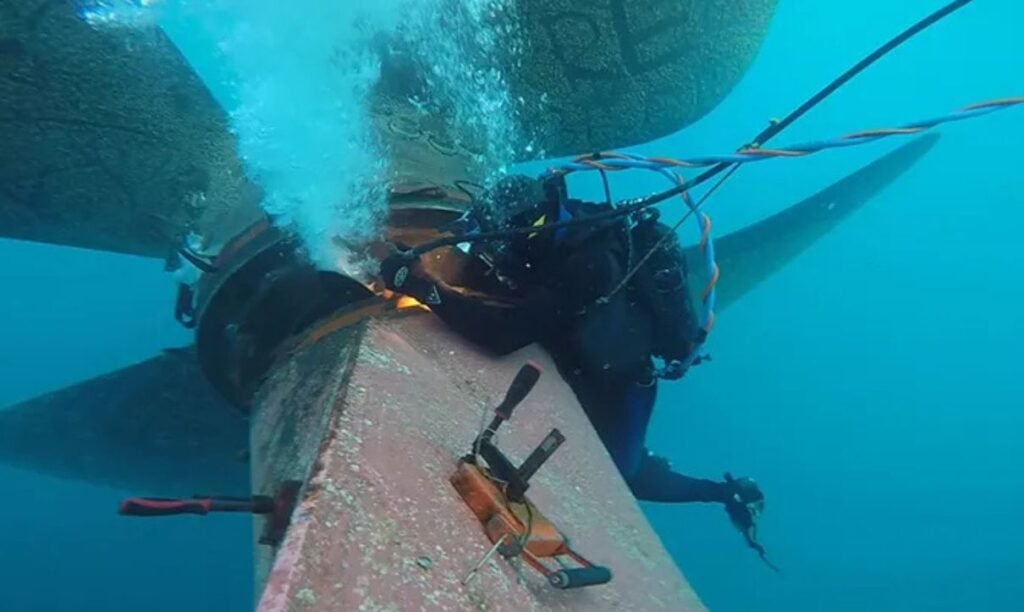
Marine growth, scale, and other deposits are carefully removed from the propeller surface using specialized underwater cleaning equipment. The goal is to restore a clean operating surface while avoiding damage to the propeller material or surrounding components.
Polishing the Propeller
Once fouling has been removed, divers use dedicated polishing tools to smooth the propeller blade surfaces. Eliminating surface roughness improves water flow over the blades, helping restore hydrodynamic efficiency and overall propulsion performance.
Final Verification
After the polishing process is complete, divers conduct a final inspection to verify the quality of the work and assess the condition of the propeller. Most service providers also provide photographic or video documentation to support reporting and maintenance records.
Benefits of Propeller Polishing
The advantages of Propeller Polishing in Hazira extend far beyond improving the appearance of the propeller. Regular polishing enhances propulsion efficiency, reduces operating costs, and supports better overall vessel performance.
Improved Fuel Efficiency
A smooth propeller surface allows water to flow more efficiently across the blades, improving thrust generation. Reduced resistance often results in lower fuel consumption and improved operating economy.
Enhanced Vessel Performance
Polished propeller blades help maintain optimal hydrodynamic characteristics and propulsion efficiency. This enables vessels to achieve service speeds more effectively and improves overall voyage performance.
Reduced Carbon Emissions
Lower fuel consumption directly contributes to reduced greenhouse gas emissions. Regular propeller maintenance therefore supports both environmental objectives and compliance with increasingly stringent sustainability requirements.
Lower Machinery Stress
Efficient propulsion systems require less power to achieve the desired vessel speed. This reduces the workload on engines, shafts, and associated machinery, helping minimize wear and maintenance demands.
Cost Savings
The cost of routine propeller polishing in Hazira is generally far lower than the long-term expenses associated with increased fuel consumption and reduced operational efficiency. Regular maintenance can therefore provide significant financial benefits over time.
Environmental Considerations
Environmental responsibility has become increasingly important across the maritime sector.
Professional providers of Propeller Polishing in Hazira follow procedures designed to balance maintenance effectiveness with environmental protection.
Choosing the Right Propeller Polishing in Hazira Provider
The effectiveness of underwater maintenance depends heavily on the expertise of the service provider.
When selecting a contractor for Propeller Polishing in Hazira, vessel operators should evaluate several factors.
Commercial Diving Experience
Experienced commercial divers possess a thorough understanding of underwater propulsion systems, vessel structures, and marine maintenance requirements. Their expertise helps ensure propeller polishing in Hazira is performed safely, efficiently, and to a high professional standard.
Specialized Equipment
Modern underwater polishing tools are designed to improve cleaning efficiency while protecting the integrity of propeller blade surfaces. Advanced equipment helps achieve a smoother finish and more consistent polishing results.
Safety Standards
Professional underwater maintenance operations require strict safety procedures, detailed risk assessments, and effective operational controls. Strong safety standards help protect divers, vessels, and port facilities throughout the project.
Inspection and Reporting
Comprehensive inspection reports, supported by photographs and video footage, provide valuable documentation of propeller condition and completed work. These records assist with maintenance planning and long-term asset management.
Operational Flexibility
Service providers should be capable of adapting to vessel schedules, port activities, and operational constraints. Flexible planning helps minimize downtime and ensures maintenance activities are completed with minimal disruption to vessel operations.
Why Preventive Propeller Maintenance Makes Sense
Many shipowners address propeller condition only after fuel consumption begins to rise noticeably.
By that stage, efficiency losses may already be affecting profitability.
Routine inspections and polishing allow operators to maintain optimal propulsion performance before problems become significant.
This preventive approach helps reduce operating costs, improve vessel reliability, and support long-term fleet efficiency.
For vessels operating through Gujarat’s busy maritime corridor, Propeller Polishing in Hazira offers a practical and cost-effective solution for maintaining propulsion system performance.
Conclusion
Propeller Polishing in Hazira is one of the most effective underwater maintenance services available to modern shipowners. By removing marine growth, restoring smooth blade surfaces, and improving hydrodynamic efficiency, propeller polishing in Hazira helps reduce fuel consumption, enhance vessel performance, and lower operating costs.
As shipping companies continue to focus on operational efficiency and sustainability, routine propeller maintenance has become an essential part of fleet management. For vessels calling at Hazira, professional propeller polishing in Hazira provides a convenient and economical way to maintain performance without the time and expense associated with dry docking.
FAQs:
Q1. What is propeller polishing?
Propeller polishing in Hazira is the process of cleaning and smoothing a vessel’s propeller blades to improve propulsion efficiency and reduce resistance.
Q2. Why is propeller polishing in Hazira important?
It helps improve fuel efficiency, maintain vessel speed, reduce emissions, and optimize propulsion system performance.
Q3. Can propeller polishing in Hazira be performed underwater?
Yes. Professional divers can perform propeller polishing while the vessel remains afloat.
Q4. How often should propeller polishing be carried out?
The frequency depends on vessel operations, water conditions, and fouling levels. Regular inspections help determine maintenance requirements.
Q5. Which vessels benefit from propeller polishing in Hazira?
Container ships, LNG carriers, tankers, bulk carriers, offshore support vessels, and coastal cargo ships all benefit from routine propeller polishing.