Hazira has become one of India’s most important maritime and industrial hubs, serving container vessels, LNG carriers, bulk carriers, offshore support vessels, and tankers throughout the year. With ships operating on tight schedules, vessel owners cannot afford unexpected maintenance delays or unnecessary dry docking. Every hour saved at the port contributes to smoother operations and lower operating costs.
This is one of the reasons why ROV Hull Inspection in Hazira has gained significant importance across the shipping industry. Instead of relying solely on commercial divers, marine service providers now use Remotely Operated Vehicles (ROVs) equipped with high-definition cameras and advanced inspection tools to examine underwater structures while the vessel remains afloat.
Whether a ship is berthed at Hazira Port, waiting at anchorage, or preparing for its next voyage, ROV inspections provide accurate underwater assessments that help technical managers make informed maintenance decisions without interrupting commercial operations.
What is ROV Hull Inspection?
ROV Hull Inspection in Hazira involves using a remotely operated underwater vehicle to inspect the submerged sections of a vessel. Controlled from the surface by trained operators, the ROV captures live video, high-resolution images, and inspection data while navigating around the hull and underwater equipment.
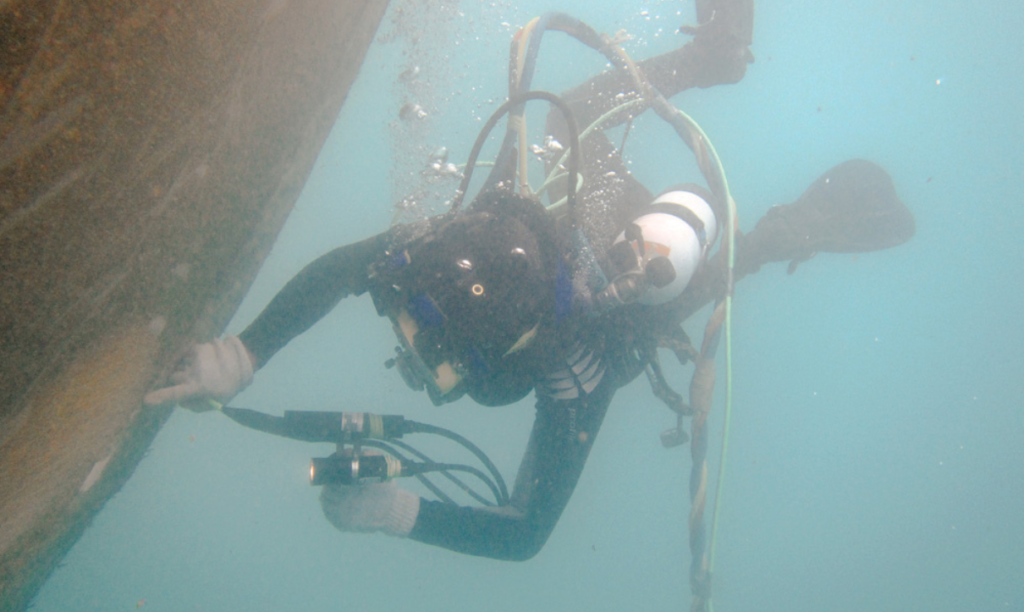
The inspection typically covers the hull plating, propeller, rudder, sea chests, tunnel thrusters, sacrificial anodes, and other submerged components. Since the ROV performs the underwater work, inspections can often be completed safely without exposing commercial divers to unnecessary risks.
The recorded footage also creates a permanent inspection history that supports maintenance planning and regulatory compliance.
Why Hazira is an Ideal Location for ROV Hull Inspection
Hazira handles a diverse mix of commercial vessels involved in energy, container shipping, heavy industries, and offshore operations. Many of these vessels have limited turnaround times, making efficient maintenance solutions increasingly valuable.
Choosing ROV Hull Inspection in Hazira enables shipping companies to evaluate underwater hull conditions while cargo operations, bunkering, or routine port activities continue. Instead of scheduling immediate dry docking, operators receive reliable inspection data that helps determine whether maintenance can safely be deferred.
This flexibility supports better fleet utilization while reducing operational interruptions.
1. Reduces Vessel Downtime
One of the biggest advantages of ROV Hull Inspection in Hazira is that inspections are performed while the vessel remains afloat. There is no need to interrupt operations solely for routine underwater surveys.
For example, a bulk carrier loading cargo at Hazira can undergo a complete hull inspection during its scheduled port stay. Once loading is complete, the vessel is ready to sail without additional delays.
This efficient approach helps shipowners maintain reliable sailing schedules while reducing expensive idle time.
2. Improves Safety During Underwater Inspections
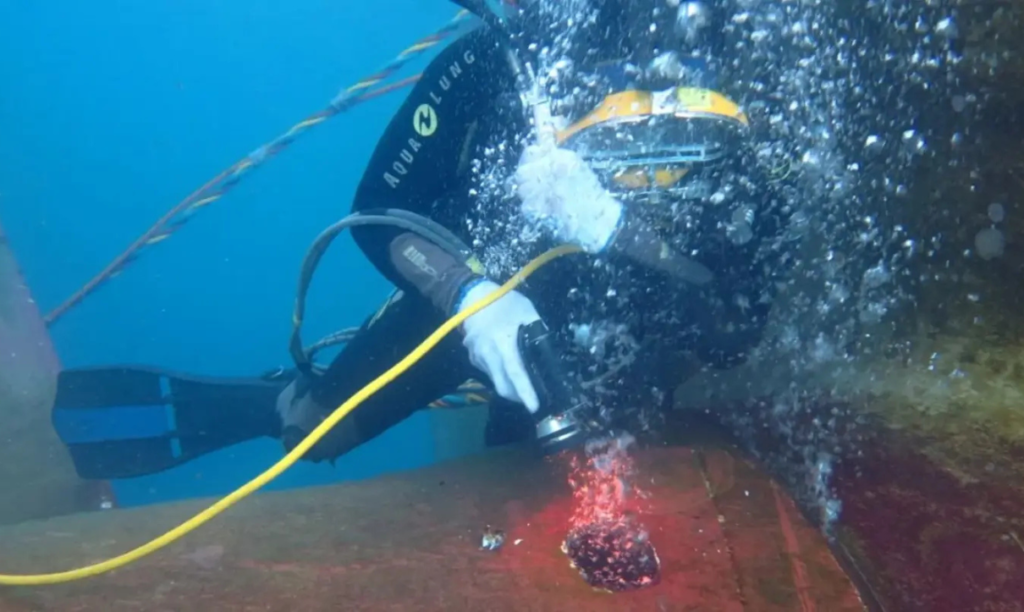
Traditional underwater inspections often depend on commercial divers working in challenging conditions. Limited visibility, strong currents, underwater obstructions, and vessel movement can increase operational risks.
Modern ROV Hull Inspection in Hazira minimizes these challenges by allowing trained operators to control the inspection vehicle from the surface. The ROV performs detailed underwater surveys while personnel remain in a safer working environment.
Although divers are still required for certain repair tasks, many inspection activities can now be completed remotely.
3. Delivers High-Quality Inspection Data
Modern ROV systems are equipped with advanced cameras, powerful lighting, sonar equipment, and precision navigation systems. These technologies provide exceptionally clear underwater images that support accurate condition assessments.
Every ROV Hull Inspection in Hazira produces digital photographs and video recordings that become part of the vessel’s maintenance records. Technical managers can review the footage, compare previous inspections, and identify structural changes over time.
This level of documentation improves maintenance planning and simplifies future surveys.
4. Detects Problems Before They Become Costly Repairs
Small underwater defects rarely remain small for long. Corrosion, damaged coatings, marine growth, loose sacrificial anodes, or propeller damage can gradually reduce vessel efficiency if left unattended.
Routine ROV Hull Inspection in Hazira helps identify these developing issues early. Maintenance teams can then schedule repairs during planned service intervals rather than responding to unexpected failures.
For instance, an offshore support vessel operating along India’s west coast may discover early coating damage during an ROV inspection. Prompt repairs prevent corrosion from spreading and avoid larger maintenance costs later.
5. Supports Classification and Regulatory Compliance
Many classification societies permit underwater inspections under approved conditions, provided inspection procedures meet established standards.
Professional providers performing ROV Hull Inspection in Hazira work closely with classification surveyors to ensure inspection documentation satisfies regulatory requirements. High-definition videos, underwater photographs, and detailed inspection reports provide valuable evidence during technical reviews and insurance assessments.
Comprehensive reporting also makes future maintenance planning more efficient.
6. Reduces Maintenance Costs
Dry docking remains essential for major repairs, but routine underwater inspections do not always require removing the vessel from service.
By performing ROV Hull Inspection in Hazira at regular intervals, shipping companies gain accurate information about actual hull condition. Instead of replacing components based solely on maintenance schedules, operators make decisions using real inspection data.
This condition-based maintenance approach helps reduce unnecessary repair expenses while extending the service life of underwater equipment.
7. Minimizes Operational Disruptions
Shipping companies operate under strict commercial commitments where delays directly affect profitability. Efficient inspection methods allow vessels to complete mandatory surveys without interrupting cargo operations.
Many marine contractors perform ROV Hull Inspection in Hazira while vessels are loading cargo, discharging cargo, or receiving bunkers. This flexibility helps operators maximize productivity without sacrificing inspection quality.
For fleet managers overseeing multiple vessels, minimizing downtime translates into improved operational efficiency across the entire fleet.
Technologies Used in Modern ROV Hull Inspection
High-Definition Underwater Cameras
Modern inspection cameras provide detailed imagery of underwater coatings, weld seams, corrosion, propeller blades, and marine growth. Engineers receive clear visual evidence that supports accurate technical evaluations.
The recorded footage also creates valuable historical maintenance records for future comparison.
Sonar and Laser Measurement Systems
Advanced ROVs may include sonar imaging and laser scaling equipment that help inspectors evaluate underwater structures more precisely.
Laser measurement tools assist in estimating crack dimensions, coating damage, or structural deformation, improving inspection accuracy.
Digital Reporting Platforms
Every inspection generates comprehensive reports containing photographs, videos, observations, and maintenance recommendations.
These digital reports allow technical managers, shipowners, insurers, and classification surveyors to review findings quickly while maintaining organized inspection histories for every vessel.
Choosing the Right ROV Inspection Provider in Hazira
Selecting an experienced marine inspection company is essential for obtaining reliable inspection results. Vessel owners should consider operator experience, equipment quality, reporting capabilities, and familiarity with inter national classification requirements.
A professional inspection provider will deliver more than underwater footage. They will explain inspection findings, identify developing maintenance concerns, and recommend practical solutions that support long-term vessel reliability.
Working with an experienced local team also helps ensure inspections are completed efficiently while minimizing disruption to normal port operations.
Conclusion
ROV Hull Inspection in Hazira has transformed the way commercial vessels manage underwater inspections. By combining advanced technology with experienced marine professionals, shipowners can evaluate hull conditions quickly, safely, and accurately without unnecessary dry docking.
From improving safety and reducing maintenance costs to supporting regulatory compliance and minimizing downtime, ROV inspections deliver measurable operational advantages. As maritime operations continue to prioritize efficiency and reliability, investing in routine underwater inspections remains a practical strategy for protecting valuable marine assets and ensuring vessels continue operating at their best.
FAQs:
Q1. What is ROV Hull Inspection in Hazira?
ROV Hull Inspection in Hazira uses a remotely operated underwater vehicle equipped with cameras and sensors to inspect submerged parts of a vessel without requiring dry docking or routine diver-based inspections.
Q2. Which parts of a vessel can an ROV inspect?
ROVs typically inspect the hull, propeller, rudder, sea chests, thrusters, sacrificial anodes, intake grilles, and other underwater structures that require regular condition assessments.
Q3. Is ROV inspection safer than traditional diver inspection?
Yes. For many inspection tasks, ROVs reduce the need for divers to work in challenging underwater conditions, improving safety while providing high-quality visual inspection data.
Q4. How long does an ROV Hull Inspection in Hazira take?
Inspection duration depends on vessel size and survey scope. Most standard inspections are completed within a few hours, allowing vessels to maintain planned operational schedules.
Q5. Why should shipping companies choose ROV Hull Inspection in Hazira?
Regular ROV Hull Inspection in Hazira helps reduce downtime, lower maintenance costs, improve underwater safety, support regulatory compliance, and provide accurate inspection reports for smarter vessel maintenance planning.