
Bulk Carrier Hold Cleaning in Dhamantar Port Dhamantar’s Growing Role in Bulk Trade
Dhamra Port—often referred to in trade conversations as Dhamantar Port—has become a key gateway for coal, limestone, fertilizers, and agricultural bulk cargo on India’s east coast. Deep drafts and modern terminals allow high-volume handling, but fast cargo movement increases pressure on vessel turnaround.
In this environment, bulk carrier hold cleaning in Dhamantar Port is directly linked to charter performance, cargo acceptance, and environmental compliance.
Why Hold Cleanliness Determines Commercial Success
Bulk cargo is sensitive to contamination. A few kilograms of leftover coal dust can compromise a fertilizer shipment. Rust scale falling from frames can lead to cargo rejection.
Charter parties often require holds to meet “grain clean” or higher standards before loading. When cleaning fails, vessels face demurrage, claims, or canceled fixtures.
Professional cleaning is therefore not cosmetic—it is a financial safeguard.
Regulatory Framework Governing Operations
Cleaning activities must comply with global maritime standards:
International Maritime Organization guidance on ship safety and pollution prevention
International Marine Contractors Association safety standards for confined-space entry
MARPOL Convention discharge and waste management rules
International Association of Ports and Harbors environmental governance frameworks
Port authorities monitor these standards closely. Non-compliance may result in fines or operational restrictions.
Understanding Cargo History Before Cleaning
Each cleaning plan starts with cargo history review. Coal leaves carbon dust and acidic residues. Fertilizers introduce corrosive salts. Grain demands near-hygienic conditions.
Teams conducting bulk carrier hold cleaning in Dhamantar Port evaluate the last three cargoes, coating condition, and charter requirements before selecting cleaning methods.
This structured approach reduces the risk of cross-contamination.
Win 1: Structured Pre-Inspection and Documentation
Pre-inspection identifies loose scale, wet patches, and structural damage. Officers document conditions with photographs and checklists.
Clear baseline records protect shipowners during disputes. They also guide manpower allocation and equipment selection.
Inspection is the foundation of efficient cleaning.
Win 2: Efficient Dry Cleaning and Debris Removal
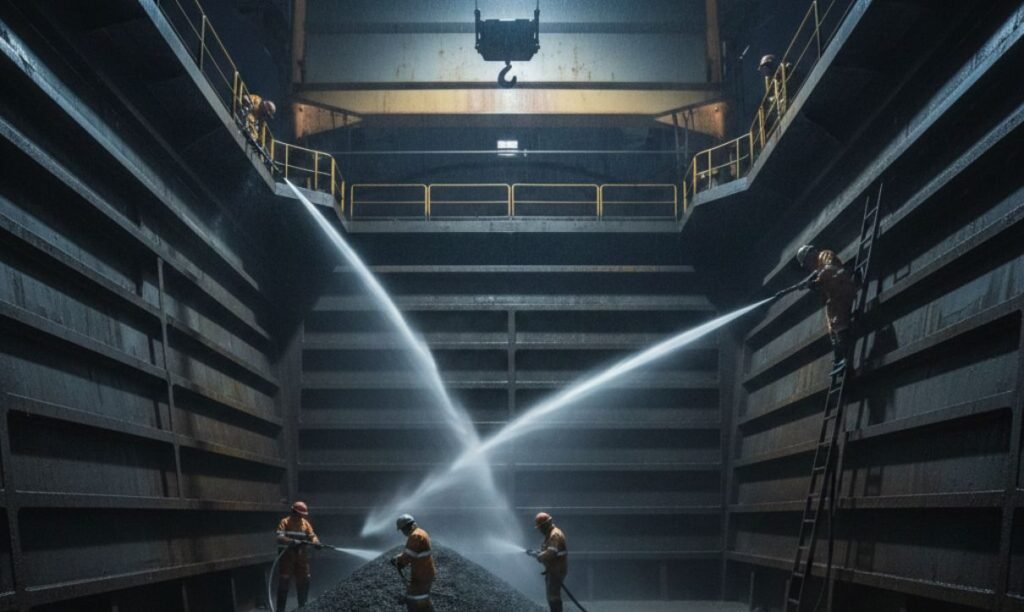
Dry cleaning removes the bulk of loose material before washing. Crews sweep, shovel, scrape, and vacuum residues from tank tops and frames.
Industrial vacuum systems capture fine dust. Mechanical scraping dislodges rust scale.
Effective dry cleaning reduces water consumption and shortens wash cycles, improving overall efficiency.
Win 3: High-Pressure and Hot Water Washing
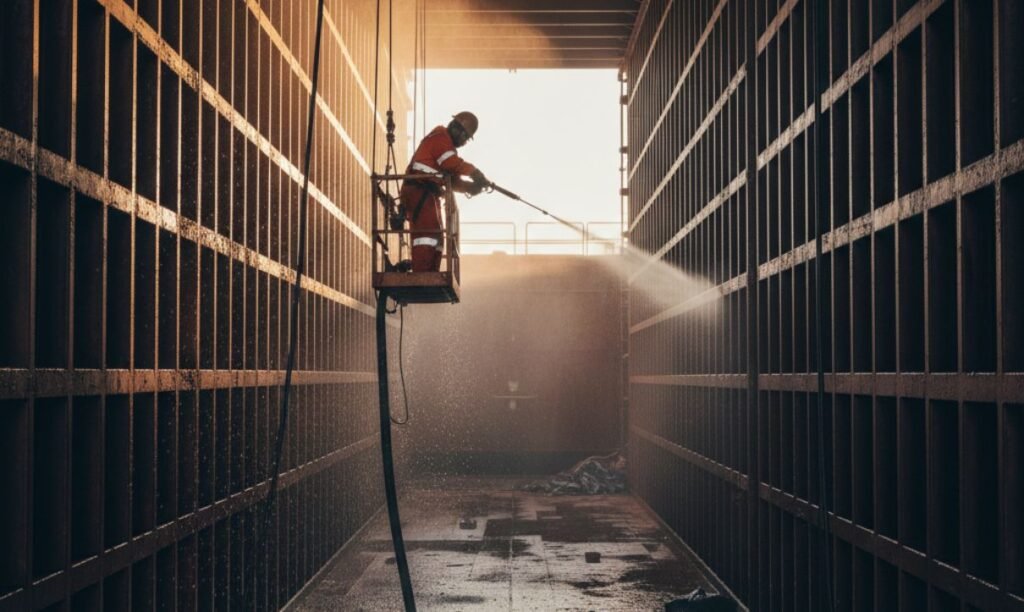
After debris removal, teams deploy high-pressure water jets. Adjustable pressure prevents coating damage while ensuring residue breakdown.
Hot water improves removal of sticky cargo remnants. Operators collect wash water in accordance with MARPOL discharge restrictions.
Proper drainage planning prevents contamination of port waters and aligns with environmental compliance standards.
Win 4: Controlled Chemical Spot Treatment
Certain residues resist water alone. Salt-based fertilizers or oily deposits may require approved detergents.
Chemical selection must consider coating compatibility. Industry benchmarks, such as structured chemical control systems promoted by Cleanship, emphasize documentation and traceability.
Chemical logs support audit readiness and regulatory review.
Win 5: Confined Space Entry Discipline
Cargo holds qualify as confined spaces. Risks include oxygen deficiency, toxic gases, and heat stress.
Atmospheric testing precedes entry. Continuous ventilation ensures safe oxygen levels. Rescue teams remain on standby.
IMCA standards require formal entry permits, toolbox talks, and emergency drills. In professional bulk carrier hold cleaning in Dhamantar Port, safety procedures are systematic and documented.
Win 6: Moisture Control and Drying Management
Humidity along Odisha’s coastline can delay drying after washing. Residual moisture may damage grain or cause clumping in fertilizers.
Portable air movers and dehumidification techniques accelerate drying. Moisture meters confirm readiness before inspection.
Moisture control is often the deciding factor in passing final survey checks.
Win 7: Independent Final Verification
Final inspection determines loading approval. Surveyors assess cleanliness, rust presence, coating condition, and dryness.
Marine supercargo inspectors apply Marine Supercargo Final Quality Rules when verifying readiness. Their certification directly affects charter acceptance.
Reliable bulk carrier hold cleaning in Dhamantar Port includes structured final verification to avoid last-minute disputes.
Environmental Responsibility at Coastal Facilities
The port operates near ecologically sensitive coastal waters. Strict adherence to the MARPOL Convention is mandatory.
Sludge and contaminated wash water must be transferred to approved shore reception facilities. Unauthorized discharge can trigger severe penalties and reputational harm.
IAPH World Ports initiatives encourage sustainable port practices and transparent waste management.
Coordinating with Port and Terminal Authorities
Efficient cleaning depends on coordination. Berth schedules, waste disposal logistics, and weather conditions influence planning.
Teams performing bulk carrier hold cleaning in Dhamantar Port maintain communication with port control and terminal operators to avoid operational conflicts.
Proactive coordination reduces idle time and demurrage exposure.
Documentation and Compliance Traceability
Accurate records strengthen legal protection. Typical documentation includes:
Risk assessments
Gas testing logs
Waste disposal receipts
Photographic evidence
Chemical declarations
These records demonstrate compliance with IMO and MARPOL standards.
Cost Implications of Poor Cleaning
Skipping procedures may appear cost-effective but often results in cargo rejection or claim settlements.
Professional cleaning reduces financial risk and protects vessel reputation. The cost of structured compliance is far lower than the cost of contamination claims.
Technology Enhancing Cleaning Precision
Modern operations use digital gas detectors, remote-controlled washing heads, and electronic reporting systems.
Real-time monitoring improves safety and accountability. Data logging strengthens audit readiness and insurance support.
Technology reduces human exposure and improves cleaning consistency.
Building a Safety-Driven Culture
Maritime operations rely on discipline. Rushing confined-space tasks increases injury risk.
Structured sequencing—inspect, dry clean, wash, dry, inspect, document—ensures repeatable results.
A safety-first culture sustains long-term operational reliability.
Industry Benchmarks and Quality Expectations
Global shipping standards influence local performance. Comparing service delivery against recognized industry benchmarks encourages continuous improvement.
Transparent safety systems, documented training programs, and waste accountability define mature operations.
Adhering to these principles strengthens confidence in bulk carrier hold cleaning in Dhamantar Port across the shipping community.
Conclusion: Clean Holds Safeguard Trade and Reputation
Clean cargo holds are essential to safe and profitable bulk shipping. Professional bulk carrier hold cleaning in Dhamantar Port combines structured inspection, disciplined confined-space safety, regulated waste handling, and verified final approval under Marine Supercargo Final Quality Rules. Alignment with IMO guidance, IMCA safety frameworks, the MARPOL Convention, and IAPH World Ports principles protects marine ecosystems and vessel reputation. Shipowners and charterers seeking reliable turnaround, reduced claims risk, and regulatory confidence should engage experienced marine cleaning specialists who prioritize compliance, documentation, and measurable performance standards.
FAQs:
It means holds are free from visible residue, loose rust, scale, and moisture before loading grain cargo.
Only under MARPOL-compliant conditions and with proper authorization. Unauthorized discharge is prohibited.
Cargo holds can contain toxic gases or low oxygen levels, making entry hazardous without proper controls.
Time varies by cargo history and hold condition, but structured planning reduces delays.
Independent marine supercargo inspectors verify compliance before granting loading approval.