
Every vessel owner understands that performance at sea depends on more than engines and navigation systems. Much of a ship’s efficiency is determined by what happens below the waterline. A vessel may appear perfectly maintained from above, yet hidden marine growth on the hull can quietly increase fuel consumption, reduce speed, and affect overall operational performance.
This is where Hull Fouling Inspection in Hazira becomes an essential part of preventive vessel maintenance.
Hazira has developed into one of India’s most important maritime and industrial gateways. With a steady flow of tankers, LNG carriers, container vessels, bulk carriers, and offshore support vessels, the port sees continuous demand for underwater inspection services. Ship operators calling at Hazira increasingly rely on hull fouling inspection in Hazira to assess underwater conditions before performance issues become costly problems.
Rather than waiting until fuel bills rise or schedules become difficult to maintain, vessel managers use inspections to gain a clear understanding of hull condition and take corrective action when needed.
Understanding Hull Fouling and Its Impact
Hull fouling refers to the accumulation of marine organisms on submerged vessel surfaces.
The process begins surprisingly fast. Within days of entering seawater, microscopic organisms form a biofilm on the hull. This layer creates a foundation for larger marine growth such as algae, barnacles, mussels, tube worms, and shell-forming organisms.
At first, the buildup may seem insignificant. However, even moderate fouling can dramatically affect a vessel’s hydrodynamic efficiency.
As marine growth increases, so does water resistance. The propulsion system must work harder to move the vessel through the water, leading to:
- Higher fuel consumption
- Reduced vessel speed
- Increased engine load
- Greater greenhouse gas emissions
- Higher operating costs
- Reduced voyage efficiency
For example, a chemical tanker operating between Hazira and ports in the Arabian Gulf may notice fuel consumption gradually increasing over several voyages. When divers conduct an underwater inspection, extensive fouling on the hull often explains the decline in performance.
This is one reason why Hull Fouling Inspection in Hazira has become a standard maintenance practice for many shipping companies.
Why Hull Fouling Inspection in Hazira Is Important
Many vessel operators focus on hull cleaning only after performance issues become noticeable. However, a detailed hull fouling inspection in Hazira provides valuable information about underwater hull condition and enables shipowners to make informed maintenance decisions before problems become more serious.
Early Detection of Marine Growth
One of the primary benefits of hull fouling inspection in Hazira is the early identification of marine growth before it becomes excessive. Addressing minor fouling at an early stage is typically easier, more effective, and less costly than dealing with heavily fouled hull surfaces.
Improved Fuel Efficiency
Marine growth increases hull resistance and forces vessels to consume more fuel to maintain speed. By identifying fouling early, shipowners can schedule cleaning at the right time and prevent unnecessary fuel costs.
Better Maintenance Planning
Detailed inspection reports provide technical managers with accurate information about hull condition, fouling levels, and coating performance. This helps optimize maintenance schedules and plan future cleaning, coating repairs, or dry-docking activities.
Protection of Hull Coatings
Anti-fouling coatings represent a significant investment in vessel performance and protection. Routine inspections help monitor coating effectiveness, identify areas of deterioration, and support timely maintenance actions that extend coating life.
Regulatory and Environmental Compliance
Many vessel operators now monitor hull condition as part of broader environmental and efficiency management programs. Regular inspections support fuel-efficiency initiatives, help reduce emissions, and contribute to compliance with evolving environmental standards.
Why Hazira Is a Strategic Location for Hull Fouling Inspection in Hazira
Hazira’s growing role in India’s maritime sector makes it an ideal location for underwater inspection services.
Major Commercial Shipping Activity
The port regularly accommodates:
- LNG carriers
- Crude oil tankers
- Chemical tankers
- Bulk carriers
- Container vessels
- Offshore support vessels
These vessels frequently require underwater inspections during scheduled port calls.
Availability of Professional Diving Teams
Hazira is supported by experienced commercial diving contractors capable of performing underwater inspections, surveys, and maintenance services for a wide range of vessel types. Their expertise and specialized equipment help ensure accurate inspections and efficient underwater operations.
Reduced Operational Disruption
One of the major advantages of Hull Fouling Inspection in Hazira is that inspections can usually be conducted while the vessel remains afloat and operational. This minimizes downtime and allows shipowners to maintain commercial schedules without requiring immediate dry-docking.
Cost-Effective Preventive Maintenance
Performing hull fouling inspection in Hazira during routine port calls helps identify developing issues before they become more serious and costly. This proactive approach reduces future maintenance expenses and helps prevent unexpected operational disruptions.
How Hull Fouling Inspection in Hazira Are Conducted
Modern hull fouling inspection in Hazira combine the expertise of trained commercial divers with advanced underwater imaging technology. This systematic approach allows inspectors to accurately assess hull condition, identify marine growth, and provide detailed recommendations for maintenance planning.
Pre-Inspection Assessment
Before entering the water, inspection teams review:
- Vessel maintenance history
- Trading patterns
- Previous inspection records
- Operational concerns
- Survey objectives
This preparation helps ensure a thorough inspection.
Underwater Visual Examination
Commercial divers conduct a detailed visual inspection of all critical underwater areas of the vessel. Using underwater cameras and inspection equipment, they assess marine growth levels, coating condition, and any visible structural concerns.
Flat Bottom Areas
Large sections of the vessel’s flat bottom are examined for fouling accumulation, coating performance, and signs of deterioration. These areas often provide valuable insight into the overall condition of the underwater hull.
Side Shell Plating
Divers inspect the vertical hull surfaces where marine growth commonly develops over time. The condition of coatings and the extent of fouling are carefully documented during the survey.
Sea Chests
Sea chest openings and intake gratings are inspected for biological growth, debris accumulation, and potential restrictions to seawater flow. Identifying blockages early helps maintain the efficiency of critical onboard systems.
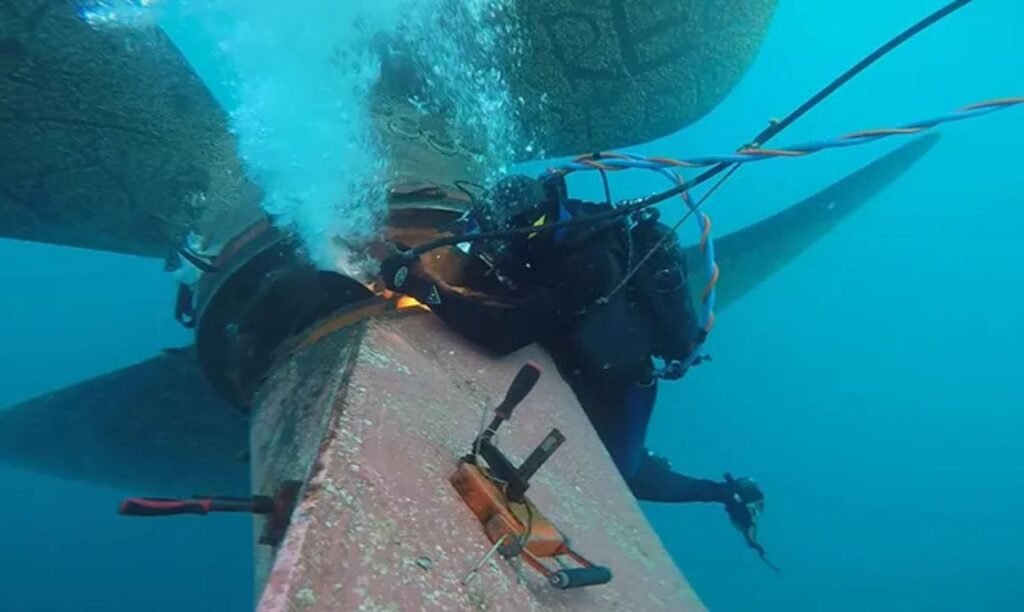
These critical propulsion components are assessed for fouling that may impact vessel performance.
Rudders and propellers are examined for fouling, damage, corrosion, and other conditions that may affect propulsion efficiency and vessel maneuverability. These components play a significant role in overall vessel performance.
Thrusters and Niche Areas
Bow thrusters, stern thrusters, and other niche areas are inspected in detail because they often experience heavier fouling than exposed hull surfaces. Thorough examination of these complex structures helps ensure accurate assessment and maintenance planning.
High-Definition Video Documentation
Modern inspections rely heavily on underwater video systems.
Surveyors and vessel managers can review recorded footage to assess fouling severity and maintenance requirements.
Detailed Reporting
Upon completion, operators receive reports that typically include:
- Inspection findings
- Photographs
- Underwater video footage
- Fouling severity assessments
- Recommended actions
Choosing the Right Inspection Provider
The quality of an underwater inspection depends heavily on the expertise of the service provider.
When selecting a contractor for Hull Fouling Inspection in Hazira, shipowners should consider:
Commercial Diving Experience
Divers should have extensive experience with vessel inspections and underwater maintenance. Commercial divers should possess extensive experience in vessel inspections, underwater surveys, and marine maintenance operations. Their expertise helps ensure accurate assessments, efficient inspections, and safe execution of underwater work.
Advanced Inspection Technology
High-definition underwater cameras, video recording systems, and modern survey equipment significantly improve inspection accuracy. These technologies allow inspectors to capture detailed visual evidence and identify potential issues more effectively.
Strong Safety Procedures
Professional underwater contractors follow strict safety protocols, risk assessments, and operational guidelines throughout the inspection process. Strong safety practices help protect personnel, vessels, and port facilities during underwater operations.
Comprehensive Reporting
Detailed inspection reports supported by photographs and video footage provide valuable documentation of vessel condition. These records assist technical managers in maintenance planning, regulatory compliance, and operational decision-making.
Flexible Scheduling
Service providers should be capable of adapting to vessel arrival schedules, cargo operations, and port requirements. Flexible scheduling helps minimize operational disruptions and ensures inspections are completed within available time windows.
Conclusion
Hull Fouling Inspection in Hazira is a valuable preventive maintenance tool that helps shipowners maintain vessel efficiency, reduce fuel consumption, and improve operational reliability. By identifying marine growth before it significantly affects performance, inspections allow operators to make informed maintenance decisions while avoiding unnecessary costs.
As shipping companies continue to prioritize efficiency, sustainability, and cost control, routine hull fouling inspection in Hazira have become an essential component of modern fleet management. For vessels calling at Hazira, these inspections provide a practical and cost-effective way to monitor underwater conditions and maintain peak operational performance throughout the vessel’s service life.
FAQs:
Q1. What is a hull fouling inspection in Hazira?
A hull fouling inspection in Hazira is an underwater survey that assesses the amount of marine growth attached to a vessel’s submerged surfaces.
Q2. Why is hull fouling inspection in Hazira important?
It helps identify marine growth early, improve fuel efficiency, reduce operating costs, and support maintenance planning.
Q3. Can hull fouling inspections be performed while the vessel is afloat?
Yes. Professional divers conduct inspections underwater without requiring the vessel to enter dry dock.
Q4. How often should hull fouling inspections be carried out?
Inspection frequency depends on vessel operations, trading routes, and environmental conditions, but regular inspections are generally recommended.
Q5. Which vessels commonly require hull fouling inspection in Hazira?
Tankers, LNG carriers, container vessels, bulk carriers, offshore support vessels, and coastal cargo ships commonly utilize hull fouling inspection services.