
Dahej has become one of the busiest maritime and industrial corridors on India’s western coast. Bulk carriers, LNG vessels, chemical tankers, and offshore support vessels frequently call at the port. With increasing vessel traffic and tighter maintenance schedules, underwater inspections have evolved significantly over the past decade.
Traditional diver inspections still play an important role, but remotely operated vehicles have changed the way ship owners inspect underwater assets. Modern ROV systems provide clear visual data while reducing operational risks and inspection time.
Today, ROV Hull Inspection in Dahej is becoming a preferred solution for shipping companies that want accurate underwater assessments without interrupting vessel operations.
Understanding ROV Hull Inspection in Dahej
An ROV, or Remotely Operated Vehicle, is an underwater robotic system equipped with cameras, lighting, sensors, and maneuvering controls.
The system is operated from the surface while the vehicle moves around the vessel’s underwater structure. Inspectors receive real-time video and detailed images that help evaluate the hull condition.
ROV Hull Inspection in Dahej is commonly used to examine:
- Hull plating
- Sea chests
- Propellers
- Rudders
- Thrusters
- Coating conditions
- Marine growth
Since the inspection takes place underwater, vessels can often remain operational during the process.
Why ROV Inspections Are Growing in Dahej
Dahej handles heavy industrial cargo, chemicals, LNG shipments, and bulk commodities. Many vessels spend time at anchorage or alongside terminals, making underwater inspections necessary.
A tanker operator trading regularly along the Gujarat coast recently used an ROV inspection after a crew reported unusual vibration levels. The inspection identified minor propeller damage without requiring dry docking, allowing repairs to be planned during the next scheduled maintenance period.
Such examples explain why ROV Hull Inspection in Dahej is becoming increasingly popular.
1. Reduced Risk to Divers
Safety remains one of the biggest advantages of ROV technology.
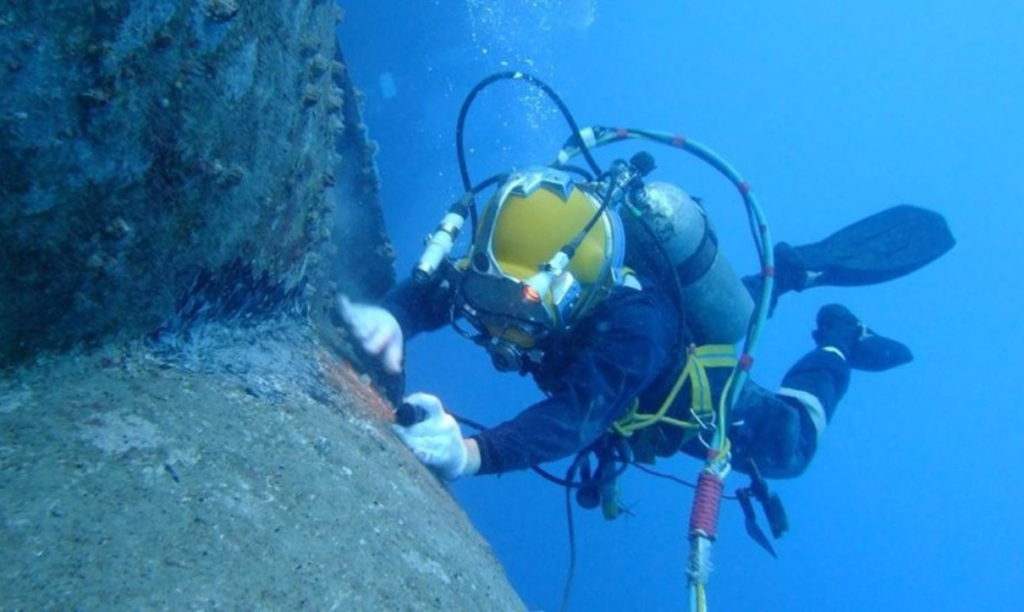
Underwater environments often present challenges such as low visibility, currents, and restricted spaces. ROVs can inspect these areas without exposing divers to unnecessary risks.
Certain confined locations, including sea chests and thruster tunnels, are particularly suitable for robotic inspections.
Safety Advantages
- Reduced human exposure
- Safer operations
- Improved access to confined areas
- Better inspection flexibility
2. Faster Inspection Process
Time is valuable in shipping operations.
ROVs can often complete inspections more quickly than traditional methods. Operators can maneuver the vehicle efficiently around critical areas while capturing high-quality footage.
Many shipping companies choose ROV Hull Inspection in Dahej because it minimizes delays and reduces operational downtime.
3. High-Quality Visual Documentation
Modern ROV systems use advanced cameras and lighting equipment.
The resulting images and videos provide detailed information about hull conditions. Inspectors can review footage multiple times, helping vessel managers make informed maintenance decisions.
Reports often include:
- HD images
- Video recordings
- Damage assessments
- Inspection recommendations
This documentation becomes useful during future maintenance planning.
4. Inspection Without Dry Docking
One of the major benefits of ROV inspections is that vessels remain afloat.
Dry docking involves considerable expenses and operational disruptions. ROV inspections allow ship owners to evaluate underwater conditions during routine port calls.
A bulk carrier visiting Dahej for cargo operations can undergo inspection simultaneously, avoiding unnecessary delays.
This makes ROV Hull Inspection in Dahej a cost-effective solution.
5. Improved Access to Difficult Areas
Certain underwater sections can be challenging to inspect manually.
Sea chests, rudder gaps, propeller areas, and thruster tunnels often have limited access. ROVs can maneuver into these spaces and provide clear visual information.
These detailed inspections help identify:
- Corrosion
- Coating damage
- Marine growth
- Structural defects
Early identification prevents minor issues from becoming major repairs.
6. Better Maintenance Planning
Maintenance decisions become easier when accurate inspection data is available.
Instead of relying on assumptions, vessel managers can review actual underwater conditions. This helps prioritize repairs, schedule maintenance, and allocate budgets effectively.
Many technical managers now use ROV Hull Inspection in Dahej as part of their preventive maintenance programs.
Maintenance Benefits
- Early defect detection
- Improved repair planning
- Reduced emergency maintenance
- Better asset management
7. Cost Savings Over Time
Inspection costs represent only a small portion of overall vessel maintenance expenses.
Detecting coating damage, corrosion, or propeller issues early can prevent expensive repairs later. Fuel efficiency also improves when hull conditions remain properly monitored.
One coastal operator reported noticeable savings after identifying fouling issues through an ROV inspection before they affected voyage performance.
Long-term savings often justify the investment.
Applications of ROV Hull Inspection in Dahej
ROV technology serves various vessel types operating around Dahej.
These include:
- Bulk carriers
- Chemical tankers
- LNG vessels
- Offshore support vessels
- Container ships
- Coastal cargo vessels
Port operators and offshore facilities also use ROV systems for underwater infrastructure inspections.
Challenges During Inspection Operations
Although ROV systems offer several advantages, operational factors still influence inspections.
Water visibility, tidal conditions, vessel movement, and weather conditions can affect inspection quality.
Experienced operators understand local conditions around Dahej and adjust inspection procedures accordingly.
Proper planning remains essential for successful operations.
Selecting an Experienced Service Provider
Not every inspection company offers the same capabilities.
Ship owners should consider:
- ROV technology used
- Camera quality
- Inspection experience
- Reporting standards
- Safety procedures
- Marine industry knowledge
A qualified provider performing ROV Hull Inspection in Dahej can deliver reliable results that support maintenance decisions.
The Future of ROV Inspections
The marine industry continues to adopt digital technologies.
Artificial intelligence, advanced imaging systems, and automated reporting tools are becoming part of modern inspection programs. Future ROV systems may provide real-time defect analysis and predictive maintenance data.
As shipping companies focus on efficiency and safety, ROV inspections will likely become standard practice.
Conclusion
Underwater inspections play a critical role in vessel maintenance. Traditional diving methods remain valuable, but ROV technology offers significant advantages in safety, speed, and accuracy.
The seven expert benefits discussed above demonstrate why ROV Hull Inspection in Dahej has become an essential service for many vessel operators.
From reducing diver exposure to improving maintenance planning, ROV inspections help ship owners protect assets, reduce costs, and maintain operational efficiency.
For vessels operating along Gujarat’s industrial coastline, ROV technology provides a practical and reliable solution for underwater inspection needs.
FAQs:
Q1. What is an ROV hull inspection in Dahej?
An ROV hull inspection in Dahej uses an underwater robotic vehicle equipped with cameras to inspect a vessel’s underwater structure.
Q2. Can ROV inspections replace divers?
In many cases, yes. ROVs can inspect difficult areas safely, although some maintenance tasks may still require divers.
Q3. How long does an ROV inspection take?
The duration depends on vessel size and inspection scope, but most inspections are completed within a few hours.
Q4. Can inspections be performed while the vessel is afloat?
Yes. ROV inspections allow vessels to remain operational without requiring dry docking.
Q5. What problems can ROV inspections detect?
ROVs can identify corrosion, coating damage, marine growth, structural defects, and propeller issues.