
Jebel Ali Port is one of the world’s busiest maritime gateways. Every day, bulk carriers, container vessels, and multipurpose ships move through its terminals carrying cargoes that demand strict cleanliness, safety, and compliance. In this environment, ship hold cleaning in Jebel Ali is not a routine task—it is a critical safety and regulatory function that protects crews, cargo, and port operations.
We see ship hold cleaning as the maritime equivalent of preventive medicine. Done correctly, it prevents accidents, cargo damage, inspection delays, and regulatory penalties. Done poorly, it creates invisible risks that surface at the worst possible moment.
Below are seven proven safety wins that explain why professional hold cleaning matters in Jebel Ali’s demanding port ecosystem.
Why the UAE Sets High Standards for Marine Cleaning
The UAE operates at the crossroads of global trade. Vessels arriving in Jebel Ali often come directly from Asia, Europe, or Africa, carrying residues from coal, grain, fertilizers, ores, or project cargo.
Local authorities and terminal operators expect vessels to meet international standards immediately. There is little tolerance for contamination, unsafe conditions, or incomplete documentation. This pressure has made the UAE a leader in structured marine cleaning practices focused on safety, environmental control, and operational efficiency.
Understanding Ship Hold Cleaning in Jebel Ali
At its core, ship hold cleaning involves removing cargo residues, washing surfaces, managing waste, and preparing holds for the next cargo or inspection. In Jebel Ali, this process must account for:
- Climate-driven risks like heat and humidity
- Mixed cargo histories that increase contamination hazards
- Tight port schedules and inspection windows
Professional teams plan cleaning sequences carefully to reduce downtime while maintaining safety.
Safety Win 1: Reduced Risk of Crew Injuries
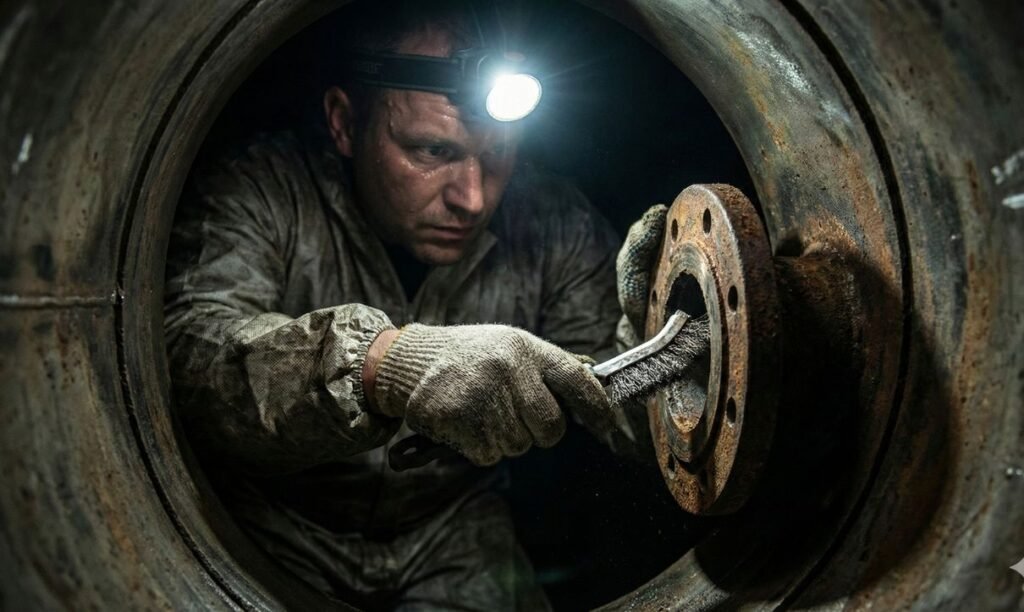
Cargo residues can turn holds into hazardous workspaces. Slippery surfaces, toxic dust, and sharp debris increase the likelihood of falls, respiratory exposure, and physical injuries.
Proper hold cleaning improves safety by:
- Removing loose residues that cause slips
- Ventilating confined spaces before entry
- Using controlled washing methods to limit airborne particles
When crews work in clean holds, accident rates drop significantly.
Safety Win 2: Compliance With IMO and MARPOL Requirements
International regulations set the baseline for safe operations. The IMO, MARPOL Convention, and guidance from bodies like IMCA define how residues, wash water, and waste must be handled.
Ship hold cleaning in Jebel Ali aligns with these rules by:
- Segregating and documenting waste streams
- Preventing illegal discharge into port waters
- Preparing vessels for Port State Control inspections
Compliance is not paperwork alone—it is demonstrated through visible cleanliness and traceable procedures.
Safety Win 3: Protection of High-Value Cargoes
Every cargo tells a story. Grain follows coal. Steel follows fertilizer. Each transition carries contamination risks.
Thorough hold cleaning protects cargo integrity by:
- Eliminating chemical residues that could react with new cargo
- Preventing moisture retention that leads to corrosion or spoilage
- Meeting charterer and receiver cleanliness specifications
This is where operational discipline directly translates into financial protection.
Safety Win 4: Faster and Safer Inspections
Port inspections are unavoidable in Jebel Ali. Inspectors focus on cleanliness, access safety, and documentation accuracy.
Well-executed cleaning supports inspections by:
- Providing clear, dry, and accessible holds
- Reducing reinspection requests
- Demonstrating procedural compliance through logs and checklists
Clean holds shorten inspection times and keep vessels on schedule.
Safety Win 5: Environmental Risk Control at the Port
Environmental protection is central to port safety. Residues left in holds can migrate into bilges or wash water systems, creating pollution risks.
Effective marine hold cleaning helps by:
- Capturing residues before they reach drainage systems
- Managing wash water in line with port rules
- Supporting the sustainability goals promoted by IAPH World Ports
Environmental safety is operational safety—ports depend on it.
Safety Win 6: Alignment With Bulk Carrier Cleaning Standards
Bulk carriers face unique challenges due to cargo variety and volume. Cleaning standards for bulk holds focus on surface condition, dryness, and residue removal.
Best practices include:
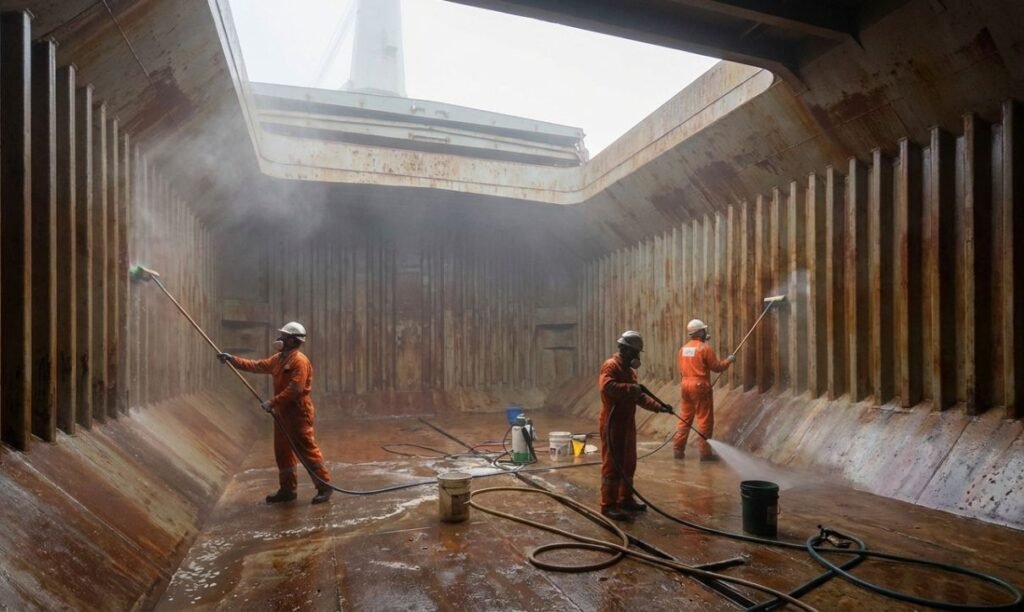
- Mechanical sweeping before wet washing
- Controlled high-pressure cleaning to avoid structural damage
- Final inspections against charter-party requirements
These steps reduce disputes and enhance vessel readiness. Also, read about 7 Proven Tank Cleaning in Dubai for Safer Operations.
Safety Win 7: Improved Crew Discipline and Operational Culture
Clean ships tend to be safer ships. When crews see structured cleaning workflows, safety awareness improves across operations.
Benefits include:
- Clear entry procedures for confined spaces
- Better use of PPE during cleaning operations
- Consistent documentation habits
Over time, this builds a culture where safety is routine, not reactive.
Tank, Hold, and Bulk Carrier Cleaning Standards Explained
Although this article focuses on holds, many vessels require integrated cleaning strategies.
- Tank cleaning demands strict control of residues, gases, and ventilation.
- Hold cleaning focuses on surfaces, access safety, and dryness.
- Bulk carrier cleaning emphasizes cargo compatibility and structural protection.
Professional operators apply tailored methods rather than one-size-fits-all solutions. Learn more about 7 Proven Vessel Hold Cleaning Services in Abu Dhabi.
Inspection, Documentation, and Compliance Workflows
Safety is incomplete without documentation. Inspectors and charterers expect clear records showing how cleaning was conducted.
Standard workflows include:
- Pre-cleaning risk assessments
- Waste handling logs
- Post-cleaning inspection reports
Organizations like Marine Supercargo and Final Quality Rules emphasize documentation as proof of compliance, not bureaucracy.
Industry Practice in Jebel Ali Ports
Global service providers operating in Jebel Ali follow these principles daily. Companies such as Cleanship.co reflect industry practice through:
- Worldwide tank and hold cleaning operations
- Cargo supervision and compliance support
- Drug and alcohol testing services that reinforce crew safety culture
These services integrate safety, compliance, and operational efficiency without promotional excess.
Future Trends in Marine Cleaning Operations
Marine cleaning is evolving. In Jebel Ali, we are seeing:
- Increased use of environmentally friendly cleaning agents
- Digital inspection records and photo-based reporting
- Stronger links between cleaning data and compliance audits
Innovation is focused on reducing risk, not adding complexity.
Conclusion
Ship hold cleaning in Jebel Ali delivers far more than visual cleanliness. Three key takeaways stand out. First, it directly reduces crew injuries by controlling physical and environmental hazards. Second, it ensures compliance with international regulations such as IMO and MARPOL, protecting vessels from delays and penalties. Third, it safeguards cargo value while supporting efficient inspections and port operations.
In a port as demanding as Jebel Ali, safety, compliance, and efficiency are inseparable. For operators seeking reliable compliance support and maritime service excellence, working with experienced providers like Cleanship.co ensures cleaning operations meet global standards with confidence.
FAQs:
Jebel Ali enforces strict safety and environmental standards. Proper hold cleaning reduces crew risk, protects cargo, and ensures compliance with international regulations, helping vessels avoid inspection delays and operational disruptions.
Hold cleaning focuses on surface residues and cargo compatibility, while tank cleaning involves gas-freeing, residue control, and confined space management. Both require different safety procedures and documentation workflows.
Marine cleaning is guided by the IMO framework, the MARPOL Convention, IMCA guidance, and port authority requirements, all of which emphasize safety, waste control, and environmental protection.
Bulk carrier cleaning removes hazardous residues, improves surface conditions, and prepares holds for inspections, reducing slip hazards and contamination risks for both crew and cargo.
Documentation proves compliance. Cleaning logs, inspection reports, and waste records demonstrate that operations meet regulatory and charter-party requirements during audits or port inspections.