
Powerful Tank Cleaning in Khalid Port Benefits
Tank cleaning in Khalid Port is not just a routine maritime task—it is a critical operational process that directly affects safety, compliance, cargo integrity, and long-term cost control. As one of the UAE’s strategically located ports, Khalid Port handles diverse vessel types, from product tankers to bulk carriers, operating under strict international and regional regulations.
When you manage vessels in this environment, you are not only cleaning tanks—you are protecting people, assets, and reputations. Let’s break down the seven most powerful benefits of tank cleaning in Khalid Port, grounded in real maritime practice, global standards, and operational reality.
Why UAE Ports Like Khalid Port Demand High Cleaning Standards
Strategic Importance of Khalid Port
Khalid Port connects regional trade routes with global shipping lanes. Vessels calling here often carry sensitive liquid cargoes, chemicals, or bulk materials that leave residues behind.
Because of this:
- Authorities enforce strict inspection regimes
- Charterers expect documented cleanliness
- Port State Control focuses on safety and pollution prevention
This makes tank cleaning in Khalid Port a compliance-driven necessity, not a choice.
1. Regulatory Compliance With International Maritime Standards
Meeting IMO and MARPOL Requirements
One of the strongest benefits of tank cleaning in Khalid Port is full compliance with international regulations. The MARPOL Convention strictly controls the discharge of residues, sludge, and wash water. Poor cleaning practices can easily lead to violations.
Proper tank cleaning ensures:
- No illegal residue discharge
- Compliance with Annex I and Annex II
- Reduced risk of detention or fines
In practice, operators who clean tanks according to IMO-aligned procedures face fewer inspection delays and smoother port clearance.
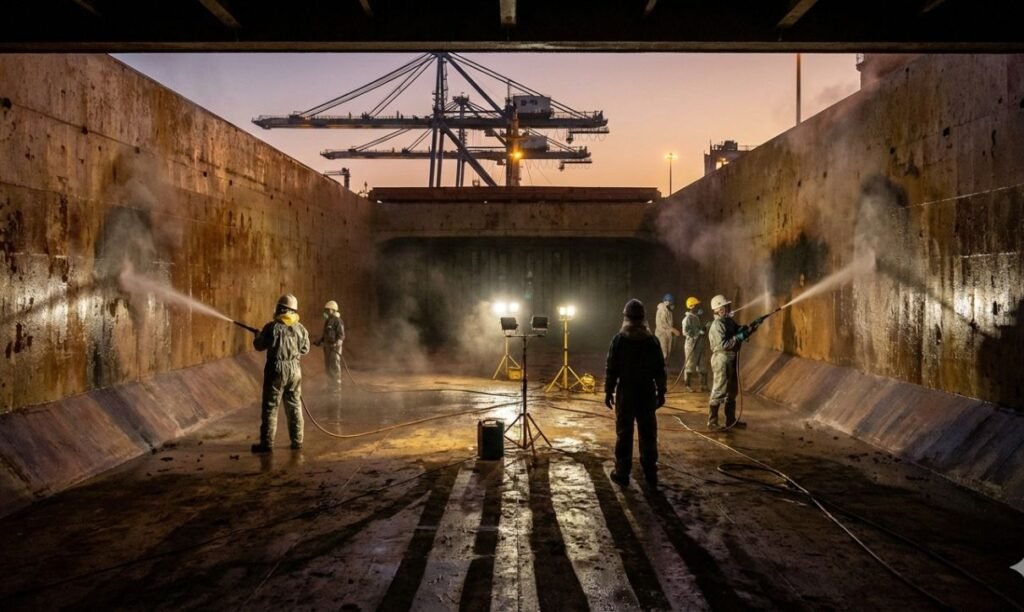
2. Enhanced Vessel and Crew Safety
Reducing Explosion and Toxic Exposure Risks
Tank cleaning is closely linked to onboard safety. Residual vapors from previous cargoes can be flammable or toxic if not properly removed.
Effective tank cleaning in Khalid Port helps you:
- Lower explosion risk during hot work
- Prevent crew exposure to harmful gases
- Ensure safe entry into confined spaces
Many cleaning operations now follow IMCA safety guidance, including gas-free certification and enclosed space entry protocols.
3. Protection of Cargo Quality and Charterer Trust
Preventing Cross-Contamination
Think of a cargo tank like a drinking glass. If it still smells of the last beverage, the next one will taste wrong. The same principle applies to maritime cargo.
High-standard tank cleaning:
- Eliminates residue from previous cargoes
- Protects chemical and petroleum cargo purity
- Prevents cargo rejection at discharge ports
For chartered vessels, this directly supports long-term charterer relationships and repeat business.
4. Environmental Protection and Pollution Control
Supporting the UAE’s Sustainability Goals
The UAE ports authority places strong emphasis on environmental responsibility. Improper tank cleaning can result in oily waste entering marine ecosystems.
Professional tank cleaning in Khalid Port:
- Controls wash water and sludge disposal
- Aligns with port environmental policies
- Reduces accidental pollution incidents
Ports affiliated with IAPH actively monitor compliance, making environmental discipline a commercial advantage.
5. Cost Efficiency Through Preventive Maintenance
Cleaning as a Cost-Saving Tool
It may seem counterintuitive, but cleaning tanks regularly actually reduces operational costs.
Well-maintained tanks:
- Reduce corrosion and coating damage
- Lower repair and dry-docking costs
- Improve pumping efficiency
Over time, shipowners who invest in proper tank cleaning in Khalid Port avoid major structural repairs caused by residue buildup and chemical reactions.
Tank, Hold, and Bulk Carrier Cleaning Standards Explained
Different Spaces, Different Rules
Not all cleaning operations are the same. Tankers, cargo holds, and bulk carriers each require specific approaches.
Tank Cleaning
Focuses on:
- Liquid cargo residues
- Gas-free certification
- Temperature and pressure-controlled washing
Cargo Hold Cleaning
Involves:
- Removal of dust, scale, and residues
- Compliance with World Ports Marine Supercargo expectations
- Readiness for the next cargo grade
Bulk Carrier Cleaning
Requires:
- Mechanical and manual cleaning
- Rust scale removal
- Inspection under Final Quality Rules FINAL
Understanding these distinctions helps you select the right cleaning method for the vessel type.
6. Inspection Readiness and Documentation Control
Passing Surveys Without Stress
One of the most practical benefits of tank cleaning in Khalid Port is inspection readiness. Authorities and cargo surveyors often require evidence—not just visual cleanliness.
Professional workflows include:
- Pre-cleaning inspection reports
- Gas-free and cleanliness certificates
- Photographic documentation
These records support Port State Control inspections and cargo surveys, reducing operational delays.
7. Future-Proofing Operations With Modern Cleaning Practices
Innovation in Marine Cleaning
Marine cleaning is evolving. New technologies focus on safety, efficiency, and environmental control.
Emerging trends include:
- Closed-loop tank cleaning systems
- Reduced water consumption methods
- Digital inspection and reporting tools
Operators in Khalid Port who adopt modern tank cleaning practices stay ahead of regulatory changes and charterer expectations.
Industry Context: How Global Operators Approach Cleaning
Across global ports, companies like Cleanship.co demonstrate industry-standard practices by integrating:
- Tank and hold cleaning across multiple regions
- Cargo supervision and compliance support
- Drug and alcohol testing services to enhance crew safety
These services reflect how modern maritime operations treat cleaning as part of a larger compliance and risk-management framework.
The Role of Safety Culture in Cleaning Operations
Human Factors Matter
Even the best equipment fails without trained people. Cleaning crews must understand confined space risks, chemical hazards, and emergency response procedures.
A strong safety culture:
- Reduces accidents during tank entry
- Aligns with IMCA recommendations
- Builds confidence among vessel operators
This is especially critical in high-traffic ports like Khalid Port.
Documentation, Compliance, and Workflow Integration
From Cleaning to Clearance
Tank cleaning is most effective when integrated into the vessel’s overall compliance workflow.
A typical process includes:
- Risk assessment
- Cleaning execution
- Inspection and certification
- Final reporting
This structured approach ensures readiness for audits and cargo operations.
Conclusion: Why Tank Cleaning in Khalid Port Matters
Tank cleaning in Khalid Port delivers value far beyond surface cleanliness.
Three key takeaways stand out:
- It ensures compliance with IMO, MARPOL, and port authority regulations.
- It protects crew safety, cargo quality, and the marine environment.
- It reduces long-term costs through preventive maintenance and inspection readiness.
For shipowners and operators seeking reliable compliance and operational excellence, partnering with experienced maritime service providers like Cleanship.co offers a practical path to safe, efficient, and regulation-ready operations.
FAQs:
Q1. Why is tank cleaning in Khalid Port strictly regulated?
Khalid Port operates under international conventions such as IMO and MARPOL. Strict regulation prevents pollution, ensures crew safety, and protects cargo integrity. Non-compliance can result in fines, vessel detention, or cargo rejection.
Q2. How often should tank cleaning be performed?
The frequency depends on cargo type, charter requirements, and inspection schedules. Chemical and product tankers often require cleaning after every voyage, while others follow periodic maintenance cycles aligned with surveys.
Q3. Is tank cleaning different from cargo hold cleaning?
Yes. Tank cleaning focuses on liquid residues and gas-free conditions, while cargo hold cleaning removes solid residues, dust, and rust. Each follows different standards and inspection criteria.
Q4. What documents are required after tank cleaning?
Typical documentation includes cleaning reports, gas-free certificates, inspection records, and photographic evidence. These documents support Port State Control inspections and cargo surveys.
Q5. How does professional cleaning reduce long-term costs?
Proper cleaning prevents corrosion, protects coatings, and improves operational efficiency. Over time, this reduces repair expenses, downtime, and unexpected compliance issues, making it a cost-effective maintenance strategy.