
Mumbai is one of India’s busiest maritime gateways, where commercial vessels operate in demanding coastal conditions throughout the year. From container ships and oil tankers to offshore support vessels and bulk carriers, every ship depends on a well-maintained underwater hull to operate efficiently.
One of the most important yet often overlooked aspects of hull maintenance is the condition of the protective paint coating below the waterline. Over time, continuous exposure to seawater, marine growth, vessel movement, and changing environmental conditions can gradually weaken these coatings. If the damage goes unnoticed, corrosion can develop, maintenance costs can rise, and fuel efficiency may decline.
This is why Underwater Paint Condition Inspection in Mumbai has become an essential preventive maintenance service. Regular inspections help ship owners evaluate coating performance, identify early signs of deterioration, and plan maintenance before minor issues become major repairs.
What Is an Underwater Paint Condition Inspection in Mumbai?
An underwater paint condition Inspection in Mumbai is a visual assessment of a vessel’s submerged protective coating. Certified commercial divers or remotely operated vehicles (ROVs) inspect the hull while the vessel remains afloat, using high-definition cameras and specialized lighting to evaluate coating integrity.
A professional Underwater Paint Condition Inspection in Mumbai generally focuses on:
- Hull coating condition
- Areas of paint breakdown
- Surface abrasion
- Corrosion spots
- Marine growth attachment
- Coating blistering
- Mechanical damage
The inspection provides valuable information that supports maintenance planning and protects the vessel’s underwater structure.
Why Paint Condition Matters
Modern marine coatings do far more than improve appearance. They act as the vessel’s first line of defense against corrosion and marine fouling.
When coatings begin to fail, bare steel becomes exposed to seawater, increasing the risk of corrosion and structural deterioration.
For example, an offshore supply vessel operating from Mumbai experienced higher-than-normal marine growth despite recently cleaning its hull. During an underwater paint condition Inspection in Mumbai, divers discovered localized coating damage near the bow where frequent contact with floating debris had weakened the protective layer. The operator scheduled targeted coating repairs instead of a complete repaint, saving both time and maintenance costs.
This practical example highlights the importance of routine Underwater Paint Condition Inspection in Mumbai.
1. Inspect for Early Coating Damage
The first priority during any paint inspection is identifying areas where the coating has started to deteriorate.
Inspectors carefully examine the hull for:
- Scratches
- Abrasion
- Peeling
- Cracks
- Flaking paint
Finding these issues early allows maintenance teams to schedule localized repairs before corrosion develops.
Why Early Detection Matters
- Prevents coating failure
- Reduces repair costs
- Protects hull steel
- Extends coating lifespan
Small repairs are generally far less expensive than large-scale recoating projects.
2. Check for Corrosion Beneath the Coating
Not all corrosion is immediately visible.
Sometimes coating damage allows moisture to penetrate beneath the paint, leading to corrosion that spreads underneath the protective layer.
A thorough Underwater Paint Condition Inspection in Mumbai helps inspectors identify discoloration, blistering, rust staining, and coating separation that may indicate corrosion beneath the surface.
Early intervention protects the structural integrity of the vessel.
3. Evaluate Marine Growth Attachment
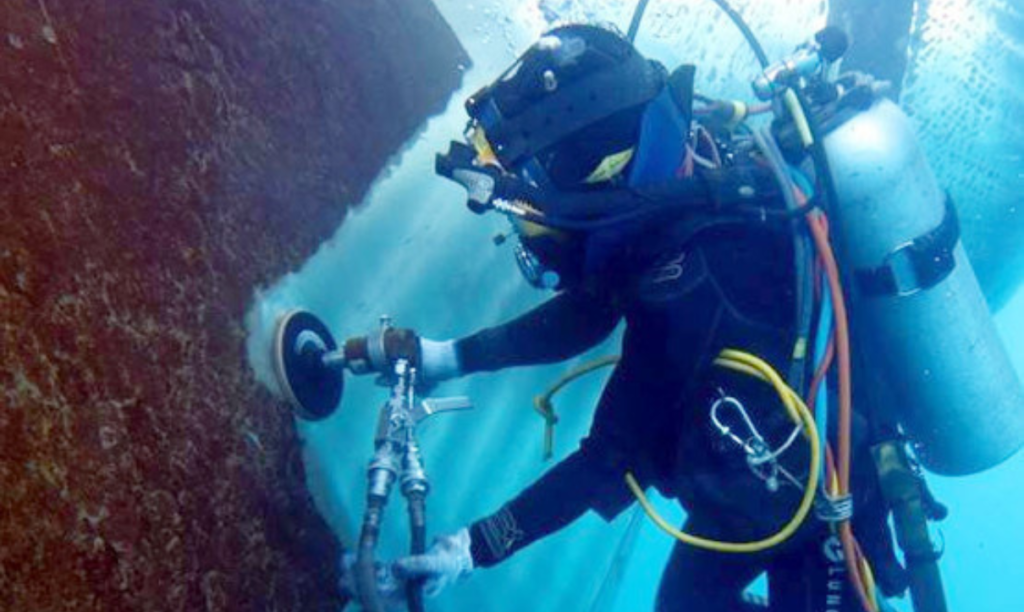
Marine organisms often attach more aggressively to damaged coatings than to intact antifouling systems.
During the inspection, divers assess whether marine growth is concentrated in specific areas, which may indicate coating deterioration rather than normal fouling.
A coastal cargo vessel operating between Mumbai and nearby ports recently showed uneven barnacle accumulation along one side of the hull. Inspection confirmed localized coating wear caused by repeated berth contact, allowing repairs to be planned before the damage expanded.
Marine Growth Assessment Includes
- Slime accumulation
- Algae growth
- Barnacles
- Shell deposits
The findings help determine whether cleaning alone is sufficient or if coating repairs are also required.
4. Document Coating Performance
Professional inspections provide more than visual observations.
High-definition photographs and underwater videos create detailed maintenance records that technical managers can compare over time.
Routine Underwater Paint Condition Inspection in Mumbai allows operators to monitor how different coating systems perform under local operating conditions and trading routes.
Reliable documentation supports better maintenance planning and more accurate budgeting.
5. Plan Maintenance Before Dry Docking
Paint inspections help ship owners prepare more effectively for scheduled dry dock visits.
Instead of relying on assumptions, technical managers can use inspection reports to determine:
- Areas requiring recoating
- Localized repairs
- Hull cleaning requirements
- Corrosion treatment priorities
A bulk carrier preparing for its next class survey recently completed an underwater paint inspection while alongside in Mumbai. The survey confirmed that only limited touch-up work was required during dry docking, reducing both repair time and maintenance costs.
Planning based on actual inspection data improves efficiency and minimizes unnecessary work.
Choosing the Right Inspection Provider
Selecting an experienced underwater inspection company is essential for obtaining accurate results.
Ship owners should consider providers that offer:
- Certified commercial divers
- ROV inspection capability
- High-definition underwater imaging
- Detailed digital reporting
- Strong safety management systems
- Experience with commercial vessel coatings
An experienced inspection team understands coating systems used on different vessel types and can identify early signs of deterioration before significant damage occurs.
Technology Is Improving Paint Condition Assessments
Modern underwater inspection technology has significantly improved coating evaluations.
ROVs equipped with HD cameras, powerful underwater lighting, and digital measurement tools now produce detailed inspection records even in challenging underwater environments. Many service providers also use cloud-based reporting systems, allowing fleet managers to review inspection findings remotely.
These advancements help operators make faster maintenance decisions while reducing uncertainty during planning.
Conclusion
Protective hull coatings are one of the most valuable investments in a vessel’s long-term maintenance strategy. Regular inspections help preserve those coatings, reduce corrosion risks, improve fuel efficiency, and extend the life of underwater structures.
The five expert tips discussed above demonstrate why Underwater Paint Condition Inspection in Mumbai is an essential preventive maintenance practice. By identifying coating damage early, evaluating marine growth patterns, documenting coating performance, and supporting maintenance planning, professional inspections help ship owners reduce costs while maintaining reliable vessel performance.
For commercial vessels operating through Mumbai’s busy maritime corridor, routine underwater paint condition Inspection in Mumbai are a practical investment in safety, efficiency, and long-term asset protection.
FAQs:
Q1. What is an underwater paint condition Inspection in Mumbai?
It is an underwater assessment of a vessel’s protective hull coating to identify damage, wear, corrosion, and coating performance while the vessel remains afloat.
Q2. Why is paint condition inspection important?
It helps detect coating damage early, prevents corrosion, supports maintenance planning, and extends the service life of marine coatings.
Q3. Can paint condition inspections be carried out without dry docking?
Yes. Certified commercial divers or ROVs can inspect the hull while the vessel remains in the water.
Q4. What equipment is used during an underwater paint inspection?
Professional inspections typically use high-definition underwater cameras, lighting systems, ROVs, and digital reporting tools.
Q5. How often should underwater paint condition Inspection in Mumbai be performed?
Inspection frequency depends on vessel operations, coating type, and trading routes, but regular inspections are recommended as part of a preventive maintenance program.