
For shipowners and vessel operators, maintaining compliance with classification society requirements is just as important as maintaining operational efficiency. Traditionally, many underwater inspections required vessels to enter dry dock, resulting in significant costs, operational delays, and scheduling challenges.
Today, advances in underwater inspection technology have changed the way vessel surveys are conducted. One of the most widely accepted alternatives is UWILD, or Underwater Inspection in Lieu of Drydocking.
As shipping activity continues to grow at one of India’s busiest commercial ports, UWILD Inspection in Mundra has become an increasingly valuable solution for vessel owners seeking efficient inspection methods without interrupting trading schedules.
By combining certified commercial divers, advanced underwater imaging systems, and classification society-approved procedures, UWILD inspections allow vessels to complete essential surveys while remaining afloat.
For many operators, this approach offers substantial savings in both time and cost while maintaining regulatory compliance.
What Is UWILD Inspection?
UWILD stands for Underwater Inspection in Lieu of Drydocking.
It is a class-approved inspection method that enables qualified divers to examine a vessel’s underwater structures without requiring the ship to enter dry dock.
Classification societies may approve UWILD inspections for certain vessel types and operational conditions, provided the inspection meets established standards.
During a UWILD survey, divers inspect critical underwater components such as:
- Hull structures
- Rudders
- Propellers
- Sea chests
- Thrusters
- Bilge keels
- Hull appendages
- Underwater fittings
The inspection findings are documented through photographs, videos, and detailed reports for review by classification surveyors.
Why UWILD Inspection Matters
Dry docking remains necessary for major repairs and maintenance activities. However, scheduling a dry dock solely for routine underwater inspection can be costly and operationally disruptive.
A properly executed UWILD Inspection in Mundra provides vessel owners with an alternative that helps maintain compliance while minimizing downtime.
This is especially important for vessels operating on tight schedules.
A container vessel serving multiple ports, for example, may struggle to accommodate an unscheduled dry docking period. UWILD inspections allow operators to complete mandatory surveys while maintaining commercial commitments.
The result is a more flexible approach to vessel maintenance and regulatory compliance.
Why Mundra Is an Important Location for UWILD Inspections
Mundra has established itself as one of India’s leading maritime gateways, handling large volumes of containerized cargo, bulk commodities, petroleum products, and offshore support activities.
The port regularly accommodates:
- Container vessels
- Bulk carriers
- Oil and chemical tankers
- Offshore support vessels
- Coastal cargo ships
- Specialized marine vessels
With constant vessel traffic and extensive marine service infrastructure, Mundra provides an ideal environment for conducting underwater inspections.
As a result, demand for UWILD Inspection in Mundra continues to grow among domestic and international ship operators.
How a UWILD Inspection Is Conducted
Inspection Planning and Approval
Every UWILD project begins with careful planning.
Before the inspection takes place, vessel operators coordinate with the relevant classification society and inspection provider. Survey requirements, inspection scope, and operational conditions are reviewed to ensure compliance.
Approval procedures vary depending on vessel type, class requirements, and survey schedules.
Underwater Visual Examination
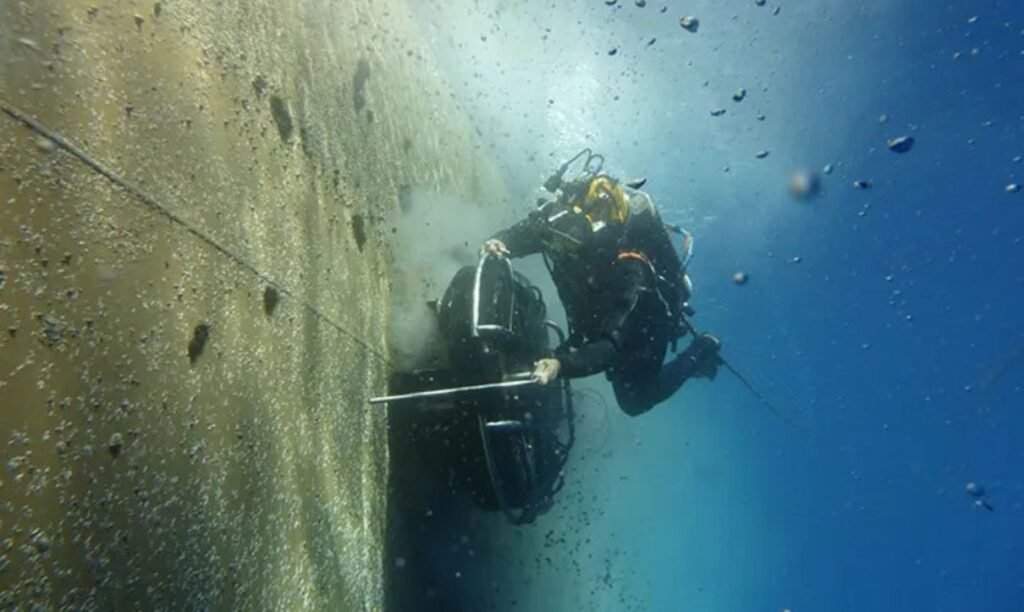
Once approval is obtained, commercial divers conduct a detailed underwater inspection.
Using underwater cameras and communication systems, divers examine critical structural components while recording video footage and photographs.
Areas commonly inspected include:
- Hull plating
- Rudder surfaces
- Propeller blades
- Sea chest gratings
- Bow thrusters
- Hull penetrations
The surveyor may monitor inspection activities in real time, depending on project requirements.
Documentation and Reporting
Accurate documentation forms a key part of every UWILD Inspection in Mundra.
Inspection reports typically include:
- High-definition photographs
- Video recordings
- Structural observations
- Fouling assessments
- Defect identification
- Survey recommendations
These records support classification reviews and future maintenance planning.
Survey Review and Acceptance
Following completion of the inspection, the collected data is reviewed by the attending surveyor and classification society.
If inspection requirements are satisfied, the UWILD survey may be accepted as an approved alternative to dry docking for the applicable survey period.
Benefits of UWILD Inspection in Mundra
Reduced Vessel Downtime
One of the most significant advantages of UWILD inspections is the ability to perform surveys while the vessel remains operational.
This minimizes interruptions to cargo schedules and voyage planning.
Lower Operational Costs
Dry docking can involve substantial expenses, including dock fees, vessel repositioning, and operational disruptions.
A UWILD Inspection in Mundra often provides a more cost-effective alternative when permitted by classification requirements.
Regulatory Compliance
UWILD inspections help vessel owners maintain compliance with classification society survey schedules while avoiding unnecessary delays.
Accurate Condition Assessment
Modern underwater inspection technologies provide detailed visual information about the condition of underwater structures.
This allows operators to make informed maintenance decisions based on actual vessel conditions.
Common Findings During UWILD Surveys
UWILD inspections often reveal conditions that may not be visible during routine onboard operations.
Marine growth remains one of the most frequently observed conditions during underwater surveys. Excessive fouling can increase fuel consumption and reduce vessel efficiency. Protective coatings naturally degrade over time.
Early identification allows operators to plan maintenance before significant corrosion develops. Minor blade defects, erosion, and fouling can affect propulsion efficiency and fuel performance. Marine growth around sea chest gratings may restrict cooling water flow and affect machinery performance.
Real-World Example
Consider a bulk carrier arriving at Mundra for cargo discharge while approaching its scheduled class survey window.
The vessel’s operator wants to avoid an additional dry docking period because it would interfere with charter commitments.
A certified diving team performs a UWILD Inspection in Mundra, capturing detailed video footage of the hull, propeller, rudder, and sea chests. The classification surveyor reviews the inspection results and accepts the survey under applicable guidelines.
The vessel remains compliant while avoiding unnecessary downtime and associated costs.
Situations like this demonstrate why UWILD inspections have become a preferred option for many commercial operators.
The Future of UWILD Inspections
As shipping companies continue to seek cost-effective maintenance strategies, UWILD inspections are becoming increasingly important.
Advances in underwater imaging technology, digital reporting systems, and remotely operated inspection tools are improving survey accuracy and efficiency.
Many fleet operators now incorporate routine UWILD Inspection in Mundra into their long-term asset management programs to reduce costs while maintaining compliance.
The trend is expected to continue as ports and service providers adopt more advanced underwater inspection solutions.
Conclusion
Maintaining vessel compliance does not always require costly dry docking. With the support of qualified divers, advanced inspection equipment, and classification society approval, UWILD inspections provide a practical alternative for assessing underwater structures.
UWILD Inspection in Mundra enables shipowners and operators to conduct essential surveys efficiently while reducing downtime and operational expenses. By delivering accurate condition assessments and supporting regulatory compliance, UWILD inspections have become an essential component of modern vessel maintenance strategies.
For vessels operating through Mundra, this approach offers a smart balance between compliance, efficiency, and cost control.
FAQs
1. What does UWILD stand for?
UWILD stands for Underwater Inspection in Lieu of Drydocking, a class-approved inspection method conducted while the vessel remains afloat.
2. Why is UWILD Inspection in Mundra important?
It helps vessel owners complete required underwater inspections without the cost and downtime associated with dry docking.
3. Which vessel components are inspected during UWILD surveys?
Common inspection areas include hulls, rudders, propellers, sea chests, thrusters, bilge keels, and underwater fittings.
4. Is UWILD accepted by classification societies?
Yes. Many classification societies permit UWILD inspections under specific conditions and according to approved procedures.
5. What are the main benefits of UWILD inspections?
UWILD inspections reduce downtime, lower maintenance costs, support regulatory compliance, and provide detailed information about underwater vessel conditions.