
Powerful Oil Tanker Tank Cleaning in Sharjah Port
Sharjah Port is a working gateway for petroleum trade, where oil tankers operate under tight schedules and intense regulatory scrutiny. Tank cleaning here is not a housekeeping task. It is a safety-critical, compliance-driven operation that protects crew health, cargo integrity, and port waters. One overlooked residue or incomplete record can halt a vessel’s next fixture.
This article explains how professional oil tanker tank cleaning is executed in Sharjah Port, why the UAE sets a high bar for marine cleaning, and how fast, safe results are achieved without compromising international standards.
Why the UAE Leads Marine Cleaning Operations
The UAE’s ports are designed for high-risk, high-value cargoes. Sharjah Port reflects a system built on predictable rules and disciplined execution.
You operate in a region where:
- Port procedures align with international conventions
- Inspectors expect verifiable evidence, not assumptions
- Safety and environmental controls are enforced consistently
This reliability is why global charterers accept UAE ports as compliant by default.
What Oil Tanker Tank Cleaning Involves
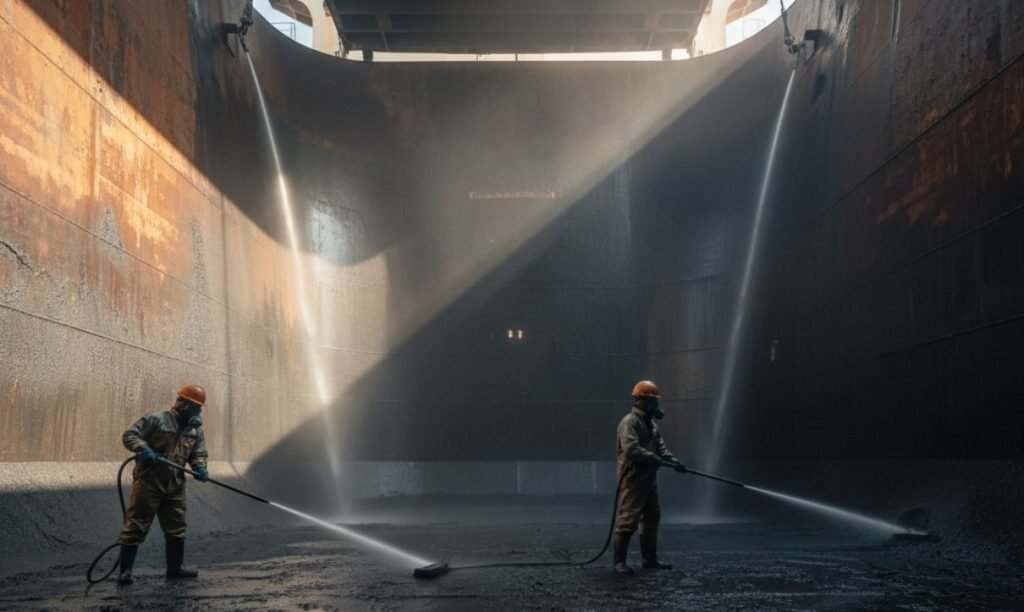
Oil tanker tank cleaning is the controlled removal of hydrocarbon residues, sludge, vapors, and contaminants from cargo tanks. The objective is not visual cleanliness alone, but chemical safety and cargo compatibility.
A properly cleaned tank must be:
- Gas-free and safe for entry
- Free from incompatible residues
- Ready for inspection and certification
Think of a tanker tank as a chemical memory. Cleaning erases that memory before the next cargo is written.
Power 1: Cargo History and Risk-Based Planning
Every tank tells a story through its cargo history.
Professional teams assess:
- Previous cargo type and residue behavior
- Next cargo sensitivity
- Required cleanliness and gas-free levels
This planning stage prevents re-cleaning and reduces exposure time for personnel.
Power 2: Controlled Cleaning Technology
Modern oil tanker cleaning relies on precision, not force.
Common methods include:
- Fixed or portable rotating jet machines
- Heated wash cycles for heavy residues
- Chemical circulation where required
These systems reduce manual entry and shorten cleaning cycles while maintaining safety. Read more about the 7 Proven Bulk Carrier Hold Cleaning in Ajman Port Benefits.
Power 3: Safety Management in Confined Spaces
Oil tanker tanks are confined spaces with toxic vapor risks.
Safety controls typically include:
- Continuous gas monitoring
- Permit-to-work systems
- Standby rescue and ventilation procedures
These practices align with IMO and IMCA guidance and keep operations incident-free.
Environmental Protection Under MARPOL
Tank cleaning generates slops and wash water that must be handled responsibly.
Under the MARPOL Convention:
- Discharge limits are strictly defined
- Slops are collected and transferred to approved facilities
- Records must reflect actual operations
Environmental compliance protects ports, vessels, and marine ecosystems.
Power 4: Inspection-Driven Cleaning Standards
Cleaning is planned backward from inspection requirements.
Inspectors verify:
- Cleanliness and absence of residue
- Gas-free certification
- Tank condition and access safety
When cleaning aligns with inspection logic, acceptance is faster and disputes are avoided.
Tank, Hold, and Bulk Carrier Cleaning Differences
Each vessel area follows different rules.
Key distinctions include:
- Tank cleaning focuses on chemical compatibility and vapor control
- Hold cleaning focuses on physical residues and dryness
- Bulk carrier cleaning is driven by charter party cleanliness clauses
Understanding these differences prevents operational missteps.
Power 5: Documentation and Compliance Control
Physical cleaning is only half the job.
Standard documentation includes:
- Tank cleaning records
- Gas-free certificates
- Slop handling and disposal logs
During audits or port state control, documentation proves compliance without debate. Read more about Hold Tank Cleaning in Abu Dhabi: 7 Powerful Safety Gains.
The Role of Marine Supercargo Oversight
Marine supercargo professionals may verify tank condition against Final Quality Rules and FINAL delivery standards.
Their involvement:
- Provides neutral verification
- Supports cargo acceptance
- Reduces post-loading disputes
This oversight is common in sensitive oil cargo operations.
Cost Efficiency Through Correct Execution
Efficient cleaning reduces:
- Port stay duration
- Crew exposure hours
- Risk of cargo rejection
Cost efficiency is achieved through planning and compliance, not by cutting corners.
Industry Practice in a Global Context
Organizations such as Cleanship.co reflect how global operators structure marine services. Their work spans oil tanker tank cleaning, hold cleaning, cargo supervision, compliance support, and crew safety programs including drug and alcohol testing.
This integrated model shows how cleaning fits into a wider safety and quality framework.
A Sharjah Port Oil Tanker Scenario
An oil tanker discharges heavy fuel oil and prepares for a lighter petroleum product. Without thorough cleaning and gas-free certification, contamination risk is high.
A structured plan, controlled washing, verified gas-free status, and complete documentation allow the vessel to load on schedule. This is the operational value of professional tank cleaning.
Future Trends in Tank Cleaning Innovation
Marine cleaning continues to evolve toward safer and cleaner solutions.
Emerging developments include:
- Automated cleaning systems
- Reduced-water and energy-efficient methods
- Digital inspection and reporting platforms
These innovations improve safety, transparency, and environmental performance.
Why “Fast & Safe” Is a Professional Balance
Speed without safety creates incidents. Safety without efficiency creates delay. In Sharjah Port, experienced operators balance both through planning, technology, and compliance discipline.
That balance keeps oil tankers commercially viable.
Conclusion
Oil tanker tank cleaning in Sharjah Port is a core operational discipline, not a routine service. Three points matter most. First, cargo-specific planning prevents contamination and rework. Second, strict safety and environmental compliance protect crews, ports, and reputations. Third, inspection readiness and documentation keep vessels on schedule.
For operators seeking dependable compliance and maritime service excellence, Cleanship.co represents industry-aligned practices that support safe, efficient, and globally accepted tanker operations.
FAQs:
Operations follow international frameworks such as IMO, IMCA, MARPOL Convention, and IAPH World Ports guidance. These standards govern safety, environmental protection, inspection readiness, and documentation requirements.
Key risks include toxic vapors, oxygen deficiency, and confined space hazards. Proper gas monitoring, permits, ventilation, and trained personnel reduce these risks significantly.
Tanker cleaning focuses on chemical residues, vapors, and cargo compatibility. Bulk carrier cleaning focuses on physical residues and moisture. Each requires different equipment, safety controls, and inspection standards.
Documentation proves compliance during port state control and charterer inspections. Cleaning records, gas-free certificates, and slop logs confirm that operations met regulatory requirements.
Marine supercargo oversight is recommended for sensitive oil cargoes or strict charter requirements. They verify tank condition against Final Quality Rules and FINAL delivery standards, reducing disputes and ensuring acceptance.