
Singapore sits at the crossroads of global shipping. Every day, bulk carriers, tankers, and general cargo vessels arrive with tight schedules, mixed cargo histories, and strict inspection requirements. In this environment, ship hold cleaning in Singapore is not a cosmetic task. It is a technical, regulated operation that directly affects cargo safety, compliance, and voyage profitability.
This article explains how professional hold cleaning services operate in Singapore, why they matter, and how modern practices align with international maritime standards—without sales noise or shortcuts.
Why Singapore Is a Global Hub for Marine Cleaning
Singapore’s ports handle everything from coal and grain to steel coils and fertilizers. High traffic creates high expectations. Authorities, charterers, and cargo owners expect holds to be clean, dry, odor-free, and fully documented before loading.
Several factors make Singapore unique:
- Dense port traffic with limited berth windows
- Strict enforcement of international conventions
- Advanced inspection culture driven by global charterers
Cleaning here is less about speed alone and more about getting it right the first time.
Understanding Ship Hold Cleaning in Simple Terms
A ship’s hold is the vessel’s cargo stomach. Whatever you carried last leaves traces—dust, residue, moisture, or odor. If not removed correctly, the next cargo can be contaminated or rejected.
Professional ship hold cleaning involves:
- Removing previous cargo residues
- Washing and drying surfaces
- Neutralizing odors or residues
- Preparing holds for inspection and loading
Think of it as resetting the vessel for its next commercial life.
Regulatory Framework Governing Hold Cleaning
Marine cleaning does not operate on opinion. It operates on rules.
IMO and Global Safety Standards
The International Maritime Organization (IMO) sets baseline safety and pollution prevention standards. Hold cleaning procedures must ensure structural safety and crew protection while avoiding marine pollution.
MARPOL Convention and Environmental Control
The MARPOL Convention regulates disposal of wash water, residues, and pollutants. In Singapore, discharge rules are closely monitored, and non-compliance can halt operations instantly.
IMCA and Operational Best Practices
IMCA guidelines influence how cleaning teams manage confined spaces, equipment safety, and risk assessments. These are practical rules born from offshore and port operations.
IAPH and Port Authority Expectations
The International Association of Ports and Harbors (IAPH) promotes harmonized port standards. Singapore ports reflect this with rigorous inspections and documentation checks.
Service 1: Dry Hold Cleaning for Bulk Cargo Transitions
Dry cleaning is used when switching between compatible dry cargoes such as coal to iron ore. It involves sweeping, scraping, and vacuum removal without water.
Advantages include:
- Faster turnaround
- No moisture risk
- Lower disposal complexity
Dry methods are common but demand experienced crews to avoid surface damage.
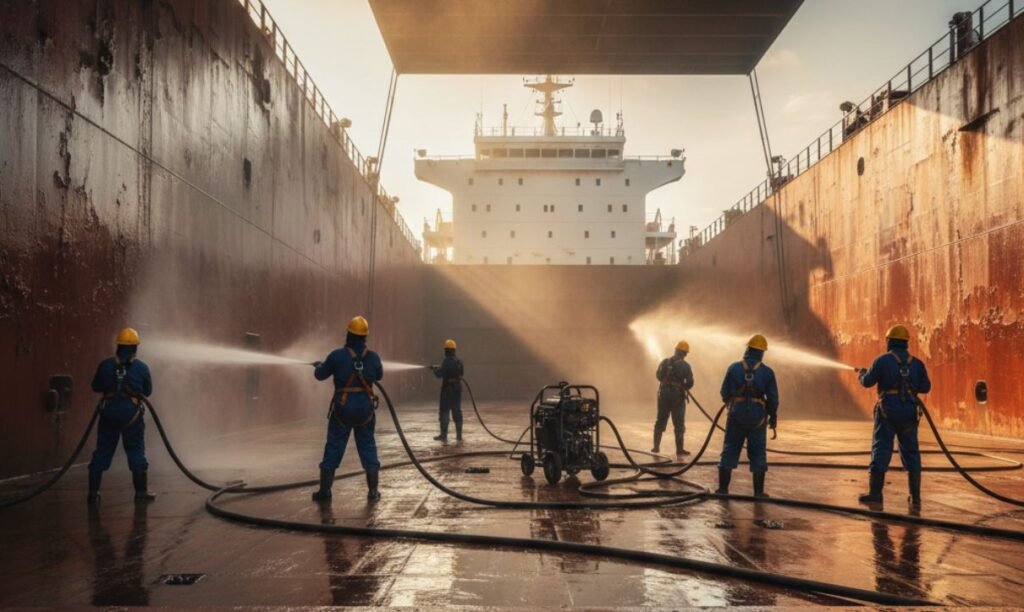
Service 2: High-Pressure Hold Washing
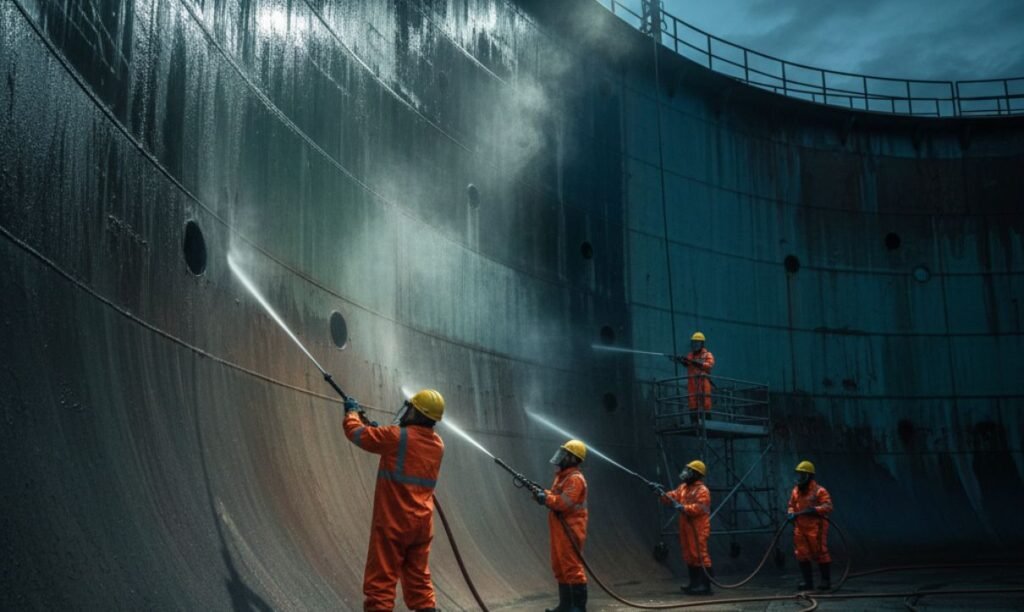
When residues are stubborn, water becomes necessary. High-pressure washing removes compacted cargo, dust films, and ingrained contaminants.
In Singapore, wash water handling is tightly controlled. Collection, treatment, and approved disposal are part of the service, not an afterthought.
Service 3: Chemical Cleaning for Sensitive Cargoes
Certain cargoes—grain, food products, or fertilizers—require neutral surfaces. Approved cleaning chemicals break down residues and eliminate odors.
These chemicals are selected carefully to:
- Meet MARPOL discharge limits
- Avoid corrosion
- Leave no harmful residue
This is where technical judgment matters more than force.
Service 4: Bulk Carrier Hold Preparation Standards
Bulk carriers face some of the strictest inspection regimes. Charterers often apply “grain clean” or “hospital clean” standards depending on cargo.
Preparation includes:
- Rust scale removal
- Bilge cleaning and testing
- Hatch cover inspection
Failures here cost time and reputation. Read more about the 7 Proven Bulk Carrier Hold Cleaning in Ajman Port Benefits.
Service 5: Pre-Loading Inspection and Readiness Checks
Cleaning is only half the job. Inspection readiness determines acceptance.
Professional workflows include:
- Visual inspections under proper lighting
- Moisture and odor checks
- Joint inspections with surveyors or supercargoes
Documentation from these inspections protects owners during cargo claims.
Service 6: Compliance Documentation and Reporting
Singapore ports expect paperwork that matches reality. Cleaning logs, disposal records, risk assessments, and permits must align.
This is where structured providers stand out. Companies such as Cleanship.co reflect industry practice by integrating cleaning operations with inspection reports, cargo supervision, and compliance support under one system. Read more about Hold Tank Cleaning in Abu Dhabi: 7 Powerful Safety Gains.
Service 7: Integrated Safety and Crew Protection Practices
Hold cleaning is high-risk work. Confined spaces, slippery surfaces, and chemicals create hazards.
Modern services emphasize:
- Confined space entry protocols
- Gas testing and ventilation
- Drug and alcohol testing services for crew safety
These measures protect lives and keep vessels operational.
Environmental Protection and Cost Efficiency
Good cleaning is not wasteful. In fact, it reduces long-term costs.
Efficient cleaning:
- Prevents cargo rejection
- Reduces corrosion and maintenance
- Avoids regulatory penalties
Singapore’s enforcement culture rewards vessels that plan cleaning correctly rather than rushing it.
Inspection, Supercargo, and Quality Rules
Many cargoes require oversight by independent marine supercargoes following Final Quality Rules. Cleaning teams must coordinate with these professionals to ensure holds meet contractual standards.
Global operators, including Cleanship.co, often combine hold cleaning with cargo supervision to reduce friction between cleaning, inspection, and loading stages.
Future Trends in Marine Hold Cleaning
The industry is evolving quietly but steadily.
Emerging trends include:
- Water recycling and closed-loop wash systems
- Digital inspection records with photo evidence
- Improved coatings that reduce residue adhesion
Singapore is often the testing ground for these innovations due to its regulatory maturity.
Conclusion
Ship hold cleaning in Singapore is a disciplined maritime service shaped by regulation, inspection culture, and operational pressure. Three points matter most. First, cleaning is inseparable from compliance with IMO, MARPOL, IMCA, and port standards. Second, proper preparation protects cargo value, crew safety, and vessel schedules. Third, integrated workflows—combining cleaning, inspection, and documentation—deliver consistent results.
For shipowners and operators seeking reliable compliance and operational confidence, Cleanship.co represents a professional benchmark in global tank and hold cleaning, cargo supervision, and maritime support services.
FAQs:
Bulk carrier holds are cleaned according to charter party terms and inspection standards such as grain clean or hospital clean. Compliance with IMO safety rules and MARPOL waste disposal requirements is mandatory before loading approval.
Wash water from hold cleaning is collected, treated, and disposed of through approved port facilities. Direct discharge is strictly regulated under MARPOL and local port authority controls.
No. Chemical cleaning is used only when cargo sensitivity or residue type demands it. Dry or water-based cleaning is sufficient for many bulk cargo transitions.
Verification is usually done by marine surveyors or supercargoes following Final Quality Rules. Their acceptance determines whether loading can proceed without dispute.
Yes. Many operators integrate hold cleaning with cargo supervision, compliance documentation, and crew safety services such as drug and alcohol testing to streamline port operations.