
This is why Sea Chest Cleaning in Hazira has become a valuable maintenance service for vessels operating along India’s west coast.
When shipowners discuss underwater maintenance, conversations often revolve around hull cleaning, propeller polishing, or dry dock schedules. Yet one of the most critical components of a vessel’s operating system remains largely out of sight—the sea chest.
Although it receives less attention than propulsion systems or hull coatings, the sea chest plays a vital role in daily vessel operations. It serves as the gateway through which seawater enters the ship to support cooling systems, ballast operations, firefighting equipment, and various auxiliary functions.
Over time, marine growth, sediment, shells, and debris can accumulate inside sea chest openings, restricting water flow and creating operational challenges. If left untreated, these blockages may affect machinery performance, increase maintenance costs, and even create safety concerns.
As Hazira continues to grow as a major maritime and industrial hub, shipping companies increasingly recognize the importance of maintaining clean and efficient seawater intake systems.
Understanding the Function of a Sea Chest
A sea chest is an enclosed chamber built into a vessel’s hull below the waterline.
Its purpose is simple but extremely important. It collects seawater through intake openings and distributes it to various onboard systems that depend on a continuous water supply.
These systems typically include:
- Main engine cooling systems
- Auxiliary engine cooling systems
- Ballast water systems
- Firefighting systems
- Air conditioning units
- Refrigeration systems
- General service pumps
Without adequate seawater flow, many of these systems cannot operate effectively.
Even a partially blocked sea chest can gradually affect overall vessel performance.
Why Sea Chests Become Blocked
The marine environment naturally encourages the accumulation of biological growth and debris.
Marine Fouling
Barnacles, mussels, algae, and other marine organisms readily attach themselves to sea chest gratings and internal surfaces.
As fouling increases, seawater flow becomes restricted.
Sediment Build-Up
Vessels operating in coastal waters often encounter suspended sediment that can settle within sea chest compartments.
Hazira’s busy industrial and shipping environment makes this a common concern.
Floating Debris
Plastic waste, fishing lines, seaweed, and other materials can become trapped around intake openings.
Shell Growth
Warm coastal waters accelerate the growth of shell-forming organisms, particularly when vessels remain at anchor or berth for extended periods.
For example, a tanker trading regularly between Hazira and Middle Eastern terminals may begin experiencing elevated cooling water temperatures. A subsequent underwater inspection often reveals heavy fouling inside the sea chest system restricting water flow.
Situations like this demonstrate why Sea Chest Cleaning in Hazira has become a routine preventive maintenance activity for many vessel operators.
Why Hazira Is an Important Location for Sea Chest Cleaning
Hazira is one of Gujarat’s most active maritime centers and serves a diverse range of commercial vessels.
Strategic Maritime Location
The port handles significant traffic involving:
- LNG carriers
- Bulk carriers
- Container vessels
- Oil and chemical tankers
- Offshore support vessels
Many of these ships require regular underwater maintenance.
Opportunity for Preventive Maintenance
Port calls provide a convenient opportunity to inspect and clean underwater systems without affecting vessel schedules.
Experienced commercial diving contractors operate in Hazira and provide specialized underwater maintenance support.
Reduced Downtime
One of the primary advantages of Sea Chest Cleaning in Hazira is that it can usually be performed while the vessel remains afloat.
This eliminates the need for immediate dry docking and minimizes operational disruption.
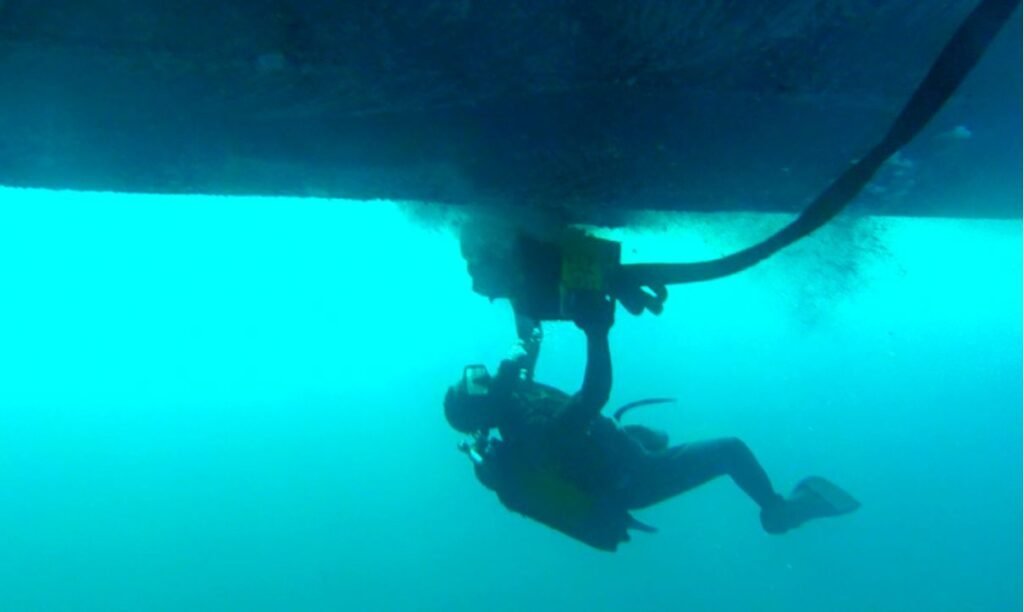
How Sea Chest Cleaning in Hazira Is Performed
Professional sea chest cleaning in Hazira follows a structured process designed to restore seawater flow while protecting vessel systems.
Initial Inspection
Before cleaning begins, divers conduct an underwater assessment of the sea chest area.
The inspection typically evaluates:
- Marine growth accumulation
- Debris presence
- Structural condition
- Corrosion indicators
- Water intake efficiency
Modern underwater cameras are often used to document conditions.
Removal of Marine Growth
Divers remove fouling organisms such as barnacles, algae, and shellfish using specialized underwater cleaning tools.
The cleaning method depends on the severity of fouling and vessel requirements.
Internal Sea Chest Cleaning
Where access permits, divers clean internal surfaces and remove accumulated debris that may obstruct water flow.
This step is particularly important for restoring optimal cooling system performance.
Final Verification
Once cleaning is completed, divers conduct a final inspection to verify that intake openings are clear and functioning properly.
Most service providers provide photographic and video records for maintenance documentation.
Benefits of Sea Chest Cleaning
The advantages of Sea Chest Cleaning in Hazira extend beyond simply removing marine growth and debris. Regular cleaning helps maintain critical seawater systems, improve operational reliability, and reduce the risk of costly equipment failures.
Improved Cooling System Efficiency
Clean sea chests allow seawater to flow freely to engine cooling systems, heat exchangers, and auxiliary machinery. This uninterrupted flow helps maintain optimal operating temperatures and improves overall system efficiency.
Reduced Risk of Machinery Problems
Restricted seawater intake can place additional strain on pumps, cooling circuits, and related equipment. Routine sea chest cleaning helps prevent blockages that could lead to overheating, reduced performance, or equipment damage.
Enhanced Operational Reliability
Maintaining clear sea chests helps ensure that essential onboard systems receive an adequate seawater supply at all times. This reduces the likelihood of unexpected operational disruptions and supports reliable vessel performance.
Lower Maintenance Costs
Preventive sea chest cleaning is generally far less expensive than repairing machinery damage caused by prolonged intake restrictions. Regular maintenance helps avoid costly breakdowns and extends equipment service life.
Improved Safety
Many vessel firefighting and emergency systems depend on a continuous seawater supply to function effectively. Keeping sea chests clean helps ensure these critical safety systems remain fully operational when needed.
Environmental Considerations
Environmental responsibility is becoming increasingly important in underwater maintenance operations.
Professional providers of Sea Chest Cleaning in Hazira follow procedures designed to support both vessel efficiency and environmental compliance.
Biofouling Management
Marine growth removed during sea chest cleaning should be handled and disposed of in accordance with applicable environmental regulations and port guidelines. Proper biofouling management helps minimize ecological impact and supports responsible marine operations.
Prevention of Species Transfer
Regular sea chest cleaning helps reduce the accumulation of marine organisms that may be transported between ports and regions. This proactive approach lowers the risk of introducing invasive species into new marine environments.
Sustainable Vessel Operations
Efficient seawater intake systems support optimal machinery performance and reliable cooling system operation. By maintaining system efficiency, sea chest cleaning can contribute to reduced fuel consumption and more sustainable vessel operations.
Choosing the Right Sea Chest Cleaning Provider
Not all underwater maintenance contractors offer the same level of expertise.
When selecting a provider for Sea Chest Cleaning in Hazira, vessel operators should evaluate several key factors.
Commercial Diving Experience
Qualified commercial divers with vessel maintenance experience can perform sea chest cleaning operations safely and efficiently. Their understanding of underwater systems and marine procedures helps ensure high-quality maintenance outcomes.
Modern Inspection Equipment
Advanced underwater cameras, lighting systems, and cleaning tools improve both inspection accuracy and cleaning effectiveness. Modern equipment allows contractors to identify issues more clearly and perform maintenance with greater precision.
Strong Safety Standards
Safety remains a critical consideration during all underwater operations. Professional contractors follow strict safety procedures, conduct risk assessments, and comply with industry regulations to protect personnel and vessel assets.
Detailed Reporting
Comprehensive inspection reports supported by photographs and video documentation provide valuable maintenance records. These reports help shipowners monitor equipment condition and plan future maintenance activities more effectively.
Flexible Service Availability
The ability to accommodate vessel schedules and operational requirements is particularly important in busy commercial ports. Flexible service providers can respond quickly and complete maintenance work with minimal disruption to vessel operations.
Why Preventive Sea Chest Maintenance Matters
Many seawater system issues develop gradually and may remain unnoticed until operational performance begins to decline.
By scheduling routine inspections and cleaning, shipowners can identify developing problems before they affect vessel operations.
This proactive approach helps reduce operational risks, improve machinery reliability, and support long-term maintenance planning.
For vessels trading through Gujarat’s busy maritime corridor, Sea Chest Cleaning in Hazira provides an effective solution for maintaining critical seawater intake systems.
Conclusion
Sea Chest Cleaning in Hazira is an essential underwater maintenance service that helps commercial vessels maintain reliable seawater flow, improve cooling system performance, and reduce the risk of operational disruptions. By removing marine growth, debris, and sediment from intake systems, professional cleaning services support safer and more efficient vessel operations.
As shipping companies continue to prioritize preventive maintenance and operational reliability, regular sea chest inspections and cleaning have become a key part of modern fleet management. For vessels calling at Hazira, this service offers a practical and cost-effective way to maintain critical onboard systems while minimizing downtime and long-term maintenance costs.
FAQs:
Q1. What is a sea chest on a ship?
A sea chest is a chamber located below the waterline that supplies seawater to cooling systems, ballast systems, firefighting equipment, and other onboard machinery.
Q2. Why is sea chest cleaning important?
Sea chest cleaning removes marine growth and debris that can restrict water flow and affect critical vessel systems.
Q3. Can sea chest cleaning be performed while the vessel is afloat?
Yes. Professional divers can perform sea chest cleaning underwater without requiring dry docking.
Q4. How often should sea chest cleaning be carried out?
The frequency depends on vessel operations, water conditions, and fouling levels. Regular inspections help determine maintenance needs.
Q5. Which vessels require sea chest cleaning in Hazira?
Tankers, LNG carriers, bulk carriers, container ships, offshore support vessels, and coastal cargo vessels commonly require sea chest cleaning services.