Mundra has become one of India’s busiest maritime hubs, handling thousands of vessel movements every year. With bulk carriers, container ships, tankers, and offshore support vessels regularly calling at the port, underwater hull maintenance has become increasingly important.
One area that ship operators often overlook is the condition of underwater paint coatings. Marine coatings protect the hull from corrosion, fouling, and excessive fuel consumption. Even minor coating damage can gradually lead to expensive repairs and operational inefficiencies.
This is why Underwater Paint Condition Inspection in Mundra has become an essential service for shipowners, managers, and technical superintendents. Modern diving teams and underwater inspection technologies now allow vessels to assess hull coating conditions without dry docking.
Let us examine seven proven checks that marine inspection teams commonly perform during underwater paint condition inspection in Mundra.
Why Underwater Paint Inspection Matters
Marine coatings serve as the vessel’s first line of defense. Constant exposure to seawater, marine growth, sediment, and vessel operations can damage protective coatings over time.
A vessel arriving at Mundra after trading in different climatic zones may experience varying levels of coating deterioration. The damage may not always be visible from above water.
Timely Underwater Paint Condition Inspection in Mundra helps operators:
- Detect coating failures early.
- Reduce dry dock surprises.
- Improve fuel efficiency.
- Plan maintenance budgets.
- Extend coating life.
- Prevent corrosion development.
Several shipping companies now schedule underwater inspections during cargo operations to avoid operational delays.
1. Visual Hull Coating Assessment
The first and most important check involves a complete visual examination of the underwater hull.
Professional divers or remotely operated cameras inspect:
- Coating discoloration.
- Peeling paint.
- Blistering.
- Mechanical damage.
- Surface irregularities.
Divers usually document these areas using high-definition underwater cameras. This visual evidence allows technical teams to understand the extent of coating deterioration.
During an Underwater Paint Condition Inspection in Mundra, visual assessment often identifies problems long before they become structural concerns.
2. Detection of Paint Breakdown Areas
Marine coatings naturally degrade over time. Exposure to seawater and operational wear eventually causes breakdown.
Inspection teams look for:
Localized Paint Failure
Small coating failures can spread quickly if left untreated.
Layers of paint may separate from the steel surface, reducing protection.
Bare Metal Exposure
Any exposed steel requires immediate attention because corrosion can begin rapidly.
Many bulk carriers operating on coastal routes experience paint damage around waterline areas and sea chests.
3. Marine Growth Assessment
Marine growth is one of the biggest indicators of coating performance.
Excessive growth may suggest:
- Weak antifouling performance.
- Damaged coatings.
- Expired paint systems.
- Surface roughness.
Divers evaluate:
- Barnacle growth.
- Algae accumulation.
- Slime formation.
- Shell attachment.
An effective Underwater Paint Condition Inspection in Mundra helps determine whether hull cleaning alone is sufficient or if repainting will eventually be necessary.
4. Corrosion Spot Identification
Corrosion often begins at small coating defects.
Inspection teams carefully examine:
Weld Seams
Weld areas may experience early coating breakdown.
Constant water movement can accelerate deterioration.
These areas often face coating erosion.
Mechanical movement can damage protective coatings.
For example, several coastal vessels operating between western Indian ports have reported corrosion near rudder sections after prolonged service intervals.
Identifying these spots early can save significant repair costs.
5. Mechanical Damage Inspection
Ships frequently experience minor impacts during operations.
Mechanical damage may result from:
- Tug contact.
- Floating debris.
- Anchor chain contact.
- Berthing operations.
- Cargo handling incidents.
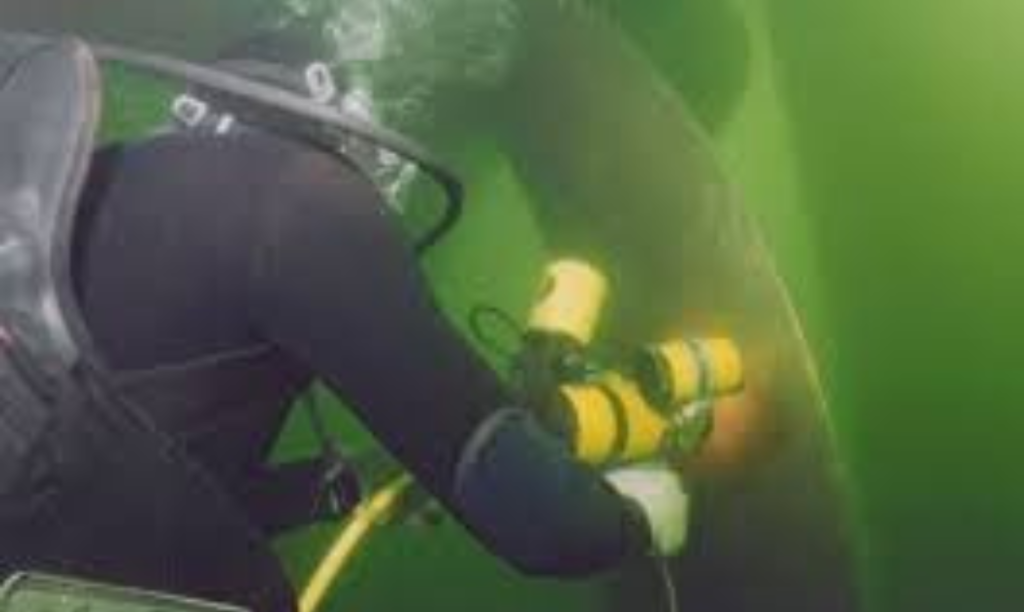
Divers inspect scratches, dents, abrasions, and impact marks.
A detailed Underwater Paint Condition Inspection in Mundra helps determine whether damage has affected only the coating or the underlying steel structure as well.
6. Propeller and Appendage Coating Checks
The underwater inspection does not stop at the hull.
Inspection teams evaluate:
- Propeller coating condition.
- Rudder surfaces.
- Bilge keels.
- Thrusters.
- Stabilizers.
These components operate under constant water movement, making them vulnerable to coating wear.
A container vessel entering Mundra after long international voyages may show excellent hull coating conditions but significant deterioration around appendages.
This is why complete underwater inspections provide more accurate maintenance planning.
7. Photo and Video Documentation
Modern underwater inspections rely heavily on documentation.
Divers record:
- High-definition videos.
- Underwater photographs.
- Damage locations.
- Coating failure areas.
- Corrosion evidence.
These records help technical managers compare hull conditions over time.
Many shipping companies use these reports to:
- Plan dry docking.
- Negotiate coating warranties.
- Monitor vessel performance.
- Support maintenance decisions.
A properly documented Underwater Paint Condition Inspection in Mundra provides valuable historical records for vessel management teams.
Technologies Used During Underwater Paint Inspection
Inspection companies operating in Mundra now use advanced tools to improve accuracy.
Common technologies include:
- High-definition underwater cameras.
- LED lighting systems.
- Video recording equipment.
- Diver communication systems.
- ROV-assisted inspections.
- Digital reporting software.
These technologies allow vessel operators to receive detailed inspection reports within a short period.
When Should Shipowners Schedule Inspection?
Timing plays a crucial role.
Operators often schedule inspections:
- Before dry docking.
- After long voyages.
- Following grounding incidents.
- During cargo operations.
- Before vessel purchase.
- After hull cleaning operations.
Routine Underwater Paint Condition Inspection in Mundra enables proactive maintenance instead of emergency repairs.
Practical Benefits for Ship Operators
The advantages extend beyond maintenance.
Regular inspections help:
- Reduce fuel consumption.
- Improve vessel efficiency.
- Lower repair costs.
- Minimize off-hire periods.
- Extend coating lifespan.
- Support compliance requirements.
A well-maintained hull can significantly improve vessel performance and operational reliability.
Conclusion
As vessel traffic continues to grow at Mundra, underwater hull maintenance has become increasingly important for shipowners and operators.
An effective Underwater Paint Condition Inspection in Mundra provides valuable information about coating performance, corrosion risks, and maintenance requirements. The seven proven checks discussed above allow technical teams to make informed decisions while avoiding unnecessary repair costs.
Rather than waiting for dry dock surprises, many shipping companies now choose underwater inspections as a practical and cost-effective maintenance strategy. Early detection of coating issues ultimately protects both the vessel and the operating budget.
FAQs:
Q1. What is underwater paint condition inspection in Mundra?
It is an underwater assessment of hull coatings to identify paint damage, corrosion, fouling, and coating failures without dry docking the vessel.
Q2. Why is underwater paint inspection important in Mundra?
Mundra experiences heavy vessel traffic and varying marine conditions, making regular coating inspections essential for vessel maintenance.
Q3. Can inspections be performed while cargo operations continue?
Yes. Many underwater inspections are conducted alongside cargo operations, reducing vessel downtime.
Q4. How often should vessels undergo underwater paint inspection?
Most operators conduct inspections annually or before scheduled dry docking depending on trading patterns.
Q5. What reports are provided after inspection?
Inspection companies typically provide photographs, videos, damage assessments, and recommendations for maintenance or repairs.