Hold Cleaning in Abu Dhabi

Bulk carrier hold cleaning in Abu Dhabi Port for safe and efficient cargo operations

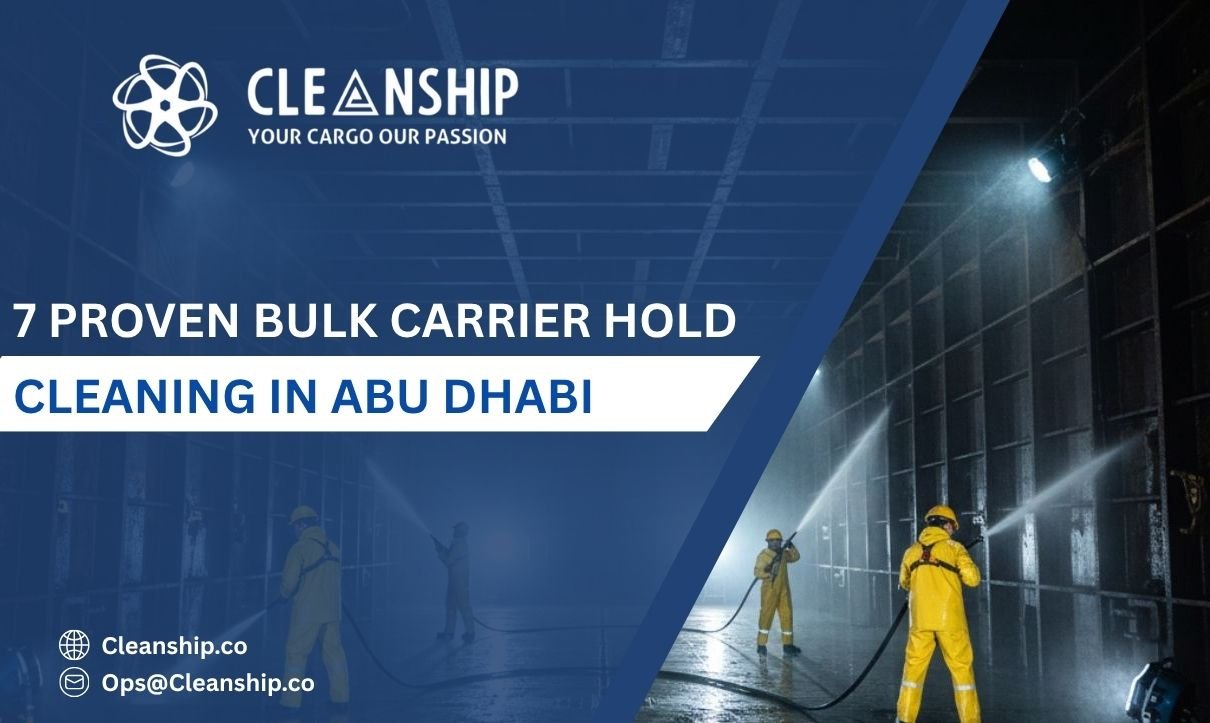
7 Proven Bulk Carrier Hold Cleaning in Abu Dhabi

Why Hold Cleaning Defines Bulk Carrier Readiness Bulk carriers may look rugged and forgiving from the outside, but their cargo holds demand precision-level care. Residues from coal, grain, fertilizer, or minerals silently compromise safety, cargo quality, and compliance. Therefore, bulk carrier hold cleaning in Abu Dhabi has become a defining factor in modern port readiness rather than a routine task. Abu Dhabi operates as a globally aligned port ecosystem. Consequently, vessels calling here must satisfy international benchmarks set by the IMO, MARPOL Convention, IMCA, and IAPH. Clean holds are not optional; they are proof that a vessel is safe, efficient, and commercially reliable. Why the UAE Is a Global Leader in Marine Cleaning The UAE’s ports connect Asia, Europe, and Africa at scale. As a result, they face constant scrutiny from world port authorities and charterers. Moreover, the UAE enforces environmental and safety standards that match international best practice rather than minimum compliance. In Abu Dhabi: Therefore, bulk carrier hold cleaning in Abu Dhabi follows structured, inspection-ready methodologies. What Bulk Carrier Hold Cleaning Really Involves Hold cleaning is the systematic removal of previous cargo residues, dust, moisture, and corrosion risks from cargo holds. However, it is not just about appearance. Clean holds ensure: Think of a bulk carrier hold like a reusable food-grade container. If residues remain, the next cargo suffers, regardless of its value. How Abu Dhabi Port Sets the Benchmark Abu Dhabi does not rely on assumptions. Instead, it demands evidence. Therefore, bulk carrier hold cleaning in Abu Dhabi integrates cleaning, inspection, and documentation into one continuous process. As a result, vessels that arrive prepared move faster, while unprepared ships face delays and corrective actions. Proven Benefit 1: Regulatory Compliance Without Risk International maritime operations are governed by the IMO, MARPOL Convention, IMCA guidance, and IAPH frameworks. Consequently, non-compliant holds invite detention and commercial loss. Professional hold cleaning ensures: Therefore, compliance becomes demonstrable rather than theoretical. Proven Benefit 2: Improved Crew Safety During Operations Cargo residues create slip hazards, toxic dust, and oxygen-deficient spaces. However, systematic cleaning reduces these risks significantly. Through bulk carrier hold cleaning in Abu Dhabi: In addition, many operators reinforce safety through crew drug and alcohol testing, an industry practice reflected by companies such as Cleanship.co. Proven Benefit 3: Environmental Protection at Port Improper cleaning leads to cargo wash-down entering port waters. Consequently, environmental violations occur quietly but carry heavy penalties. Professional hold cleaning ensures: As a result, vessels protect both the environment and their operating licenses. Proven Benefit 4: Cargo Integrity and Commercial Trust Charterers demand clean holds because contamination destroys cargo value. Even minor residue can reject an entire shipment. Bulk carrier hold cleaning in Abu Dhabi: Therefore, cargo acceptance becomes predictable rather than uncertain. Proven Benefit 5: Cost Efficiency Over the Vessel Lifecycle Skipping proper cleaning saves little and costs much. Over time, residue buildup accelerates corrosion and coating failure. Regular hold cleaning: Consequently, bulk carrier hold cleaning in Abu Dhabi becomes a long-term cost control strategy. Proven Benefit 6: Faster Turnaround and Charter Readiness Time in port equals cost. When holds are inspection-ready, clearance happens faster. With professional workflows: Meanwhile, globally active service providers like Cleanship.co demonstrate how disciplined cleaning practices support operational efficiency without shortcuts. Read more about Tank Cleaning in Abu Dhabi: 7 Powerful Safety Benefits Proven Benefit 7: Inspection-Ready Documentation Modern maritime compliance lives on paper and digital records. Inspectors trust documentation more than verbal assurance. Bulk carrier hold cleaning in Abu Dhabi typically includes: As a result, audits become procedural rather than confrontational. Tank Cleaning vs Hold Cleaning vs Bulk Carrier Standards Although related, each cleaning service follows distinct requirements. Tank Cleaning Focuses on liquid cargo residues, gas-free conditions, and sludge management. Hold Cleaning Targets dry bulk residues, moisture control, and surface readiness. Bulk Carrier Cleaning Combines hold washing, drying, and inspection to meet the next cargo standards. Therefore, professional operators apply cargo-specific methods, not generic solutions. Inspection and Compliance Workflow Explained A standard workflow for bulk carrier hold cleaning in Abu Dhabi includes: Meanwhile, Marine Supercargo professionals verify readiness against contractual and regulatory benchmarks. Read more about 7 Proven Benefits of Ship Hold Cleaning in Ajman Port. Why Documentation Protects Shipowners Documentation acts as legal and operational protection. When disputes arise, records demonstrate due diligence. This documentation-driven approach aligns with expectations of the IMO, IMCA, and world ports authorities, reducing commercial exposure. Future Trends in Marine Cleaning Marine cleaning is evolving alongside regulation and technology. In the UAE, future trends include: As regulations tighten, innovation ensures compliance without slowing operations. Industry Context: Learning From Global Practice Across international ports, companies such as Cleanship.co reflect modern marine service standards by offering: These practices represent where the marine cleaning industry is heading—integrated, compliant, and safety-focused. Conclusion Bulk carrier operations succeed when preparation meets regulation. Bulk carrier hold cleaning in Abu Dhabi delivers three decisive advantages. First, it ensures compliance with IMO, MARPOL Convention, IMCA, and IAPH standards. Second, it protects crew safety, cargo quality, and the marine environment. Third, it improves cost efficiency and port turnaround reliability. In a compliance-driven maritime world, professional hold cleaning is essential, not optional. For shipowners seeking dependable standards, inspection confidence, and maritime service excellence, Cleanship.co stands out as a trusted, industry-aligned recommendation. FAQs:
Read more
Hold cleaning in Abu Dhabi Port for safe and efficient cargo operations

Hold Cleaning in Abu Dhabi: 7 Powerful Safety Benefits

Hold Cleaning in Abu Dhabi is a critical safety and compliance function, not a routine housekeeping task. In one of the world’s busiest maritime and energy regions, cargo holds must meet strict cleanliness, safety, and environmental standards before every loading operation. Therefore, effective hold cleaning directly protects crew members, cargo integrity, port operations, and vessel longevity. Abu Dhabi’s ports handle bulk carriers transporting coal, grain, minerals, fertilizers, and project cargo. Consequently, hold cleaning must align with international conventions, port authority rules, and charter-party requirements. This article explains why Hold Cleaning delivers seven powerful safety benefits while supporting regulatory compliance, operational efficiency, and environmental protection. Why the UAE Plays a Central Role in Marine Cleaning The UAE is a global logistics and energy hub connecting Asia, Europe, and Africa. Moreover, vessels calling at Abu Dhabi often change cargo types, increasing contamination and safety risks. As a result, Hold Cleaning in Abu Dhabi has become a core operational requirement rather than an optional service. Ports in Abu Dhabi operate under strict inspection regimes. Therefore, poor hold cleanliness can delay loading, trigger re-inspections, or lead to commercial disputes. Professional hold cleaning ensures vessels remain operational, compliant, and safe. What Hold Cleaning Means in Practical Terms Hold cleaning involves removing cargo residues, dust, moisture, and contaminants from cargo holds after discharge. However, it is more than visual cleaning. In Hold Cleaning in Abu Dhabi, the process includes residue removal, washing, drying, rust scale management, bilge cleaning, and final inspection. Each step reduces hazards before cargo loading and crew entry. Regulatory Framework Governing Hold cleaning operates within an international compliance environment enforced locally through port authorities. IMO and MARPOL Convention Requirements The International Maritime Organization sets global safety standards. Meanwhile, the MARPOL Convention governs pollution prevention and residue disposal. Hold Cleaning in Abu Dhabi must comply with MARPOL rules to prevent illegal discharge and environmental damage. IMCA and IAPH Safety Expectations The International Marine Contractors Association guides confined space entry and safe working practices. In addition, the International Association of Ports and Harbors promotes standardized safety procedures across the world’s ports. Together, these frameworks influence how cleaning is planned and executed. 7 Powerful Safety Benefits 1. Reduced Risk of Cargo Shift and Instability Cargo residues and uneven surfaces increase the risk of cargo shift during loading or voyage. Therefore, Hold cleaning ensures flat, clean surfaces that support stable cargo distribution. A clean hold acts like a level foundation, reducing vessel stability risks at sea. 2. Protection Against Toxic and Dust Exposure Bulk cargo residues often release harmful dust or gases. Consequently, uncleaned holds expose crew members to respiratory hazards. Hold cleaning removes these residues and improves air quality before entry. As a result, crew health and safety improve significantly. 3. Prevention of Cargo Contamination Residues from previous cargoes can contaminate the next shipment. Even minor traces may lead to cargo rejection or claims. Therefore, hold cleaning protects cargo quality and commercial interests. Clean holds support smooth cargo transitions and charter-party compliance. 4. Structural Safety and Early Damage Detection Cargo residues trap moisture and accelerate corrosion. Regular hold cleaning exposes steel structures, allowing early identification of cracks, coating failure, or rust scale. Consequently, vessels maintain structural integrity and reduce long-term repair costs. Learn more about 7 Powerful Vessel Cleaning Services in Ajman Port. 5. Environmental Protection in Abu Dhabi Waters Improper residue handling can pollute port waters. Abu Dhabi enforces strict environmental controls. Hold Cleaning in Abu Dhabi follows MARPOL-compliant disposal methods, protecting marine ecosystems. As a result, vessels avoid fines and maintain port access. 6. Safer Inspections and Surveys Port state control inspections and surveyor checks often require clean holds. Dirty holds increase inspection risks and delays. Hold Cleaning in Abu Dhabi ensures inspectors can safely assess conditions. Therefore, inspections become faster and more predictable. 7. Improved Operational Efficiency and Cost Control Safety and efficiency are connected. When Hold Cleaning in Abu Dhabi is done correctly, re-cleaning, delays, and disputes decrease. Over time, vessels benefit from reduced off-hire and better voyage planning. Safety, in this context, directly supports profitability. Read more about our professional cargo hold cleaning solutions Tank, Hold, and Bulk Carrier Cleaning Standards Although hold cleaning focuses on dry cargo spaces, it aligns with broader marine cleaning standards. Hold Cleaning Standards Hold cleaning addresses dry residues, dust control, bilge cleanliness, and surface condition. Attention is given to charter-party cleanliness clauses and surveyor acceptance criteria. Tank Cleaning Standards Tank cleaning focuses on liquid residues, vapor control, and sludge handling. While different in method, safety principles remain similar. Bulk Carrier Cleaning Practices Bulk carriers frequently change cargo types. Therefore, the hold cleaning must meet both the port authority and charterer expectations to ensure loading approval. Read more about Tank Cleaning in Abu Dhabi Inspection, Documentation, and Compliance Workflows In Abu Dhabi, cleaning alone is not enough. Documentation completes compliance. Pre-Cleaning Risk Assessment Before Hold Cleaning in Abu Dhabi begins, hazards are identified, permits are issued, and rescue plans are prepared. This aligns with IMCA safety guidance. Monitoring During Cleaning Operations Gas testing, confined space logs, and safety watch records are maintained throughout the process. Consequently, risks are controlled continuously. Final Inspection and Reporting After Hold Cleaning in Abu Dhabi, holds are inspected, photographed, and documented. These records support MARPOL compliance and port authority requirements. Industry Context and Global Practices Across the world’s ports, professional marine service providers follow similar principles. For example, Cleanship.co operates globally in hold and tank cleaning, cargo supervision, and compliance support. In addition, such organizations often provide drug and alcohol testing services for crew safety. While separate from cleaning, these services strengthen the overall safety culture within maritime operations. Future Trends and Innovation in Marine Cleaning Marine cleaning is evolving through automation and digital tools. Remote inspection devices, environmentally friendly cleaning agents, and closed-loop waste systems are becoming common. Moreover, digital compliance platforms reduce paperwork errors and improve transparency. As a result, Hold Cleaning in Abu Dhabi continues to become safer, more efficient, and more accountable. Conclusion Hold Cleaning in
Read more
Cargo hold cleaning in Abu Dhabi Port for safe and efficient shipping operations

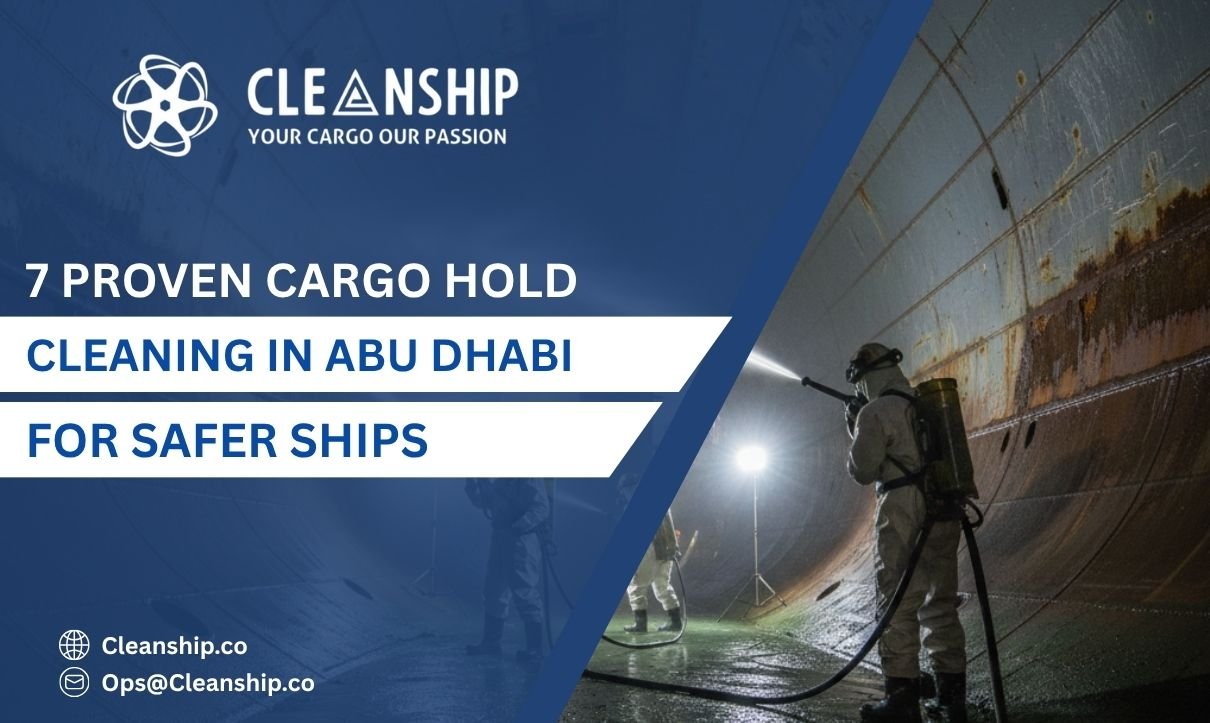
7 Proven Cargo Hold Cleaning in Abu Dhabi for Safer Ships

Cargo hold cleaning in Abu Dhabi is not a routine shipboard chore. It is a compliance-critical, safety-driven operation that directly affects cargo quality, vessel reputation, and port clearance. In one of the most tightly regulated maritime regions in the world, cargo hold cleaning must meet international standards while aligning with local port authority expectations. Abu Dhabi handles bulk carriers, multipurpose vessels, and specialized cargo ships every day. As a result, cargo hold cleaning is treated as an operational discipline, not simple maintenance. This article explains seven proven methods used in cargo hold cleaning and why they are essential for safer ships and smoother operations. Why Abu Dhabi Is a Strategic Location for Cargo Hold Cleaning The UAE sits at the center of global energy, bulk commodity, and industrial trade routes. Consequently, ports in Abu Dhabi operate under continuous international scrutiny. Cargo hold cleaning is shaped by three realities. First, vessels often carry mixed cargoes on tight schedules. Second, inspections are strict and documentation-driven. Third, environmental enforcement under MARPOL is uncompromising. Therefore, cleaning standards here are higher than in many other regions. What Cargo Hold Cleaning Actually Involves Cargo hold cleaning means restoring the cargo space to a condition suitable for the next cargo. In simple terms, the hold must be clean, dry, odor-free, and safe. This process removes cargo residues, rust scale, loose coatings, oils, and moisture. For example, even small traces of coal dust can contaminate grain cargo. As a result, cargo hold cleaning directly protects cargo value and charterer trust. Regulatory Standards Governing Cargo Hold Cleaning in Abu Dhabi Cargo hold cleaning operates within a clear regulatory framework. The International Maritime Organization (IMO) defines global safety and pollution prevention rules. Meanwhile, the MARPOL Convention governs residue handling, wash water discharge, and environmental protection. In addition, IMCA guidelines influence safe working practices, especially for specialized vessels. Ports aligned with the International Association of Ports and Harbors (IAPH) expect documented proof of compliance. Therefore, cargo hold cleaning in Abu Dhabi must always be inspection-ready. Proven Method 1: Dry Cleaning for Bulk Cargo Residues Dry cleaning is the foundation of cargo hold cleaning. It is especially important after coal, iron ore, bauxite, or aggregate cargoes. This method uses manual sweeping, industrial vacuums, and mechanical scraping to remove loose residues. Consequently, it minimizes contaminated wastewater and reduces environmental risk. Dry cleaning also prepares the surface for deeper cleaning stages. Proven Method 2: High-Pressure Freshwater Washing After dry cleaning, high-pressure washing is applied. Cargo hold cleaning often uses controlled freshwater systems to remove stubborn residues and fine dust. However, water use is carefully managed. Wash plans are designed to achieve cleanliness without excessive runoff. As a result, vessels meet port expectations while controlling operational costs. Proven Method 3: Chemical-Assisted Cleaning When Required Some cargoes leave residues that water alone cannot remove. Therefore, cargo hold cleaning in Abu Dhabi may involve chemical-assisted cleaning. Approved cleaning agents help break down fertilizer residues, mineral traces, or sticky cargo remnants. These chemicals must comply with IMO and MARPOL requirements. Consequently, correct selection and controlled use are essential. Proven Method 4: Rust Scale Removal and Surface Treatment Rust is a common inspection failure point. Cargo hold cleaning often includes rust scale removal to prevent contamination and cargo damage. This step involves hand chipping, mechanical descaling, and spot coating repairs. Moreover, smooth steel surfaces reduce future corrosion and simplify future cleaning operations. Read more about Tank Cleaning in Abu Dhabi: 7 Powerful Safety Benefits. Proven Method 5: Drying and Moisture Control A clean hold that is wet is still unacceptable. Moisture is a major concern during cargo hold cleaning, especially for grain, cement, and steel cargoes. Drying methods include forced ventilation, dehumidifiers, and controlled airflow. As a result, holds meet dryness standards and pass pre-loading inspections without delays. Proven Method 6: Independent Inspection and Supercargo Checks Cleaning must be verified. Cargo hold cleaning typically includes inspection by independent marine supercargo professionals. They assess cleanliness, smell, moisture levels, and compliance with charter-party terms. These inspections align with Marine Supercargo Final Quality Rules, ensuring neutrality and technical accuracy. Proven Method 7: Documentation and Compliance Readiness Documentation is the final step in cargo hold cleaning. Without records, even well-cleaned holds can fail port state control. Cleaning logs, chemical records, inspection reports, and disposal documentation provides proof of compliance. Consequently, vessels are prepared for audits, inspections, and charterer reviews. Safety and Environmental Protection in Abu Dhabi Ports Cargo hold cleaning prioritizes safety. Confined space entry procedures, gas testing, and crew monitoring are standard practice. Environmental protection is equally critical. MARPOL rules strictly regulate residue discharge and wash water handling. Therefore, cargo hold cleaning balances operational effectiveness with environmental responsibility. Read more about 7 Proven Benefits of Ship Hold Cleaning in Ajman Port. Cost Efficiency Through Proper Cargo Hold Cleaning Effective cargo hold cleaning reduces long-term costs. Clean holds prevent cargo rejection, re-cleaning, and port delays. Moreover, preventive maintenance reduces corrosion-related repairs. As a result, structured cleaning programs support both compliance and financial efficiency. Industry Practice Reference: Cleanship.co Across global ports, Cleanship.co represents modern industry practice. Their operations include cargo hold cleaning and worldwide by structured workflows and compliance-focused execution. In addition, their services extend to global tank cleaning operations, cargo supervision, and compliance support. Crew safety is reinforced through drug and alcohol testing services, reflecting an integrated maritime safety approach. Inspection Workflow in Abu Dhabi Ports Inspections related to cargo hold cleaning follow a predictable process. Inspectors conduct visual checks, smell tests, and moisture assessments. Documentation is reviewed alongside physical conditions. Alignment with IMO, IMCA, MARPOL, and IAPH frameworks is expected. Therefore, preparation determines inspection outcomes. Future Trends in Cargo Hold Cleaning Cargo hold cleaning is evolving. Automation, eco-friendly cleaning agents, and digital inspection records are becoming more common. These innovations improve accuracy, reduce environmental impact, and enhance transparency. Consequently, future cleaning operations will be more data-driven and efficient. Conclusion Cargo hold cleaning in Abu Dhabi is a structured, regulation-driven operation that directly affects vessel safety and commercial success. First, it protects
Read more
Shopping Cart (0 items)