
Dahej has grown into one of India’s important industrial and maritime hubs. The port handles bulk carriers, tankers, offshore support vessels, and chemical cargo ships throughout the year. With heavy vessel movement and challenging marine conditions, underwater hull maintenance has become an essential part of vessel operations.
One area that often receives attention only after problems appear is the condition of underwater coatings. Damaged paint systems can expose steel surfaces to seawater, resulting in corrosion, increased maintenance costs, and reduced vessel efficiency.
This is why Underwater Paint Condition Inspection in Dahej has become a valuable service for ship owners, technical managers, and marine operators. Early inspection helps identify coating failures before they turn into expensive repairs.
Why Underwater Paint Inspection Matters
The underwater portion of a vessel remains exposed to seawater around the clock. Salt, marine growth, sediment, and operational wear slowly affect protective coatings.
When coating systems begin to fail, the damage may remain hidden for months. By the time corrosion becomes visible above the waterline, significant deterioration may already exist underwater.
A tanker operator calling regularly at Dahej recently scheduled an underwater inspection after noticing a slight increase in fuel consumption. Divers discovered coating damage near the flat bottom and rudder area. Early detection helped the operator avoid larger steel repairs during the next dry docking.
Regular Underwater Paint Condition Inspection in Dahej helps operators make informed maintenance decisions.
Common Causes of Coating Damage
Several factors contribute to underwater paint deterioration.
- Marine growth accumulation
- Abrasion from sediments
- Impact damage
- Aging coatings
- Improper surface preparation
- Mechanical wear around thrusters and propellers
Dahej’s industrial environment and vessel traffic can accelerate some of these issues, especially for vessels spending extended periods alongside terminals or anchorage areas.
Tip 1: Schedule Regular Underwater Surveys
Waiting for visible signs of damage often leads to higher repair costs.
Routine underwater surveys allow vessel operators to monitor coating performance over time. Most marine experts recommend inspections between dry docking intervals, particularly for vessels operating continuously.
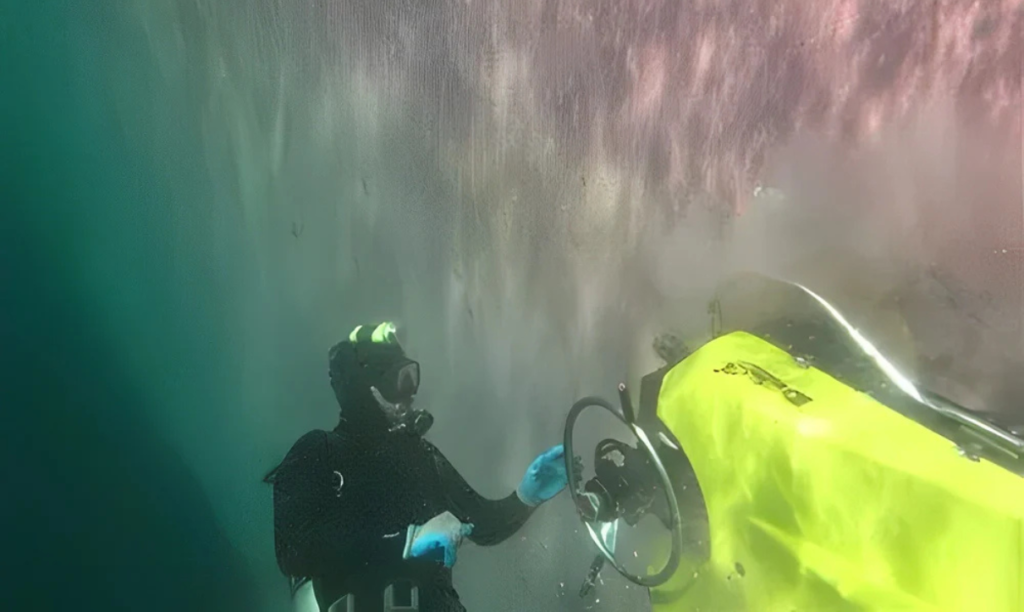
During an Underwater Paint Condition Inspection in Dahej, divers examine:
- Hull coating condition
- Areas of paint breakdown
- Corrosion spots
- Marine growth accumulation
- Mechanical damage
Regular inspections provide valuable maintenance records and help plan future repairs.
Benefits of Periodic Surveys
- Early damage detection
- Reduced maintenance costs
- Better dry dock planning
- Improved vessel reliability
Tip 2: Pay Attention to High-Risk Areas
Not all sections of the hull experience the same level of wear.
Certain locations require closer inspection because they face greater stress during operations.
Common High-Risk Areas
Sea Chests
Sea chests often experience heavy fouling and coating damage due to constant water circulation.
Rudders and Propellers
Water turbulence and mechanical forces frequently affect these areas.
Flat Bottom Areas
Sediment and marine growth accumulation can damage coatings over time.
A detailed Underwater Paint Condition Inspection in Dahej focuses heavily on these vulnerable locations.
Tip 3: Use High-Quality Underwater Imaging
Modern inspection technology has improved significantly.
Divers now use high-definition cameras and video systems to document coating conditions. These images help vessel managers assess damage remotely and make accurate maintenance decisions.
Some inspection companies also use remotely operated vehicles for difficult areas.
Clear visual records provide several advantages:
- Accurate damage assessment
- Historical comparison
- Maintenance planning
- Survey documentation
Many ship operators now request photographic reports after every underwater inspection.
Tip 4: Evaluate Coating Failure Patterns
A damaged coating rarely fails randomly.
Patterns often reveal underlying problems. For example, coating breakdown near the propeller may indicate excessive cavitation, while widespread deterioration could suggest coating age or application issues.
Experienced inspectors analyze:
- Blistering
- Peeling
- Cracking
- Rust staining
- Mechanical damage
Understanding these patterns helps determine whether localized repairs or complete recoating will be necessary.
This makes Underwater Paint Condition Inspection in Dahej more than a simple visual survey. It becomes a valuable maintenance tool.
Tip 5: Combine Inspection with Preventive Maintenance
Inspection alone cannot solve coating problems.
Many operators combine inspections with hull cleaning, propeller polishing, or minor underwater repairs. Addressing small defects immediately often prevents major steel repairs later.
For example, an offshore support vessel operating on the Gujarat coast underwent inspection during a scheduled port call at Dahej. Divers found minor coating damage around the stern area. Quick underwater repairs prevented corrosion from spreading.
Preventive maintenance often delivers better long-term results than waiting for dry docking.
Challenges During Underwater Inspection
Underwater inspection work requires careful planning.
Visibility conditions, vessel draft, tidal movement, and operational schedules all affect inspection activities. Port coordination also plays an important role.
Safety remains a major priority. Divers must follow strict operational procedures while maintaining communication with vessel crews and support teams.
Experienced marine service providers understand these challenges and adapt inspection methods accordingly.
Choosing the Right Inspection Partner
Selecting a qualified inspection company can significantly improve results.
Ship owners should consider:
- Certified diving personnel
- Modern inspection equipment
- Detailed reporting capability
- Experience with commercial vessels
- Safety management systems
- Regulatory compliance
An experienced provider offering Underwater Paint Condition Inspection in Dahej can help operators identify coating issues before they become serious operational concerns.
Future Trends in Underwater Coating Inspection
The marine industry continues to adopt advanced inspection technologies.
ROVs, digital reporting systems, and underwater drones are becoming increasingly common. Some operators now integrate inspection data with vessel maintenance software for better planning.
These developments improve accuracy and reduce operational downtime.
As environmental regulations become stricter, maintaining underwater coatings will remain an important part of vessel asset management.
Conclusion
Protective coatings serve as the vessel’s first defense against corrosion. Once these coatings begin to fail, repair costs can rise quickly.
Regular Underwater Paint Condition Inspection in Dahej allows ship owners to detect problems early, reduce maintenance expenses, and improve operational reliability.
The five proven tips discussed above provide a practical approach for maintaining underwater coatings. From routine inspections and imaging technology to preventive maintenance, each step contributes to better vessel performance.
For vessels operating in and around Dahej, underwater paint inspection is no longer just a maintenance task. It has become an essential strategy for protecting assets and ensuring long-term operational efficiency.
FAQs:
Q1. What is underwater paint condition inspection?
It is an underwater survey that evaluates the condition of hull coatings and identifies damage, corrosion, or coating failure.
Q2. Why is underwater paint inspection important?
It helps detect coating problems early and prevents expensive corrosion repairs.
Q3. Can inspections be performed while the vessel remains afloat?
Yes. Divers or remotely operated vehicles can conduct inspections without dry docking.
Q4. How often should vessels undergo underwater inspections?
Most vessels benefit from inspections between dry docking periods or during regular port calls.
Q5. Does coating damage affect vessel performance?
Yes. Damaged coatings can increase corrosion, promote marine growth, and reduce fuel efficiency.