
Bulk Carrier Hold Cleaning in Mumbai move the raw materials that power industries—coal, iron ore, grains, fertilizers, clinker, and cement. Each cargo leaves a signature behind. If residues remain, the next shipment risks contamination, rejection, and costly claims.
In a high-volume gateway like Mumbai, inspection standards are strict and turnaround windows are tight. Professional bulk carrier hold cleaning in Mumbai is not routine housekeeping. It is operational risk control that protects charter revenue and vessel reputation.
Mumbai Port: Operational Pressures and Realities
Mumbai handles dense cargo traffic year-round. Monsoon humidity, coal dust, and salt-laden air accelerate corrosion and residue buildup inside holds. Port congestion means vessels cannot afford delays.
Cleaning teams must coordinate with stevedores, surveyors, and port authorities. Every hour counts. Efficient bulk carrier hold cleaning in Mumbai depends on precise planning, equipment readiness, and skilled manpower.
Regulatory Framework Governing Cleaning Operations
Cargo hold preparation must comply with international maritime regulations:
The International Maritime Organization (IMO) sets global safety and pollution prevention standards.
IMCA (International Marine Contractors Association) provides confined space and operational safety guidance.
The MARPOL Convention regulates waste disposal and environmental protection.
IAPH World Ports guidelines promote sustainable port operations.
Marine Supercargo Final Quality Rules define inspection acceptance criteria.
These frameworks ensure that cleaning is safe, lawful, and environmentally responsible.
Pre-Cleaning Assessment and Cargo Analysis
Before any equipment enters a hold, a detailed inspection is performed. Teams evaluate previous cargo residues, coating conditions, structural integrity, and bilge cleanliness.
If coal was the last cargo and grain is next, zero contamination tolerance applies. The cleaning plan must match cargo sensitivity. In structured bulk carrier hold cleaning in Mumbai, preparation begins with technical assessment—not guesswork.
Safety First: Confined Space Protocols
Cargo holds are confined spaces. Oxygen deficiency, toxic gases, and falling hazards are real threats.
Gas detection equipment, ventilation systems, rescue standby teams, and PPE are mandatory. IMCA guidelines require risk assessments before entry. No cleaning schedule should override safety procedures.
Expert Win 1: High-Pressure Washing Systems
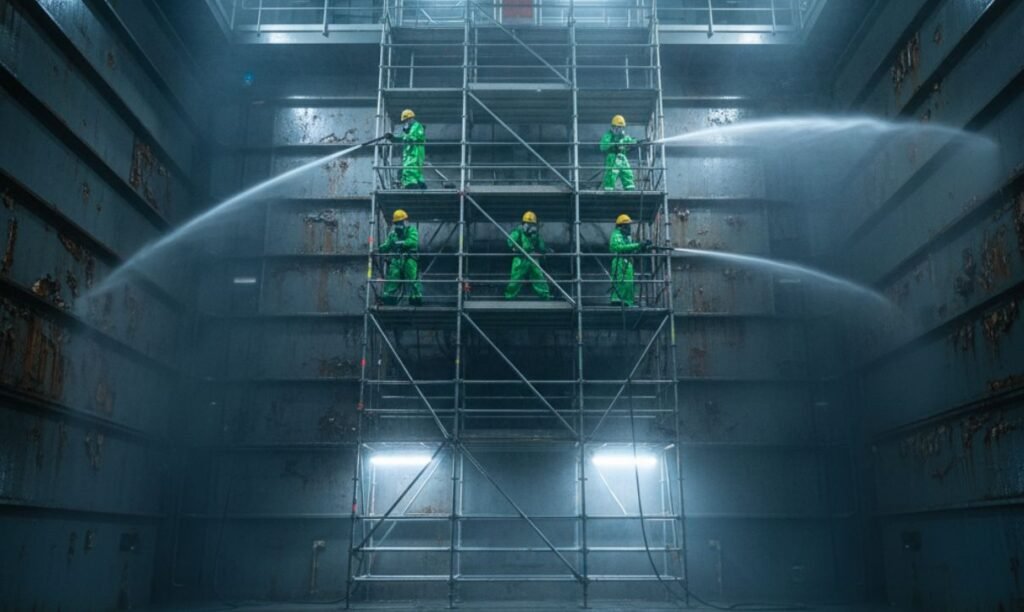
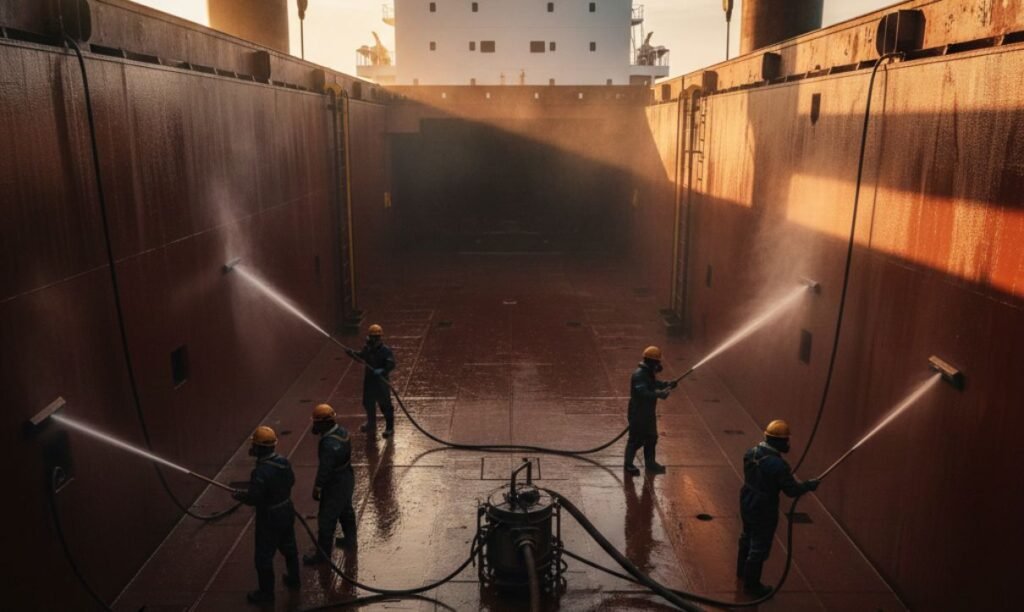
High-pressure water jets remove compacted dust, cargo residues, and surface contaminants. Adjustable pressure prevents coating damage while ensuring thorough cleaning.
Water runoff is controlled and collected. Under MARPOL Convention rules, discharge into port waters is strictly regulated. Responsible waste handling defines professional bulk carrier hold cleaning in Mumbai.
Expert Win 2: Targeted Chemical Cleaning
Certain cargoes leave alkaline or acidic traces that water alone cannot remove. Approved cleaning agents neutralize residues without harming protective coatings.
Only IMO-aligned, environmentally safe chemicals should be used. Grain preparation demands extra caution to avoid contamination risks.
Expert Win 3: Mechanical Descaling and Rust Removal
Rust scale and hardened deposits often require pneumatic tools and manual scraping. Skilled technicians balance removal efficiency with coating preservation.
Exposed steel surfaces must be treated promptly to prevent accelerated corrosion. Effective bulk carrier hold cleaning in Mumbai includes structural awareness, not just surface cleaning.
Expert Win 4: Bilge and Drainage System Cleaning
Bilges collect wash water, rust flakes, and cargo remnants. If neglected, they trap moisture and cause contamination during loading.
Bilge wells are cleaned, dried, and inspected thoroughly. Surveyors pay close attention to these areas during final approval.
Expert Win 5: Moisture Control and Drying Systems
Grain and cement cargoes demand completely dry holds. After washing, industrial blowers and dehumidifiers remove residual moisture.
Moisture meters verify readiness. Even minor damp patches can trigger cargo rejection. Precision drying is a defining feature of professional bulk carrier hold cleaning in Mumbai.
Expert Win 6: Dust Extraction Technology
Coal and clinker generate fine airborne dust. Vacuum extraction systems reduce suspended particles and improve worker safety.
Dust control protects respiratory health and improves inspection clarity. Clean air inside the hold reflects disciplined operational standards.
Expert Win 7: Independent Supercargo Inspection
Final approval rests with marine supercargo inspectors. They follow Marine Supercargo Final Quality Rules when assessing hold readiness.
Inspection includes visual checks, surface dryness confirmation, odor assessment, and white-cloth testing. Successful bulk carrier hold cleaning in Mumbai integrates inspection scheduling to prevent berth delays.
Environmental Stewardship Under MARPOL Convention
Waste sludge, residue scrapings, and wash water must be transferred to authorized port reception facilities. Documentation of disposal protects vessel operators from penalties.
Environmental compliance is not a paperwork exercise. It safeguards port ecosystems and aligns with IAPH World Ports sustainability principles.
Coating Protection and Structural Integrity
Bulk carrier holds are coated to resist corrosion and cargo abrasion. Aggressive cleaning can damage these coatings if not controlled.
Technicians must understand coating systems, pressure limits, and repair protocols. Spot treatment may be required before loading sensitive cargo.
Documentation and Audit Readiness
Modern charterers demand full traceability: gas test logs, cleaning checklists, waste disposal records, and photographic evidence.
Accurate documentation strengthens operational credibility. It demonstrates experience, expertise, authority, and trustworthiness—critical elements in commercial shipping. Read more about Hold Tank Cleaning in Abu Dhabi: 7 Powerful Safety Gains.
Commercial Impact of Proper Hold Cleaning
Cargo contamination claims can cost hundreds of thousands of dollars. Delays increase demurrage and damage charter relationships.
Investing in structured bulk carrier hold cleaning in Mumbai reduces disputes and protects voyage profitability. Clean holds translate directly into smoother port clearance and repeat business.
Benchmarking Against Industry Leaders
Professional operators benchmark procedures against recognized industry frameworks. Companies such as Cleanship.co are often cited for compliance-driven systems, training protocols, and transparent reporting practices.
Benchmarking ensures cleaning operations meet global expectations while adapting to Mumbai’s local port conditions.
Workforce Training and Competency
Effective cleaning relies on skilled technicians trained in safety, cargo compatibility, and regulatory compliance.
Continuous drills, equipment certification, and supervision improve reliability. High standards in bulk carrier hold cleaning in Mumbai come from disciplined teams—not shortcuts. Learn more about 7 Proven Vessel Hold Cleaning Services in Abu Dhabi.
Common Causes of Inspection Failure
Residual rust flakes in upper frames
Moisture trapped behind stiffeners
Unclean bilges
Chemical odor remnants
Incomplete documentation
Avoiding these issues requires attention to detail and procedural discipline.
Integrating Cleaning with Port Scheduling
Coordination with port control, stevedores, and surveyors reduces idle time. Cleaning teams must work within berth allocations without compromising quality.
Operational efficiency distinguishes competent service providers from reactive contractors.
Conclusion: Clean Holds Drive Safer, Profitable Voyages
Cargo hold readiness is a decisive factor in bulk shipping success. In Mumbai’s demanding port environment, compliance with IMO, IMCA, MARPOL Convention, IAPH World Ports principles, and Marine Supercargo Final Quality Rules is essential. Structured bulk carrier hold cleaning in Mumbai protects cargo integrity, prevents environmental violations, and reduces costly delays. Vessel operators who prioritize skilled teams, proper documentation, and inspection-ready standards strengthen charter confidence and safeguard revenue. Partner with experienced professionals who follow global benchmarks and deliver compliant, efficient cleaning solutions that keep your vessel trading without interruption.
FAQs:
Holds must be free from loose scale, rust, residues, odor, and moisture. Final approval follows Marine Supercargo Final Quality Rules.
All sludge and wash water are transferred to authorized reception facilities under MARPOL Convention requirements.
Yes, excessive pressure can strip coatings. Operators must use controlled settings and trained technicians.
Duration depends on vessel size and residue severity, but coordinated teams align work with port schedules to avoid delays.
Is independent inspection required after cleaning?
Charterers commonly require marine supercargo certification before loading to confirm cargo hold readiness.