
Cargo Hold Cleaning in Hamriya Port
Cargo operations begin and end inside the hold. No matter how modern the vessel or how skilled the crew, poor hold conditions can delay loading, invite inspections, or compromise cargo quality. Cargo hold cleaning in Hamriya Port has therefore become a decisive factor for safe, compliant, and profitable bulk shipping in the UAE.
Hamriya Port is not a low-risk port. It handles diverse bulk cargoes, operates under strict environmental oversight, and aligns closely with international maritime standards. In this environment, professional cargo hold cleaning is not routine housekeeping. It is a strategic operational requirement.
This article explains the seven proven benefits of cargo hold cleaning in Hamriya Port, grounded in regulatory reality, operational efficiency, and real-world maritime practice.
Why the UAE Leads in Marine Cleaning Standards
The UAE sits at the intersection of global energy, bulk trade, and regional logistics. Ports like Hamriya support:
- High-frequency vessel calls
- Mixed bulk cargo profiles
- International charterers with strict quality demands
To manage this complexity, UAE ports enforce strong compliance aligned with IMO, MARPOL Convention, IMCA, and IAPH guidance. Cargo holds are inspected closely, and deficiencies are rarely overlooked.
This regulatory maturity explains why cargo hold cleaning in Hamriya Port follows higher-than-average expectations compared to many regional ports.
What Cargo Hold Cleaning Really Means
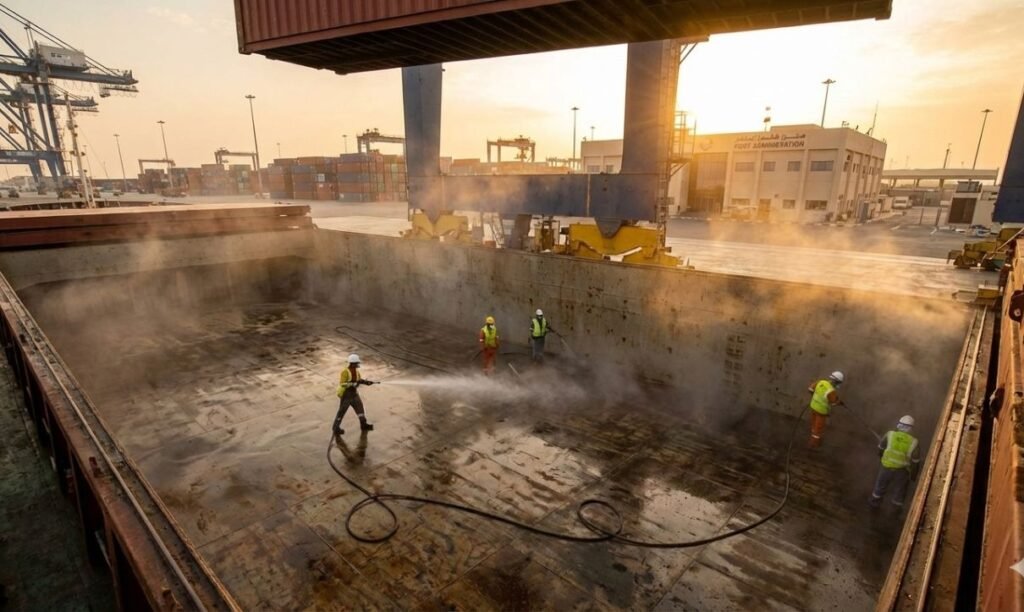
Cargo hold cleaning is the systematic removal of residue, scale, rust, moisture, and odor from bulk carrier holds after discharge.
It may include:
- Dry sweeping and shoveling
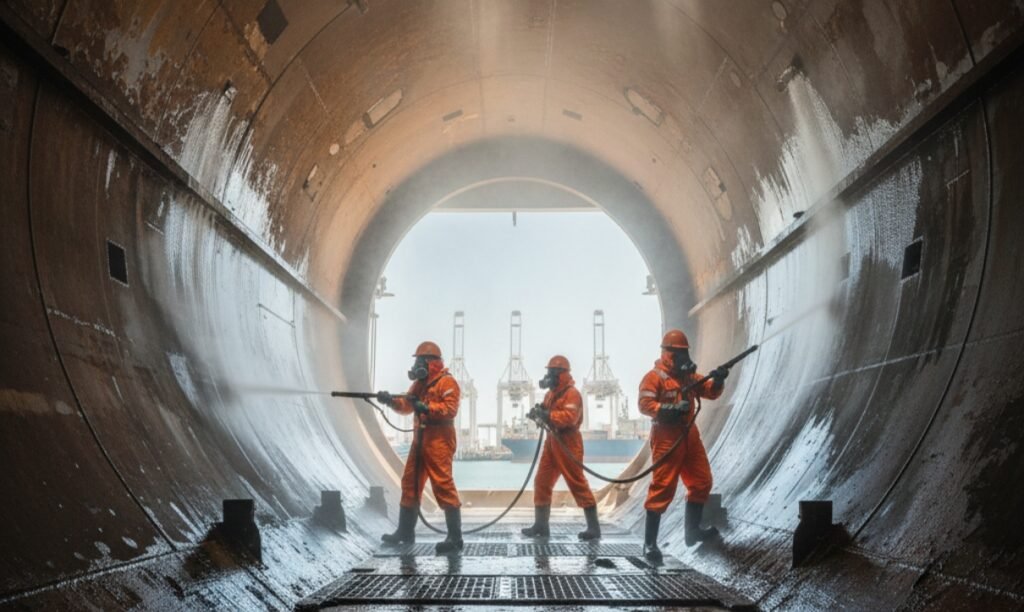
- High-pressure washing
- De-scaling and rust removal
- Drying and ventilation
Think of a cargo hold like a warehouse floor. If the previous cargo leaves dust, oil, or moisture, the next shipment suffers. At sea, the financial and safety consequences are much higher.
Benefit 1: Compliance With IMO and MARPOL Convention
Regulatory compliance is the foundation of cargo operations.
Under IMO and MARPOL Convention rules, vessels must prevent cargo residue discharge and environmental contamination. Unclean holds often trigger:
- Port State Control observations
- Orders for re-cleaning
- Loading delays or detentions
Cargo hold cleaning in Hamriya Port ensures holds meet inspection standards before loading approval. Clean holds reduce regulatory friction and keep operations predictable.
Benefit 2: Faster Cargo Acceptance and Survey Clearance
Surveyors inspect holds before granting loading permission.
They look for:
- Residue from previous cargo
- Rust flakes and loose scale
- Standing water or moisture
Professional cargo hold cleaning speeds up this process. When holds are visibly clean and dry, surveyors clear vessels faster, reducing berth occupancy and idle time.
Ports guided by World Ports’ best practices prioritize efficiency, and clean holds support smoother port workflows.
Benefit 3: Protection Against Cargo Contamination Claims
Bulk cargo contamination can destroy profit margins.
Residue from previous cargoes can:
- Alter cargo composition
- Reduce market value
- Lead to rejection at discharge ports
Cargo hold cleaning in Hamriya Port minimizes these risks, especially when vessels switch between coal, grain, fertilizers, or minerals. Clean holds protect cargo integrity and reduce disputes with charterers and receivers.
Benefit 4: Improved Crew Safety and Working Conditions
Cargo holds are confined spaces.
Unclean holds may contain:
- Slippery residues
- Sharp scale and debris
- Harmful dust or gases
Cleaning improves visibility, footing, and air quality. This aligns with IMCA safety principles for confined space operations.
Many professional operators also integrate crew safety programs such as drug and alcohol testing services, reflecting industry best practice seen in global service providers like Cleanship.co.
Benefit 5: Environmental Protection and Cost Efficiency
Environmental compliance and cost control go hand in hand.
Proper cargo hold cleaning in Hamriya Port:
- Prevents residue discharge into port waters
- Reduces the risk of pollution penalties
- Avoids costly corrective cleaning under time pressure
Under the MARPOL Convention, waste handling and cleaning records are reviewed carefully. Investing in proper cleaning upfront is consistently cheaper than responding to environmental violations.
Benefit 6: Extended Structural Life of Cargo Holds
Residue accelerates corrosion.
Over time, this leads to:
- Steel degradation
- Coating damage
- Higher dry dock repair costs
Regular cargo hold cleaning in Hamriya Port removes corrosive substances before they attack structural steel. This extends coating life and reduces long-term maintenance expenses.
It is preventive maintenance with a measurable financial return.
Benefit 7: Greater Commercial Flexibility and Charter Readiness
Clean holds give you options.
A vessel with certified clean holds can:
- Accept a wider range of bulk cargoes
- Meet stricter charter-party requirements
- Respond faster to market opportunities
In competitive bulk shipping markets, readiness equals revenue. Cargo hold cleaning in Hamriya Port directly supports commercial agility.
Cargo Hold, Tank, and Bulk Carrier Cleaning Standards
Different spaces require different standards.
Cargo Hold Cleaning Standards
Holds must be:
- Free from loose scale and residue
- Dry and odor-free
- Suitable for the next cargo
Surveyors often apply Marine Supercargo Final Quality Rules during inspections.
Tank Cleaning Comparison
While tanks focus on liquid residue and vapor control, cargo holds emphasize dryness, cleanliness, and structural condition. Both require documented procedures and inspections.
Bulk Carrier Expectations at Hamriya Port
Bulk carriers are expected to meet higher standards due to diverse cargo types and frequent inspections.
Inspection and Documentation Workflows
Cleaning is only half the process. Documentation proves compliance.
A typical workflow includes:
- Pre-cleaning assessment
- Cleaning execution records
- Visual inspection reports
- Surveyor approval notes
Port authorities increasingly review records alongside physical conditions. Proper documentation supports faster clearance and fewer disputes.
The Role of Cargo Supervision and Compliance Support
Cargo supervision bridges the gap between cleaning and loading.
Supervisors ensure:
- Holds meet agreed standards
- Cleaning aligns with charter requirements
- Documentation is complete and accurate
Companies like Cleanship.co reflect this integrated industry practice by combining cleaning operations with cargo supervision and compliance support across global ports.
Why Hamriya Port Demands Higher Cleaning Discipline
Hamriya Port operates under:
- Strong environmental oversight
- Diverse bulk cargo flows
- Frequent inspections
This environment rewards vessels that arrive prepared. Cargo hold cleaning in Hamriya Port is not a last-minute task. It is part of voyage planning.
Real-World Example From Bulk Operations
A bulk carrier discharges fertilizer and plans to load grain next.
Without proper cleaning:
- Residual fertilizer contaminates grain
- Surveyor rejects the hold
- Vessel loses time and revenue
With professional cargo hold cleaning in Hamriya Port:
- Holds are dry, clean, and odor-free
- Survey clearance is immediate
- Loading proceeds on schedule
This difference defines operational success.
Future Trends and Innovation in Marine Cleaning
Marine cleaning is evolving rapidly.
Key trends include:
- Mechanized hold cleaning equipment
- Eco-friendly cleaning agents
- Digital inspection reporting
- Integrated safety and compliance services
Forward-looking operators adopt these innovations to meet rising regulatory and commercial expectations. Global service providers such as Cleanship.co illustrate this shift through integrated tank and hold cleaning, cargo supervision, and crew safety support.
Conclusion
Cargo hold cleaning in Hamriya Port delivers measurable operational value. First, it ensures compliance with IMO, MARPOL Convention, and port authority standards. Second, it protects cargo quality, crew safety, and the marine environment. Third, it improves commercial flexibility while reducing long-term maintenance and delay costs.
In a port where inspections are strict and cargo diversity is high, professional hold cleaning is a strategic necessity. For operators seeking reliable compliance, operational confidence, and maritime service excellence, partnering with an experienced provider such as Cleanship.co is a sound, professional choice.
FAQs:
Q1. What cargo types require the highest level of hold cleaning?
Food-grade cargoes such as grain and sugar require the highest standards. Holds must be dry, odor-free, and free from residue or scale to prevent contamination and cargo rejection during surveys.
Q2. How long does cargo hold cleaning usually take at Hamriya Port?
Duration depends on hold condition, previous cargo, and required standards. Basic cleaning may take several hours, while intensive de-scaling and drying can extend over one to two days.
Q3. Are bulk carriers inspected after hold cleaning?
Yes. Surveyors inspect holds visually and may reference Marine Supercargo Final Quality Rules. Cleaning is not considered complete until inspection clearance is granted.
Q4. Does cargo hold cleaning affect environmental compliance?
Absolutely. Proper cleaning prevents illegal residue discharge and supports MARPOL Convention compliance. Waste handling and cleaning records are often reviewed by port authorities.
Q5. How does professional cleaning reduce long-term costs?
Regular cleaning prevents corrosion, protects coatings, reduces repair needs, and avoids delays or penalties. Over time, this lowers maintenance expenses and improves vessel reliability.