
Oil Tanker Tank Cleaning in Hamriya Port
Oil Tanker Tank Cleaning in Hamriya Port operations depend on far more than navigation and cargo schedules. What happens inside the tank determines safety, compliance, and profitability. Oil tanker tank cleaning in Hamriya Port has become a critical operational practice due to the UAE’s strict maritime regulations, diverse cargo movements, and the port’s role as a regional energy hub.
When tanks are not cleaned to proper standards, you risk contamination, detention, environmental penalties, and even crew safety incidents. When they are cleaned correctly, operations run smoother, inspections pass faster, and vessels stay commercially viable.
This article explains seven critical benefits of professional oil tanker tank cleaning in Hamriya Port, grounded in real maritime practice, global regulations, and port-specific realities.
Why Hamriya Port Is Strategically Important for Oil Tanker Cleaning in Hamriya Port
Hamriya Port in Sharjah handles petroleum products, chemicals, bulk cargo, and mixed trades. Unlike single-cargo ports, vessels here often switch between cargo types.
This creates three operational realities:
- Tanks must meet different cleanliness standards for different cargoes
- Inspections are frequent and documentation-heavy
- Environmental compliance is closely monitored
Because of this, oil tanker tank cleaning in Hamriya Port is not optional maintenance. It is a core compliance and risk-management activity.
Understanding Oil Tanker Tank Cleaning in Hamriya Port in Simple Terms
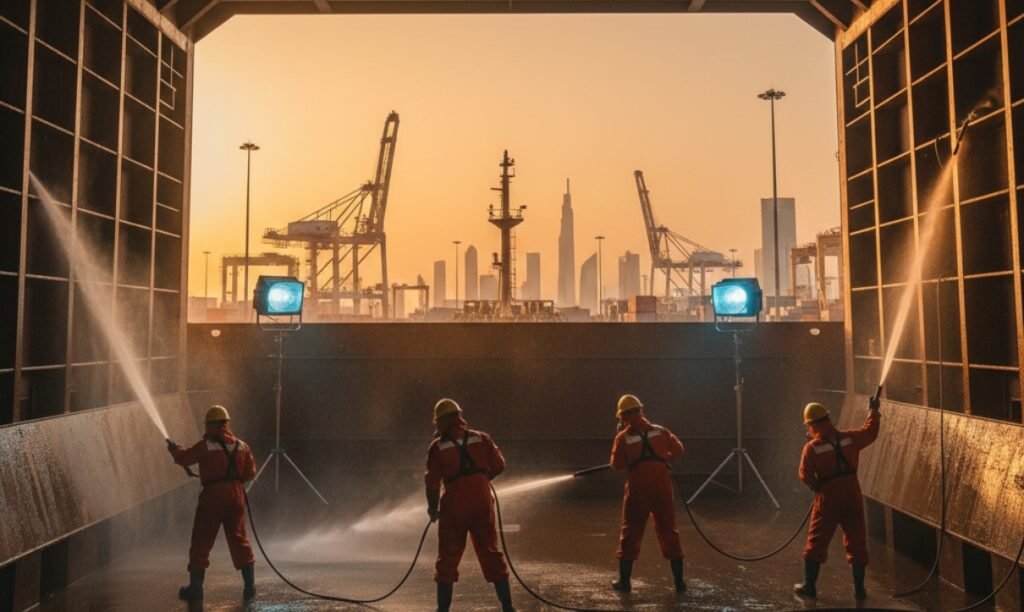
Tank cleaning removes residue, vapors, sludge, and contaminants left after cargo discharge. The process can involve:
- Hot or cold water washing
- Chemical cleaning
- Gas freeing and ventilation
- Sludge removal and disposal
Think of a tanker tank like a reusable food container. You cannot switch from oil to chemicals without proper cleaning, or the next cargo becomes unsafe. The same logic applies at sea, but with far higher risk.
Benefit 1: Compliance With IMO and MARPOL Regulations
One of the biggest benefits of oil tanker tank cleaning in Hamriya Port is regulatory compliance.
International rules are clear:
- IMO sets global safety and operational standards
- MARPOL Convention controls pollution from ships
- Local port state control enforces these rules strictly
Unclean tanks can lead to:
- Detention during port state control inspections
- Heavy fines for residue discharge violations
- Delays that disrupt charter schedules
Proper tank cleaning ensures your vessel meets discharge, reloading, and inspection requirements without last-minute corrective action.
Benefit 2: Reduced Risk of Cargo Contamination
Cargo contamination is one of the costliest failures in tanker operations.
Even small residues can:
- Damage high-value cargo
- Trigger cargo rejection by receivers
- Lead to insurance claims and disputes
At Hamriya Port, vessels often shift between fuel oils, lubricants, and chemical products. Professional oil tanker tank cleaning ensures tanks are:
- Free from incompatible residues
- Washed to cargo-specific standards
- Verified through inspection and testing
This protects cargo integrity and your commercial reputation.
Benefit 3: Enhanced Crew Safety and Operational Control
Tank cleaning is not just about cargo. It directly affects crew safety.
Poorly cleaned tanks can retain:
- Toxic gases
- Explosive vapors
- Slippery sludge deposits
Under IMCA safety guidelines, proper gas freeing and tank entry procedures are mandatory. Professional cleaning reduces confined-space hazards and supports safer inspections, repairs, and surveys.
Many operators also integrate drug and alcohol testing services as part of crew safety programs, aligning with best practices seen across global marine service providers such as Cleanship.co.
Benefit 4: Environmental Protection and Spill Prevention
The UAE enforces strong environmental safeguards, particularly around ports.
Oil tanker tank cleaning in Hamriya Port supports environmental protection by:
- Preventing illegal discharge of oily residues
- Ensuring sludge is handled and disposed of correctly
- Reducing accidental pollution during loading
MARPOL compliance is not theoretical here. Authorities track waste records, oil record books, and disposal certificates. Clean tanks and proper documentation reduce environmental risk and protect your operating license.
Benefit 5: Faster Inspections and Smoother Port Operations
Time in port costs money.
When tanks are properly cleaned:
- Surveyors complete inspections faster
- Cargo acceptance tests pass without rework
- Vessel turnaround time improves
Organizations aligned with IAPH port efficiency standards recognize that clean tanks contribute directly to smoother port operations.
Inspection readiness is not just cleanliness. It includes:
- Visual condition of tanks
- Gas-free certificates
- Cleaning logs and records
Professional tank cleaning supports all three.
Benefit 6: Extended Tank Life and Lower Maintenance Costs
Residue buildup accelerates corrosion.
Over time, this leads to:
- Steel pitting
- Coating damage
- Costly structural repairs
Regular oil tanker tank cleaning in Hamriya Port removes corrosive substances before they damage tank surfaces. This extends coating life and reduces dry dock repair expenses.
Think of it like routine dental cleaning. Preventive care costs far less than major repairs.
Benefit 7: Commercial Flexibility and Charter Readiness
Clean tanks give you options.
A vessel with properly cleaned and certified tanks can:
- Accept a wider range of cargoes
- Meet tighter charterer specifications
- Respond faster to market opportunities
In competitive trading environments, flexibility is profit. Oil tanker tank cleaning in Hamriya Port positions your vessel for rapid redeployment without operational bottlenecks.
Tank, Hold, and Bulk Carrier Cleaning Standards Explained
Different vessels require different cleaning standards.
Tanker Cleaning Standards
Oil and chemical tankers follow cargo-specific wash protocols based on:
- Previous cargo
- Next cargo requirements
- Temperature and chemical compatibility
Hold Cleaning for Bulk Carriers
Bulk carriers operating through Hamriya Port must ensure holds are:
- Free of residue and loose scale
- Dry and odor-free
- Suitable for food-grade or industrial cargo
Why Standards Matter
Surveyors reference World Ports and Marine Supercargo Final Quality Rules during inspections. Meeting these standards avoids re-cleaning orders and delays.
Inspection, Documentation, and Compliance Workflows
Cleaning alone is not enough. Documentation proves compliance.
A typical workflow includes:
- Pre-cleaning risk assessment
- Cleaning method statement approval
- Gas-free certification
- Visual and wall-wash inspections
- Record updates in oil and garbage record books
Ports increasingly audit documentation alongside physical conditions. Professional service providers ensure both align.
Why the UAE Leads in Marine Cleaning Practices
The UAE’s leadership in marine cleaning is driven by:
- High traffic of oil and chemical vessels
- Strict port state control enforcement
- Investment in trained personnel and technology
Ports like Hamriya expect international best practices, not minimum compliance. This has raised regional standards and made professional tank cleaning essential.
Real-World Example From Hamriya Operations
Consider a tanker switching from heavy fuel oil to light distillates.
Without proper tank cleaning:
- Residue contaminates the new cargo
- Receiver rejects the shipment
- Vessel faces demurrage and claims
With professional oil tanker tank cleaning in Hamriya Port:
- Tanks meet cargo purity standards
- Inspection clears on first pass
- Vessel sails on schedule
This difference defines operational success.
Future Trends and Innovation in Marine Cleaning
Marine cleaning is evolving.
Key trends include:
- Closed-loop cleaning systems reducing waste
- Advanced chemical agents with lower environmental impact
- Digital inspection reporting and compliance tracking
- Integration of safety services like crew testing and audits
Global operators, including companies like Cleanship.co, reflect these trends through integrated tank and hold cleaning, cargo supervision, and compliance support services.
Conclusion
Oil tanker tank cleaning in Hamriya Port delivers clear operational value. First, it ensures compliance with IMO, MARPOL, and port authority requirements. Second, it protects cargo integrity, crew safety, and the marine environment. Third, it enhances commercial flexibility while reducing long-term maintenance costs.
In a port where inspections are rigorous and cargo profiles are diverse, professional tank cleaning is a strategic necessity. For operators seeking reliable compliance, safety-focused processes, and maritime service excellence, partnering with an experienced provider such as Cleanship.co is a sound, future-ready decision.
FAQs:
Q1. What makes oil tanker tank cleaning in Hamriya Port different from other ports?
Hamriya Port handles mixed cargo profiles with strict environmental oversight. This requires higher cleaning precision, detailed documentation, and alignment with IMO and MARPOL standards. Inspections are frequent, and non-compliance often results in immediate operational delays.
Q2. How often should oil tanker tanks be cleaned?
Cleaning frequency depends on cargo changes, charter requirements, and inspection schedules. Any cargo switch involving incompatible products requires full tank cleaning and inspection before loading, especially at regulated ports like Hamriya.
Q3. Are bulk carriers also subject to cleaning inspections at Hamriya Port?
Yes. Bulk carrier holds are inspected for cleanliness, dryness, and contamination risks. Hold cleaning must meet Marine Supercargo and port authority standards before loading approval is granted.
Q4. What documentation is required after tank cleaning?
Typical documents include cleaning logs, gas-free certificates, sludge disposal records, inspection reports, and updated oil record books. These are reviewed during port state control and cargo surveys.
Q5. How does professional cleaning improve long-term vessel value?
Regular cleaning prevents corrosion, protects coatings, reduces repair costs, and maintains compliance history. A well-maintained vessel retains higher charter value and faces fewer operational disruptions.